He's 60 and He Just Realized That Every Time His Adult Daughter Asks Him a Question He Already Knows the Answer To, He Pretends to Think About It - Pauses, Tilts His Head, Says 'Let Me Think' - Because a Man Who Watched His Father Answer Every Question With Immediate, Conversation-Ending Certainty Learned That a Child Who Gets an Answer Too Fast Never Gets a Conversation
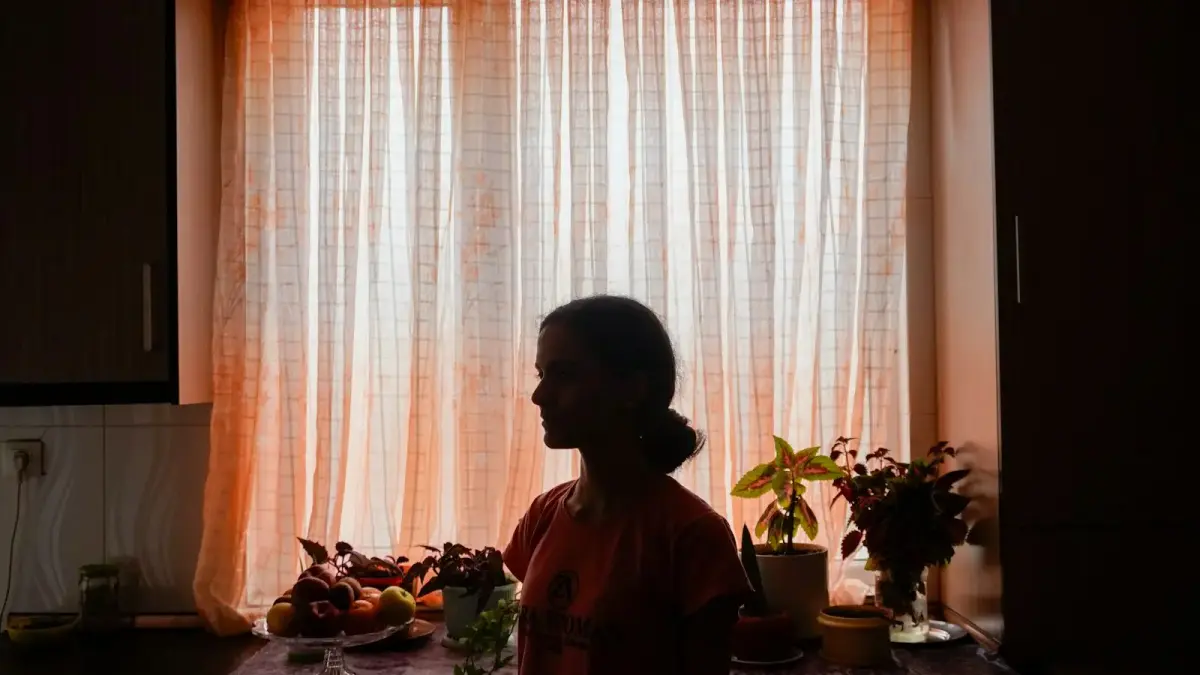
She called last Tuesday about her garden.
Something about the tomato plants not taking, the soil being wrong, whether she should try raised beds instead. I knew the answer before she finished her second sentence. I’ve been gardening for thirty-five years. I knew the drainage was the problem. I knew exactly what to tell her.
But I didn’t tell her. Not right away.
I leaned back in my chair, made a sound like I was considering it, and said, “Hmm, let me think about that for a second.” And in the silence that followed - maybe four seconds, maybe five - she kept talking. She told me about the neighbor who built a cold frame out of old windows. She told me about her daughter, my granddaughter, who planted sunflower seeds in a paper cup at school. She told me she’d been thinking about her mother’s garden, the one we had when she was small, and how she remembers the smell of dirt on summer mornings.
I got all of that because I waited five seconds.
If I had answered at the speed of knowing, I would have gotten: “Oh, okay. Thanks, Dad.”
The Man Who Always Had the Answer
My father was the fastest mind in any room he entered.
Ask him a question, any question, and the answer came back before the echo of your voice faded. He didn’t pause. He didn’t consider. He knew, and he delivered his knowing like a verdict.
What’s the best route to the coast? Highway 9 to the connector. Don’t take Main. Next question.
Should I major in business or history? Business. History won’t pay your rent.
That was it. Conversation over. Problem solved. He was efficient in a way that felt, when I was young, like competence. Like strength. This man had the world mapped and catalogued and cross-referenced, and if you needed anything from the index, he could retrieve it instantly.
It took me forty years to understand what that speed actually cost.
A 2015 study published in the Journal of Personality and Social Psychology found that conversational responsiveness - the degree to which a person makes space for another’s perspective - was a stronger predictor of relationship satisfaction than the actual content of what was said. It wasn’t about having the right answer. It was about the quality of the pause before you gave it.
My father had every right answer. He just never gave anyone the space to arrive there with him.
What the Pause Actually Is
I started doing it without deciding to.
Sometime in my late forties, after my divorce, after the years of therapy I probably should have started decades earlier, I noticed I had developed a habit. My daughter would ask me something - about a recipe, about whether her car was making a weird noise, about a decision at work - and instead of answering, I’d tilt my head slightly and say, “Let me think about that.”
I wasn’t thinking about it.
I already knew. Most of the time, I knew within two seconds. But something in me had learned, through years of painful observation, that the moment you deliver a certain answer, the conversation ends. The other person got what they came for. The transaction is complete.
And I didn’t want a transaction. I wanted to hear my daughter’s voice for a few more seconds.
That’s what the pause is. It’s not a performance of wisdom. It’s not some calculated technique I read about in a book. It’s a door I hold open - just a crack, just for a moment - because I know that once I answer, she’ll say thank you, and the call will start winding down, and I’ll be sitting in my kitchen alone again with the correct answer and nobody to share it with.
The pause is greed, if I’m being honest. Greed for her voice. Greed for whatever she might say next if I just don’t talk for a few seconds.
Five Seconds Changes Everything
Here is what I have learned about what happens in those five seconds.
She thinks out loud. She talks herself partway to the answer and then veers into something completely unrelated and far more interesting. She tells me about her week.
She mentions a friend I’ve never met but now feel like I know. She sighs, and in that sigh is an entire weather system of feelings she didn’t call to discuss but needed to release anyway.
Daniel Goleman wrote about this - about how emotional intelligence isn’t reading people, it’s creating the conditions where people feel safe enough to read themselves out loud. I can’t quote him exactly, but the idea stuck with me. The pause is the condition. The silence is the safety.
My father never gave anyone five seconds. Not because he was cruel, and not because he didn’t love us. He did love us, fiercely and without apology.
But he came from a generation of men who believed that love was demonstrated through usefulness. You love your family by solving their problems. You solve their problems by having the answers.
You deliver the answers quickly because speed is respect.
He respected us so hard he never heard us.
The Inheritance I Almost Accepted
I was becoming him. I could feel it in my thirties, the pull toward certainty. My daughter was small then, five or six, and she’d ask me why the sky was blue, and I’d tell her. Immediately. Correctly. And she’d nod and wander off, and that would be the end of it.
One afternoon she asked me where birds go when it rains. I opened my mouth to answer - they shelter in trees, under eaves, in dense foliage - and something stopped me. I don’t know what. Maybe it was the look on her face, which was not the look of someone who needed information. It was the look of someone who wanted to wonder about something together.
“I don’t know,” I said. Which was a lie. “Where do you think they go?”
She talked for ten minutes. She decided the birds go to a secret place underground where they have tiny umbrellas and drink hot chocolate. She drew a picture of it. She asked me to draw one too. We spent the whole rainy afternoon drawing the underground bird city, and I have that picture still, somewhere in a box, and it is worth more than every correct answer I have ever given.
That was the moment, though I didn’t know it yet, that I started choosing her voice over my certainty.
The Science of Slowing Down
There is a concept in psychology called “bid and response” - developed by John Gottman in his research on what makes relationships last. A bid is any attempt to connect. A question, a comment, a look across the room. And the response is either turning toward the bid or turning away from it.
A 2019 study in the journal Psychological Science found that the speed of response mattered almost as much as the response itself. People who answered too quickly were perceived as less emotionally available - not because they didn’t care, but because the speed communicated that the interaction wasn’t worth sitting in.
Think about that. Answering fast - the thing my father did as a form of love - actually reads as a form of dismissal.
When I pause, when I say “let me think about that,” I am turning toward my daughter’s bid. I am telling her, without words, that her question is worth slowing down for. That she is worth slowing down for. That this moment, this ordinary Tuesday afternoon phone call about tomato plants, matters enough for me to stop everything and sit inside it with her.
I’m not thinking. I’m staying.
What My Father Missed
He died at seventy-four. Quick, like everything else about him. A heart attack on a Wednesday morning, gone before the ambulance arrived.
At the funeral, my sister said something I have never forgotten. She said, “Dad always knew exactly what to say. I just wish he’d sometimes not said it.”
I understood her perfectly. We both loved him, and we both admired him. And we both spent our entire childhoods talking to a man who was already finished listening before we’d started talking.
He didn’t know he was doing it. That’s the part that hurts the most. He thought he was being a good father. He was being a good father, in every way he knew how. He provided, he protected, he showed up, he answered every question we ever asked him.
He just answered them too fast.
And the space between a child’s question and a father’s answer - that space he never left open - is where the relationship lives. It’s where the real conversation happens. It’s where a daughter says the thing she didn’t call to say, where a son admits the thing he didn’t know he was carrying, where two people stop being parent and child and start being two humans sitting in the same uncertainty for a moment.
My father filled that space with answers. I try, imperfectly, to leave it empty.
Sixty and Still Learning to Wait
I am not a patient man by nature. I am my father’s son, built for speed, wired for certainty. Every time my daughter calls, there is a version of me that wants to answer immediately - to prove I still know things, to be useful, to earn my place in her life through competence.
But there is another version of me now. The one who has learned, slowly and through great loss, that my place in her life is not earned through answers. It’s earned through attention. Through presence. Through the willingness to pretend I need five seconds when I don’t, because those five seconds are not a performance.
They are an offering.
A 2021 study in Frontiers in Psychology found that adults who reported having parents who “left space” in conversations - who paused, asked follow-up questions, and resisted the urge to immediately correct or inform - showed significantly higher levels of secure attachment and emotional regulation in their own adult relationships. The researchers called it “conversational generosity.”
I like that phrase. Conversational generosity. It makes my small act of pretending to think sound almost noble, when really it’s just a sixty-year-old man who wants to hear his daughter’s voice for a few more seconds before she hangs up.
Last week she called about the garden again. The raised beds worked. The tomatoes are coming in.
“Dad,” she said, “do you think I should try peppers next year?”
I know the answer. I’ve always known the answer.
“Hmm,” I said. “Let me think about that.”
And she kept talking. And I kept listening. And the five seconds between her question and my answer filled up with her life - the small, beautiful, ordinary details of a woman who still calls her father to ask about vegetables, not because she needs his help but because she wants to hear him pause.
She wants the door held open.
I hold it as long as I can.