He's 61 and has quietly realized that the reason he buys too much food every time his adult children come home - three kinds of juice nobody asked for, snacks they haven't eaten since middle school, a refrigerator so full the door barely closes - is not generosity and it is not habit, it is a man whose own father's refrigerator was always half-empty quietly rewriting the story one grocery bag at a time
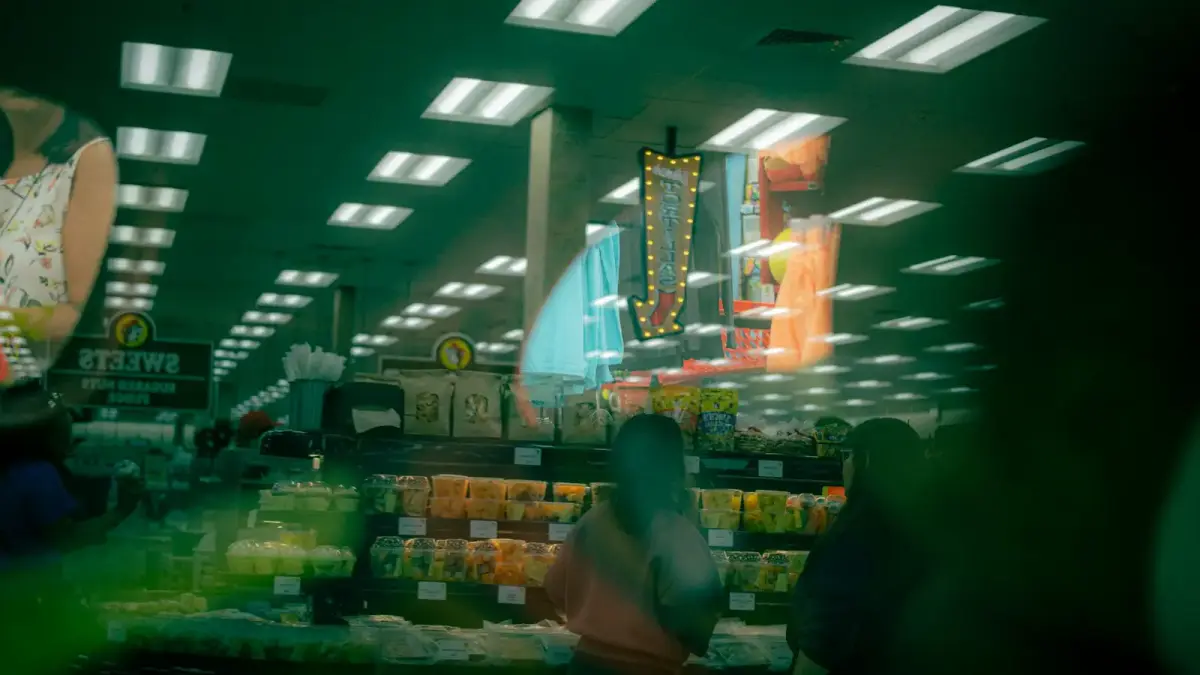
My daughter was coming home last Thanksgiving - her, her husband, and the baby. Three people. Three nights. And I stood in aisle seven of the grocery store with a cart that could have fed a shelter.
Two gallons of whole milk. A gallon of oat milk because I thought she mentioned it once. Orange juice, apple juice, cranberry juice. Chips she used to eat in high school. Frozen pizzas my son hasn’t touched since he was fourteen. Yogurt in four flavors. Two rotisserie chickens. Enough fruit to open a stand.
My wife looked at the cart and said, very gently, “Marcus, there are three of them and they’re staying two days.”
I knew she was right. I put nothing back.
The refrigerator that wouldn’t close
I am sixty-one years old and I have done this my entire adult life. Every time my children announce they’re coming home - for a weekend, for a holiday, sometimes just for dinner - something in me switches on. It isn’t a conscious decision. It is closer to a compulsion.
I go to the store and I buy everything. Not what we need. Not what makes sense. Everything.
The fridge fills until the shelves bow. Produce drawers overflow. Bottles crowd each other on the door shelves so tightly that opening the refrigerator becomes a negotiation.
My kids have joked about it for years. “Dad’s done it again,” they’ll say, surveying the kitchen counter still covered in bags I haven’t found room to unpack. They think it’s funny. They think it’s sweet. They think it’s just Dad being Dad.
For a long time, I thought so too. I told myself I was being a good host. That I wanted them to feel comfortable. That I didn’t want anyone to go hungry or to have to make a run to the store when they could be sitting on the couch with me instead.
But that explanation never quite fit. Because the buying wasn’t proportional. It wasn’t hospitality. It was something heavier than that.
A kitchen where you learned not to ask
My father was not a bad man. I want to say that clearly, because this isn’t a story about blame.
He was a machinist who worked second shift most of my childhood. He came home tired. He did what he could. But our house ran on a kind of quiet scarcity that I absorbed so deeply I didn’t even recognize it as a feeling until I was well into my fifties.
The refrigerator in our kitchen was never full. Not empty - there was always something. Bread. Butter. Some lunch meat. But it was the kind of stocked where you learned, very early, not to ask for seconds. Where you ate what was there and didn’t comment on what wasn’t.
Nobody talked about money. My mother stretched things without ever saying she was stretching things. Cereal was portioned. Juice was a weekend thing. Snacks were not a category that existed.
I want to be careful here. We were not in crisis. We were fine. But “fine” has a texture, and the texture was: there is enough, but only just, and your job is to not need more than what’s here.
A 2019 study published in the journal Appetite found that adults who grew up in food-insecure or food-scarce households were significantly more likely to over-purchase and stockpile food in adulthood - even when their current financial situations were stable. The researchers called it “food abundance as emotional regulation.” I call it something simpler: trying to build a different house in your body.
You don’t realize you’re doing it until someone names it
Here’s what nobody tells you about growing up with not-quite-enough: you don’t walk around feeling deprived. You feel normal. The deprivation becomes the wallpaper. You stop seeing it.
Then you grow up. You get a job. You buy a house. You have children. And something in you says, without words, without any conscious script: their refrigerator will never look like mine did.
The psychologist Gabor Mate has written about how unresolved childhood needs don’t disappear - they get rerouted. They come out sideways. A man who never felt emotionally safe becomes the father who checks the locks four times. A woman who grew up in chaos becomes the mother who plans every minute of every vacation.
And a boy who learned not to open the fridge too many times becomes the man who fills it until the door won’t close.
I didn’t understand this about myself until a few years ago. My son, who was maybe thirty at the time, came home for a long weekend. I’d done my usual routine - the massive shop, the overflowing counter, the fridge that required engineering to close.
He opened it, stood there for a moment, and said something I’ll never forget.
“Dad, you know we’re not going to eat all this, right?”
It wasn’t mean. It was tender. He said it like a man who’d been watching his father do something for decades and finally decided to say the quiet part out loud.
I laughed it off. But that night, lying in bed, I thought about my father’s refrigerator. The light inside it. The way it looked at ten o’clock at night when I’d open it hoping for something and find the same half-empty shelves.
And I understood - not intellectually, but in my chest - that every time I filled my own refrigerator for my children, I was reaching back through forty years and filling that one too.
The love that carries grief inside it
There is a particular kind of love that only makes sense when you understand it is also mourning.
I buy three kinds of juice because nobody bought me three kinds of juice. I stock snacks my kids haven’t eaten in fifteen years because the act of having snacks available, of there being too much rather than just enough, of abundance rather than careful rationing - that act is the correction. That act is me saying to my own childhood self: you deserved more than what was in that fridge.
A 2021 study in Frontiers in Psychology examined what researchers termed “compensatory parenting” - the tendency for adults to over-provide in areas where they felt under-provided for as children. The study found that this compensation was most pronounced in men, particularly around material provision, because many men of previous generations were socialized to express love through providing rather than through words or physical affection.
That hit close to home.
I have never been a man who says “I love you” easily. My father never said it. His father certainly never said it. But I can fill a refrigerator. I can make sure there is more than enough. I can create a kitchen where nobody has to calculate, where nobody has to portion, where a thirty-two-year-old woman can open my fridge at midnight and find seven things she might want and not feel guilty about any of them.
That is my love language, and I am not ashamed of it. But I have learned to see what lives underneath it.
What the full fridge is really saying
If you could translate a packed refrigerator into words, mine would say something like this:
I know you don’t need this. I know you’re a grown adult with your own kitchen and your own grocery budget and your own life. But for three days, let me be the father who has more than enough. Let me be the opposite of what I came from. Let me fill this space so completely that there is no room for the feeling I grew up with - that quiet hum of not-quite, that background noise of careful.
Psychologist Adam Grant has written about how generosity can sometimes be a form of identity repair - that we give not just to help others but to become the person we wish someone had been for us. I think about that often. I think about standing in that grocery store, loading the cart, and how the act itself feels like medicine. Not for my children. For me.
My children are fine. They have always been fine. They grew up in a house where the fridge was full. They have no idea what a half-empty one feels like, and that - that is the whole point. That is the project. That is the thing I have been building, one grocery trip at a time, for thirty-five years.
The man in the parking lot with too many bags
I still over-buy. My wife still gently suggests I might not need the second case of sparkling water. I still buy it.
But something has shifted. I do it now with a kind of awareness that I didn’t have before. I stand in the checkout line with my ridiculous cart and I know exactly what I’m doing. I am not confused about it anymore.
I am a sixty-one-year-old man filling a refrigerator for people who don’t need it filled, because a boy who did need it filled never got that. And both of those things are true at the same time. The love and the grief. The abundance and the absence. The full fridge now and the empty one then.
A 2017 study in the Journal of Personality and Social Psychology found that our earliest experiences of scarcity - even mild ones, even ones we wouldn’t classify as traumatic - create lasting behavioral patterns that persist across decades. We don’t outgrow them. We build lives around them.
I built a life around a full refrigerator.
And if you’re reading this and you recognize yourself - if you’re the person who always cooks too much, who always buys the extra, who cannot let a guest leave without packing them a bag of food they didn’t ask for - I want you to know something.
You are not being excessive. You are not being irrational. You are being the person who remembers what it felt like to not have enough, and you have spent your whole life making sure nobody you love ever knows that feeling.
That is not a flaw. That is one of the most human things I have ever seen. And you don’t need to stop doing it. You just might want to understand why. Because when you do, the groceries feel a little lighter on the way in from the car. And the fridge, impossibly full, finally makes perfect sense.