He's 62 and has quietly accepted that his marriage survived not because they fixed what was broken but because they both agreed to stop mentioning it, and he's not sure anymore whether that was wisdom or surrender
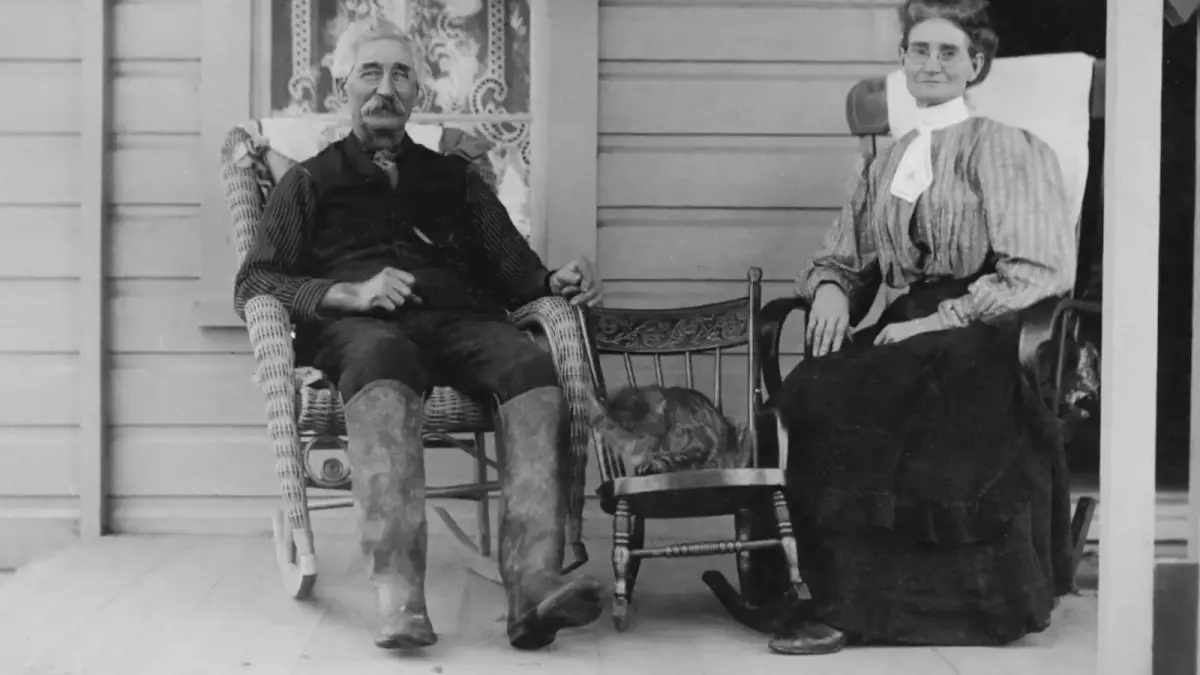
She was standing at the kitchen counter slicing a pear when it hit him. Not as a revelation - more like a familiar ache that had simply decided to announce itself. He watched her from the doorway, coffee cooling in his hand, and realized they hadn’t spoken about the thing that nearly ended them in over nine years.
Not once.
Not a passing reference. Not a late-night confession softened by wine. Not even the kind of oblique comment couples sometimes make when they’re testing whether it’s safe to go back there. Complete silence. As if it never happened.
And the strangest part wasn’t the silence itself. It was how well the silence had worked.
I think about this man - let’s call him David, because he reminds me of someone I know well - and I think about how many marriages are held together not by resolution but by an agreement nobody ever formally made. There was no sit-down conversation where they decided to stop talking about it. There was just a gradual, mutual withdrawal from the topic. A wordless treaty. And both of them honored it so thoroughly that it almost doesn’t exist anymore.
Almost.
The room nobody enters
Every long marriage has geography. There are spaces you move through freely - daily logistics, the kids, the yard, what to have for dinner, plans for the weekend. And then there are rooms you’ve quietly agreed to keep the door shut on.
David knows exactly where that door is. He could walk right up to it. Some evenings, after a glass of bourbon, he almost does.
But he never opens it. And neither does she. And so the marriage continues in the rooms that remain accessible, which are, honestly, most of the house. They laugh. They eat together. They drive to their daughter’s place on Sundays and sit in the backyard with the grandkids. From the outside, it looks like exactly what a good marriage is supposed to look like after thirty-seven years.
From the inside, it looks like that too. Most of the time.
The problem with sealed rooms is that they don’t actually disappear. You just learn to navigate around them. You develop habits of avoidance so practiced they start to feel like personality traits. You become someone who doesn’t bring things up. And after long enough, you forget that you used to be someone who did.
How silence becomes structure
Psychologist John Gottman, who spent decades studying what makes marriages last or collapse, identified something he called “repair attempts” - the small gestures couples make to de-escalate conflict and reconnect after rupture. A joke during a tense moment. A hand on a shoulder. A willingness to say, “I think we got off track.”
Gottman found that the success or failure of these repair attempts was one of the strongest predictors of whether a marriage would survive. Not the severity of the conflict. Not even the content of the disagreement. But whether both people could find their way back to each other after the damage was done.
What Gottman talked about less - and what David lives with every day - is what happens when the repair attempt never comes. When both people simply decide, without saying it aloud, that the cost of reopening the wound is higher than the cost of leaving it sealed.
A 2019 study published in the Journal of Personality and Social Psychology examined what researchers called “demand-withdraw” patterns in long-term couples. One partner pushes for discussion, the other retreats. Over time, the pushing partner often gives up. Not because they’ve made peace with the situation, but because the withdrawal becomes so total that pursuing the conversation starts to feel like an act of aggression.
David’s wife stopped bringing it up around 2018. He remembers the year because it was the year their son got married, and there was a stretch of genuine happiness that made the topic feel irrelevant. By the time the happiness settled back into routine, the window had closed. And neither of them reached for it again.
The generation that was taught to endure
There’s a generational layer here that matters. David grew up watching his father go to work, come home, sit in his chair, and say almost nothing about his inner life for forty-three years of marriage. That wasn’t considered dysfunction. That was considered strength.
Men of David’s generation - late boomers, early Gen X - were raised with a very specific definition of what it means to be a good husband. You provide. You stay. You don’t complain. You certainly don’t sit on the edge of the bed at midnight and say, “I need to talk about how I’m feeling.” That kind of vulnerability wasn’t just discouraged. It was structurally unavailable. The language for it didn’t exist in most of their households.
A 2021 study in Frontiers in Psychology found that men over 55 were significantly less likely than younger men to identify emotional avoidance as a problem in their relationships. Not because they didn’t experience disconnection, but because they had internalized avoidance as a form of care. Staying quiet was protecting the marriage. Bringing it up was threatening the marriage.
David knows this framework intimately. He was built by it. And part of what makes his situation so hard to untangle is that the silence genuinely has protected something. The marriage is intact. They are not miserable. They have a life together that works, filled with real affection and shared history and the kind of comfort that only comes from decades of proximity.
He just doesn’t know if “works” is the same thing as “whole.”
Love in the gray zone
Here’s where it gets honest, and where I think a lot of people will recognize themselves.
This isn’t a story about a bad marriage. David doesn’t lie awake at night wishing he’d left. He doesn’t fantasize about a different life. He loves his wife - genuinely, specifically, in the way you love someone whose breathing pattern you’ve memorized without trying.
And this isn’t a story about a good marriage either. Not in the way magazines describe good marriages, with their vocabulary of communication and vulnerability and radical honesty. David and his wife skipped that chapter. They went straight from crisis to silence, and the silence calcified into something that looks, from most angles, like peace.
The gray zone is where most long marriages actually live. Not in the glow of perfect partnership. Not in the wreckage of obvious failure. But in the strange, quiet middle where love and avoidance coexist so thoroughly that separating them would require dismantling the whole structure.
Brene Brown has written extensively about how vulnerability is the foundation of genuine connection. And I believe that. I also believe that David and his wife are genuinely connected - through grandchildren and inside jokes and a shared understanding of how the other one takes their coffee and which topics make them go quiet at dinner parties.
The question isn’t whether they’re connected. The question is whether connection that routes around the hardest truth is the kind of connection either of them actually needs.
And David, at sixty-two, doesn’t have an answer. That’s the part nobody tells you about long marriages. Sometimes you live inside a question for so long that it stops feeling like a question and starts feeling like a room. Another room in the house. One you know is there but simply don’t enter.
What endurance actually costs
There’s a particular kind of tiredness that comes from long silence. Not exhaustion exactly. More like a low-grade weight you carry so constantly that you stop noticing it except in small moments - a song from the wrong year, a question from a friend that edges too close, the way she sometimes looks at him across a restaurant table with an expression he can’t quite read.
In those moments, the sealed room pulses. Just briefly. Just enough to remind him it’s still there.
David told me once - or rather, the man David reminds me of told me once - that the hardest part isn’t the silence itself. It’s not knowing whether she feels it too. Whether she also has nights where the thing they don’t discuss rises up and presses against her chest. Or whether she’s genuinely moved past it, and he’s the only one still standing outside that door.
He’ll never ask. He knows that. She’ll never volunteer. He knows that too.
And the marriage will continue. Not because it was healed. But because both of them decided, independently and without coordination, that the alternative was worse.
Some houses have rooms like that
I’m not going to wrap this up with a lesson. I don’t think there is one - not a clean one, anyway.
What I will say is that I think David’s marriage is far more common than the version we see in therapy brochures and relationship books. The version where every wound gets processed and every rupture gets repaired and both people emerge closer and stronger on the other side.
That version exists. I’ve seen it. But I’ve also seen David’s version, again and again, in men and women who’ve been married thirty, forty, fifty years. Marriages that survived not because the hard conversation happened, but because it didn’t. Marriages built on foundations that include a few rooms nobody goes into anymore.
A 2022 study in Psychological Science found that long-married couples who reported high satisfaction often described their relationships in terms of acceptance rather than resolution. They hadn’t solved every problem. They’d simply decided which problems they could live alongside.
Maybe that’s wisdom. Knowing what to let go of so the rest can breathe.
Or maybe it’s surrender. Choosing comfort over the terrifying possibility of real honesty.
David doesn’t know. And I think that not-knowing might be the most honest thing about his whole story. He loves her. He stays. He doesn’t bring it up. And some nights, standing in the kitchen doorway with his coffee going cold, he wonders if the life they built together is everything it could have been, or just everything they were brave enough to let it become.
I don’t think he’s wrong to wonder. And I don’t think he’s wrong to stay.
Some questions don’t get answered. They just get carried. And maybe carrying them together - even in silence - is its own kind of love.