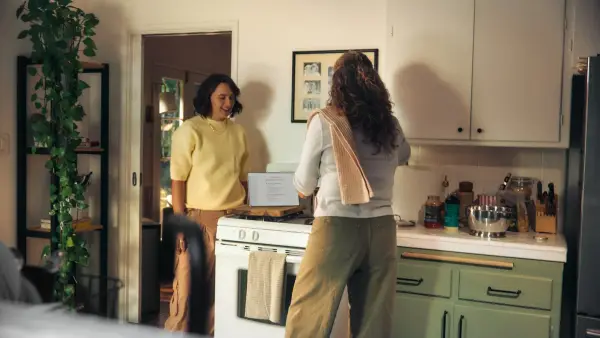
He's 63 and has finally understood that the reason he cannot watch his adult son struggle without immediately offering to fix it is not overprotection and it is not distrust - it is a father who was given no help at twenty-five and swore his children would never stand alone in the wreckage the way he did, and the line between shielding someone you love from pain and preventing them from discovering their own strength is one he has spent thirty years searching for and has never found
My son called last Thursday to tell me his landlord is selling the building. He has sixty days to find a new place in a city where rent has doubled since he signed his lease. He’s thirty-one. He has a job, a car, a head on his shoulders. He can handle this.
I know he can handle this.
I hung up the phone and within ninety seconds I had pulled up apartment listings in his neighborhood, texted my buddy who manages properties on the east side, and started mentally calculating whether I could cover a security deposit without his mother noticing the withdrawal.
My wife found me at the kitchen table with three tabs open on my laptop. She didn’t even ask what I was doing. She just looked at the screen, looked at me, and said, very gently, “He didn’t ask for your help.”
She was right. He didn’t ask. He called to tell me what was happening in his life. That’s all. A thirty-one-year-old man sharing news with his father. And I turned it into a project within the time it takes to boil water.
I’m sixty-three years old. And I have finally stopped pretending this is about being a good dad.
The year nobody came
When I was twenty-five, I lost a job, a relationship, and most of my savings in the span of about four months.
It wasn’t dramatic the way it sounds listed out like that. The job was an entry-level position that ended when the company downsized. The relationship was already fraying at the seams. The savings were barely savings at all - a few thousand dollars that evaporated into rent and groceries and the kind of quiet desperation that doesn’t make for good stories later.
What I remember most about that year isn’t the losing. It’s the silence around it.
My father was alive. We spoke occasionally. When I told him I’d been let go, he said something like, “Well, you’ll figure it out.” Then he asked if I’d caught the game on Sunday. My mother sent a card. My older brother was dealing with his own problems. My friends were twenty-five - they could barely take care of themselves, let alone show up for someone else’s crisis.
Nobody came. Not because they were cruel. Not because they didn’t care. They just didn’t think to come. And I stood in an apartment I couldn’t afford, eating cereal for dinner, trying to figure out how to make rent with no job and no safety net, and I made a decision that I didn’t know I was making at the time.
I decided that if I ever had children, they would never stand in a room like that alone.
A 2019 study published in the Journal of Family Psychology found that parents who experienced significant hardship without adequate support during young adulthood were substantially more likely to engage in what researchers called “compensatory parenting” - providing their children with the specific forms of help they themselves were denied. The impulse isn’t about the child’s current need. It’s about the parent’s unresolved experience of not being helped.
I didn’t read that study until last year. But I could have written it.
The body that moves before the mind
Here’s what I want you to understand about the father who can’t stop fixing things: it is not a choice.
My son gets a flat tire at eleven o’clock at night and calls to tell me he’s waiting for roadside assistance. Fine. He’s handled it. He’s got a plan. The adult part of my brain registers this and nods. The adult part of my brain says: he’s got this, let him have it.
But there is another part of my brain - older, faster, running on software that was installed when I was twenty-five and has never been updated - and that part has already grabbed my car keys. That part is already planning the route. That part is looking at my thirty-one-year-old son and seeing a young man standing alone in a situation that feels dangerous, and the word “alone” is the part that activates everything.
It’s not that I think he’s incompetent. I know he’s competent. I watched him grow up. I watched him handle things that would have flattened me at his age. But knowing something and feeling something are two different systems, and they do not consult each other before acting.
When I see my son struggle, my body doesn’t see a capable adult navigating a normal difficulty. My body sees the version of me that nobody came for. And my body does what it swore it would do thirty-eight years ago in a bare apartment with an empty refrigerator: it shows up. Whether it’s been asked to or not.
Gabor Mate has written about how unprocessed experiences from our past don’t stay in the past - they live in the body as automatic responses, triggered by situations that rhyme with the original wound even when they don’t repeat it. The father who jumps to fix isn’t responding to his son’s flat tire. He’s responding to his own twenty-five-year-old self, still standing in the wreckage, still waiting for someone to walk through the door.
What fixing really means
My son said something to me about a year ago that I think about almost every day.
We were having one of those careful conversations that fathers and adult sons have when they’re trying to be honest without blowing up the relationship. He told me that when I rush in to solve his problems, what he hears is: I don’t think you can do this on your own.
I tried to explain that it wasn’t about trust. That it was the opposite of distrust - that I loved him so much I couldn’t physically stand to watch him struggle. And he said, very quietly, “Dad, when you fix everything for me, I never get to find out if I could have fixed it myself.”
That sentence hit me the way a certain kind of truth hits you - not as new information, but as something you already knew and had been working very hard not to look at directly.
Because he’s right. Every time I intervene, I’m not just solving a problem. I’m removing an opportunity. The flat tire he handles alone at midnight becomes a story he tells himself about his own capability. The apartment search he navigates without my contacts becomes evidence that he can build a life on his own terms. And every time I take those moments from him, I’m doing the one thing I swore I’d never do.
I’m leaving him without something he needs.
Not money. Not a place to live. Not a ride home from the side of the road. Something harder to name than that. The specific, irreplaceable knowledge that he can stand in the wreckage and walk out of it under his own power.
A 2022 study published in the Journal of Research in Personality found that young adults whose parents frequently intervened in solvable problems reported lower self-efficacy and higher anxiety about future challenges - not because they lacked skills, but because they’d never had the chance to prove to themselves that their skills were sufficient. The researchers described it as “competence without confidence” - capable people who don’t believe in their own capability because someone always stepped in before the test was complete.
I read that and thought: I am the someone.
The oath and its shadow
The promise I made at twenty-five was pure. It came from a real place. A young man standing alone in real difficulty, looking around at the empty room and thinking: my children will never feel this.
And that promise drove everything good about the father I became. It’s why I showed up to every game, every recital, every parent-teacher conference where the chairs were too small and the coffee was terrible. It’s why I worked overtime so my kids wouldn’t eat cereal for dinner the way I did. It’s why I answered the phone at two in the morning, every time, without complaint, for thirty years.
The promise was real. The love behind it was real.
But promises made in pain have shadows. And the shadow of “my children will never stand alone” is “my children will never stand on their own.” The line between those two sentences is razor-thin, and I have been walking it for three decades, and I still can’t see it clearly.
Adam Grant talks about how the greatest gifts parents give their children aren’t the things they do for them - they’re the things they allow their children to do for themselves. The hardest kind of love, he suggests, is the love that steps back. Not because it doesn’t care, but because it trusts the person it raised.
Stepping back. Trusting. Watching your son stand in difficulty and keeping your hands at your sides. For a man who swore an oath at twenty-five in an empty apartment, that feels less like love and more like abandonment. Even though I know - I know - it isn’t.
The conversation I keep having with myself
There is a fight that happens inside me every time my son shares a problem, and it goes exactly the same way every time.
One voice says: let him handle it. He’s an adult. He’s strong. You raised him for this.
Another voice - louder, older, running on adrenaline and old grief - says: you know what it feels like to handle it alone. You know what that silence sounds like. You swore. You swore.
And the second voice wins. Not every time. But more often than I’d like to admit. Because the second voice isn’t arguing with logic. It’s arguing with a memory that lives in my chest, and memories that live in the chest don’t respond to reasoning. They respond to urgency. They feel the signal before the situation has been properly assessed, and by the time the assessment is done, I’ve already texted him three apartment listings and the name of a guy who can help.
A 2020 study in Psychological Science found that parents who experienced what the researchers termed “support deprivation” in their own formative years showed heightened amygdala activation when observing their children in distress - even mild, age-appropriate distress. The parent’s brain was not responding to the actual level of threat. It was responding to an internal template shaped decades earlier, in which distress plus aloneness equaled danger.
My son has a flat tire. My brain reads it as an emergency. Not his emergency. Mine.
The love that learns to hold still
I’m not going to tell you I’ve figured this out. I haven’t. Last Thursday I still pulled up those apartment listings. I still texted my buddy. My wife still had to point out what I was doing before I could see it myself.
But something is shifting. Slowly. In the way that things shift when you’re sixty-three and you’ve been running the same program for almost four decades.
I’m learning to sit with the discomfort. To let the phone ring with my son’s voice on the other end telling me about a difficulty, and to listen - actually listen - without already building the solution in my head. To trust that the man I raised can do what I couldn’t at his age, precisely because I was there in all the ways my father wasn’t.
That’s the part I keep missing. The oath I made at twenty-five - my children will never stand alone - I kept it. I kept it every single day for thirty years. My son doesn’t stand alone. He never has. He knows I’m here. He knows the phone will be answered. He knows the door is open.
And because he knows all of that - because I built that floor under him brick by brick for three decades - he can afford to stand on his own. The safety net is there. He doesn’t need me to jump in. He needs to know I would.
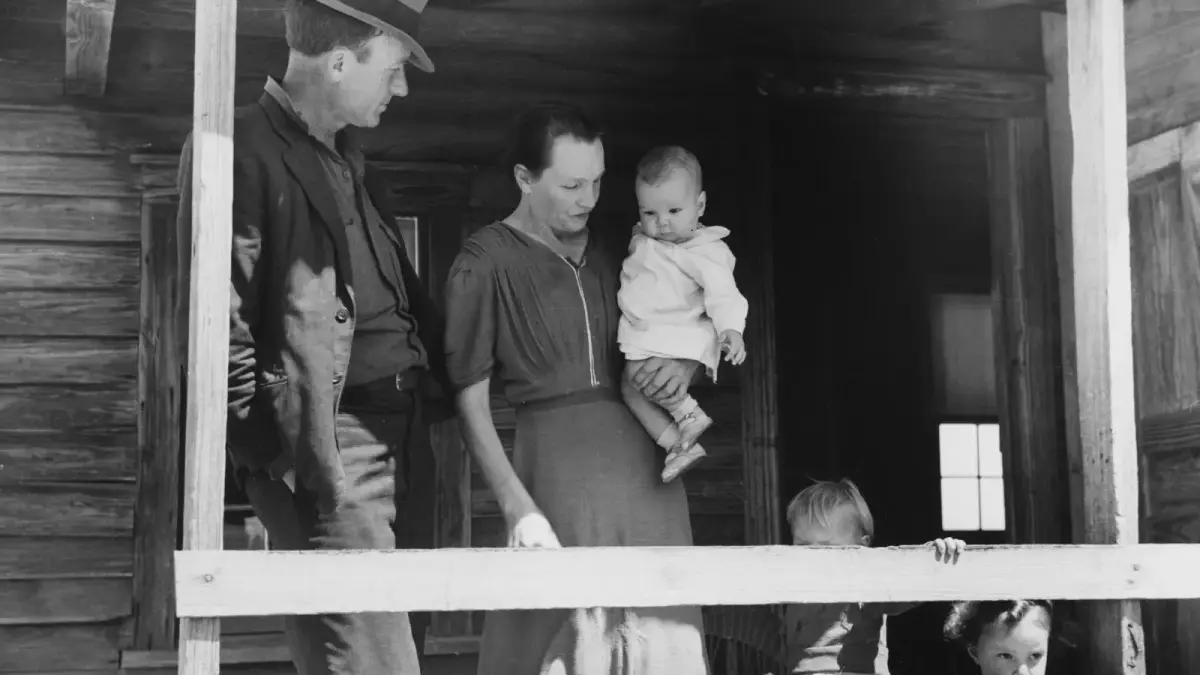
That’s the line I’ve been looking for. Not between protecting and letting go. Between showing up and stepping back. Between the love that carries and the love that watches from the porch, hands in pockets, heart in throat, trusting the person you made to walk the road you couldn’t walk for him.
I’m sixty-three. I’ve been searching for that line since my son was born. I still lose it sometimes. I probably always will. But the searching - the willingness to hold still when every cell in my body is screaming to move - that might be the most honest form of fatherhood I’ve ever practiced.
The love behind the fixing was always real. It still is. I’m just learning, very late and very slowly, that love can also look like a man sitting at a kitchen table, closing three browser tabs, and letting his son find his own apartment.
Not because he doesn’t care. Because he finally trusts what he built.