He is 62 and just realized he has been the first person to arrive at every office, every job site, every meeting room for his entire working career - not because he is punctual or ambitious but because a boy who watched his father sit in the truck in the driveway at 5 AM every morning, engine running, coffee balanced on the dashboard, waiting to leave before the sun came up, learned that a man who arrives first never has to explain himself to anyone, and arriving early was never about time but about making sure he would never be in a position where someone could question whether he belonged
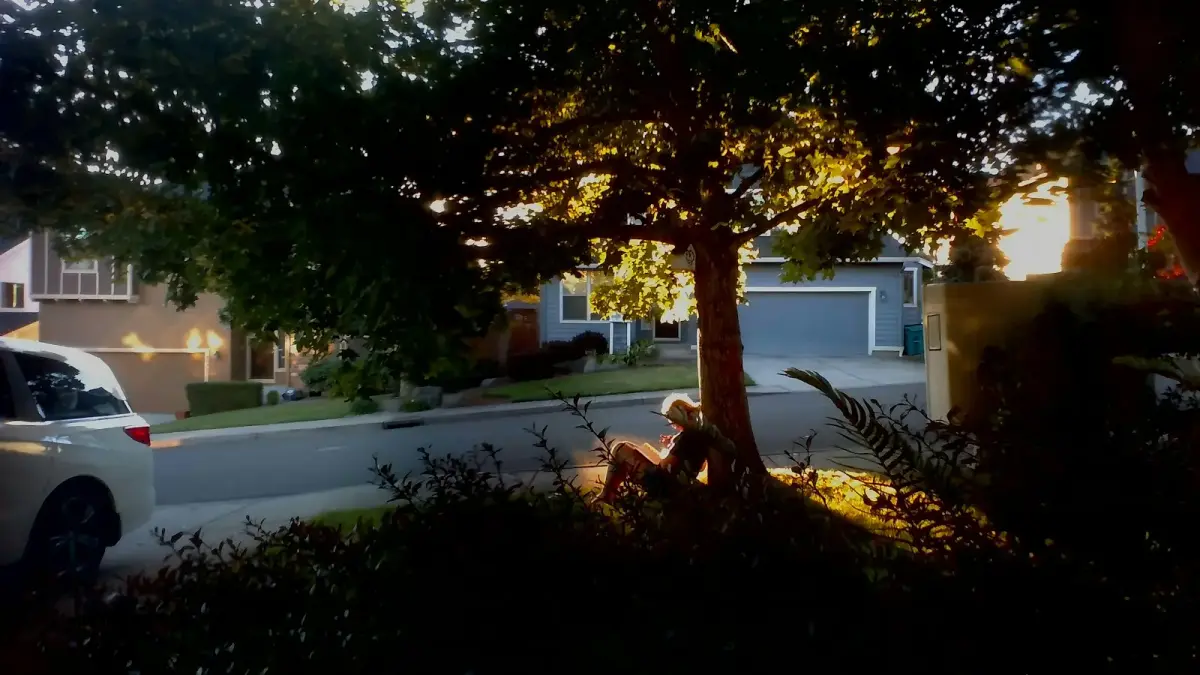
The Truck in the Driveway
I remember the sound before the image. The low rumble of a cold engine turning over in the dark. The faint click of a thermos lid. The creak of a truck door that had been opened the same way, at the same hour, for so many years that the hinge had worn a groove into the morning silence.
My father was in the driveway by five. Every morning. The house still asleep around me, the hallway cold under my bare feet, and through the kitchen window I could see the shape of him in the cab. Just sitting there. Engine running. Coffee balanced on the dash in a cup that had lost its handle years ago.
He was not late. He was not leaving yet. He was just - there. Ready. Settled into the driver’s seat like a man who had made a decision about something a long time ago and never revisited it.
I did not understand what I was learning. I was seven, maybe eight, standing in the dark kitchen with a glass of water I did not really want, watching a man wait to go to work thirty minutes before he needed to leave. I thought it was just what fathers did.
It took me until sixty-two to realize it was the most important thing he ever taught me.
The Parking Lot Was Always Empty When I Got There
I have been the first person to arrive at every job I have ever held. Every single one.
The warehouse where I started at nineteen. The office where I got my first desk. The regional meetings where I did not know anyone’s name. The conference rooms where decisions got made by people who had been making decisions long before I walked in.
I was always there first. Setting up chairs. Turning on lights. Making the coffee no one asked me to make. Sitting in the quiet before the noise, watching the parking lot fill up from the inside.
People noticed, of course. Bosses called it dedication. Colleagues called it discipline. One manager, years ago, put it in a performance review: “Marcus demonstrates exceptional commitment to punctuality.” I remember reading that line and feeling proud of it, the way you feel proud of something you believe you chose.
But I did not choose it. Not really.
A 2019 study published in the Journal of Personality and Social Psychology found that many of the behaviors we attribute to personal discipline are actually rooted in anxiety avoidance - that what looks like conscientiousness from the outside is often a carefully constructed strategy for managing uncertainty. The researchers noted that people who arrive early to social and professional settings frequently do so not because they value timeliness, but because the act of being first eliminates the vulnerability of entering a room where everyone else is already established.
I read that study two years ago. I sat with it for a long time.
What a Boy Learns Without Being Told
My father never gave a speech about work ethic. He never sat me down and said, “Son, always be early.” He never used phrases like “the early bird gets the worm” or told me stories about men who succeeded because they outworked everyone.
He just sat in the truck.
And I absorbed the lesson the way children absorb everything - not through the words adults say, but through the things adults do when they think no one is paying attention.
The lesson was not about time. The lesson was about position. A man who is already in the room when the room fills up does not have to explain why he is there. He does not have to introduce himself. He does not walk in late with the eyes of people who arrived before him tracking his movements, silently measuring him. He is part of the furniture. He is the baseline.
My father was a welder. He worked on job sites where the foreman kept a mental note of who showed up when. Where being five minutes late was a mark against your name that took weeks to erase. Where the men who arrived first got the best assignments, not because anyone admitted to favoritism, but because being there early signaled something - reliability, seriousness, a willingness to be present before you were required to be.
He came from a family that did not own property. He married young. He had three sons by twenty-six. And every single morning of my childhood, he sat in that truck before the sun came up, engine running, coffee on the dashboard, waiting.
He was not being disciplined. He was being careful. There is a difference that takes decades to see.
The Anxiety That Looks Like Ambition
Here is what I understand now that I could not have understood at twenty-five or thirty-five or even fifty.
I was never early. I was afraid of being late.
Those two things feel identical from the inside. They produce the same behavior - the alarm set forty minutes before you need it, the route planned the night before, the suit laid out on the chair, the arrival at the parking lot while the morning is still gray and the building is still locked. From the outside, it looks the same. From the inside, the engine is different.
Being early out of ambition feels like excitement. Being early out of fear feels like relief. And what I felt, every morning of my career, pulling into an empty parking lot and seeing no other cars - what I felt was relief. A small, private exhale. I made it. I am here. No one can say I was not here.
Brene Brown writes about how shame drives so many of the behaviors we mistake for virtue. The man who works eighty hours a week is not always passionate - sometimes he is terrified of what happens if he stops. The woman who never asks for help is not always strong - sometimes she learned early that asking meant owing, and owing meant being vulnerable to someone else’s power.
My early arrivals were the same kind of disguise. They looked like dedication. They were armor.
I did not come from the kind of family that guaranteed a seat at any table. No one in my family had an office. No one had a title on a business card. When I walked into professional spaces for the first time - real offices, with carpeted floors and framed mission statements and people who had gone to universities I had only seen on television - I felt it. The gap. The quiet suspicion that someone would eventually notice I did not quite fit.
So I arrived first. Every time. Because a man who is already there when the room fills up does not have to walk in under anyone’s gaze.
The Inheritance No One Names
A 2021 study in Frontiers in Psychology examined what researchers call “intergenerational transmission of coping strategies” - the ways parents pass behavioral patterns to their children without explicit instruction. The study found that children of parents who experienced socioeconomic insecurity were significantly more likely to develop hypervigilant time-management behaviors, even when the children themselves achieved financial stability.
The researchers used the phrase “phantom anxiety” - the persistence of coping mechanisms designed for threats that no longer exist. The child grows up. Gets the job. Gets the office. Gets the title. And still arrives thirty minutes early to everything, still checks the parking lot for other cars, still feels that small hum of unease when someone else is already there before him.
That is what my father gave me. Not through words. Through the truck. Through the thermos. Through the creak of the driveway at five in the morning when the world was still dark and he was already ready to go prove he belonged somewhere.
I do not know what my father’s mornings felt like from the inside. He died eleven years ago, and we never talked about it. Men of his generation did not narrate their inner lives. They built them into routines and rituals and habits so consistent that the habits themselves became invisible - just the way things were done, the way a Reid man moved through the world.
But I know what my mornings felt like. And I suspect his felt the same.
The engine running in the dark. The coffee going cold on the dashboard. The quiet act of being ready before anyone could question whether you were ready enough.
What I Want to Say to the Boy in the Kitchen
I am sixty-two. I have had a career that, by most measures, went well. I was promoted. I was trusted. I was the guy who opened the building. I was the guy who had the coffee made before the team arrived. I was the guy bosses pointed to when they wanted to show new hires what commitment looked like.
And all of it - every early morning, every empty parking lot, every quiet half hour alone in a conference room before the meeting started - all of it came from a seven-year-old standing in a cold kitchen, watching his father sit in a truck and learning something he would not be able to name for fifty-five years.
You are not broken for carrying this. You are not flawed for building your career on a foundation of quiet anxiety about whether you deserve to be in the room. That anxiety was intelligent. It was adaptive. It read the environment with perfect accuracy - you were entering spaces that were not built for people like you, and arriving first was a brilliant strategy for making yourself unquestionable before anyone had the chance to question you.
Adam Grant has written about how the traits we develop in response to adversity often become our greatest professional strengths - that the vigilance born from uncertainty frequently produces the most reliable, most trusted, most deeply competent people in any organization. The early arrivers. The over-preparers. The ones who never coast.
That was me. That was my father. That was the lesson passed from the truck to the kitchen window to a career spanning four decades.
Arriving on Your Own Terms
I still get to places early. I probably always will. The wiring runs too deep, the morning routine too embedded in my bones, for me to suddenly become someone who strolls in casually at the last minute.
But something shifted when I finally understood it. When I stopped calling it discipline and started calling it what it was - a boy’s strategy for surviving in rooms where he was not sure he was welcome.
The shift did not change the behavior. It changed the feeling underneath it. Now when I pull into a parking lot and mine is the only car, I do not feel relief. I feel something warmer. Something closer to recognition. I see myself clearly, maybe for the first time. Not as the dedicated employee. Not as the man with exceptional punctuality. But as the son of a welder who sat in a truck every morning because he knew what it cost to be seen arriving instead of already there.
If you are someone who has always been early - to work, to gatherings, to appointments, to everything - I am not going to tell you to stop. I am not going to suggest that you “heal” this pattern or “release” this habit.
I am going to suggest that you look at it. Really look at it. Ask yourself when it started. Ask yourself whose morning routine you absorbed. Ask yourself whether the thing you have always called discipline might actually be something more tender, more human, more inherited than that.
You might find a truck in a driveway. You might find a father who never said a word about time but taught you everything about what it means to make sure - absolutely sure - that no one could ever say you were not there.
And then you might sit with that for a while. The way he sat in the truck. Quiet. Engine running. Ready for something he could never quite name.