He is 64 and just realized he has been sitting in the driveway for five minutes after pulling in from work every single evening for his entire adult life - the engine off, hands still on the wheel, breathing settling, the house glowing through the windshield like something he needs to prepare himself for - not because he is tired or avoiding the people inside but because a boy who watched his father walk through the front door and immediately become someone else's answer to every question in the room learned that the five minutes between arriving and entering was the last territory a working man owned, and he has spent forty years guarding it the way you guard the final page of a book you are not ready to finish
I did it again last Tuesday.
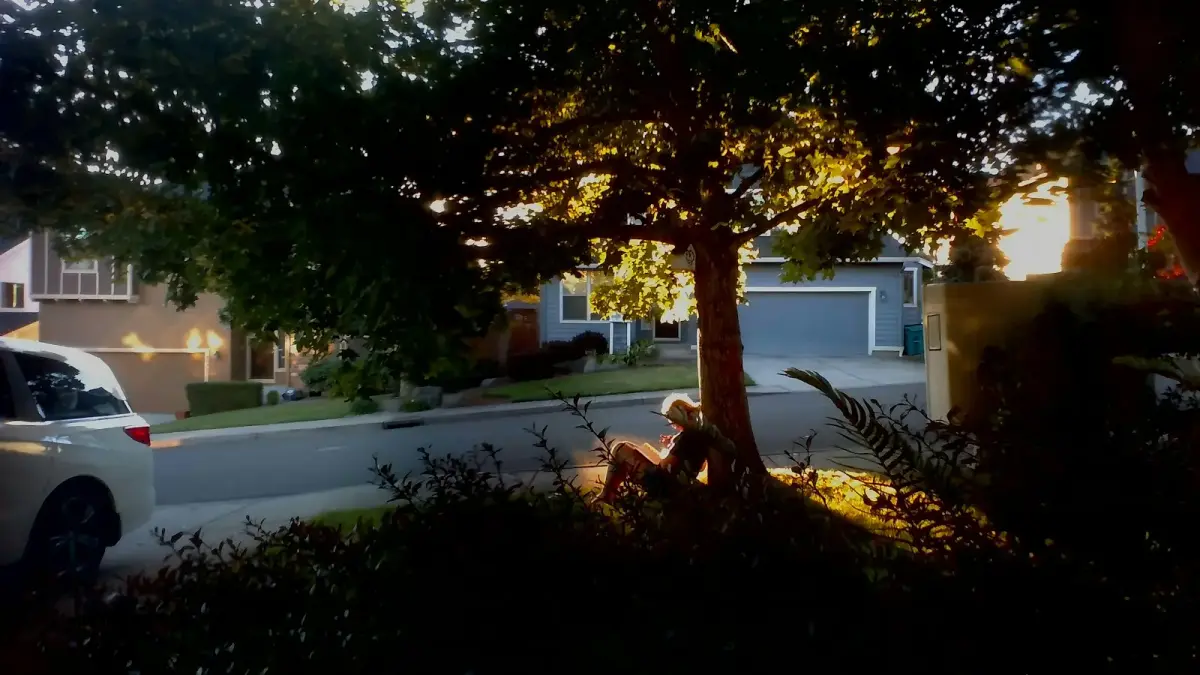
Pulled into the driveway at 6:14 PM, turned the key, and just - stayed. The engine ticked as it cooled. The seatbelt was still across my chest. Through the windshield, I could see the kitchen light on, could see movement behind the curtains, could practically smell whatever my wife was making for dinner.
And I sat there. Hands loose on the wheel. Not scrolling my phone, not finishing a podcast, not doing anything at all.
Five minutes later, I went inside. I’ve been doing this for as long as I can remember. I’m not sure I ever decided to start. It just became part of the architecture of my evenings - as automatic as the turn signal three blocks from home. And I never thought to question it until my daughter, visiting for the weekend, watched me from the living room window and later asked, with genuine concern in her voice, “Dad, are you okay? You just sat in the car for like five minutes.”
I told her I was fine. And I meant it. But the question stayed with me, because for the first time in forty years, I had to ask myself what those five minutes actually were.
The Room Before the Room
There’s a concept in architecture called the threshold - a transitional space that exists between outside and inside, between public and private. Old Japanese homes had the genkan, a sunken entryway where you removed your shoes and, symbolically, removed your day. Medieval castles had antechambers. Churches have narthexes.
These were never accidental. People have always understood that you cannot walk directly from one world into another without a place to stand in between.
The driveway is the modern man’s threshold.
Not the foyer. Not the mudroom. The driveway. Because the foyer already belongs to the house, and the house already belongs to everyone in it. The driveway is the last space that belongs to no one but you.
A 2019 study published in the Journal of Environmental Psychology found that transitional spaces significantly affect our ability to shift psychological roles - that the physical act of pausing between environments helps the brain release one identity and prepare for another. The researchers called it “psychological decompression,” but that clinical language misses what it actually feels like.
It feels like putting yourself back together before you walk into a room full of people who need you whole.
What His Father Taught Him Without Saying a Word
My father did it too.
I remember being nine, maybe ten, watching from my bedroom window as his truck pulled into the driveway. The headlights would sweep across the garage door, then cut out. And he’d sit there. I could see the orange glow of his cigarette, the slow rhythm of it brightening and dimming.
He never told me he was decompressing. He never said he needed a minute to shed the foreman and become the father. He never explained that the man who had spent ten hours solving other people’s problems needed a brief stretch of time where no one asked him for anything at all.
He just did it. And I absorbed it the way children absorb everything - not through instruction but through observation.
Gabor Mate has written extensively about how children inherit not just their parents’ behaviors but their parents’ emotional strategies. We don’t learn coping mechanisms from lectures. We learn them from watching. A boy who sees his father pause at the threshold learns that the transition between worlds is sacred, even if no one ever names it that way.
I didn’t choose the driveway habit. I inherited it. The way I inherited his hands, his walk, his tendency to go quiet when the room gets too loud.
The Misreading
Here’s what most people assume when they see a man sitting in his car in the driveway: he’s avoiding something.
His marriage is bad. His kids exhaust him. He dreads the noise, the questions, the “how was your day” that demands an answer he doesn’t have the energy to manufacture.
And sometimes that’s true. I won’t pretend otherwise.
But far more often, the driveway pause is the opposite of avoidance. It’s preparation. It’s the act of gathering yourself so that when you do walk through that door, you can actually be there - not just physically present, but emotionally available. Not carrying the argument with your coworker into the dinner table conversation. Not bringing the weight of a deadline into your daughter’s story about her day at school.
Susan Cain’s research on introversion touched on something adjacent to this - the idea that some people need solitude not because they dislike connection, but because connection costs them more. The driveway isn’t where a man hides from his family. It’s where he earns the energy to show up for them.
My wife asked me about it once, years ago. Not with worry, just curiosity. “You always sit in the car for a few minutes. What are you doing out there?”
I told her the truth, which was also the most insufficient answer I’ve ever given: “Nothing.”
Because that’s exactly what I’m doing. Nothing. And the nothing is the point.
The Sovereignty of Five Minutes
Think about a working man’s day. Really think about it.
From the moment the alarm sounds, he belongs to someone else. The morning belongs to the routine - the coffee, the commute, the mental rehearsal of whatever the day demands. The workday belongs to the employer, the client, the team, the project. Every hour is spoken for. Every minute has a claim on it.
Then the drive home, which belongs to traffic and obligation. And then the evening, which belongs to the family - deservedly, lovingly, but belonging to them all the same. Dinner, homework help, household tasks, the shared rituals of domesticity.
The driveway is the seam.
Five minutes where nobody owns you. Five minutes where you are not an employee, not a husband, not a father, not a provider. You are just a man sitting in a cooling car, listening to the engine tick, watching the light in the kitchen window.
A 2021 study in the journal Emotion found that people who build small “micro-recovery” moments into their daily transitions report significantly higher relationship satisfaction and lower emotional exhaustion. The researchers didn’t study men in driveways specifically, but they might as well have.
Those five minutes aren’t selfish. They’re structural. They’re the load-bearing wall between two versions of yourself, and without them, the whole architecture starts to crack.
The Confessional on Concrete
There’s something else that happens in the driveway that’s harder to talk about.
Sometimes you sit there and take inventory. Not of your to-do list or your bank account, but of yourself. You ask the questions you can’t ask anywhere else because everywhere else, someone is listening.
Am I doing this right? Am I enough? Did I become the man I said I would? Is this the life, or is this the rehearsal?
The driveway is the only confessional some men will ever enter. It has no priest, no protocol, no requirement to articulate what you’re feeling. You just sit with it. You let the questions rise and fall without demanding answers.
Daniel Goleman’s work on emotional intelligence emphasized that self-awareness - the ability to observe your own emotional state without immediately reacting to it - is the foundation of every other interpersonal skill. The driveway is where some men practice the only form of self-awareness they were ever given permission to have. Quiet, private, invisible.
No one teaches boys to sit with their feelings. But some boys watch their fathers sit in the driveway, and they learn that there is at least one place where a man is allowed to feel without performing.
The Book You Are Not Ready to Finish
I’m sixty-four now. The driveway habit hasn’t changed, but my understanding of it has.
When I was thirty, those five minutes were about decompression. Shedding the workday so I could be present for bath time and bedtime stories.
When I was forty-five, they were about transition. The kids were older, the demands different, but the need to cross the threshold intentionally was the same.
Now they’re about something I don’t have a clean word for. Gratitude, maybe. Or awareness. I sit in the driveway and I look at the house and I think about all the evenings I’ve walked through that door. All the dinners, all the arguments, all the ordinary Tuesdays that turned out to be the substance of a life.
The light in the kitchen window means someone is in there waiting for me. Not with a list of problems. Not with demands. Just waiting, the way people wait for someone they’ve chosen to share their evenings with for forty years.
And I sit there for five minutes because part of me understands that one day I will pull into this driveway for the last time. The engine will tick. The light will glow. And those five minutes will be the final ones that belong only to me.
I’m not avoiding anything. I’m holding on to something.
If you’ve ever sat in your car after pulling in - engine off, hands still, the house waiting - you already know what I mean. You don’t need me to explain it. You just need someone to tell you that the pause isn’t a problem to be solved.
It’s the last territory you own. And you’ve been right to guard it.