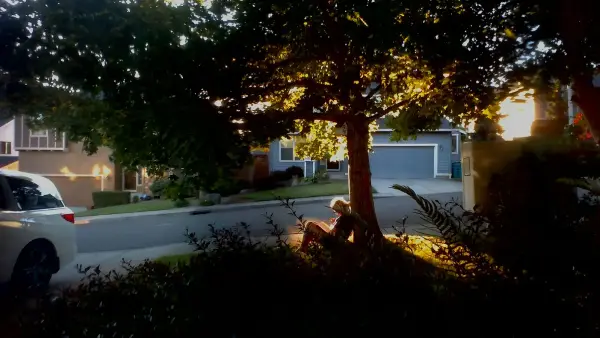
She is 62 and just realized that every friendship she has maintained for more than twenty years survived not because of the big moments - the weddings attended, the crises talked through, the funerals stood beside - but because of the small, deliberate acts of remembering that nobody ever thanked her for: the text on a random Tuesday, the birthday never once forgotten, the way she always asked about the specific thing they mentioned last time, and she understands now that maintaining love was never a feeling but a practice, a discipline in tenderness that the world never taught her to value
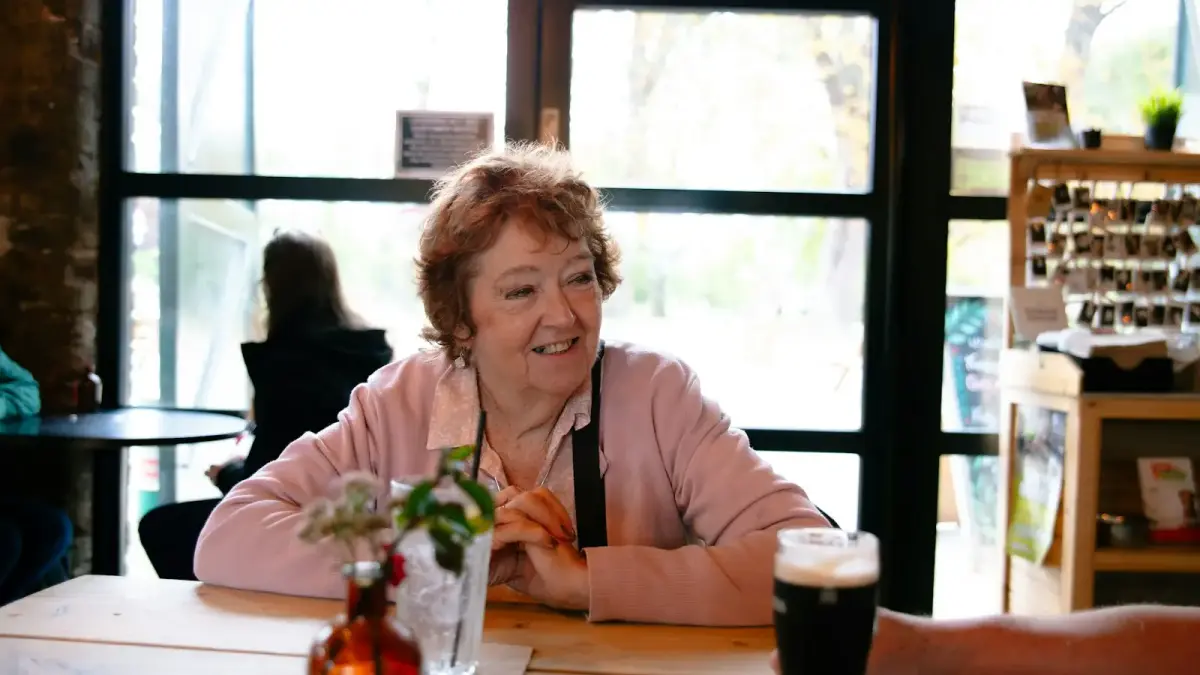
I was cleaning out a drawer last Saturday when I found a birthday card from my friend Diane. It was from 2003. Twenty-three years ago. The handwriting was hers - that particular slant she has, the way she writes her capital D like it is trying to escape the word it belongs to - and inside she had written one sentence: “Nobody remembers the things you remember about people, and that is your superpower.”
I sat on the bedroom floor holding that card for a long time.
I do not know what made me save it. I save a lot of things. Cards, notes, the texts I screenshot because someone said something that felt like it mattered. But this one stopped me because Diane is still in my life. Twenty-three years after writing this card, she texted me last Thursday to ask how my sister’s knee surgery went. She remembered the surgery. She remembered which knee. She remembered that I was nervous about the anesthesia because my mother had a bad reaction to anesthesia once in 1994.
Diane remembers everything. And I realize now, at 62, that this is not a personality trait. It is the reason she is still in my life.
The inventory I did not know I was keeping
Here is what I did last month without thinking about it.
I texted Carol on a Tuesday because I drove past a nursery that had the exact kind of hydrangea she has been trying to grow for three years. I sent Ellen an article about the town in Italy where her grandparents came from. I called Margaret on the anniversary of her husband’s death - not the first anniversary, which everyone remembers, but the seventh, which almost nobody does.
I asked Linda how her son’s new apartment was working out. I remembered that Patricia’s dog had a vet appointment and checked in afterward. I sent Diane a photograph of a restaurant we ate at in 1998 because I walked past it and it had new awning and I thought she would want to know.
None of this took more than a few minutes. None of it was dramatic. None of it was the kind of thing that anyone would describe as a grand gesture of friendship. But when I listed it all out, I realized something that took my breath away.
I have been doing this for forty years. This quiet, invisible, daily work of remembering the specific details of other people’s lives and feeding those details back to them at precisely the right moment. And every single friendship that has survived into my sixties - every single one - survived because of this work. Not because of the big moments. Because of the Tuesdays.
The myth of the big moments
We tell ourselves that friendships are built on grand gestures. The friend who showed up at the hospital. The friend who flew across the country for the funeral. The friend who talked you through the divorce over four bottles of wine and slept on your couch for a week.
Those moments matter. I am not dismissing them. But here is what I have learned after six decades of paying attention: the friends who show up at the hospital are almost always the same friends who texted last Tuesday. The grand gestures are not separate from the small ones. They are the harvest of a thousand small plantings that nobody saw.
A 2020 study published in the Journal of Social and Personal Relationships found that the single strongest predictor of friendship longevity was not shared history, not similarity of personality, not geographic proximity. It was what researchers called “maintenance behaviors” - the small, routine, often invisible acts of reaching out, remembering, and demonstrating that you are paying attention to the specific details of another person’s life. The study found that friendships without these maintenance behaviors deteriorated at roughly the same rate regardless of how emotionally close the friends had once been.
Maintenance behaviors. That is the clinical term for what I have been doing since I was twenty years old. It sounds mechanical. It is not mechanical. It is the most deliberate form of love I know.
What nobody taught us
Nobody taught me this. Nobody sat me down and said, “Julia, if you want to keep the people you love in your life, you have to practice keeping them. You have to remember. You have to follow up. You have to be the person who asks about the thing they mentioned three weeks ago, even when they have forgotten they mentioned it.”
I learned it by watching it not happen.
I watched my mother lose her closest friend over a period of about five years. Nothing dramatic. No argument. No betrayal. Just a slow evaporation. They stopped calling. They stopped remembering each other’s children’s birthdays. They stopped doing the small, quiet work of maintaining the bridge between their lives, and one day the bridge was gone and neither of them could remember exactly when it had fallen.
My mother was sad about it for years. She would mention Janet sometimes, the way you mention a place you used to live. Past tense. Distant. And I decided, at an age too young to articulate it as a decision, that I would never let a friendship dissolve through neglect. If a person mattered to me, I would do the work of mattering back.
The psychologist and friendship researcher William Rawlins has spent decades studying how friendships survive across the lifespan. His work suggests that the transition from young adulthood to middle age is where most friendships die - not from conflict but from what he calls “structural neglect.” The circumstances that used to keep friends in contact - shared workplaces, school proximity, neighborhood overlap - disappear, and without deliberate effort, the friendship disappears with them.
Deliberate effort. That is the part nobody names. The effort is invisible, and because it is invisible, it is chronically undervalued. The woman who maintains six close friendships across four decades is performing a feat of emotional architecture that rivals anything a therapist does in a session. But nobody calls it a skill. They call it being “a good friend,” as if it were a personality type rather than a discipline.
The discipline in tenderness
I have a system. I do not call it a system because that makes it sound cold, but it is one. I keep a small notebook - paper, not digital, because my hands remember what my phone forgets - where I write down the things people tell me. Not everything. Just the things that matter to them. The surgery date. The anniversary they dread. The name of the grandchild they just found out they are having. The thing they mentioned they were worried about that they probably assumed I would forget.
I do not forget. I do not forget because I write it down, and I write it down because I decided forty years ago that remembering is the highest form of love I know how to practice.
Is this exhausting? Sometimes. There are weeks when I do not feel like texting Carol about her hydrangeas or calling Margaret on the anniversary that the world has moved past. There are mornings when the effort feels enormous and the recognition feels nonexistent.
But here is what I know at 62 that I did not know at 32: the women my age who still have close friends are not lucky. We are disciplined. We practiced a form of tenderness that the world never taught us to value, and we did it anyway, year after year, because we understood something that nobody puts on a greeting card.
Love does not maintain itself. It never has. The friendships that last are not the ones between people who were meant to be friends. They are the ones between people who decided, over and over, to do the small and thankless work of staying.
The text on a random Tuesday
Brene Brown has written about the concept of “thin-slicing” in relationships - the way we make judgments about how much someone cares based not on declarations of love but on tiny, almost imperceptible signals of attention. A remembered name. A follow-up question. The message that arrives not because something happened but because someone was simply thinking of you.
Those thin slices are the entire architecture of friendship after fifty. The big moments become rarer. You do not have weddings and graduations and new babies to organize your caring around. What you have is Tuesday. And Wednesday. And the accumulated evidence of forty years of someone remembering the specific texture of your life.
I texted Diane yesterday. I told her I found the card from 2003. She wrote back immediately: “I remember writing that. You had just reminded me of something about my mother that I had forgotten, and I thought - she holds the things I lose.”
She holds the things I lose.
That is what this is. That is what we do, the women who still have their friends at 62. We hold the things other people lose. The dates, the details, the small specifics of a life that the person living it is too busy to track. We hold them, and we hand them back at the right moment, and the person feels seen in a way that no grand gesture could ever replicate.
If you recognize yourself in this - the woman who remembers, the woman who follows up, the woman who sends the text that nobody asked for because something crossed her path and reminded her of someone she loves - I want you to know something.
That is not a small thing. That is not a personality quirk or a habit or a compulsion. That is a practice. A discipline. A form of love so quiet and so consistent that it built every lasting relationship in your life.
You were never lucky in friendship. You were devoted. And the proof is in every text you sent on a random Tuesday, to someone who did not know they needed to hear from you until they did.