He's 62 and has just realized that his adult son only calls when something needs fixing - not money, not emotional advice, not because he misses him, but literally fixing, a leaking pipe, a car that won't start, a shelf that needs mounting - and the man who drops everything every single time is not being used but being offered the only language of closeness his son ever learned from watching him, because a father who showed love exclusively through competence raised a boy who learned that the bridge to his father was built from broken things, and the phone call at thirty-four about a dripping faucet is not a request for a plumber but a son building the only architecture of intimacy his father ever demonstrated
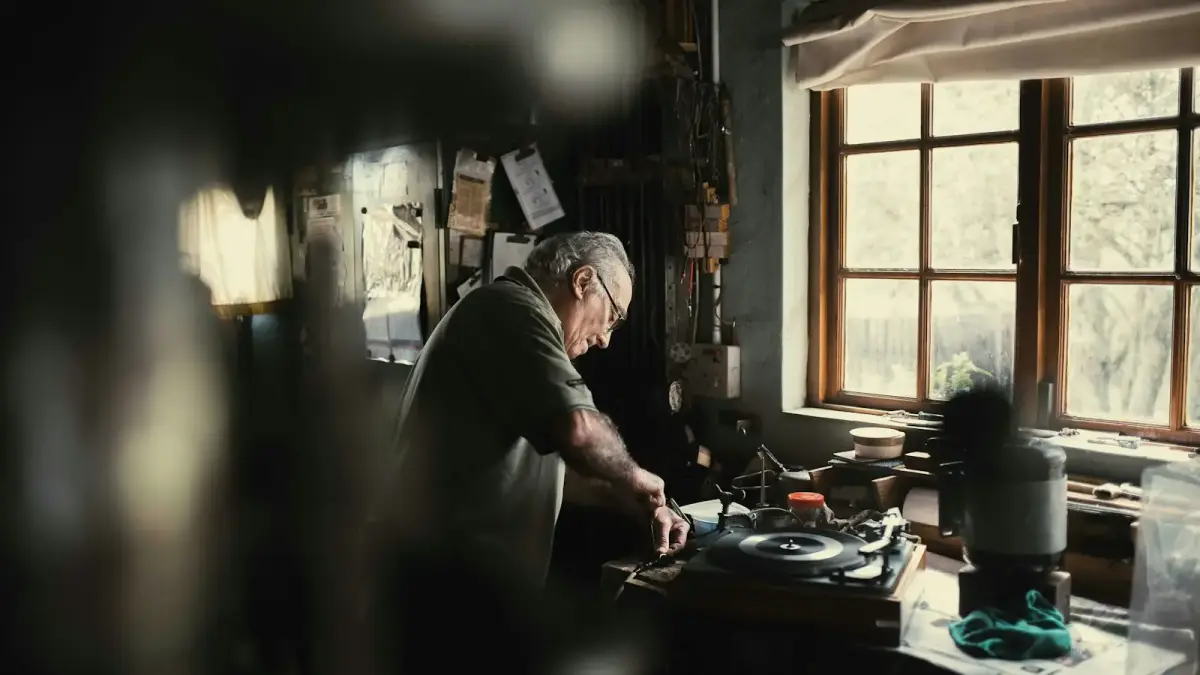
The Call Came on a Tuesday
My friend Paul told me this story over coffee last month, and I haven’t stopped thinking about it since.
His phone rang at 7:40 in the morning. It was his son, David. Thirty-four years old, married, good job, lives forty minutes away. Paul said he felt the familiar mix of warmth and something else - something he couldn’t name - when he saw the name on the screen.
“Dad, the kitchen faucet’s dripping again. That same one. Can you come look at it this weekend?”
Paul said yes before the sentence was finished. He always says yes. He told me he’d already started thinking about which washer size he’d need, whether it was the O-ring or the valve seat, whether he should bring his full kit or just the basin wrench.
Then he hung up and sat there in his kitchen, sixty-two years old, holding a coffee that had gone cold.
And for the first time, something shifted.
The Pattern He Couldn’t Unsee
Paul started counting. Not obsessively, not with resentment - just with the quiet honesty of a man who’d finally allowed himself to notice.
The last eight phone calls from David had all been about something broken. A shelf that pulled away from drywall. A car that was making a sound. A garage door off its track. A toilet that ran constantly. A ceiling fan that wobbled. The pilot light on the water heater.
Eight calls. Eight broken things. Eight Saturday mornings driving forty minutes with a toolbox on the passenger seat.
His wife had noticed before he did. She’d said it gently one evening. “He never just calls to talk, does he?” Paul told me he’d gotten defensive. He said something like, “He’s busy. That’s how it is when you’re young.”
But sitting there with his cold coffee, he knew she was right. David never called to say hello. Never called to ask how Paul’s back was doing or whether he’d watched the game. Never called with no reason at all, the way people do when they simply want to hear someone’s voice.
The Story He Told Himself First
Paul’s first interpretation was the obvious one. The one most men his age would land on.
He’s using me. He only values me for what I can do.
I watched Paul’s face when he told me this part. He said it flatly, like a fact he’d accepted. Like a man reporting weather.
And I recognized that look. I’ve seen it in my own mirror. That particular resignation of fathers who suspect they’ve become service providers to the people they raised. The ATM theory of fatherhood - except in Paul’s case, the currency wasn’t money. It was competence.
He sat with that story for about two weeks. It colored everything. He noticed he felt a specific heaviness when David’s name appeared on his phone. Not joy, not annoyance - something more like the feeling of being confirmed in a suspicion you never wanted to be right about.
But Paul is a thoughtful man. And thoughtful men eventually ask the harder question.
The Harder Question
The question wasn’t “why does my son only call when something’s broken?”
The question was “what did I teach him about when fathers and sons are allowed to be close?”
Paul told me he sat in his garage one evening - his workshop, the place where everything made sense - and tried to remember a single time he’d called his own father just to talk. He couldn’t find one.
He tried to remember initiating physical affection with David past the age of maybe seven. He couldn’t find that either.
What he could remember was this: every meaningful moment of connection between himself and his son had been structured around a task. Building the deck. Changing the oil. Fixing the bike chain. Assembling the crib when David’s wife was pregnant.
A 2019 study published in the Journal of Family Psychology found that men who grew up with emotionally reserved fathers are significantly more likely to use instrumental activities - tasks, projects, shared labor - as their primary pathway to relational intimacy. The researchers called it “side-by-side bonding,” and they noted it wasn’t deficient. It was simply different.
Paul wasn’t being used. He was being invited.
The Architecture of Intimacy
Here’s what Paul eventually understood, and what broke something open in his chest when he did.
David learned closeness by watching his father. That’s how all children learn it. They don’t learn it from what you say about love. They learn it from what love looked like in practice, in the house, on a Tuesday evening when no one was performing.
And what love looked like in Paul’s house was a man who showed up with tools. A man who expressed devotion through competence. A man who said “I love you” by replacing the alternator on a car that should have been junked years ago, so his wife could get to work safely. A man who built shelves and fixed leaks and assembled furniture because that was the dialect of care that his own father had spoken.
David didn’t learn that the bridge to his father was built from conversation. He learned it was built from broken things.
So when his faucet drips, he doesn’t call a plumber. He calls his dad. Not because a plumber couldn’t fix it. Not because he’s cheap or lazy or unthinking. But because a dripping faucet is the only door he knows how to knock on.
Psychologist Terrence Real, who has spent decades working with men on emotional literacy, writes about what he calls “covert intimacy” - the ways men create closeness through shared activity when direct emotional expression feels unavailable. Real argues that recognizing covert intimacy isn’t about excusing emotional limitation. It’s about understanding that connection happened even when it didn’t look the way the culture tells us it should.
What the Son Is Really Saying
When David calls about a leaking pipe, he’s not saying “fix this for me.”
He’s saying “I need a reason to have you in my kitchen for two hours on a Saturday.”
He’s saying “I don’t know how to call and say I miss you, because you never modeled that for me, but I know that if something is broken you will come, and when you come we will stand side by side and talk about nothing in particular while your hands do something useful, and that hour of standing next to you is the closest I know how to get.”
He’s saying “I love you” in the only language his father ever spoke fluently.
A 2021 study in Frontiers in Psychology examining intergenerational transmission of attachment behaviors found that sons tend to replicate not just the attachment style but the specific relational rituals of their fathers. If closeness was structured around activity, sons carry that structure forward - not out of limitation but out of loyalty to what worked.
David isn’t broken. David is faithful. He’s faithfully reproducing the only blueprint for father-son connection he was ever given.
The Weight of Understanding
Paul told me that once he saw this clearly, he cried in his garage. Not dramatically. Just that quiet kind of crying that happens when you suddenly understand something that’s been true for thirty years.
He wasn’t crying because his son was damaged. He was crying because his son was reaching for him in the only way Paul had ever made available. And he’d almost missed it. He’d almost let that story - the “he’s using me” story - harden into something permanent.
He was crying because he realized that every time he drove forty minutes with his toolbox, his son was watching him come. And that arrival - not the fixed faucet, not the mounted shelf, not the silenced drip - was the point.
The fixed thing was never the point.
The coming was the point.
What Paul Did Next
He didn’t have some cinematic conversation with David about feelings. That’s not who they are, and forcing it would have been its own kind of dishonesty.
What he did was smaller and, I think, braver.
He started calling David about broken things in his own house. “Hey, that gutter’s pulling away from the fascia board. You want to come help me Saturday?” And David said yes immediately. The way Paul always says yes.
He started lingering longer after the fix. Staying for dinner. Sitting on the porch for a beer even though the job was done an hour ago.
He stopped treating the repair as the container and started treating it as the door. The repair gets you in the same room. What happens after the wrench goes down - that’s where the new part begins.
Brene Brown writes about how vulnerability is not about grand declarations. Sometimes vulnerability is simply staying in the room five minutes longer than your instinct tells you to. Sometimes it’s asking one question that has nothing to do with the task.
Paul asked David how his sleep had been lately. Just that. Standing in the kitchen, faucet fixed, tools still on the counter. David looked surprised. Then he answered honestly.
Paul said it was the best conversation they’d had in years.
The Broken Things Between Us
I think about Paul’s story because it’s not just Paul’s story. It’s a whole generation of men who showed love through what their hands could do. Who built houses and fixed cars and mounted shelves and replaced outlets and never once said “I’m doing this because I don’t know how to say I love you, so I’m showing you instead.”
And it’s a whole generation of sons who learned that if you want your father close, you need a project. You need a reason. You need something broken enough to justify the intimacy of his presence.
Those sons aren’t manipulative. They’re not thoughtless. They’re not failing to appreciate their fathers as full human beings.
They’re speaking the family language. They’re knocking on the only door they were ever shown.
And the fathers who keep showing up with their toolboxes - they’re not being exploited. They’re being loved in their own dialect. They’re being told, in the only vocabulary that moves between these two men without friction, “You matter to me. Please come.”
The Faucet That Drips
If you’re sixty-two and your son only calls when something needs fixing, I want you to consider the possibility that nothing is wrong.
Consider that your son is not careless with your time. He is careful with it in the only way he knows how.
Consider that the leaking pipe is a love letter written in the language you taught him. And every time you show up with your wrench and your knowledge and your quiet competence, you’re reading it back to him.
The faucet drips. The phone rings. The father drives.
And somewhere in that ritual - in the forty-minute drive, in the standing side by side, in the work that doesn’t need words - two men who never learned to say it are saying it anyway.
You’re not being used. You’re being chosen. Over and over, in the only way he knows.
That’s not a failure of intimacy. That’s intimacy itself, wearing work gloves.