He's 63 and just realized the reason he still dims every light in the room before showing someone a photograph on his phone - cupping his hand around the screen, tilting it away from the glare, leaning toward whoever he's with and saying 'here, come look at this' - is the same ritual his father performed in the living room on Sunday nights when he pulled down the white screen and clicked the first slide into the carousel projector
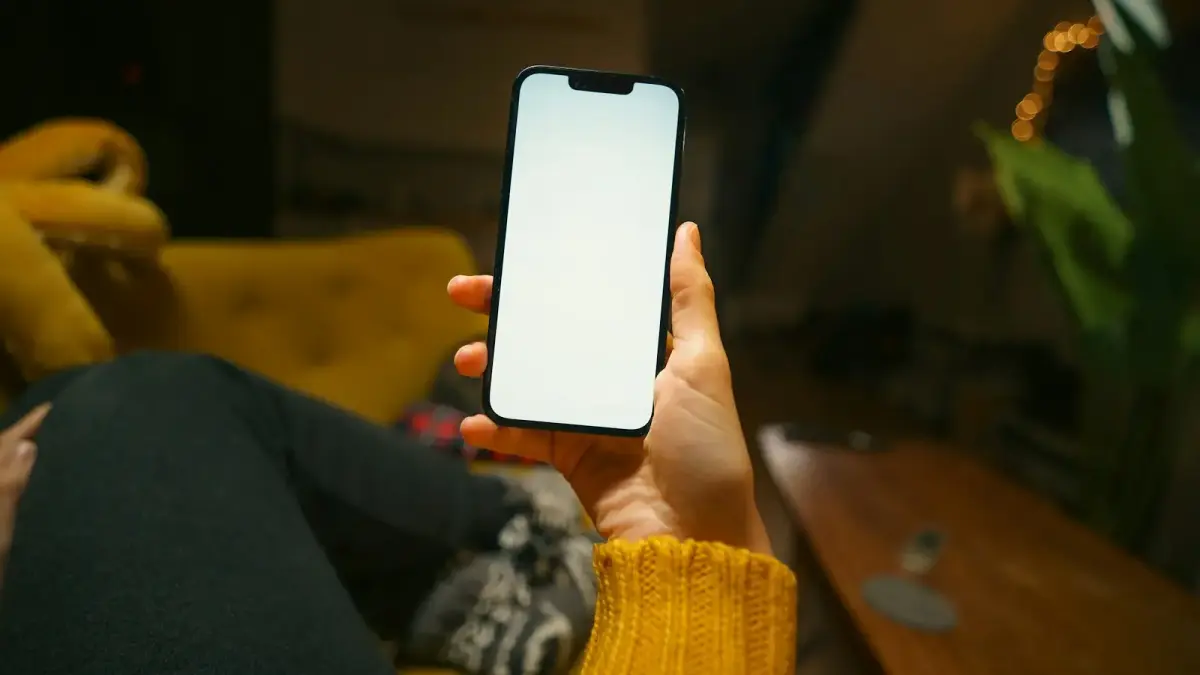
I was at my nephew’s graduation party last month when I caught myself doing it again. Someone asked if I had photos from the fishing trip, and before I even unlocked my phone I was already reaching for the lamp on the end table. I turned the dimmer down. I angled the screen away from the window. I cupped my left hand around the top of the phone like a visor and leaned toward my brother-in-law and said, “Here, come look at this.”
He looked. He smiled. He said the fish was big.
But my sister was watching me from across the room, and she had this expression on her face - half amusement, half something deeper. She said, “You know you do the exact same thing Dad used to do.” And for a second I didn’t understand what she meant. Then I did. And I had to sit down.
The Sunday Night Theater
My father was not a dramatic man. He sold insurance in a suburb of Cleveland and drove a beige Buick and kept his emotions filed somewhere between his tax returns and his golf scorecards. But on Sunday nights in the fall and winter, something changed in him.
He would pull the white screen down from its mount above the bookshelf. He would thread the carousel into the projector - that heavy, beautiful Kodak machine that smelled like warm dust and electrical heat. And then he would walk through the house turning off every single light.
The kitchen light. The hallway light. The porch light. The little lamp my mother kept on in the bathroom.
He was building a theater. He was telling the house that something was about to happen.
The projector hummed. The fan pushed warm air into the room. And then came that sound - the click-thunk of the carousel advancing to the first slide, followed by a warm rectangle of light blooming on the white screen. You could see dust motes drifting through the beam like tiny planets.
“That’s your uncle Frank at the lake,” he would say. “That was the summer we all went up to the cabin.”
His narration was never fancy. But his voice was different on those nights. Slower. More careful. As if each photograph was a room he was walking us into, and he wanted to make sure we didn’t trip on the way in.
A Boy Learns What a Photograph Deserves
I was maybe seven or eight when I understood that showing someone a picture was not a casual act in our house. It was a production. It required preparation, atmosphere, and an audience that was willing to lean in.
My father never flipped through slides quickly. He never said, “Oh, skip that one.” Every image got its moment. Every image got the darkness and the silence and the hum of the projector fan. A blurry shot of a parking lot in Myrtle Beach got the same reverence as the one perfect frame of my mother laughing on the boardwalk with her hair blowing sideways.
I didn’t know I was learning something. I thought I was just watching slides. But what I was actually absorbing, frame by frame, was a belief system: photographs are sacred events. They are not things you glance at. They are things you build a room around.
A 2019 study published in the Journal of Personality and Social Psychology found that rituals - even arbitrary ones - increase the perceived value of an experience. The researchers discovered that when people performed a small ritual before consuming something, they rated it as more meaningful, more pleasurable, and more worthy of attention. My father never read that study. He didn’t need to. He already knew that turning off every light in the house was what made thirty-six squares of Kodachrome feel like cinema.
The Choreography You Don’t Know You Inherited
Here is what startled me at that graduation party: I have been performing my father’s ritual for decades without once recognizing it as his.
Every time I show someone a photo on my phone, I dim the nearest light. I angle the screen. I cup my hand. I lean in. I say some version of “here, come look at this” - the same four words, the same conspiratorial tone, as if I’m about to reveal something that requires your full participation.
I am sixty-three years old, and I have been doing this my entire adult life. With disposable camera prints held under a desk lamp. With digital camera screens tilted in restaurant booths. With phones in every model and size for the last fifteen years. The technology keeps changing. The choreography never does.
Psychologist Daniel Goleman has written about how emotional learning often bypasses the conscious mind entirely. We absorb patterns of reverence from the people who raised us - not through instruction, but through atmosphere. Nobody sat me down and said, “Marcus, when you show someone a photograph, you must first create the proper conditions.” My father just turned off the lights. And a boy sitting cross-legged on the carpet absorbed the message: this matters. Pay attention. Something is about to be shown to you.
A 2021 study in Frontiers in Psychology found that children who grew up in homes with strong family rituals were more likely to develop what the researchers called “meaning-making behaviors” as adults - small, habitual acts that transform ordinary moments into significant ones. I read that and thought about the dimmer switch on my nephew’s lamp and how my hand reached for it before my conscious mind even registered what I was doing.
The Half-Second Glance
My nephew is twenty-four. Last Thanksgiving, I tried to show him a photo of the sunset I’d caught from my back porch - one of those skies that looks like someone spilled wine across the horizon. I did my whole routine. Dimmed the light. Cupped the screen. Leaned toward him.
He glanced at it for maybe half a second. “Cool,” he said, and went back to his own phone.
I don’t blame him. I don’t even think he was being rude. He lives in a world where he sees five hundred images before lunch. Photographs are not events for him. They are atmosphere. They are the wallpaper of his attention, always there, always scrolling, always replaceable by the next one.
But something in me hurt. Not at him - at the distance between the world he lives in and the world I carry inside me. In my father’s living room, a single photograph could hold an entire family motionless for thirty seconds. You could hear people breathe. You could hear the projector fan. You could hear my father say, “Now look at the light on the water there,” and every set of eyes in the room would find the light on the water.
That photograph of my uncle Frank at the lake probably wasn’t even a good photograph. It was probably overexposed and slightly crooked. But it got the full theater. It got the darkness and the narration and the collective lean-in of a family that understood, without being told, that this moment - this small glowing rectangle of color - was worth stopping for.
Susan Cain has written about how modern culture systematically devalues the kind of quiet, sustained attention that gives experiences their depth. We’ve built a world that rewards speed - fast glances, fast swipes, fast reactions. And somewhere along the way, we stopped building theaters for our photographs.
What the Darkness Was Really For
I’ve been thinking about this for weeks now, and I think I finally understand something my father was doing that went deeper than I realized.
The darkness was not about the projector. The projector worked fine in ambient light - you could see the image. It wouldn’t have been as vivid, but it would have been visible. My father didn’t turn off every light because the technology required it. He turned off every light because the moment required it.
He was teaching us that some things deserve your full attention. Not most things. Not everything. But some things - a photograph of your uncle at the lake, a blurry shot of your mother on the boardwalk, a sunset caught at the exact right second - deserve to have the rest of the world turned off.
That’s what I’m doing when I dim the lamp and cup my hand around my phone. I’m not compensating for screen glare. I’m building a tiny theater. I’m saying to the person next to me: this is not a swipe. This is not a scroll. This is something I want you to see, and I want you to see it the way it deserves to be seen.
The Warm Rectangle
My father has been gone for eleven years. His projector is in a box in my garage. The white screen is still mounted above the bookshelf in the house where I grew up, which my sister now owns. She’s never taken it down.
I called her after the graduation party and told her what I’d realized about the lights. She was quiet for a long time. Then she said, “I do it too. I didn’t know you did.”
We do it because a man in a beige Buick who kept his emotions filed away found one way to show us what mattered to him. He couldn’t say it. He probably couldn’t have named it. But every Sunday night, he turned off every light in the house and filled a white screen with warm color, and his voice got slow and careful, and he showed us the people he loved in the places where he’d been happy.
I cup my hand around a five-inch screen the way he used to adjust the focus knob on a machine that weighed fifteen pounds. The technology is laughably different. The gesture is exactly the same.
Some things deserve their own darkness. Some things deserve an audience willing to lean in. My father knew that. I know it now. And every time I reach for the dimmer switch before I show someone a photograph, I am not performing an outdated ritual. I am keeping a theater open that my father built sixty years ago in a living room in Ohio, one slide at a time.