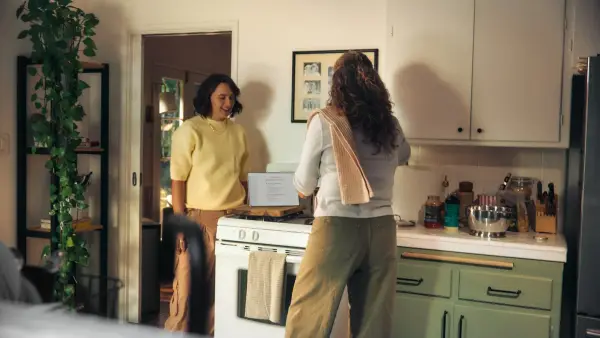
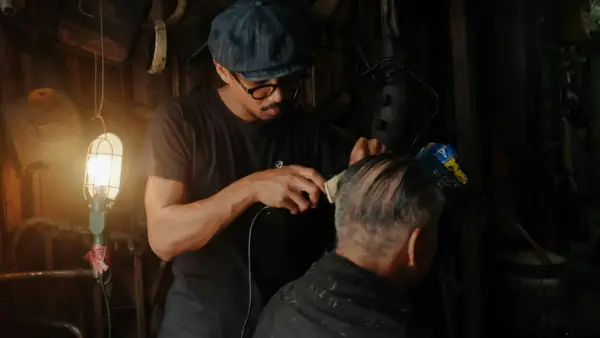
He's 64 and just realized the reason there are almost no photographs of him from his children's entire childhood is not that he was camera-shy - it's that he understood his role as the one who captured everyone else's joy, and it never occurred to him that someone should have been capturing his
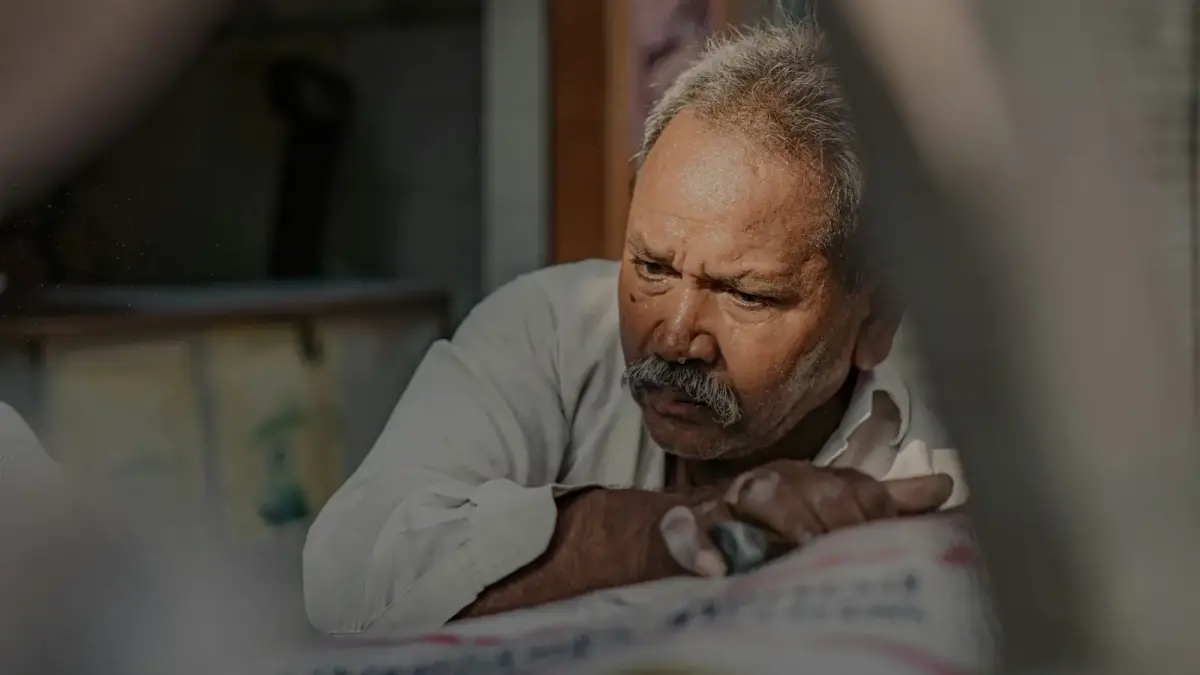
The album arrived on his sixty-fourth birthday
His daughter handed it to him wrapped in brown paper, and he could tell by the weight that it was something she’d spent time on. He opened it at the kitchen table while everyone watched, and for the first few pages he smiled the way you smile at old pictures - with recognition, with tenderness, with the mild embarrassment of seeing your children when they were still small enough to carry.
Then something shifted.
He kept turning pages. Birthday parties. Beach vacations. First days of school. Christmas mornings with wrapping paper covering the floor. His wife laughing. His son on a bicycle. His daughter in a cap and gown.
He was in almost none of them.
Not because he wasn’t there. He was there for all of it. But he was the one holding the camera. He was the one who said “get closer together” and “look over here” and “one more, just in case.” He was the one who made sure the moment was preserved - and in doing so, he erased himself from the record of his own life.
Three decades of proof he was there but almost no evidence of what his face looked like while he watched them grow
I think about this man - a friend’s father, actually - more than I probably should. Because the album his daughter made contained hundreds of photographs spanning thirty years, and in fewer than a dozen of them could you see his face clearly.
There were a handful of shots where someone else had grabbed the camera. A blurry one from a camping trip. A formal portrait at a wedding. One where his wife had turned the lens on him while he wasn’t looking, and he appeared startled, almost confused by the reversal.
But for the most part, the visual record of this family’s life tells the story of a man who existed just outside the frame.
His children know exactly what their mother looked like at thirty-five. They know the way she tilted her head when she laughed. They know how she looked in the morning light on vacation, how her face changed across decades. They have proof of her aging, her joy, her presence.
Their father at thirty-five is mostly a guess. A voice behind the camera saying “beautiful, stay right there.”
This was not absence - it was the most devoted form of attention he knew how to give
Here’s what I’ve come to understand about men of that generation, the ones who are now in their sixties and seventies: many of them learned to express love through witnessing. Not through words. Not through grand gestures. Through the quiet, persistent act of paying attention to everyone else.
The camera was the perfect instrument for this kind of devotion. It let you be completely present without being visible. It let you say “I see you, I notice you, this moment matters” without ever having to say it out loud.
A 2019 study published in the Journal of Family Psychology found that fathers who came of age in the 1970s and 1980s were significantly more likely to define their parental role in terms of provision and protection than emotional expression. Love was something you demonstrated through action, not something you named.
Holding the camera was an action. It was a way of saying: I am here, I am watching, I will make sure this is remembered.
But it came with a cost that nobody calculated at the time.
The invisible architect of everyone else’s memories
Think about what it means to be the family photographer. You are the person who decides what matters enough to preserve. You are the one who sees the light falling a certain way across your daughter’s face and thinks - this, right here, this is worth keeping.
You are, in a very real sense, the architect of your family’s memory. You build the archive. You choose what future versions of your children will look back on and feel connected to.
And you do all of this from a position of complete invisibility.
There’s something almost sacred about it when you frame it that way. The person who loves you most is the person who makes sure you’re remembered - even at the cost of their own remembering.
But there’s also something that aches.
Because his daughter, now in her thirties, told me she sometimes tries to picture her father’s face from when she was young. Not the face he has now, but the one he had when he was carrying her on his shoulders, when he was reading to her at bedtime, when he was standing at the edge of the soccer field watching her play.
She can’t quite see it. She has to imagine it. Because he was always behind the lens, making sure she was the one being seen.
The generation that confused visibility with vanity
I want to be careful here, because I don’t think this was entirely unconscious. I think many fathers of that era had an active discomfort with being photographed that went deeper than simple shyness.
There was a belief - unspoken but powerful - that wanting to be seen was somehow self-indulgent. That good fathers didn’t need evidence of their own presence. That the proof of their love existed in the photographs themselves - not photographs of them, but photographs they took. The act of capturing was the contribution. Being in the picture would have felt like competing with their own children for attention.
Dr. Brene Brown has written extensively about how vulnerability and visibility are intertwined - that allowing yourself to be seen requires a kind of courage that many people, particularly men raised in stoic households, were never taught to access. Being behind the camera was safe. It was loving without being exposed.
A 2021 study in Psychological Science examined how men over sixty describe their emotional legacy and found that the most common regret was not a failure of presence but a failure of expression. They were there. They just never let anyone see what being there looked like on their face.
What the album actually captured
Here is what I find most beautiful and most heartbreaking about this story: the album his daughter made is not actually a record of his absence. It’s a record of his attention.
Every single photograph in that album was taken by him. Every composition, every angle, every moment he chose to preserve - that was his eye. His love. His way of saying “this matters.”
The album is full of him. It’s just that he’s on the other side of every image.
If you could somehow flip the photographs around - if you could see what was behind the camera instead of in front of it - you would see a man watching his family with an intensity of focus that most people reserve for the things they love most in the world.
You would see what his face looked like while he watched them grow. And I suspect it would be the most tender, unguarded version of him that ever existed - because he thought no one was looking.
The reversal that undid him
His daughter told me that after he finished looking through the album, he was quiet for a long time. Then he said something that made everyone at the table cry.
He said: “I didn’t know anyone wanted a picture of me.”
Not in a self-pitying way. In a genuinely surprised way. As if it had simply never crossed his mind that his face - his ordinary, unremarkable, present-for-everything face - was something his children would want to look at someday.
This is the part that gets me. He wasn’t hiding. He wasn’t withholding. He genuinely did not understand that he was worth capturing. That his joy mattered. That his face watching his daughter blow out birthday candles was as important as the candles themselves.
He thought his job was to make sure everyone else was remembered. It never occurred to him that someone should have been remembering him too.
You were never invisible - you were just looking the wrong direction
If you recognize yourself in this story - if you were the one behind the camera, or if your father was - I want to say something that might sound simple but I think matters.
The photographs exist because of you. Every image in every album, every preserved moment, every record of joy - that was your attention made permanent. That was your love in its most concrete form.
You were never absent. You were never invisible. You were simply facing outward, always outward, making sure the people you loved knew they were seen.
A 2023 study in the Journal of Personality and Social Psychology found that the most meaningful form of love people report receiving is not grand declarations but “consistent attentional presence” - the feeling of being noticed, over and over, across years. That’s what the camera was. Consistent attentional presence, documented.
But here’s what I hope you hear: you deserved to be noticed too. You deserved someone turning the camera around. You deserved to exist in the visual record of your own life - not as the architect of everyone else’s memories, but as a person whose face, in the act of loving, was worth preserving.
Your children want to know what you looked like while you watched them grow. Not because they doubt you were there. But because they love you, and they want to see what love looked like on your face.
It’s not too late for someone to turn the camera around.