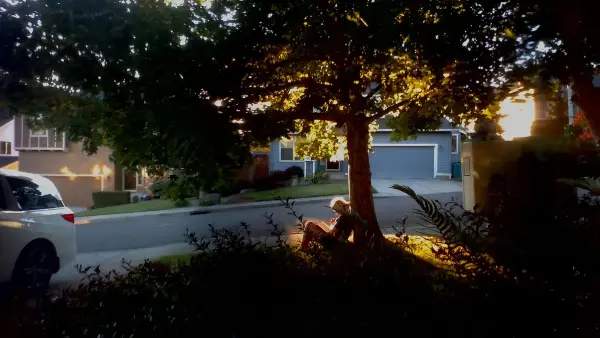
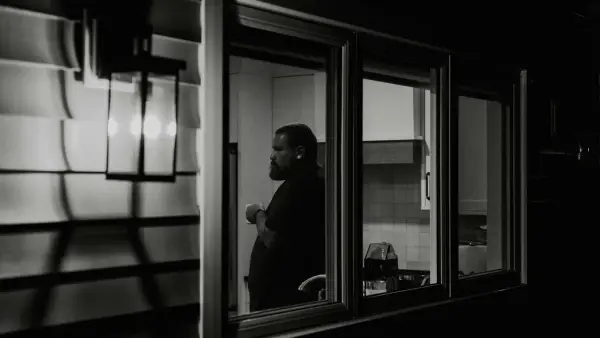
He's 64 and just realized he still turns off every light when he leaves a room - follows the family through the house flipping switches behind them, patrols the upstairs before bed like a man conducting an inspection nobody assigned - because his father counted kilowatt hours the way other men counted miles per gallon, and a boy who watched a man stand in the doorway of an empty room and sigh at a single burning bulb learned that leaving a light on in a room nobody was using was not carelessness but a kind of sin, the one waste a working man could actually prevent
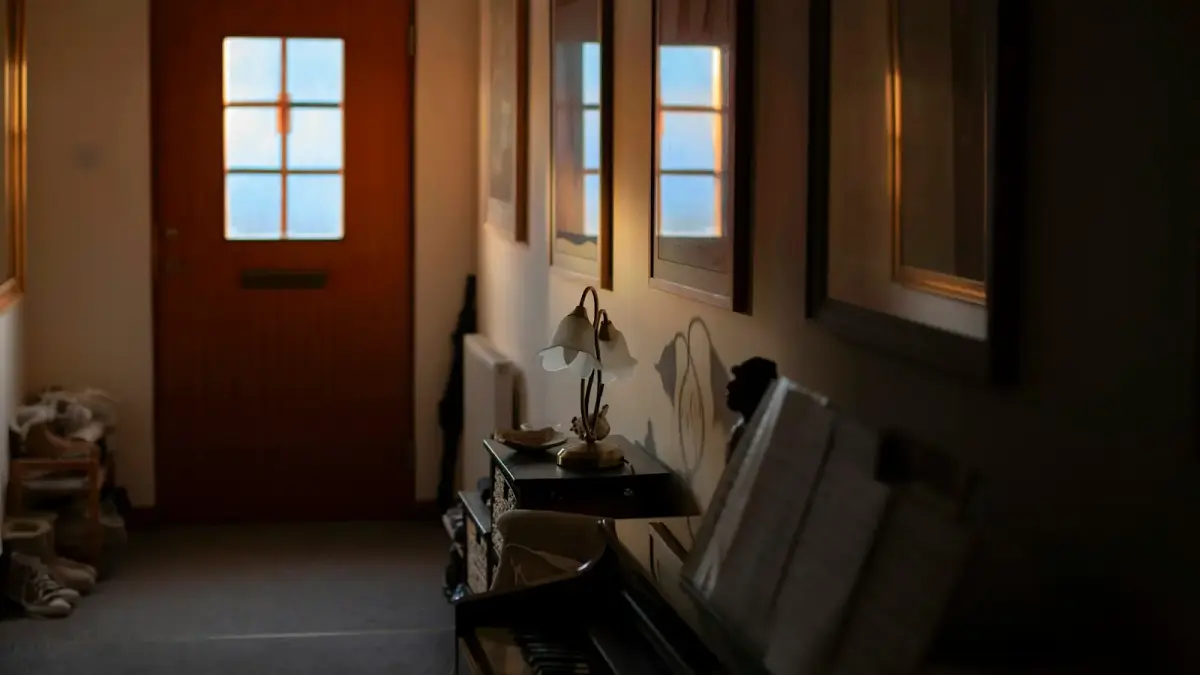
The Patrol
Every night around ten, after the news and the last cup of decaf, a man I know begins his rounds.
He doesn’t call it that. He would never use a word like “rounds” because that would mean admitting it’s a pattern, and admitting it’s a pattern would mean something about him he’s not ready to examine. But it’s rounds. It’s the same path through the same house he’s lived in for thirty-one years.
The kitchen first. The light over the stove that his wife leaves on as a nightlight. He turns it off. The hallway bathroom - someone left the vanity light burning again. Click. The living room lamp his daughter was reading under two hours ago, now casting its glow over an empty couch. Click. Up the stairs. The guest room nobody’s slept in since Easter. The closet light in the master bedroom. The little reading lamp on his wife’s nightstand that she turned on and then forgot when she moved to the couch.
Click. Click. Click.
His wife calls it The Patrol. His grown daughter, home for the weekend, calls it “Dad being Dad.” They say it with affection, mostly. Sometimes with a thin edge of something else.
He laughs when they tease him. But he also cannot stop.
The Bill on the Kitchen Table
His father was a machinist in a paper mill outside of Dayton. Reliable work, union wages, nothing extravagant. The kind of job that kept a family fed and a mortgage current but never quite allowed the exhale that comes with having enough.
And his father had a relationship with the electric bill that other men had with the stock market.
It arrived on the same day each month. His father would sit at the kitchen table with the envelope and a cup of black coffee and study the number the way a doctor studies lab results - looking for what had gone wrong, where the damage was, what small failure of discipline had allowed the number to climb.
If the bill was higher than last month, there was a lecture. Not a yelling kind of lecture. His father was not a yelling man. It was worse than yelling, actually - it was that quiet, disappointed accounting. “Somebody left the basement light on for three days.” “The porch light was burning all night Tuesday.” “We’re paying to light rooms nobody’s standing in.”
A 2019 study published in the Journal of Consumer Psychology found that financial anxiety doesn’t just shape spending behavior - it shapes the entire moral framework through which people evaluate waste. For families operating without financial margin, even small expenditures that feel unnecessary can trigger a disproportionate stress response. The researchers called it “resource vigilance.” His father would have called it common sense.
The boy absorbed every word. Not as instruction, exactly. As atmosphere. As the texture of what it meant to be a man responsible for a household on a budget that could not absorb carelessness.
The Kilowatt Theology
Here is what nobody tells you about growing up in a house where money was watched that carefully: the lessons don’t arrive as lessons. They arrive as temperature. As the feeling in the room when something has been wasted.
His father didn’t sit him down and say “electricity costs money” the way a parent explains a concept to a child. His father simply lived inside a value system where leaving a light on in an empty room was an offense - not a large one, not a punishable one, but an offense against something. Against order, maybe. Against discipline. Against the unspoken agreement that a working man’s household should never leak money it didn’t need to spend.
And the boy felt it. He felt the sigh his father released when he walked past the bathroom and saw the light burning over an empty sink. He felt the slight tension in his father’s shoulders when the porch light had been left on past dawn. He felt the satisfaction - because it was satisfaction, quiet and complete - when his father walked through a dark house at night and found everything turned off, everything sealed, everything under control.
That satisfaction is what transferred. Not the financial logic. The feeling.
Psychologist Gabor Mate has written extensively about how children absorb not just their parents’ explicit teachings but their emotional states - the anxieties, the vigilances, the unspoken rules that govern what feels safe and what feels dangerous. A child doesn’t need to understand utility pricing to learn that a burning light in an empty room means something has gone wrong.
The boy learned. And the boy is sixty-four now and still learning, every night, walking through the upstairs with his hand reaching for switches in the dark.
What He Could Not Control
Here is what I think the light switch was really about, though I suspect the man himself has never framed it this way.
His father could not control rent. His father could not control the price of ground beef going up twelve cents a pound in a single year. His father could not control the plant closing the second shift, or the union negotiation that went sideways, or the transmission dying on the Buick in a year when the transmission dying on the Buick was a genuine financial emergency.
His father could not prevent any of the large catastrophes that living working class invites. The layoff. The medical bill that arrives like a grenade. The furnace dying in January. The slow erosion of purchasing power that economists describe in percentages and families experience as dread.
But his father could control the light switch.
The light switch was the one domain where vigilance actually worked. Where discipline actually translated into savings, even if those savings were pennies. Where a man could walk through his own house and impose order on something, anything, when the larger world offered no such opportunity.
A 2021 study in Frontiers in Psychology examined what researchers called “compensatory control behaviors” - small rituals of management that people develop when they feel powerless over larger circumstances. The study found that these behaviors aren’t irrational. They serve a genuine psychological function, providing a sense of agency in environments where agency is scarce. The researchers noted that such behaviors are especially common in people who experienced prolonged financial insecurity.
The nightly patrol was never about electricity. It was about the only kind of power his father had.
And when his father walked through the house at night, clicking off every light, checking every room, he was not being cheap. He was performing the one act of stewardship available to a man who could not steer the economy but could, by God, make sure his family wasn’t burning money while they slept.
The Rooms His Children Light
His own children - grown now, with their own mortgages and their own electric bills - leave lights on everywhere.
They leave the kitchen blazing when they walk to the living room. They leave the bathroom vanity burning for hours. They leave bedroom lights on when they go downstairs and downstairs lights on when they go up, and they move through his house on holiday weekends trailing electricity behind them like a wake.
It bothers him.
It bothers him in a way he cannot explain without sounding like a lecture, and he knows it would sound like a lecture because it sounded like a lecture when his father said it, and the last thing he wants is to become the man at the kitchen table with the envelope and the disappointed accounting.
But his body won’t cooperate with his intentions. He cannot walk past a lit empty room. He has tried. He has stood in the hallway and told himself it does not matter, the LED bulb costs a fraction of a cent per hour, the electric bill is not the emergency it was in 1974. And his hand still reaches for the switch.
His wife once asked him why he couldn’t just leave it. He said, “I don’t know.” And he meant it. He genuinely does not know. The knowledge that it doesn’t matter financially has no authority over the part of him that learned, before he learned anything else about being a man, that a dark empty room is a correct room and a lit empty room is a room where someone has failed.
This is what inherited behavior looks like. Not a decision. A reflex. A moral instinct that lives in the hands before it reaches the brain.
Love in the Shape of a Light Switch
I want to say something careful here, because this man - and I know several versions of him, and you might be one, or married to one, or raised by one - does not need to be fixed.
The patrol is not a pathology. It is not OCD, though it might look like it from the outside. It is not about money, though it started there. It is not nagging, though his family sometimes experiences it that way.
The patrol is love expressed as stewardship.
His father could not say “I am terrified we will not have enough.” Working men of that generation did not have the vocabulary or the permission for that kind of confession. So his father said “turn off the light.” And in that instruction lived everything he could not say directly - I am afraid, I am trying, I am doing the only thing I know how to do to keep this family safe, and the only thing I know how to do is make sure nothing is wasted.
The son inherited the instruction. But more than that, he inherited the love underneath it. The fierce, silent, obsessive love of a man who showed his devotion by walking through the house at night making sure everything was sealed and dark and accounted for.
Adam Grant has written about how the behaviors we inherit from our parents often outlast the circumstances that created them. We keep performing rituals whose original purpose has dissolved, not because we’re stubborn but because the ritual itself became the relationship. The act of turning off the light became the way he stays connected to a father who has been gone for nineteen years.
And maybe that’s the gentlest way to understand The Patrol. Not as a habit he can’t break. Not as an annoyance his family tolerates. But as a nightly prayer in the language of light switches - a man walking through his house in the dark, speaking to his father in the only language they ever shared, saying: I learned what you taught me. I am still careful. I am still here, turning off the lights.
The house goes dark. The man goes to bed.
And somewhere in that darkness, a boy is still watching his father stand in the doorway of an empty room, and learning that love sometimes looks like a hand reaching for a switch, and the quiet click of a light going out, and the particular silence of a man who has done the one small thing he can.