He's 64 and has started eating dinner alone in the kitchen after his wife goes to bed - not because the marriage is failing but because a man who spent forty years eating whatever everyone else chose, at the hour everyone else needed, on a schedule that was never once his, has discovered that a bowl of something simple at ten o'clock at night with nobody to perform for is the first honest meal he has eaten in his entire adult life
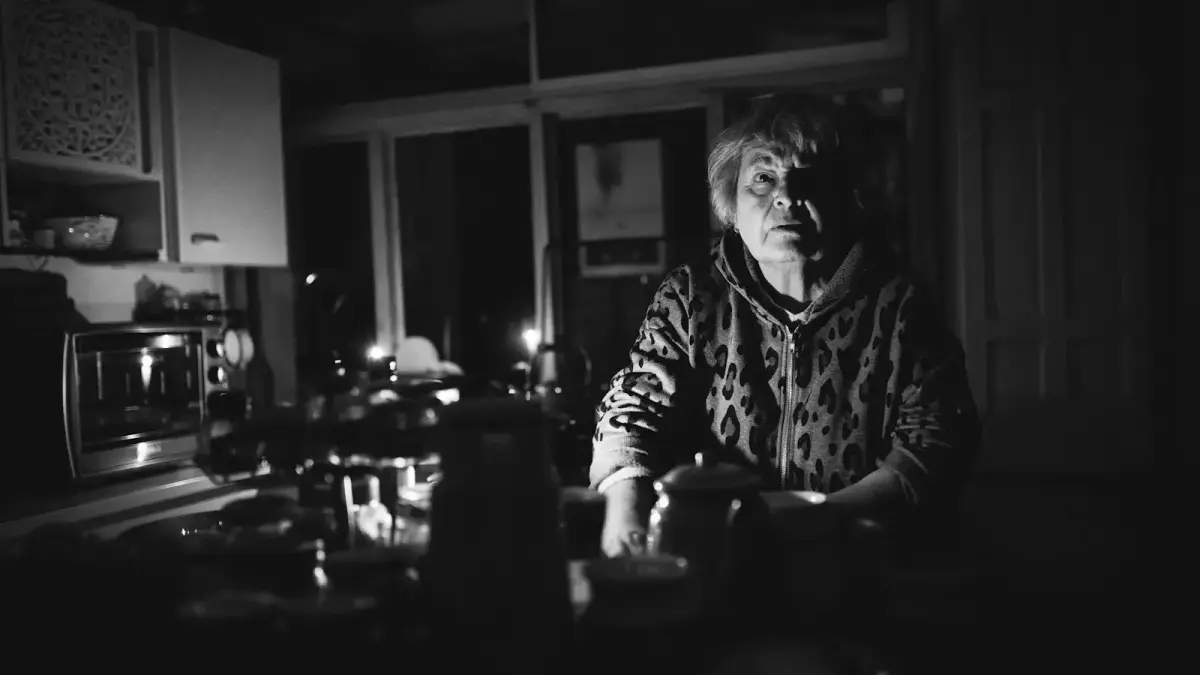
My father-in-law stands at the counter at ten fifteen on a Tuesday night, eating leftover soup straight from the pot with a wooden spoon. The kitchen light is the only one on in the house. His wife went to bed an hour ago. He is wearing the old flannel shirt he changes into after dinner - the real dinner, the one that happened at six o’clock with proper plates and conversation about the grandchildren.
He doesn’t know I can see him from the hallway. I’m staying at their house for the weekend, and I came down for water, and I stopped because there was something on his face I had never seen before.
He looked calm. Not the performed calm of a man holding steady for his family. Not the blank expression that passes for contentment in men who learned early that their feelings were everybody else’s inconvenience. He looked like a person who had, for the first time in a very long time, stopped translating himself for an audience.
He was just eating soup. But I don’t think it was just soup.
The Meal That Belongs to No One Else
Here is a question that sounds small but isn’t: when was the last time that man chose what he ate?
Not selected from a menu. Not agreed to a suggestion. Not said “whatever you want is fine” to his wife or “I could go for anything” to his kids. When was the last time he opened a refrigerator with no one watching and thought, genuinely, what do I want right now - and then made it?
For most men of his generation, the answer is difficult to locate. It might be college. It might be the first apartment. It might be a handful of bachelor years between leaving home and getting married, years when he ate cereal at eleven at night and cold pizza at seven in the morning and never once thought about whether the meal was appropriate, balanced, or considerate of someone else’s dietary needs.
Then the marriage began. Then the children came. And somewhere in that transition - so gradual that nobody noticed it happening - his preferences stopped being a category that existed.
A 2017 study published in the journal Appetite found that men in long-term heterosexual partnerships were significantly more likely than their female counterparts to report having no strong food preferences - not because they genuinely lacked them, but because they had habituated to deferring. The researchers noted that many male participants struggled to answer the question “What is your favorite meal?” with any specificity. They could name their wife’s favorite. They could name each child’s. Their own had been filed away so long ago that retrieving it felt like asking for directions to a house they’d moved out of decades earlier.
This isn’t a complaint about marriage. It’s an observation about a certain kind of man - the kind who learned that being good meant being easy. Who understood, without anyone saying it directly, that having preferences was a form of difficulty, and difficulty was a form of selfishness, and selfishness was the one thing a provider could never afford to be.
The Schedule That Was Never His
Dinner at six. Because the kids had homework by seven. Because his wife had been managing the house all day and needed the meal to happen when it happened. Because there was a rhythm to the household and his job was to show up inside it, not to reshape it around his own internal clock.
He was never hungry at six. He’s still not. His body has always wanted to eat later - nine, ten, sometimes later. But he sat down at six o’clock for forty years because that was when the family ate, and the family eating together was more important than any individual person’s hunger.
And it was. He still believes that. He doesn’t resent the forty years of six o’clock dinners. He doesn’t wish he’d done it differently. But now the kids are gone. The house is quiet by nine. His wife, who has her own rhythms, goes to bed early. And for the first time since he was twenty-three years old, the kitchen belongs to no one’s schedule but his.
So he waits. He watches the news. He reads something on his phone. He lets the house settle into its late-night quiet. And then he walks into the kitchen and opens the refrigerator, and he makes something simple - a bowl of soup, a piece of toast with whatever is in the fridge, scrambled eggs, sometimes just crackers and cheese on a plate - and he stands at the counter and eats it slowly, without conversation, without performance, without considering a single other person’s needs.
His wife thinks it’s a little strange. She’s mentioned it. “You barely touched your dinner,” she says sometimes, meaning the six o’clock one, the shared one. She wonders if he’s feeling all right. She wonders if something is wrong.
Nothing is wrong. Something might actually be right for the first time in decades. But he doesn’t know how to explain it, because the language for what he’s experiencing doesn’t exist yet in his vocabulary. He’s never had to describe the feeling of discovering your own preferences at sixty-four.
The Provider Who Provided Everything Except a Self
There is a particular version of masculinity that men born in the late 1950s and early 1960s inherited without any of it ever being spoken aloud. It went like this: you work. You provide. You show up. You don’t complain. You eat what’s in front of you. You wear what’s clean. You sleep when the house is done needing you. Your preferences are a luxury that belongs to people who aren’t responsible for anyone.
This wasn’t cruelty. It was an operating system. It was passed from fathers who came home too tired to speak to sons who learned that a man’s value was measured entirely by his usefulness to others. A good man was a man who required nothing. A good husband was a husband who caused no friction. A good father was a father who adjusted himself around his children’s needs so seamlessly that no one ever noticed he’d been adjusting at all.
Dr. Terrence Real, a therapist who has spent decades working with men in long-term marriages, writes about what he calls the “performance of selflessness” in traditional male partners - the way certain men learn to suppress preference so completely that they eventually lose access to the preference itself. It’s not that they’re hiding what they want. It’s that the wanting has atrophied. The muscle went unused for so long that they genuinely cannot locate it.
This is the man standing in the kitchen at ten o’clock at night. He isn’t rebelling. He isn’t withdrawing. He’s doing something much more disorienting than either of those. He’s feeling, for the first time, the faint signal of a preference he didn’t filter through anyone else’s needs. And he’s following it to the refrigerator.
The First Autonomous Act
I’ve been thinking about what it means to call a bowl of leftover soup at ten fifteen on a Tuesday an autonomous act. It sounds dramatic. It sounds like I’m making too much of a small thing.
But that’s exactly what the men I’ve spoken to about this describe - the sense that it shouldn’t feel as significant as it does, and the quiet alarm of realizing how much it means. One man, sixty-one, told me he started making himself a single fried egg after his wife went to sleep. “I don’t even like eggs that much,” he said. “But I like making it. I like the sound of the butter in the pan. I like that nobody asked me to do it and nobody is going to eat it except me.”
Another man, sixty-seven, said he started eating cereal at ten thirty at night. The same cereal he’d eaten in his twenties, before his marriage, before his career, before his identity became entirely load-bearing. He said eating it felt like visiting someone he used to know.
A 2022 study published in the Journal of Research in Personality found that adults over sixty who reported engaging in small, self-directed routines - activities chosen purely for personal satisfaction rather than obligation - showed significantly higher scores on measures of psychological well-being and identity coherence. The researchers noted that these routines were often strikingly modest. A specific walk. A particular chair. A meal eaten alone at an unusual hour. What mattered wasn’t the activity itself but the fact that it had been chosen without reference to anyone else’s needs or expectations.
The late-night meal isn’t about food. It’s about the choosing. It’s about the extraordinary, quietly revolutionary experience of a man asking himself what he wants and discovering that the question still works - that the wiring is still there, buried under forty years of service, but alive.
What His Wife Doesn’t Need to Worry About
If you’re reading this and you’re the wife - the one who noticed he’s barely eating at dinner and then heard the kitchen sounds at ten o’clock and felt a small knot of worry form somewhere near your sternum - I want to say something directly.
He’s not leaving. He’s not unhappy. He’s not pulling away from you.
He’s finding a part of himself that went dormant the year your first child was born, or maybe earlier, maybe the week after the wedding, maybe the first morning he woke up and realized that his life was no longer organized around his own rhythms but around a shared rhythm that required him to sand down every edge that didn’t fit.
That sanding was love. He knows that. He’d do it again.
But the edges are growing back now, quietly, in the late-night kitchen. Not sharp edges. Soft ones. The edge that says I like soup at ten. The edge that says I want toast with too much butter and nobody to mention the butter. The edge that says this body, this appetite, this preference is mine, and I am going to sit with it for twenty minutes in a quiet kitchen and feel what it feels like to be a person who wants something that has nothing to do with anyone else.
That’s not a threat to the marriage. That might be what saves a man in the last chapter of his life from disappearing entirely into the role he played in everyone else’s story.
The Bowl of Something Simple
I think about my father-in-law at the counter sometimes. The wooden spoon. The flannel shirt. The single light above the stove. The soup that wasn’t about nutrition or routine or obligation but was about a man, alone with himself, discovering that he had a self to be alone with.
He won’t talk about it. Men like him don’t narrate these things. They don’t journal about late-night cereal or call it a breakthrough. They just do it. They just keep showing up in the kitchen after everyone is asleep, making something small and eating it standing up, not because they have to but because they want to, and that wanting - that simple, quiet, almost embarrassingly small wanting - is the first honest thing they’ve done for themselves in forty years.
If you know a man like this, don’t ask him about it. Don’t name it. Don’t make it a conversation.
Just let him have the soup.