He's 66 and just realized he still carries a folded twenty-dollar bill behind his driver's license - separate from his spending money, untouched for years, moved from wallet to wallet - because his father kept a bill tucked behind his union card for thirty years and told a boy who asked about it that a man should always carry enough to get home from wherever he ends up, and the twenty was never about the money but about a working man's knowledge that the distance between standing and stranded can close in a single afternoon
The Bill That Never Gets Spent
His wife found it on a Tuesday evening while he was in the shower.
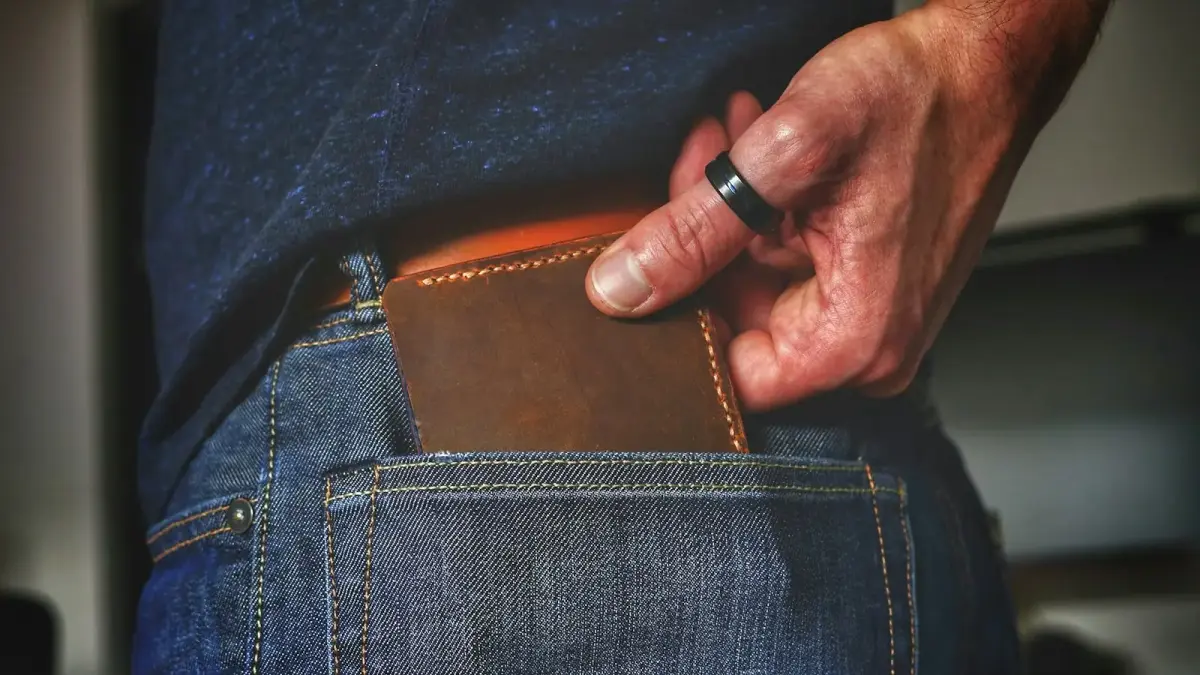
She had picked up his wallet from the kitchen counter to move it off the spot where the coffee had pooled that morning, and it slipped open in her hand. Behind the driver’s license, folded into a tight square the size of a postage stamp, was a twenty-dollar bill so creased it had gone soft along its folds.
She held it up when he came downstairs. “How long has this been here?”
He looked at it the way you look at something you see every day but have never actually examined. The bill was faded. The creases had become permanent valleys in the paper. He could not remember when he had last unfolded it, but he knew - the way you know the weight of your own shoes - that it had been there for decades.
“My dad used to do that,” he said.
And that was all. Except it wasn’t all. It was the surface of something so deep he had never thought to look down.
A Union Card and a Single Sentence
His father was a pipe fitter who worked refineries along the Gulf Coast in the 1960s and 70s. He carried a wallet that was always slightly too thick - not because he had money, but because he kept everything in it. Union card. Social security card. A photo of his wife before her hair went gray. A stub from the last paycheck, as evidence, as proof he had earned something that week.
And behind the union card, folded the same way, a bill.
The boy asked about it once. He was maybe nine. They were at a gas station, and his father pulled out the wallet to pay, and the boy saw him move past that folded bill to reach the loose ones underneath.
“What’s that one for?”
His father didn’t look at him. He was counting out exact change because exact change mattered in a household where the margin between making it and not making it was narrower than a pay stub.
“A man should always carry enough to get home from wherever he ends up.”
One sentence. No lecture. No follow-up. His father put the wallet back in his pocket and went inside to pay.
That was the entire curriculum.
The Classroom Nobody Talks About
There is a kind of education that never happens in a classroom. It doesn’t involve textbooks or lesson plans or anyone sitting you down to explain the way the world works. It happens in the space between a father’s hands - in the things he does so automatically that he doesn’t know he’s teaching.
A 2019 study published in the Journal of Family Psychology found that children internalize parental behaviors most deeply when those behaviors are performed without narration. The researchers called it “ambient modeling” - the lessons that land not because they were aimed at you, but because you happened to be watching when your parent did something real.
His father never gave a speech about financial preparedness. He never used the word “emergency” or “contingency.” He was a man who had grown up in a house where the electricity got shut off more than once, who had hitchhiked to job sites before he could afford a car, who understood in his bones that the world does not owe you a ride home.
So he carried enough to get one.
And the boy watched. And the boy learned. Not the words - the posture. The quiet, daily act of readiness that said: I know what can happen. I have seen the floor give way. I carry what I need to stay standing.
Wallet to Wallet to Wallet
Here is the part that gets him.
He has carried that twenty - or its replacement, swapped out when the bill got too worn to fold anymore - through every wallet he has ever owned. He has moved it the way you move a family photo. He has tucked it behind his license in leather bifolds, nylon trifolds, the slim card wallet his daughter bought him two Christmases ago that he uses on weekends.
He has never spent it. Not once. Not even close.
There were times when he could have. Times when he was short on cash at a drive-through or digging through his pockets at a parking meter. He has, on at least three occasions that he can remember, told a cashier he didn’t have enough when the twenty was right there, folded and waiting, six inches from his fingertips.
Because that money is not money. It is a border. It is the line between “I have options” and “I am stuck.” And crossing that line - even for something small, even temporarily - feels like breaking a seal that was never meant to be broken.
A 2022 study in Psychological Science explored what researchers called “sacred possessions” - objects whose emotional significance far exceeds their material value. The study found that people resist using these objects even when doing so would be entirely rational, because the object has become a container for something the person cannot afford to lose. Not the thing itself. The meaning the thing holds.
His twenty is a sacred possession. It holds his father’s voice. It holds the gas station. It holds the world where a man could lose everything between sunrise and supper and needed to know he could at least get home.
The Class Line You Don’t See
There is a difference between preparedness that comes from wealth and preparedness that comes from poverty.
Wealthy preparedness looks like insurance policies, investment portfolios, estate planning. It is abstract. It lives in documents you keep in a fireproof safe and update once a year. It is managed by professionals. It assumes the system will work as designed.
Working-class preparedness looks like a twenty-dollar bill behind a union card.
It is physical. It is carried on the body. It assumes nothing about the system. It says: if everything else fails - the car, the job, the marriage, the luck - I can at least get myself from here to there. I can make a phone call. I can buy enough gas to get home. I am not dependent on anyone else’s decision about whether I deserve help.
This is not pessimism. It is the realism of people who have watched systems fail. People who have seen a factory close without warning. People who have driven past their own workplace and seen a chain on the gate. People whose fathers came home on a Thursday and said nothing during dinner because the nothing was the news.
Dr. Gabor Mate has written extensively about how early experiences of economic instability shape the nervous system itself - how the body learns to carry provisions even after the scarcity ends, because the body remembers what the mind has learned to smooth over. You can earn six figures and still feel the floor shifting. You can own your home outright and still carry enough to get back to it.
The twenty is not a relic of poverty. It is a relic of awareness. The awareness that safety is not a permanent condition. That it must be maintained the way you maintain a house - daily, quietly, with your hands.
The Moment You Become Your Father
He is sixty-six years old. He has a pension. He has savings. He has a home that is paid off and a car that starts every morning and a wife who has loved him for forty-one years.
He does not need a twenty-dollar bill behind his license.
He carries it anyway.
And here is what he has only recently understood: this is not a failure to update his behavior. This is not some outdated reflex he forgot to shed. This is him, choosing - every time he opens a new wallet and carefully transfers that folded bill - to keep his father’s hand on his shoulder.
A 2021 study in the Journal of Research in Personality found that adults who maintain small physical rituals inherited from deceased parents report significantly higher levels of what the researchers called “continuing bonds” - the sense that a relationship endures beyond death. These rituals don’t have to be grand. They can be as small as stirring coffee counterclockwise, or folding a bill into a square and tucking it behind a card.
His father has been gone for fourteen years. But every morning, when he picks up his wallet and feels that slight extra thickness behind the license, his father is right there. Not as a ghost. Not as a memory. As a practice. As a posture. As a way of moving through the world that says: I know what can happen, and I am ready.
He did not choose to carry the twenty. The twenty chose him - the way a river chooses its banks, by running the same path long enough that the ground gives way and the channel becomes permanent.
What the Twenty Really Holds
His granddaughter is seven. She is the kind of child who notices everything and asks about all of it.
One afternoon, sitting in his truck outside the ice cream shop, she watched him open his wallet and saw the folded bill.
“What’s that, Pop?”
He could feel the weight of the moment the way his father must have felt it at that gas station fifty-seven years ago. The wheel turning. The lesson waiting to be passed like a baton from one set of rough hands to the next.
“That’s my get-home money,” he said.
She thought about this. “But we’re already home.”
He smiled. “Not always.”
She nodded, the way children nod when they are filing something away for later, for a time when the words will mean more than they do right now.
He doesn’t know if she will carry a twenty. The world she is growing up in runs on cards and phones and money that isn’t even paper anymore. But that’s not the point. The point was never the denomination.
The point was the readiness. The quiet, inherited knowledge that you do not wait for the emergency to prepare for it. That you carry what you need close to your body. That a man who grew up watching the distance between standing and stranded close in a single afternoon will spend the rest of his life making sure he can cover that distance on his own.
The twenty is not money.
It is his father’s voice, folded small enough to fit inside a wallet, carried close enough to feel against his leg with every step, telling him what he has always known: you are not the kind of man who gets stranded. You are the kind of man who gets home.
And that was enough. That was always enough.