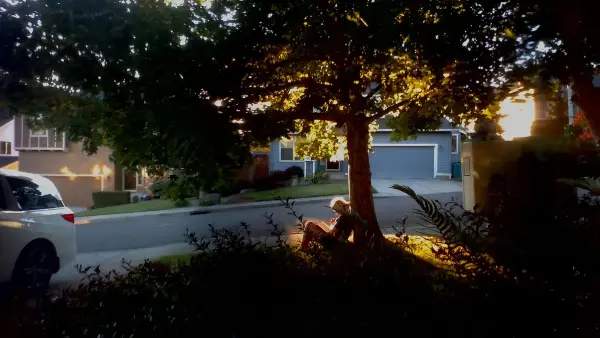
He's 67 and just realized he still checks the weather forecast every morning even though he hasn't worked outdoors in six years and has nowhere particular to be - because a man who spent four decades arriving at a job site before dawn learned that the first act of every morning was to ask the sky what it intended to do to his plans, and the forecast became the only prayer a practical man ever allowed himself, the daily ritual of reading the world's mood before deciding how to meet it
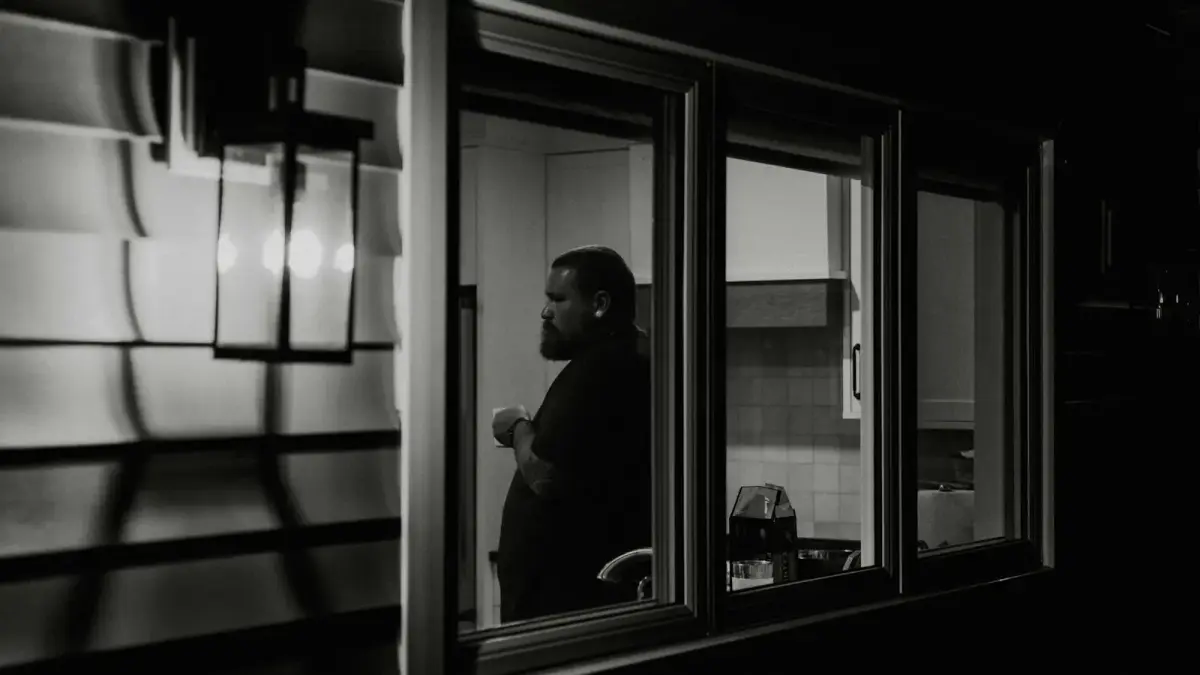
The First Thing He Does
My father-in-law, Ray, wakes up at 5:14 every morning. Not because he sets an alarm. The alarm has been off for six years. His body simply won’t let go of the time it spent four decades obeying, and 5:14 is the minute that won the argument with sleep sometime around 1983.
The second thing he does is reach for his phone. Not to check email - he has three unread messages from February he may never open. Not to scroll the news. He opens the weather app. Studies it the way a man studies a blueprint. Checks the hourly. Checks the ten-day. Notes the wind speed with a nod that means something only to him.
Then he sets the phone down, makes his coffee, and sits at the kitchen table with no particular plans for the day ahead.
I watched him do this for years before I understood what I was seeing. It looked like habit. It looked like something left over from the job, a reflex that hadn’t caught up with the retirement. But it wasn’t leftover anything. It was the last surviving piece of a daily practice that once organized his entire sense of who he was in the world.
What the Forecast Used to Mean
For forty-one years, Ray worked construction. Foundations, framing, roofing. The kind of work where the sky is not scenery but a boss with final say over whether your day goes the way you planned it.
Rain meant delay. Wind above thirty meant the crane stayed down. A freeze overnight meant the concrete you poured yesterday might have cracked. The forecast wasn’t information. It was intelligence. It told you what tools to bring, what layers to wear, whether to push the pour to tomorrow, whether to send the crew home early.
A 2019 study published in the Journal of Occupational Health Psychology found that workers in weather-dependent occupations develop what the researchers called “environmental monitoring habits” - sustained attention to atmospheric conditions that persists long after the occupational need has ended. The study found that retirees from outdoor professions continued checking weather forecasts at rates nearly identical to their working years, even when the information had no practical application.
The researchers treated this as a curiosity. I think they missed what it actually is.
Checking the weather was never just about the weather. For men like Ray, it was the morning ritual that said: I am a man who prepares. I am a man who reads the conditions and adjusts. I am someone who faces what’s coming instead of being surprised by it.
Take the weather away from that sentence and you have a philosophy. A whole approach to being alive.
The Liturgies of Practical Men
Ray’s generation - working men born in the late fifties and sixties - were not given a vocabulary for spiritual practice. Nobody handed them meditation apps or journaling prompts or self-care routines. The word “ritual” belonged to churches, and most of them stopped going before their kids were born.
But they built rituals anyway. They just didn’t call them that.
The boots lined up by the door the night before. The thermos filled and capped at the same time each morning. The truck warmed up for exactly four minutes while the coffee cooled enough to drink. The radio tuned to AM news - not because they cared about the headlines but because the low murmur of someone else’s voice gave structure to the silence before dawn.
These were liturgies. They were the daily acts of a man organizing himself against uncertainty, saying in gesture what he could never say in words: I am here. I am ready. I know what’s coming.
The weather check was the first and most sacred of these. It was the moment a man asked the world a question - what kind of day are you going to be? - and then decided, based on the answer, how he would show up.
Daniel Goleman’s work on emotional intelligence has always emphasized that self-regulation begins with awareness of one’s environment. What he describes as the foundation of emotional competence - the ability to read conditions and calibrate one’s response - is exactly what these men were doing every morning at 5:15, standing in the kitchen, reading the sky on a four-inch screen.
They just didn’t know there was a name for it.
What Retirement Takes That Nobody Warns You About
When Ray retired, people told him to enjoy himself. Travel. Pick up a hobby. Sleep in.
Nobody told him that the hardest part of retirement would not be boredom. It would be the disappearance of structure. The sudden absence of a reason to prepare.
A 2021 study published in the Journal of Research in Personality found that men who had held weather-dependent or physically demanding jobs reported significantly higher rates of identity disruption in retirement compared to men in office-based roles. The researchers attributed this to the loss of what they called “environmental purpose” - the daily sense that one’s preparedness mattered, that the body’s readiness had consequences, that the morning carried weight.
Ray didn’t lose a job. He lost the entire framework that told him who to be before breakfast.
The golf didn’t help. The woodworking was fine but didn’t fill the shape of the thing that was missing. What was missing was not activity. It was consequence. The feeling that if he didn’t prepare, something real would go wrong. That the sky was watching and he needed to be ready for it.
The weather forecast is the only piece of that framework that survived. It’s the one morning act that still feels like it matters, even when it doesn’t change anything about his day. And maybe that’s why he can’t stop checking it.
Not Habit but Holding On
I used to think Ray checked the weather out of habit. The way you keep reaching for a light switch in a room that’s been rewired. A reflex that outlived its function.
But I’ve watched him more carefully now, and I don’t think that’s right. There’s an intentionality to it. A focus. He doesn’t glance at the forecast the way you glance at a notification. He reads it. He considers it. He occasionally says something aloud to nobody in particular - “supposed to clear up by Thursday” - as if the information has consequences he hasn’t fully worked out yet.
What I think he’s doing is not checking the weather. He’s maintaining the one morning practice that still lets him feel like a man with a plan. Even if the plan is just Tuesday. Even if the plan is a walk to the hardware store and a sandwich at the kitchen counter.
The forecast gives him something to prepare for. And preparation - quiet, daily, unglamorous preparation - was the language he spoke his entire adult life. It was how he said I care. How he said I’m responsible. How he said I will not be caught off guard by the things that could hurt the people I’m supposed to protect.
Without the forecast, the morning has no question. And a man who spent forty years answering the sky’s questions every dawn doesn’t know who he is in a morning that doesn’t ask him anything.
The Prayer They Never Named
Gabor Mate has written beautifully about how emotional patterns that look like dysfunction are often survival strategies that outlived their context. The behavior persists not because the person is stuck but because the behavior was once the smartest solution their nervous system could find, and letting go of it feels like letting go of the identity it held together.
Ray’s weather check is not a leftover from the job. It’s a prayer. The only kind of prayer a man like him would ever trust - practical, daily, rooted in something you can measure.
It says: I am still the person who faces the day with his eyes open. I still read the conditions before I step outside. I am still prepared, even if nobody needs me to be. Even if the worst thing that happens today is a little rain on the tomatoes.
There is something holy in that. Not in the religious sense, but in the sense of a man maintaining his covenant with the morning. Showing up at 5:14 because the morning was the one appointment he never missed, and missing it would mean admitting that the world no longer needs him to be ready.
If you are a man reading this, or if you love one - the man who checks the weather, who sets the coffee timer, who walks through the house at night making sure every lock is turned and every window is down - know this.
Those rituals are not habits. They are not compulsions. They are not relics of a job that ended.
They are the language of a man who was never taught to say I love you in words but learned to say it in preparation. In vigilance. In the quiet, daily work of making sure that nothing and no one he cares about gets caught in the rain.
The forecast is not about the weather.
It never was.