There is a kind of love that only happens on the car ride home from someone else's house - when the evening is over and the headlights find the road and one person says something honest about the night that they would never have said at the table, and the other person laughs in a way they only laugh when no one else is watching, and for twelve minutes between the driveway you just left and the driveway you are about to pull into, you are more married than you have been all week
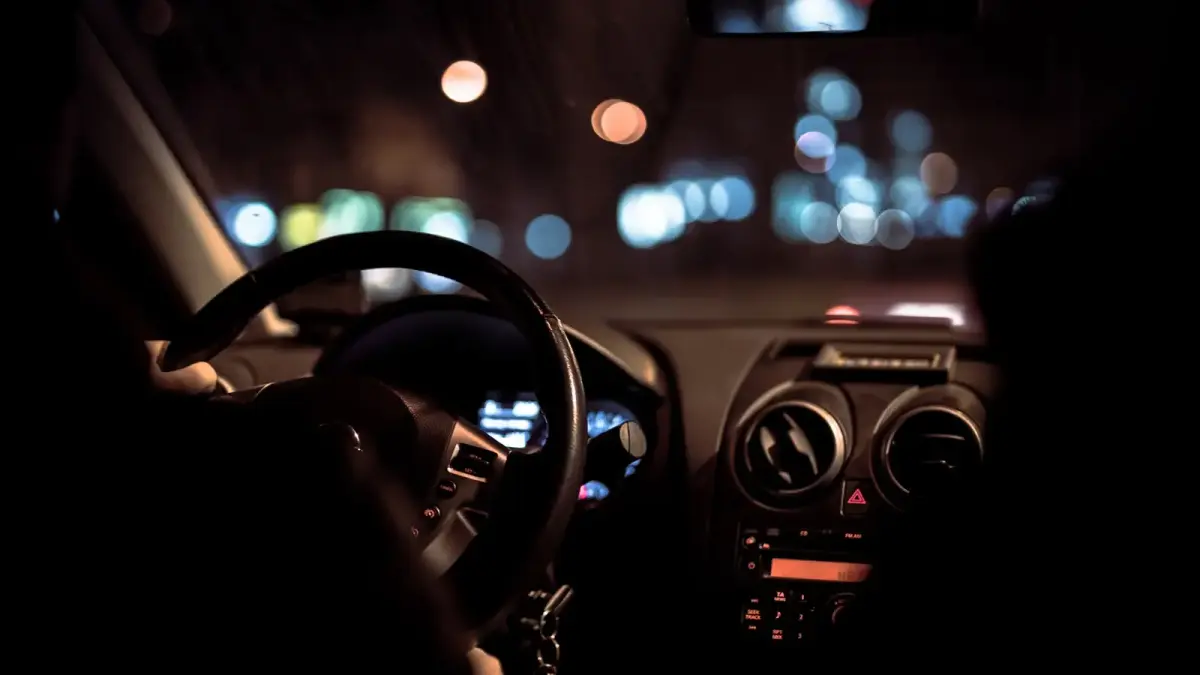
It is 10:40 on a Saturday night and you are pulling out of someone’s driveway. The seatbelt clicks. The radio stays off. Neither of you reaches for it, and that silence is the first honest thing either of you has done in four hours.
Your partner checks the mirror, backs out slow, and then says something. Maybe it is about the host’s new kitchen renovation that clearly cost more than they let on. Maybe it is quieter than that - something about the way your friend’s husband kept refilling his wine glass like he was trying to get somewhere far away from that table. Maybe it surprises both of you, how quickly the truth arrives once the front door closes behind you.
And there it is. The real conversation. The one that has been sitting in your chest since the appetizers, waiting for a room small enough and dark enough to be spoken aloud.
I have been thinking about this moment for a long time. Not because it is dramatic or cinematic or worthy of a love poem. But because it might be the most married you ever feel - and it only lasts twelve minutes.
The first thirty seconds after you pull away
Something shifts the moment the car leaves the curb. You can feel it. The posture changes. The voice drops half a register. The careful, pleasant version of yourselves - the ones who complimented the risotto and asked about someone’s daughter’s college applications - those people dissolve like breath on a cold window.
It does not happen all at once. There is usually a beat of quiet first. A shared exhale. The sound of tires on pavement and the dashboard glow turning both your faces a little blue.
Then one of you speaks. And it is almost never about something important. It is about something true, which is different.
“Did you notice he never once asked her a question all night?”
“I thought the food was actually terrible. I had three pieces of bread to survive.”
“She seemed sad. Did she seem sad to you?”
These are not gossip. They are not cruelty. They are the raw, unedited observations that you held in your mouth for hours because the social contract required you to smile and nod and say everything was lovely.
And now the social contract is over, and it is just the two of you in the dark, and you can finally say what you actually saw.
The most honest room in a long relationship
There is a reason the car does this to people. It is not just convenience or timing. The architecture of the space itself invites a kind of honesty that almost no other room allows.
You are facing forward. Not at each other. Your eyes are on the road, the headlights, the passing trees, and that removes the single biggest barrier to emotional honesty - the weight of being looked at while you speak.
A 2019 study published in the Journal of Personality and Social Psychology found that reduced eye contact during emotionally vulnerable conversations actually increased the depth of self-disclosure. Participants who spoke about difficult topics while sitting side by side, rather than face to face, shared more openly and reported feeling less judged.
The car perfects this. It gives you proximity without exposure. Warmth without surveillance.
There is also the darkness. The world outside the windshield is just shapes and light, and inside the car it is dim enough that your face can do whatever it needs to do without being read. You can let your expression be complicated. You can look worried or amused or confused without someone immediately asking what is wrong.
And then there is the temporary nature of it. You both know this ride has an endpoint. The driveway is coming. The porch light is on. The kids or the dog or the empty house is waiting. This conversation has a built-in boundary, and that boundary makes it safer. You do not have to sustain this honesty forever. You just have to hold it for twelve minutes.
The post-performance debrief
Here is what I think is really happening on that car ride home, and why it matters more than we give it credit for.
When you spend an evening at someone else’s house, you are performing. Both of you. You are performing together, as a couple, for an audience. You are being charming and interested and relaxed-looking. You are navigating other people’s energy, their stories, their dynamics. You are watching your partner interact with the world and noticing things you cannot say out loud.
The car ride home is the debrief. It is two people who just performed the same show turning to each other and saying, here is what I actually experienced while we were in there.
John Gottman, the psychologist who has spent decades studying what makes marriages last, calls this kind of exchange a “stress-reducing conversation.” Not stress about each other - stress about the world. His research shows that couples who regularly process external experiences together build what he calls emotional attunement. They stay in sync not by talking about the relationship, but by talking about everything else.
And that is exactly what the car ride home is. It is two people sitting in the dark, metabolizing an evening together. Not analyzing. Not fixing. Just saying, this is what I noticed, and what did you notice, and did you feel that too.
That is not small talk. That is emotional co-regulation. And most couples do it without ever realizing what they are building.
The things you only say in the car
There is a category of sentence that only exists in the car ride home. You would not say it at the dinner table. You would not say it in the living room before bed. You would barely say it in therapy. But something about the car - the motion, the dark, the shared direction - pulls it out of you.
“I think I was performing too hard tonight. I do not know who I was trying to impress.”
“I miss when we used to be the fun ones.”
“I kept thinking about my mother. I do not know why.”
“Are we happy? I think we are. But watching them tonight made me want to ask.”
These are not complaints. They are not the beginning of a fight. They are something much more rare - a person thinking out loud in the presence of someone they trust enough to be half-formed with.
Brene Brown writes about this in her work on vulnerability. She describes the difference between performed intimacy - where we say the right things in the right setting - and emergent intimacy, where honesty shows up uninvited because the conditions are finally right. The car ride home is emergent intimacy at its purest. Nobody plans it. Nobody lights a candle or sets the mood. It just happens because the walls come down and the road is dark and your partner is right there.
A 2021 study in Frontiers in Psychology found that unstructured, unplanned moments of connection - what the researchers called “incidental intimacy” - were stronger predictors of relationship satisfaction than planned romantic gestures. The couples who reported the highest satisfaction were not the ones who went on the most date nights. They were the ones who had the most moments of unscripted honesty in ordinary settings.
The car. The kitchen at midnight. The walk from the parking lot to the restaurant. The in-between spaces.
Why this matters more than date night
I want to say something that might sound like heresy in a culture that treats date night like a sacrament.
The car ride home is more intimate than most date nights. And it is not even close.
Date night is scripted. You get dressed. You choose a restaurant. You sit across from each other and try to have a meaningful conversation over someone else’s music and a server who keeps checking in. It is lovely. It is needed. But it is still, in some quiet way, a performance.
The car ride home is the opposite. It is unplanned. Unrehearsed. You are not trying to connect. You are just two people in a small dark space with twelve minutes and nothing to prove.
Adam Grant has written about the difference between forced vulnerability and natural vulnerability - and how the natural kind, the kind that surfaces in low-pressure environments, tends to be the kind that actually changes something. The car ride home is natural vulnerability. It asks nothing of you. It just holds the space and lets you be whoever you are right now, in this moment, with this person.
And the laughter. I have to talk about the laughter. Because there is a kind of laugh that only happens in the car ride home - a laugh that is part relief, part recognition, part exhaustion, part love. It is the laugh that says I know exactly what you mean and I am so glad we are leaving and I like us better than I like anyone we just spent time with.
That laugh is not performative. Nobody is watching. Nobody will hear it. It belongs entirely to the two of you, and it is gone the moment you pull into the driveway.
The driveway
You pull in. The garage door goes up or it does not. The engine stays running for a second, or maybe you have already turned it off and neither of you has opened the door yet.
This is the other moment. The quiet one after the quiet one.
You are home. The evening is over. The real conversation has been had, or at least enough of it. And there is this pause - sometimes five seconds, sometimes thirty - where you both just sit there. Not because you have more to say. But because this small, dark, moving room has been so easy to be in that neither of you is quite ready to leave it.
A 2020 study published in Psychological Science found that couples who lingered in transitional moments - the space between one activity and the next - reported higher levels of what the researchers called “felt security.” Not happiness exactly. Something deeper. The sense that this person is not going anywhere, and neither are you, and you do not have to rush toward the next thing to prove it.
The driveway moment is that. It is the held breath between the world you just navigated together and the house you are about to walk back into, where you will become parents or roommates or two people brushing their teeth in silence.
But for now, right now, the car is still warm and the night is still yours.
I think the reason we do not talk about this kind of love is that it does not look like anything from the outside. It is not a grand gesture. It is not a surprise trip or a handwritten letter or a slow dance in the kitchen. It is two people in a Honda Accord at 10:52 PM, saying the things they could not say at the table, laughing the laugh they only laugh alone, being more honest than they have been all week.
And then the porch light flickers, and one of you says we should go in, and the other one nods but does not move yet.
That is the love. Not the dinner party. Not the performance. The twelve minutes after, when you are finally just yourselves.
You have probably had a thousand of these rides and never named them. But they are holding your marriage together in ways you cannot see. They are the thread that runs underneath everything else - the fights, the routines, the years of ordinary days.
Every car ride home is a tiny renewal of the thing you chose a long time ago. Not the wedding vow. Something smaller and more true.
The choice to keep telling this person what you actually think. And the miracle that they keep laughing.