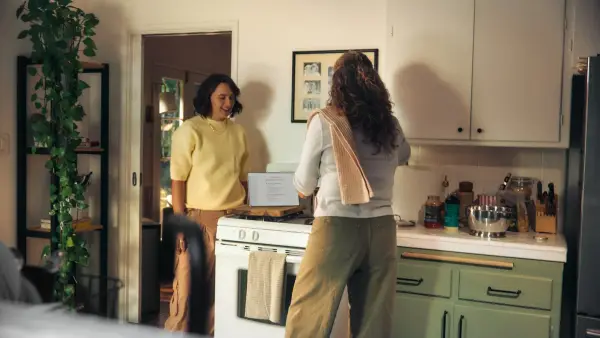
There is a kind of love that never announces itself - the kind where he fills her car with gas on Sunday mornings before she wakes up and she leaves his favorite mug at the front of the shelf every time she unloads the dishwasher - and nobody ever told them that the love they have been quietly building for thirty years is not the absence of passion but the thing passion becomes when it survives long enough to stop needing an audience
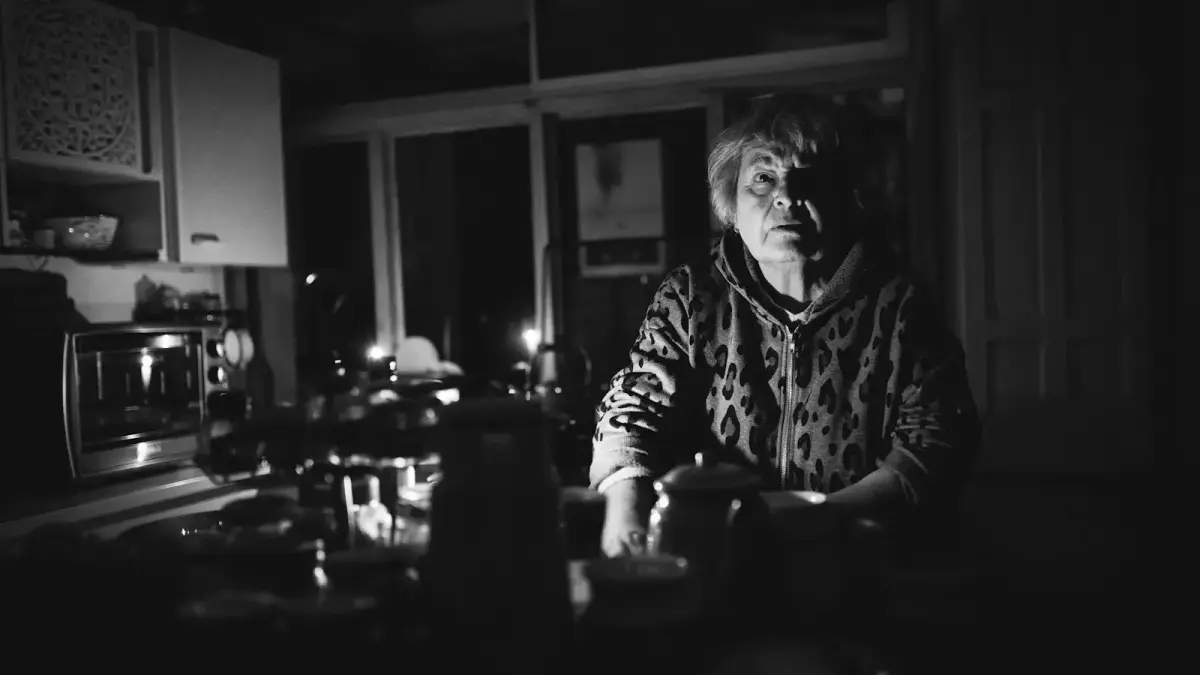
I watched my parents at the kitchen counter last Thanksgiving and almost missed it.
My mother was slicing bread. My father came up behind her, reached past her shoulder, and moved the butter dish closer to her cutting board. She didn’t look up. He didn’t say anything. He just saw that she’d need it in about ten seconds and placed it where her hand would naturally reach.
She shifted half a step to the left without pausing her conversation with my aunt. He filled the space she’d made, opened the drawer behind her, and pulled out the serving fork she hadn’t asked for yet.
The whole exchange took maybe four seconds. Nobody else noticed. I almost didn’t notice. But once I saw it, I couldn’t unsee it - this silent choreography between two people who have been learning each other’s rhythms for forty-one years.
And I thought: this is the love nobody writes songs about. This is the love that will never trend online, never make anyone cry at a wedding, never look like anything from the outside except two people who happen to be standing in the same kitchen.
But I have never seen anything more intimate in my life.
The love nobody photographs
There is a whole language that long-married couples speak, and it has almost nothing to do with words.
He turns the radio to her station before she gets in the car. She orders his coffee when she sees him parking because she knows he hates waiting in line. He checks the weather on her phone because she never remembers to, and she’ll be cold later, and she won’t say anything about being cold, and he knows that too.
She puts her hand on his lower back when she passes behind his chair. Not a caress. Not a gesture. Just a quiet signal - I’m here, I’m moving through, you don’t need to turn around.
He orders her water before she sits down at restaurants because she always forgets to drink water and then gets a headache at three in the afternoon and blames it on the lighting.
These aren’t grand gestures. They’re translations. They’re the accumulated evidence of ten thousand small observations made over decades - what she needs before she knows she needs it, what bothers him before he’s registered the discomfort, where her keys end up when she’s distracted, how his shoulders tighten two days before a deadline.
Nobody photographs this. Nobody posts it. It doesn’t fit in a Valentine’s Day card or a anniversary toast.
But it is the most complex, fluent, and irreplaceable thing two people can build together.
The myth we inherited
Somewhere along the way, we were taught that love is supposed to feel like a storm.
Movies gave us rain-soaked confessions. Songs gave us sleepless nights and racing hearts. Romance novels gave us the moment when two people lock eyes across a room and the world narrows to a single unbearable point of wanting.
And that is real. I’m not dismissing it. The early days of love - the electricity, the obsession, the way your whole nervous system reorganizes around another person - that is one of the most powerful human experiences there is.
But we were never told what comes after.
We were never told that the storm is supposed to pass. That the calm on the other side isn’t a sign of failure. That the relationship didn’t break when your heart stopped racing every time they walked into the room - it grew up.
A 2012 study published in the journal Social Psychological and Personality Science found that couples in long-term relationships can and do maintain deep emotional engagement - but it looks fundamentally different from early-stage passion. The researchers described it as a shift from obsessive to companionate love, where emotional security replaces emotional volatility as the primary source of connection.
We pathologize this shift constantly. We call it “losing the spark.” We say the passion “died.” We look at couples who’ve been together for thirty years and feel a quiet pity, as if endurance were a consolation prize for people who couldn’t find anything better.
But what if endurance is the thing itself? What if the love that survives long enough to become invisible is not diminished love but love that no longer needs to prove it exists?
The body remembers differently
There is a way my mother reaches for my father’s hand in the car that tells you everything.
She doesn’t grab it. She doesn’t lace her fingers through his. She just rests her hand on top of his on the center console - palm down, fingers relaxed, the way you might rest your hand on a warm stone.
It’s not electric. It’s gravitational.
And I think that’s the part nobody warns you about - how touch changes in a long relationship. Not worse. Not less. Just different in a way that’s harder to name and easier to dismiss.
Early love touches like it’s discovering. Long love touches like it’s confirming. The hand on the back says, You’re still here. The knee pressed against a knee under the table says, I’m still choosing this.
John Gottman’s research at the University of Washington found that the strongest predictor of relationship longevity isn’t how often couples say “I love you” or how passionate their physical connection remains. It’s something he called “bids for connection” - small, almost invisible moments where one partner reaches toward the other. A glance across the room. A hand on a shoulder. A comment about something outside the window.
Gottman found that couples who stayed together long-term responded to each other’s bids roughly 86 percent of the time. Couples who eventually separated responded only 33 percent of the time.
The difference between marriages that last and marriages that don’t isn’t passion. It’s attention. It’s the willingness to keep turning toward the small, unremarkable moments where your partner is quietly asking: Are you still with me?
And the couples who have been doing this for thirty years don’t even realize they’re doing it anymore. It’s become automatic. Effortless. Like breathing.
Which is exactly what makes it easy to overlook and impossible to replace.
What the 5:1 ratio actually means
Gottman’s most famous finding is deceptively simple: stable relationships maintain a ratio of roughly five positive interactions for every one negative interaction.
But I think most people misunderstand what “positive interactions” means in this context.
They imagine compliments. Date nights. Grand romantic gestures. The kind of love that announces itself.
In practice, the five-to-one ratio is built almost entirely from moments that would bore anyone watching from the outside. Passing the salt. Laughing at a joke you’ve heard before. Saying “drive safe” when they leave for work. Texting a photo of something that reminded you of them.
It’s built from Sunday mornings when he fills her gas tank before she’s awake. From the mug placed at the front of the shelf. From the blanket pulled up over her shoulders at midnight when he gets up to use the bathroom and notices she’s kicked the covers off again.
A 2019 study in Psychological Science found that people consistently underestimate the emotional impact of small, everyday acts of kindness - both when giving and receiving. The researchers called it “the warm glow gap.” We assume these tiny gestures don’t register. But they do. They accumulate. They become the foundation that everything else rests on.
The love that survives isn’t the love that had the best beginning. It’s the love that kept showing up in the unremarkable middle.
The quiet pride of being known
There is something that happens after twenty or thirty years with another person that I don’t think any other human experience replicates.
You become fully, exhaustively, sometimes inconveniently known.
They know you snore when you sleep on your back but won’t admit it. They know you get quiet before you get angry and chatty before you get anxious. They know the specific way you sigh when you’re pretending to be fine. They know which silences mean “I’m thinking” and which ones mean “I need you to ask.”
And here is what I find extraordinary: they stay.
Not because they’ve overlooked the hard parts. Not because they’re settling. But because they made a decision, somewhere around year eight or year twelve or year twenty, that knowing someone completely and choosing them anyway is its own form of devotion.
This is the love that doesn’t make it into the highlight reel. The love where he knows she cries at commercials with dogs in them and she knows he reads the obituaries every morning not out of morbidity but because he likes to see how people were remembered. The love where she knows exactly how much silence he needs after a hard day - not forever, just forty minutes and one cup of coffee - and he knows that when she reorganizes the pantry at ten at night, something is wrong and she’ll talk about it tomorrow but not right now.
That kind of knowing is not boring. It’s sacred. It’s what happens when two people have paid close enough attention, for long enough, that they’ve become fluent in a language only they speak.
Not a fairy tale, but something better
I want to be careful here, because I’m not trying to romanticize all long marriages.
Some long marriages are endurance tests. Some are prisons held together by obligation, fear, or financial entanglement. Longevity is not, by itself, proof of love.
What I’m talking about is something more specific. I’m talking about the marriages where both people are still turning toward each other. Still adjusting. Still noticing. Still placing the mug at the front of the shelf - not out of habit alone, but out of a kind of attention that has become so practiced it looks effortless.
That’s the part that gets me. It looks effortless because it’s been practiced for thirty years. The way a pianist’s hands look relaxed on the keys. The way a dancer’s body looks weightless mid-turn. You’re not seeing ease. You’re seeing mastery.
My parents don’t have a love story that would make a good movie. There’s no rain-soaked confession, no dramatic reunion, no moment where the music swells and everything becomes clear.
What they have is a forty-one-year conversation that neither of them has ever walked away from. A partnership so finely calibrated that they can navigate a crowded kitchen without bumping into each other, finish each other’s grocery lists from memory, and sit in complete silence for an hour without either of them wondering if something is wrong.
Nobody told them that what they built is extraordinary. Nobody told them that the love they’ve been quietly maintaining - with gas tanks and coffee mugs and hands on backs and blankets pulled up at midnight - is not the absence of passion.
It’s what passion becomes when it grows up. When it stops performing for an audience. When it finally has nothing left to prove.
And if you have that - if you’re living inside that kind of love right now, the kind that doesn’t look like much from the outside, the kind that would never go viral, the kind that just keeps showing up on a Sunday morning before anyone else is awake - I hope you know what you have.
Because most people spend their whole lives looking for the lightning.
And they walk right past the warmth.