Psychology says men who always volunteer to drive - on every road trip, every errand, every late-night airport pickup - are not being generous, they are men who learned as boys that the only time their father could say something honest was when his hands were on the wheel and his eyes were on the road, and driving became the only place where closeness did not require the terrifying act of looking someone in the eye
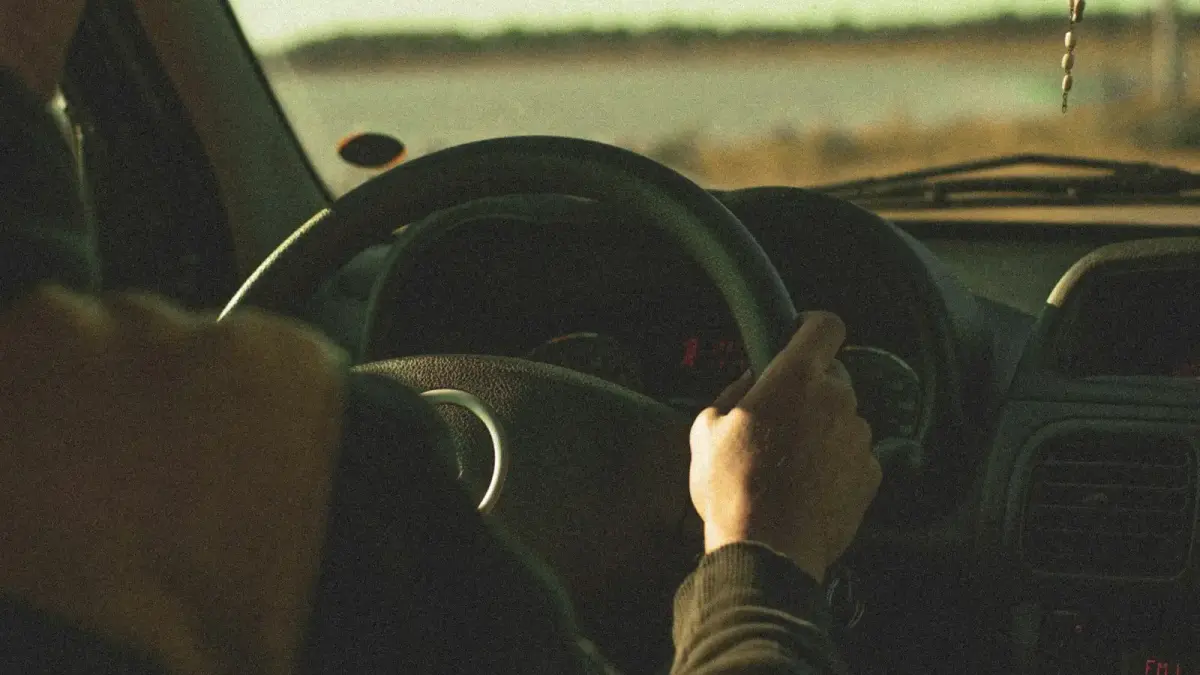
My father told me he was proud of me exactly once. We were on the interstate somewhere outside of Louisville, two hours into a drive that neither of us needed to take.
He didn’t look at me when he said it. His hands stayed at ten and two. His eyes stayed on the road.
I was nineteen. I remember the mile marker more clearly than the words.
That’s the thing about men and cars. The car isn’t transportation. It’s architecture.
It’s the room in the house that doesn’t exist - the one where a man can say something true without the unbearable weight of someone watching his face while he says it.
And if you grew up with a father like mine - a man who loved you but could only show it when the engine was running and the highway stretched out long enough to make silence feel like permission - then you already know why you always volunteer to drive.
You’re not being generous. You’re not being controlling. You’re rebuilding the only room where closeness ever felt safe.
The windshield is the oldest emotional shield men have
There’s a reason boys remember car conversations with their fathers more vividly than almost any other interaction. The car removes the single most threatening element of emotional exchange: eye contact.
A 2016 study published in the Journal of Nonverbal Behavior found that sustained eye contact during emotionally vulnerable conversations significantly increased cortisol levels and physiological stress responses - particularly in men. The researchers noted that men who were allowed to engage in emotional disclosure while oriented side-by-side reported feeling substantially safer than those seated face-to-face.
Your father probably never read that study. He didn’t need to. His body already knew.
He knew that the kitchen table was a courtroom. That the living room was a stage. That anywhere two people sat across from each other and looked directly at each other’s faces became, for him, a place where honesty had consequences he couldn’t predict.
But the car. The car was different.
In the car, he could stare at the road and let a sentence fall out sideways, almost accidentally, like he hadn’t meant to say it. And if the sentence landed wrong, he could just keep driving. He could let the hum of the tires fill the space where a response should have been. He could wait for you to absorb it without having to watch you absorb it.
The windshield gave him something to look at that wasn’t your face. And that small mercy - that thin pane of glass between him and the open road - was enough to let him say things he couldn’t say anywhere else.
You learned the blueprint before you had words for it
Children are not passive. They are architects-in-training, quietly mapping every room in the house for its emotional function.
This room is where we pretend everything is fine. This room is where someone cries when they think nobody can hear. This room is where we eat in silence and call it dinner.
And then there’s the car.
The car is where Dad said something real. The car is where you heard his voice change - where it dropped half an octave and lost the performance quality it had everywhere else. The car is where he told you about his own father, or about a mistake he made at work, or about the fact that he worries about you more than he’ll ever admit at the dinner table.
You didn’t decide to memorize this. Your nervous system did it for you.
Developmental psychologist Dr. Edward Tronick’s research on emotional communication patterns has shown that children encode not just what their parents say, but the entire contextual environment in which emotional safety was experienced. The setting becomes fused with the feeling. The car didn’t just happen to be where your father opened up. The car became, neurologically, the shape of openness itself.
So you grew up. And you started volunteering to drive.
The offer to drive is not about the driving
Watch a man offer to drive somewhere. Watch how quickly he does it, how casually. “I’ll drive.” Two words. Tossed out like it’s nothing.
But it’s everything.
When a man who learned this blueprint says “I’ll drive,” he is saying something much larger and much more vulnerable than he realizes. He is saying: I know how to be close to you, but only if my hands are busy and my eyes have somewhere else to go. I know how to be present, but only if I’m also doing something. I want to be in this space with you - I just need the road to make it feel survivable.
This is not dysfunction. This is adaptation. This is a boy who found the one room where his father’s walls came down, and he has been quietly rebuilding that room every time he picks up a set of car keys.
Think about the men in your life who always drive. Think about the conversations you’ve had with them in those cars. Think about how some of the truest things they’ve ever said to you were said while they were changing lanes or checking mirrors or adjusting the rearview.
That’s not a coincidence. That’s emotional architecture operating exactly as it was designed - by a boy who needed it to survive a house where love was real but silent.
Side-by-side is the masculine geometry of intimacy
Psychologist Dr. Niobe Way spent years studying how boys and men form and maintain close relationships. Her research, published across multiple works including her book Deep Secrets, found something that most people feel but rarely name: men tend to experience emotional intimacy most naturally in side-by-side configurations rather than face-to-face ones.
Fishing. Driving. Watching a game. Working on something together in the garage.
These aren’t distractions from connection. They are the connection. For many men, the shared forward gaze - both people looking at the same thing rather than at each other - creates a container that feels safe enough for honesty.
Daniel Goleman touched on this in his work on emotional intelligence. He noted that men frequently use parallel activities as a bridge to emotional disclosure - not because they’re avoiding intimacy, but because the activity provides what he called a “scaffolding” that makes vulnerability structurally possible.
Your father understood this in his bones. He couldn’t sit across from you at a restaurant and tell you he was scared about money. But he could drive you to school on a Tuesday morning and mention, almost offhandedly, that things were tight - and that offhand mention carried more emotional weight than any face-to-face confession ever could, because it was real. It was unperformed. It fell out of him because the car made it safe enough to fall.
The late-night airport pickup is a love language
You know the man I’m talking about. The one who will drive forty-five minutes to the airport at 11 p.m. on a Wednesday for someone he cares about. The one who insists. The one who says, “Don’t get a cab, I’ll come get you,” and means it with his whole chest.
People call this generosity. People call this being a good friend, a good partner, a good brother.
It is those things. But it’s also something much more specific.
That man is creating the conditions for a conversation that might not happen anywhere else. He knows - not consciously, but in the deep tissue of his emotional memory - that a dark car, a quiet highway, a person who just got off a long flight and has their guard down - that’s where the real stuff lives. That’s where someone might actually tell you how they’re doing. Not the rehearsed version. The real one.
And he wants to be there for that. He wants to be the one holding the wheel when someone he loves finally exhales.
A 2019 study in Frontiers in Psychology examined what the researchers called “incidental intimacy” - emotional closeness that emerges not from deliberate vulnerability but from the ambient conditions of a shared environment. They found that movement, low lighting, and reduced face-to-face orientation all independently predicted higher rates of emotional self-disclosure. A car at night hits all three.
The man driving to the airport at 11 p.m. is not performing generosity. He is engineering the exact conditions his nervous system learned, decades ago, were the only ones where love could travel safely between two people.
The car is not a crutch - it’s a bridge
I want to be careful here because I’ve seen this pattern dismissed. I’ve heard people say that men who can only talk in cars need therapy, need to learn to sit across from someone and be present, need to stop hiding behind the steering wheel.
And maybe. Maybe that growth is worth pursuing. Maybe there’s a version of this where you learn to hold eye contact and say the hard thing and sit with the silence that follows.
But I also think there’s something worth honoring about the car. About the fact that your father found a way - imperfect, indirect, side-angled - to reach you. He didn’t have a therapist. He didn’t have a vocabulary for emotional attunement. He had a 1994 sedan and a stretch of highway and twenty minutes before you got to school, and in those twenty minutes, he managed to build something real.
That matters.
And the fact that you absorbed his blueprint and now rebuild it every time you offer to drive someone - that matters too. It means the connection landed. It means his love, sideways and windshield-filtered as it was, actually reached you. And now you carry it forward in the only language you were taught.
You are not broken for needing the road
If you are a man who has his best conversations while driving, you are not avoidant. You are not emotionally stunted. You are not hiding.
You are a person who learned, very early, that closeness has a shape. And the shape you learned was two people facing the same direction, the engine humming underneath them, the world sliding past the windows, and the road giving you both something to look at so that the words could come out without the terror of being watched while they formed.
That’s not a limitation. That’s a language.
And the people who love you - the ones who’ve sat in your passenger seat at midnight and heard you say something you couldn’t say over dinner - they know it’s a language. They’ve been hearing it for years.
Your father gave you an imperfect gift. He gave you a room with no walls and a door that only opens when the ignition turns. He gave you a way to love people that requires motion, that needs a destination even if the destination doesn’t matter, that works best when the sky is dark and the highway is empty and nobody has to look at anybody too directly.
It’s not the only way to love. But it is a real one. And it came from a real place - a man who couldn’t say the thing sitting still, so he started the car and said it anyway.
Every time you pick up those keys and say “I’ll drive,” you’re honoring that. You’re saying, in the only language your father spoke fluently: come sit beside me. I have something I might want to tell you. I just need the road to help me get it out.
That’s not weakness. That’s one of the most specific and honest forms of love I’ve ever seen.