Men who still carry a cloth handkerchief are not behind the times - they are keeping alive the only gesture their fathers ever had for saying I love you, folded into a square and tucked into a pocket, ready to hand to someone whose tears they could not fix but refused to ignore
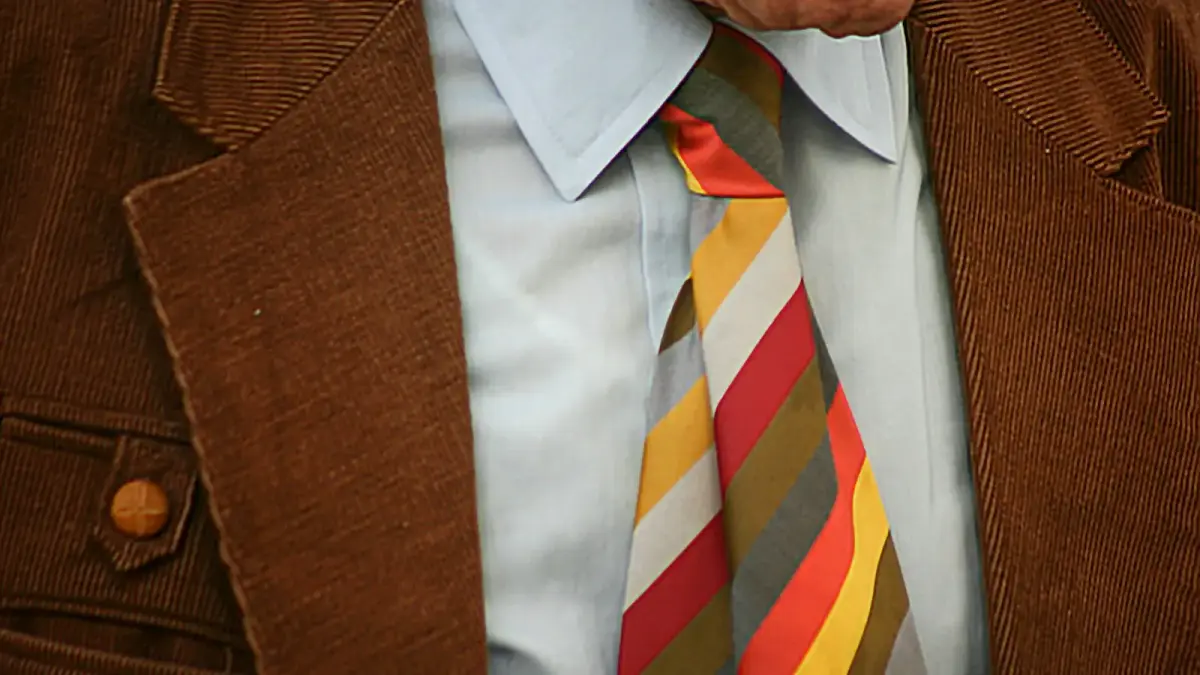
My father carried a cloth handkerchief every day of his adult life. White cotton, ironed flat, folded twice, and slipped into his back left pocket before he picked up his keys each morning. He did this the way he tied his shoes - without thinking, without fanfare, as if it were simply part of being dressed.
I never saw him cry into it. Not once. But I saw him hand it to my mother at a funeral. I saw him pass it across a restaurant table to a friend whose wife had just left. I saw him kneel on one knee in a church parking lot and press it gently against the scraped knee of a neighbor’s child, saying nothing, just holding it there until the crying slowed.
He never talked about why he carried it. I don’t think it ever occurred to him that it needed explaining.
It wasn’t until years after he died - years after I started carrying one myself - that I understood what I was really folding into my pocket each morning.
The Language Before Language
There is a generation of men who learned tenderness the way they learned everything else - not through words, but through watching. Their fathers never said “I love you.” Their fathers never explained their feelings or sat on the edge of the bed to talk about hard days. But their fathers showed up. They showed up with handkerchiefs.
A cloth handkerchief is such a small thing. A square of fabric. But the act of carrying one says something enormous if you know how to listen.
It says: I expect someone today to need comfort. I have prepared for that. I am walking into the world already ready to help someone who is falling apart.
That is not a fashion choice. That is a philosophy of living.
A 2019 study published in the Journal of Personality and Social Psychology found that men who grew up in households where emotional support was demonstrated through action rather than verbal expression often developed what researchers called “instrumental empathy” - the ability to respond to distress through practical gestures rather than emotional language. These men scored lower on verbal emotional expression but higher on anticipatory caregiving - the tendency to prepare in advance for someone else’s need.
A man with a handkerchief in his pocket is not carrying a piece of cloth. He is carrying anticipatory care, folded into a square.
What a Father’s Pocket Taught
My father was born in 1941. He grew up in a house where men fixed things. They did not discuss things. They did not process things. If someone was hurting, you brought something useful. A glass of water. A warm blanket. A clean cloth.
This was not emotional avoidance, though it would be easy to call it that from a distance. This was the vocabulary they had. And within that vocabulary, carrying a handkerchief was practically poetry.
Think about what the gesture actually communicates. A man reaches into his own pocket - his personal space, his body - and pulls out something clean that belongs to him. He offers it to you. He is saying: use this. Ruin it. Get your tears and your grief and your mascara all over it. I will take it home and I will wash it and I will fold it again and I will carry it tomorrow for the next person who needs it.
That is not a small gesture. That is one of the most generous things a person can do - offer something of their own to hold someone else’s pain, and then quietly clean it and prepare to do it again.
Brene Brown has written extensively about how vulnerability does not always look the way we expect it to. Sometimes vulnerability is not a confession or a breakdown. Sometimes it is a quiet readiness to be useful in someone else’s worst moment. The man with the handkerchief is not performing stoicism. He is practicing a form of vulnerability so subtle that most people mistake it for formality.
The Ironing
Here is the part that gets me.
They ironed them. These men - men who could rebuild a carburetor, men who worked twelve-hour shifts, men whose hands were rough enough to catch a baseball without a glove - they stood at an ironing board and pressed a square of cotton flat. Or their wives did, and they folded them. Either way, someone in that house was spending time making sure that this small cloth was smooth and clean and presentable.
Why? Because you cannot offer someone a wrinkled, balled-up rag when they are crying. The ironing was part of the message. The crease was the punctuation. A well-pressed handkerchief said: I take your future grief seriously enough to have prepared for it with care.
A 2021 study in Frontiers in Psychology explored the concept of “care rituals” - repetitive domestic behaviors that serve an emotional function beyond their practical purpose. Researchers found that these rituals, things like always keeping a clean towel by the door or preparing a specific comfort food without being asked, function as what they called “embodied emotional communication.” The ritual replaces the conversation. The act is the feeling.
Ironing a handkerchief is a care ritual. It is a man standing at a board on a Sunday night, running heat and pressure over a small square of cotton, preparing to carry someone else’s sadness in his pocket all week.
I cannot think of anything more tender than that.
What It Means to Carry One Now
I am forty-six years old and I carry a cloth handkerchief. I carry it the way my father did - back left pocket, folded flat, white cotton. I have never once planned to use it on myself.
People notice. Younger people especially. They notice because almost nobody does it anymore. Tissues come in plastic packets now. Paper napkins are everywhere. The disposable world made the cloth handkerchief seem unnecessary.
But that is exactly the point. A tissue says: here is something you can throw away after you cry. A handkerchief says: here is something I will take back from you and carry home and clean and bring again. Your grief is not disposable to me. I will hold it, wash it, and show up with room for more.
I have handed mine to a woman on an airplane who got bad news on her phone before takeoff. I have handed it to my daughter’s friend at a school play when her parents didn’t show. I have handed it to a man in a parking lot who was sitting in his truck with the engine off, just sitting there, the way men sit when they don’t know where else to go with what they are feeling.
None of them expected it. All of them took it. And something shifted in the air each time - some small permission was granted. You can fall apart. Someone came prepared for this.
Daniel Goleman’s work on emotional intelligence includes what he calls “empathic accuracy” - the ability to read what someone needs in a moment of distress. But there is a step beyond accuracy, and it is preparation. It is not just reading the room. It is having walked into the room already carrying what the room might need.
My father never read a book about emotional intelligence. He carried a handkerchief. I think he understood something those books are still trying to say.
Not Old-Fashioned - Inherited
The easy reading of a man with a cloth handkerchief is that he is old-fashioned. A holdover. A relic of a time when men wore hats and opened car doors and did things we have since decided are unnecessary.
But I want to push back on that. Because the men I know who still carry handkerchiefs are not performing nostalgia. They are practicing something they inherited, the way you inherit a walk or a way of laughing or the impulse to check the locks twice before bed.
They carry them because their fathers carried them. And their fathers carried them because their fathers carried them. And somewhere back in that chain, a man decided that he wanted to walk through the world ready to help someone who was crying, and he folded a piece of cloth and put it in his pocket, and that was his whole theology of care.
That is not outdated. That is the most emotionally sophisticated thing some of these men ever learned. And the fact that they are still doing it - still ironing, still folding, still carrying - means the lesson landed. It means that whatever their fathers could not say out loud, they said loudly enough with a gesture that their sons are still repeating it decades later.
The Fold
There is a moment each morning that I think about more than I probably should.
It is the moment after the handkerchief comes out of the drawer, and before it goes into the pocket. The fold. Two halves. Then two halves again. Smooth the edges. Press it flat with your palm. Tuck it in.
It takes about four seconds. It is the smallest ritual in my day. But every time I do it, I am standing in the same motion my father stood in. My hands are doing what his hands did. I am preparing for the same thing he prepared for - not my own tears, but someone else’s.
I think that is what love looks like when it has been passed down through men who were never taught the word for it. It looks like a square of cotton. It looks like a crease. It looks like a pocket that always has room for someone else’s worst day.
My father could not tell me he loved me in a way that felt natural to him. But he could hand me a clean cloth when I was ten years old and crying in the driveway, and he could say “here,” and that word - that single, ordinary word, said while pressing cotton into my hand - carried everything.
I fold one every morning now. Not because I am stuck in the past.
Because some things your father teaches you are too important to set down.