Men who still carry their father's pocket knife even though they have never once needed a knife in their daily lives understood something as boys that no one ever explained - that some things between fathers and sons are not passed hand to hand but pocket to pocket, and at fifty-seven the weight of it against his thigh is not a tool but the only inheritance that still feels warm
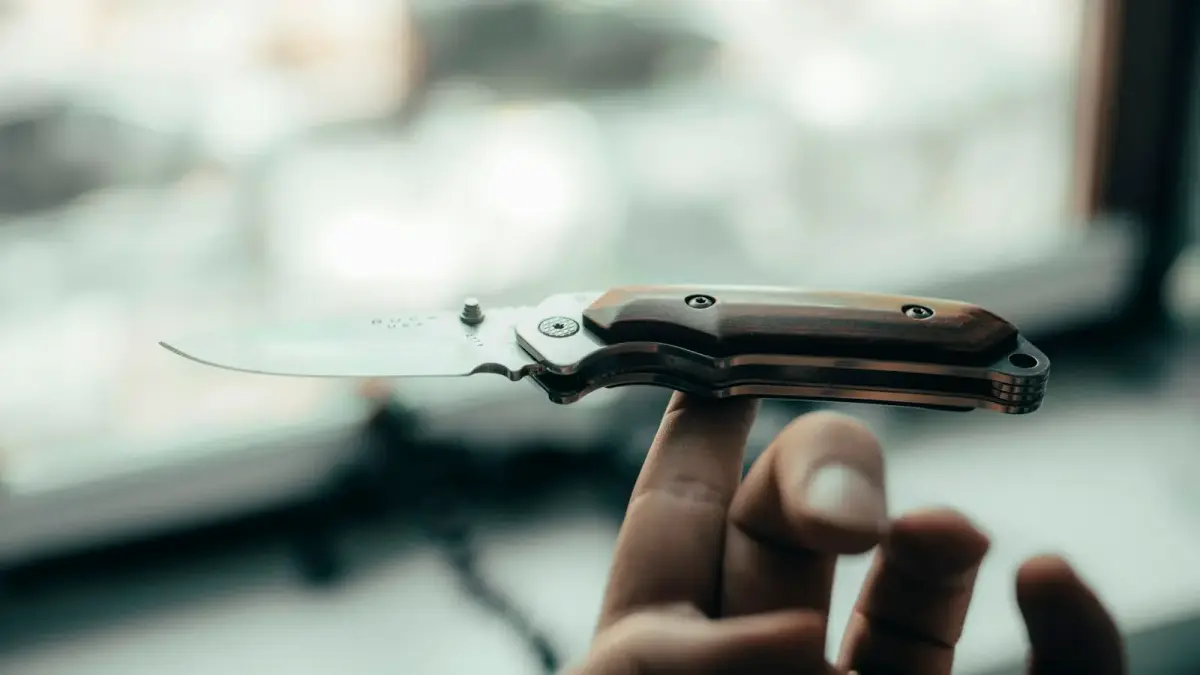
My father carried a pocket knife every day of his adult life, and I never once saw him use it for anything that required a knife.
He used it to open envelopes. To scrape a sticker off a jar. To pry the lid off a paint can in the garage on a Saturday morning while I stood behind him holding a roller I was too young to use properly. He used it the way other men used their hands - casually, reflexively, without thinking. It appeared from his right front pocket the way words might appear from a more expressive man’s mouth. Constantly, and for everything, and for nothing at all.
He never said, “This is important.” He never said, “I want you to have this someday.” He never explained what it meant to him or where it came from or why a man who worked in an office and drove a sedan and had never once been camping still reached for a three-inch blade forty times a day as though the world kept presenting him with things that needed to be cut open.
He did not have to explain it. I was watching.
The object that said everything the man did not
There is a particular kind of inheritance that does not arrive in a will or a box or a conversation.
It arrives in a pocket. Quietly. Without ceremony. Sometimes without the son even realizing it has happened until years later, when he reaches into his own jacket and feels the weight of something that does not belong to the life he actually lives but belongs, unmistakably, to a life he cannot stop carrying.
A 2018 study published in the Journal of Personality and Social Psychology examined what researchers called “symbolic object attachment” in adults - the tendency to imbue physical objects with emotional significance far beyond their functional value. The study found that inherited objects, particularly those from deceased or emotionally distant attachment figures, activated the same neural regions associated with secure attachment. The object was not a reminder of the person. To the brain, it was the person.
My father’s pocket knife sits in my desk drawer now. Some mornings I pick it up and hold it for a moment before putting it in my pocket, and I could not tell you what I am doing or why. I do not need a knife. I have never needed a knife. I need the four ounces of steel and bone that still carry the shape of his grip in the slight wear of the handle.
That is not sentimentality. That is the nervous system recognizing the closest thing to a handshake it ever got.
What a boy learns from watching a man reach for the same pocket a thousand times
Boys watch their fathers with a kind of attention that nobody teaches them and nobody acknowledges.
They do not watch the way daughters watch - studying the face, reading the voice, trying to decode the emotional weather. Boys watch hands. They watch movements. They watch what a man reaches for, and how often, and whether the reaching is automatic or deliberate.
I watched my father’s right hand move to his right front pocket so many times that the gesture became a kind of grammar. It was how he started a sentence. Someone would hand him a box. His hand would go to the pocket. Someone would mention something that needed fixing. The hand. The pocket. The small mechanical click of the blade locking open.
It was not a tool. It was punctuation. It was the physical expression of a man saying, “I am here. I am capable. I will handle this.”
And the boy standing three feet away, watching the hand go to the pocket for the nine hundredth time, was not learning about knives. He was learning about what it looks like when a man shows up. When a man says, without speaking, that the situation is under control. That someone in this room knows what to do next.
Donald Winnicott, the British psychologist who gave us the concept of transitional objects, wrote extensively about how children attach to physical items as stand-ins for emotional security. A child’s blanket is not a blanket. It is the feeling of the mother’s presence compressed into something portable. Something the child can carry when the mother is not in the room.
What Winnicott studied in toddlers does not stop at age five. It simply goes underground. And the boy who watched his father reach for the knife a thousand times was building, without knowing it, an emotional dictionary with exactly one entry: this object means safety.
The conversation that happened without words
Here is what I think about most, now that my father has been gone for six years.
He never once told me he loved me in the way that phrase is supposed to be delivered. Not the words strung together in that order. Not plainly, not while looking at me, not in a way that I could receive and hold and replay later when I needed to hear it again.
But he handed me the knife.
Not formally. Not as a ceremony. He was eighty-one and his hands had started to shake, and one afternoon he pulled it from his pocket and set it on the kitchen table between us and said, “You should probably have this. I keep dropping the damn thing.”
That was the speech. That was the entire transfer of four decades of daily companionship between a man and a three-inch blade and whatever it meant to him that he could never find the vocabulary for. He did not say it was important. He did not say it had been his father’s before him. He did not say that carrying it every day for fifty years was the closest he had ever come to a devotional practice.
He said he kept dropping the damn thing, and he slid it across the table, and I picked it up and put it in my pocket like it was nothing, because that is what we do. That is what men of that generation taught their sons to do with enormous emotional moments. You act like they are ordinary. You put the feeling in your pocket where no one can see it.
And then you carry it every day for the rest of your life.
The psychology of what men carry instead of saying
There is a growing body of research on what psychologists call “emotional proxy objects” - physical items that function as containers for feelings that the owner cannot or will not express directly.
A 2021 study published in Frontiers in Psychology examined the objects men over fifty reported carrying daily and found something remarkable. Watches inherited from fathers. Wallet-sized photographs that had not been looked at in years but could not be removed. Wedding rings from marriages that ended decades ago. And pocket knives - more pocket knives than the researchers expected, nearly all inherited, nearly all from fathers, nearly all described with the same phrase: “I don’t really use it, but I can’t not carry it.”
The researchers noted that these objects served a function remarkably similar to what developmental psychologists observe in children with comfort objects. They regulated emotion. They provided continuity. They anchored the carrier to a sense of identity that existed before the current version of themselves - a link to a lineage that felt solid even when the present did not.
Adam Grant has written about how men, particularly men raised in emotionally reserved households, often develop what he calls “object fluency” - the ability to communicate emotional depth through physical things rather than language. The man who gives his son a knife is not giving a tool. He is giving the only vocabulary he has. He is saying: this mattered to me every day, and now I want it to matter to you, and I do not have any other way to say that, so here.
The son who takes it understands this. Not immediately. Not consciously. But somewhere in the body, in the weight of the thing against his leg as he walks through a parking lot or sits in a meeting or stands at a kitchen counter in a house his father never saw, the message arrives.
You were worth handing it to.
The generational shift that makes the knife heavier
Something is changing between fathers and sons, and it makes the knife mean more, not less.
Men in their thirties and forties are learning a new language. They are going to therapy. They are telling their children they love them out loud, plainly, frequently, without conditions. They are reading books about emotional intelligence and practicing vulnerability and trying, with real effort, to build the bridges their own fathers could not.
And many of these same men still carry the knife.
Because the knife is not a rejection of the new language. It is an honoring of the old one. It is a man saying: I am learning to tell my son I love him with words, and I am also carrying the only way my father could tell me, and both of these things are true at the same time.
A 2020 study in the Journal of Research in Personality found that men who described themselves as emotionally expressive were just as likely to carry inherited objects from their fathers as men who described themselves as emotionally reserved. The object did not replace verbal expression. It existed alongside it - a parallel channel, a second language, a frequency that words could not fully reach.
The man at fifty-seven who puts the knife in his pocket before leaving the house in the morning is not stuck. He is not failing to evolve. He is carrying two entire traditions of love in the same body. One in his mouth, which is learning new words. One in his pocket, which has always known.
What the weight really is
I want to be careful here, because I do not want to romanticize silence. I do not want to say that a pocket knife is the same as a father sitting down with his son and saying, plainly, “I am proud of you. I love who you are. You do not have to earn this.”
It is not the same. The words matter. The absence of words cost something, and every man carrying his father’s knife knows exactly what it cost, even if he would describe the knife as just a knife and change the subject if you pressed him on it.
But I also want to name what the knife is. What it actually represents when a man reaches into his pocket and feels the familiar weight and does not think about it consciously but feels, for a half-second, something that settles in his chest like a hand on a shoulder.
The knife is the proof that he was watched. That his father, who could not find the words, found another way. That the love was there - not loud, not direct, not shaped like the love he needed, but there. Pressed into an object. Worn smooth by daily contact. Passed forward without explanation because the explanation would have required a language neither of them had been taught.
At fifty-seven, you reach into your pocket and feel it there, and you do not think about your father. You do not replay a memory. You do not get sentimental. You just feel, for one half-second, that the world is solid. That you came from somewhere. That a man who could not say the thing still found a way to put it in your hand.
And that has to be enough.
And somehow - in a way that psychology can describe but never fully explain - it is.