There are men who still wave at every car that passes their house even though they haven't known half the drivers in over a decade, not because they are friendly or stuck in the past but because a boy who grew up on a street where every adult raised a hand to every passing car learned that a neighborhood was not held together by fences or cameras but by the agreement that someone was always watching, and the wave at sixty-one is not a greeting but the last surviving clause of a contract that said I see you and if something happens I will notice
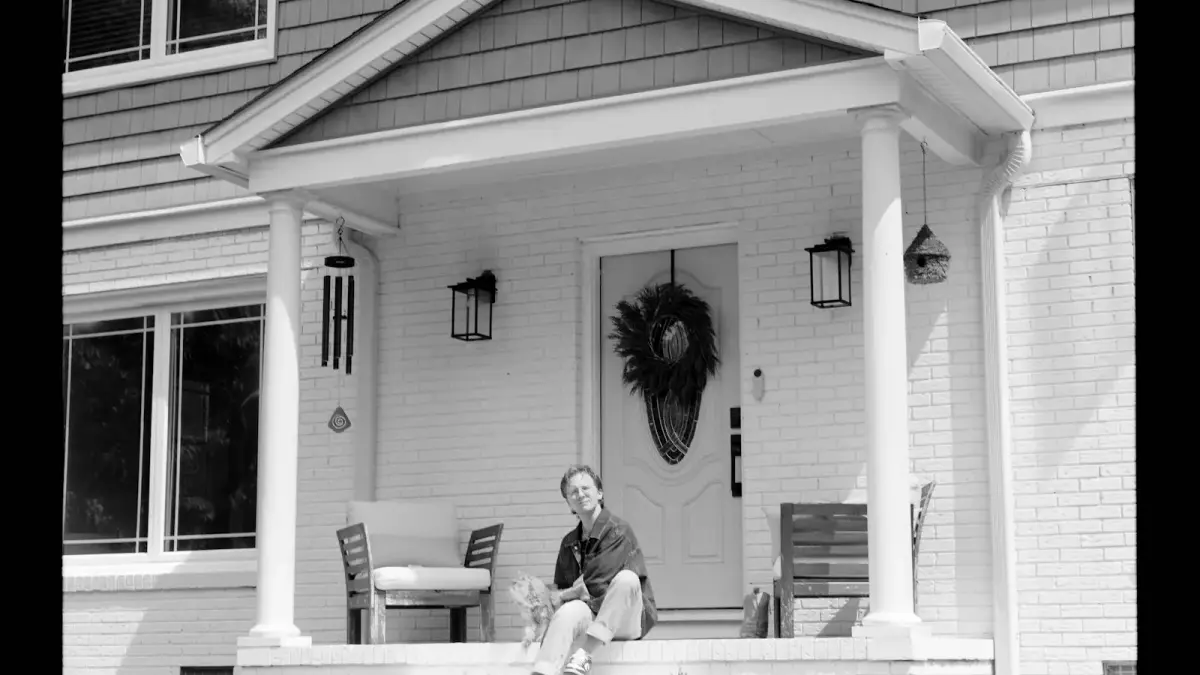
The man on the porch with his hand half-raised
My father waved at every car. I don’t mean he waved at people he knew. I mean he sat on the front steps of our house in the early evening, a glass of something sweating in his other hand, and he raised two fingers off the armrest of his lawn chair at every single vehicle that rolled down our street.
Didn’t matter if it was the mail carrier, the teenager from four houses down learning stick shift, or a sedan he’d never seen before. The hand went up. Every time.
I used to think it was just a quirk. The kind of thing dads did, like checking the locks twice before bed or backing into parking spaces. I figured it would fade once the neighborhood changed, once the Hendersons moved and the new family never introduced themselves, once the street he knew became a street he mostly remembered.
But it didn’t fade. He’s seventy-three now, and the hand still goes up.
And I’m starting to understand that it was never about friendliness. It was never small talk with a windshield between them. That wave was the operating language of an entire generation of men who built their sense of safety not out of surveillance systems or neighborhood apps but out of the radical, quiet agreement that someone was paying attention.
The contract nobody wrote down
There was a time - and if you’re over fifty, you remember it - when a neighborhood ran on a system that had no name.
No one called it anything. There was no committee. Nobody signed up. But every person on the block understood, in their bones, that they were part of an unspoken arrangement.
You watched the street. You noticed when someone’s car wasn’t in the driveway by the time it should have been. You knew whose dog barked at strangers and whose barked at everything. If a window was open in February, someone walked over. If a kid was sitting on the curb past dark, someone’s porch light clicked on.
A 2015 study published in the Journal of Community Psychology found that perceived neighborhood cohesion - the feeling that your neighbors notice you and would intervene if something went wrong - was a stronger predictor of residential safety than physical security measures like cameras or alarm systems. It wasn’t infrastructure that made people feel safe. It was the belief that someone would notice.
That belief lived inside the wave.
When my father raised his hand, he was not saying hello. He was saying: I see this car. I see the time of day. I know what belongs here and what doesn’t. And if something goes sideways tonight, I’ll remember what I saw.
The wave was a receipt. Proof that a human being was watching.
The boys who learned it without being taught
Nobody sat us down and explained this. There was no conversation about civic duty or neighborhood watch protocols. You just absorbed it the way you absorbed everything else about being a man in that era - by watching what the men around you did and assuming it was required.
My father waved. Mr. Kazinski across the street waved. The retired electrician on the corner waved from behind his screen door, sometimes just a shadow moving behind mesh, but you knew the hand went up.
And so you learned. Not that waving was polite, but that noticing was a responsibility.
Robert Putnam wrote about this in his research on social capital - the idea that communities function not because of rules but because of thousands of tiny, voluntary acts of mutual recognition. When he tracked the decline of civic engagement across American neighborhoods, he wasn’t just talking about fewer people joining bowling leagues. He was talking about the disappearance of this exact gesture. The wave. The nod. The moment where one person says to another, without words, I know you’re here and that matters to me.
A boy who grew up watching every man on the street raise a hand to every passing car internalized something that no parenting book could teach him. He learned that a neighborhood is not a collection of houses. It’s a collection of promises. And the wave was how you renewed yours, every single evening.
What replaced it, and what it lost
I live in a neighborhood now with a group chat. There are 147 people in it. Someone posts a photo of an unfamiliar van every few days. Someone else replies with a Ring doorbell screenshot. A third person links to a crime map.
We have never been more informed and less connected.
The information is there, but the contract is gone. Nobody is sitting on the porch. Nobody is raising a hand. The watching has been outsourced to cameras, and the caring has been outsourced to algorithms, and what we’ve gained in footage we’ve lost in something harder to name.
A 2021 study in the journal Social Science & Medicine found that neighborhoods with higher levels of passive surveillance technology actually reported lower levels of interpersonal trust between residents. The cameras didn’t bring people closer. They made the watching impersonal. When a device does the noticing, no human being has to.
My father’s wave required him to be present. To sit outside. To look up. To make eye contact with a windshield he couldn’t see through and trust that the person behind it saw him.
That’s not a convenience. That’s a practice.
And when the last generation of men who do it is gone, no app will replace what it meant to drive down a street and see a man on his porch raise two fingers in your direction. Not because he knew you. But because he’d decided, decades ago, that knowing wasn’t the point.
The wave at sixty-one
I catch myself doing it now. I’m sixty-one. I sit on the front porch more than I used to, not because I’ve run out of things to do inside but because something in me has started to understand what my father was doing out there all those years.
He was holding the line.
Not a fence line. Not a property line. A human line. The one that says: this is a place where people are seen. This is a street where someone will notice if your garage door is open at midnight. This is a block where a stranger’s car at 3 AM gets remembered, not recorded - remembered, by a person, who was sitting right here.
I wave at cars I don’t recognize. I wave at the delivery trucks that come six times a day now. I wave at the teenager who races past at a speed that makes me wince.
Most of them don’t wave back. That’s fine. The wave was never a transaction.
Daniel Goleman’s work on social intelligence describes what he calls “neural resonance” - the way one person’s emotional state can activate a mirror response in another. When someone waves at you, even if you don’t wave back, something in your nervous system registers that you were acknowledged. You were seen. For a fraction of a second, you were not anonymous.
That fraction of a second is the whole point.
A generation of men who confused being seen with being safe
Here’s what I think younger people miss when they see an older man waving at traffic. They think it’s quaint. A leftover. The behavioral equivalent of leaving your door unlocked or knowing your mailman’s first name - charming in theory, outdated in practice.
But it’s not outdated. It’s undefeated.
No technology has ever replicated what a human being communicates when they choose, voluntarily, to acknowledge your presence. Not your data. Not your license plate. Your presence. The fact that you exist, that you passed through this specific place at this specific time, and that another person noticed and cared enough to move their hand.
The men who still do this are not performing nostalgia. They are practicing the last surviving form of a social contract that kept entire neighborhoods intact for decades. A contract that said: we don’t need to be friends. We don’t need to know each other’s names. But we need to know that someone is watching. Not watching like a camera watches. Watching like a neighbor watches. With intent. With care. With the quiet promise that if something goes wrong, a person - not a device - will respond.
The porch light stays on
My father doesn’t move as fast as he used to. It takes him longer to get settled in his chair. The neighborhood has turned over three times since he bought the house. He knows maybe four families by name now, down from every single one.
But the hand still goes up.
And I want you to know, if you’re someone who does this too - if you’re the man or woman who waves at cars from your driveway, who nods at joggers, who raises a hand to the school bus even though your kids graduated twenty years ago - you are not performing an empty gesture.
You are the last thread of something that held us together before we decided algorithms could do it better.
You are the proof that community was never about infrastructure. It was about a person choosing, every single day, to say: I’m here. I see you. You are not driving through a collection of houses. You are driving through a place where someone gives a damn.
The wave is not a greeting. It never was.
It is the most efficient promise a human being can make with two fingers and a front porch. And the world that loses it will not understand what it lost until the porches are empty and the cameras are watching and nobody - not one person - can tell you who drove past the house last Tuesday evening, because no one was sitting outside to see.