There are men who cannot sit down until everyone in the house has gone to bed - not because they need the quiet but because a boy who grew up being told that idle hands were a character flaw learned that the only version of rest he was allowed was the kind nobody was awake to witness
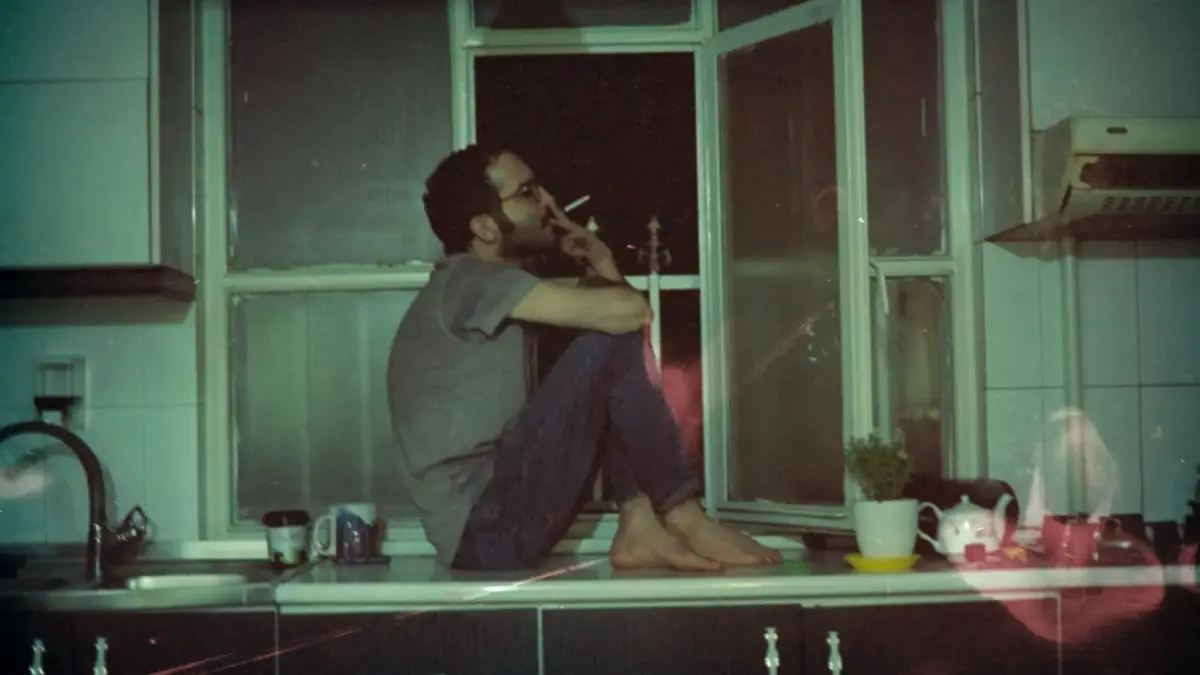
My father never sat down before 11 PM. Not once. Not in thirty years of marriage, not on holidays, not on the weekends when other men on our street were stretched across recliners watching football. He was always moving. Wiping the stovetop. Tightening a hinge. Walking the perimeter of the house like a man guarding something invisible.
I used to think he was restless. That maybe he had too much energy, or that sitting bored him, or that he genuinely enjoyed checking the lock on the back door for the fourth time in an hour.
I was wrong about all of it.
He wasn’t restless. He was performing. And the audience was anyone in the house who might catch him doing nothing.
I know this because I became him. I am forty-seven years old, and I cannot sit on the couch while my wife is still awake. I just can’t. My body won’t allow it. There is always one more thing to wipe, one more dish to rinse, one more reason to be standing. And when she finally says goodnight and the bedroom door clicks shut - only then does something inside me release. Only then do I sit. Only then do I breathe like a person who has permission.
This is the article I wish someone had written for me twenty years ago.
The Puttering That Isn’t Puttering
You know the pattern even if you’ve never named it.
The house is winding down. Your partner is reading on the couch. Your kids are in their rooms. The day is functionally over. There is nothing left to do.
And yet you are standing at the kitchen counter, reorganizing a drawer that doesn’t need reorganizing. You are checking that the garage door is closed even though you checked seven minutes ago. You are folding a towel that was already folded.
If someone asks what you’re doing, you have an answer ready. Always. “Just tidying up.” “Making sure everything’s locked.” “I’ll sit down in a minute.”
But you won’t sit down in a minute. You won’t sit down until the house is dark and every witness is asleep.
This isn’t obsessive-compulsive behavior. It isn’t anxiety in the clinical sense. It is something quieter and older than that. It is a boy’s voice inside a man’s body whispering the same thing it has whispered for decades: if they can see you resting, they’ll know you’re not enough.
Where Boys Learn That Stillness Is Laziness
A 2019 study published in the Journal of Research in Personality found that men who grew up in working-class households were significantly more likely to associate rest with guilt - and to delay personal relaxation until they were alone or unobserved. The researchers called it “conditional rest tolerance.” I call it the inheritance nobody talks about.
Think about the fathers and grandfathers of men in their fifties and sixties. Think about what those men modeled.
They came home from factories and farms and job sites. They ate dinner. And then they fixed something. They mowed something. They built something. There was always a project, always a chore, always motion. Sitting was what you did in church, and even then you sat up straight.
The message was never spoken out loud because it didn’t have to be. A boy absorbs it through watching. Through noticing which version of his father earns approval and which version earns a sideways look. The father who is fixing the fence is the good father. The father who is sitting on the porch is the one the neighbors talk about.
Gabor Mate has written extensively about how children internalize the emotional postures of their caregivers - not just the words, but the unspoken rules about what feelings and states are acceptable. For boys in working-class homes, the unspoken rule about rest was brutal in its simplicity: rest is earned, and it is never fully earned, and if someone catches you taking it, the earning resets to zero.
The Night Shift Nobody Assigns
Here is what the wives and partners of these men often notice but rarely understand.
He is different after midnight. He is softer. He laughs at something on his phone. He sits with his legs stretched out and his shoulders dropped. He pours a drink or makes a snack and eats it slowly, without standing at the counter, without already moving toward the next task.
This is not a different man. This is the same man without an audience.
A 2021 study in Frontiers in Psychology examined what the researchers called “private restoration behaviors” - the ways people recover from emotional and physical fatigue when they believe they are unobserved. Men who scored high on what the study called “performance-based masculinity” showed a dramatic difference in physiological stress markers when alone versus when other household members were present. Their cortisol dropped. Their breathing slowed. Their bodies literally changed when no one was watching.
Because rest, for these men, is not a neutral act. It is an exposure. Sitting on the couch at 8 PM while your wife walks past carrying laundry feels - to a man wired this way - like being caught stealing. It doesn’t matter that she wouldn’t judge. It doesn’t matter that she’s told him a hundred times to just sit down. The judge isn’t her. The judge has been dead for twenty years and still runs the courtroom.
Devotion Disguised as Motion
I want to be careful here because this is the part where most psychology articles would turn clinical. They’d call this a disorder. They’d recommend therapy. They’d frame the behavior as something broken that needs fixing.
I don’t see it that way.
Yes, the root is painful. Yes, a boy should be allowed to rest without earning it. But the man that boy became - the one wiping counters at 10 PM, the one checking the locks, the one who makes sure the coffee is set up for tomorrow morning before he gives himself permission to stop - that man is not broken.
He is devoted. He expresses love through maintenance. He keeps the gears turning because keeping the gears turning is the only language of care he was ever taught.
His wife might wish he’d sit with her on the couch. She might feel lonely watching him move through rooms, always one task away from being present. And she’d be right to feel that. Both things are true. His motion is love, and his motion is distance, and the tragedy is that he can’t tell the difference because they were fused together before he had the words to separate them.
What the Kitchen Looks Like at 11:47 PM
I want to describe this moment because if you are one of these men, you will recognize it immediately. And if you love one of these men, you deserve to understand what it looks like from the inside.
The house is finally dark. The last door closed ten minutes ago. You did three more things after that because you needed the buffer - you needed to be absolutely sure that everyone was asleep and not just lying there waiting to come back out.
And then you sit.
Not on a chair. Usually on the couch, in a specific spot, with a specific posture that would look unremarkable to anyone but feels - to you - like an act of defiance. You are sitting down. In your own house. Doing nothing.
The kitchen light is still on because full darkness would feel like hiding, and you’re not hiding, you’re just resting, and there is a difference, even though it doesn’t feel like one.
You might watch something on your phone. You might just sit there and listen to the refrigerator hum. Daniel Goleman once described emotional intelligence as the ability to recognize your own emotional states in real time. This late-night moment is the only time some men can do that. The only time the internal noise drops enough to hear what they actually feel.
And what they feel, usually, is tired. Just tired. Not depressed or anxious or in crisis. Just tired in the honest, bone-deep way that they weren’t allowed to feel at 7 PM because there were still witnesses.
The Permission Nobody Gave You
Here is what I’ve learned, and I say this as a man who still struggles to sit down before the house goes dark.
The boy who learned that rest was a character flaw was not wrong about his environment. He read the room correctly. In that house, at that time, with that father, rest really was dangerous. Stillness really did invite criticism. The boy adapted perfectly to an imperfect situation.
But the house changed. The father is gone or aged or softened. The wife is not keeping score. The children do not think less of a father who sits. The room the boy read so accurately no longer exists - but the reading persists because it was written into his body before his mind was old enough to edit it.
A 2023 study in Psychological Science found that behavioral patterns formed in childhood homes - particularly those related to achievement, rest, and perceived judgment - remain active in adults even when every rational part of the brain knows the original conditions no longer apply. The researchers likened it to a smoke alarm that keeps going off in a house that hasn’t had a fire in thirty years. The alarm isn’t broken. It’s just faithful to an old threat.
You are faithful to an old threat. That’s not a flaw. That’s a boy who did what he had to do.
Sitting Down While Someone Is Still Awake
I sat on the couch last Tuesday at 9:15 PM. My wife was still up, reading in the armchair across the room. My hands were empty. I wasn’t holding a phone or a remote or a rag or a wrench. I was just sitting.
It lasted about four minutes before I got up to check something in the garage.
But those four minutes happened. And my wife looked over at me during one of them, and she smiled - not because she knew what it meant, but because she liked having me there. Just there. Just still.
I’m not going to tell you to go to therapy or journal about your father or practice mindfulness. You already know what this is. You’ve always known.
I’m just going to tell you that the house is yours now. The couch is yours. The evening is yours. And rest - visible, witnessed, unapologetic rest - is not a flaw in your character.
It never was. A good boy just believed it because a tired man needed him to.