Men who grew up watching their fathers check every lock in the house before bed - the front door, the back door, the garage, the windows - often become adults who perform the same circuit every night without being asked, and the ritual they call habit is actually a prayer a boy learned from watching a man who could not say I love you any other way but by making the house safe enough for everyone inside it to sleep
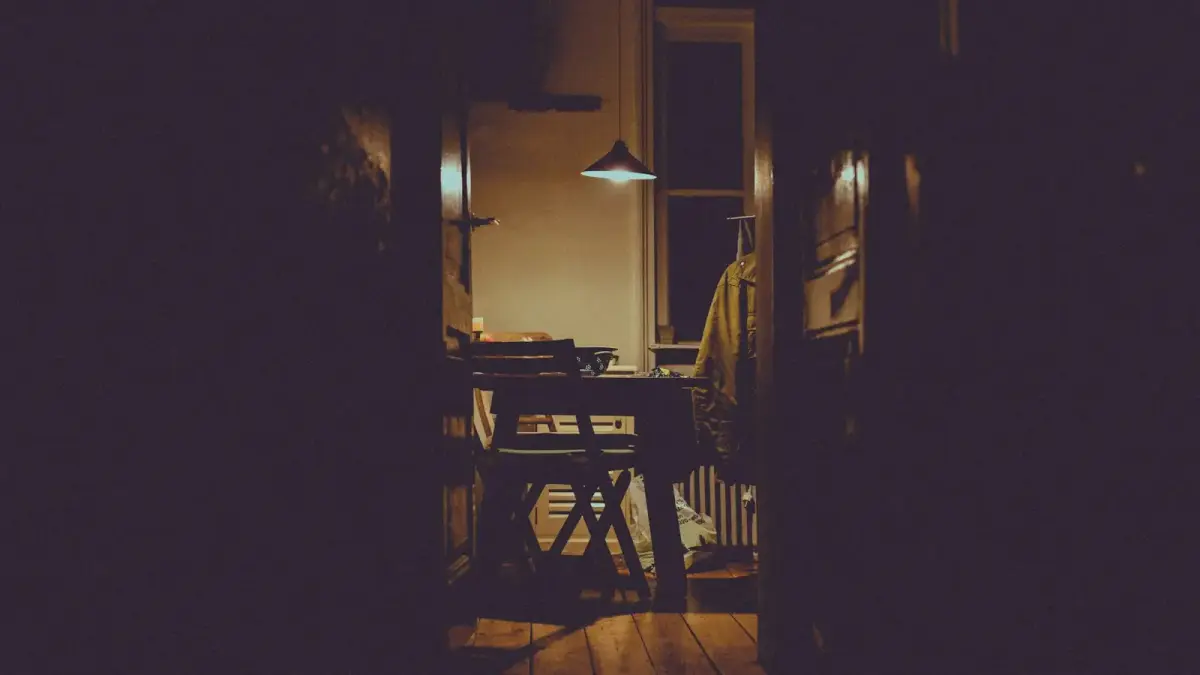
I check the front door at 10:47 every night.
Not because I decided on 10:47. Not because anything happened at that time that made it significant.
But because my father checked the front door at roughly 10:47 every night of my childhood, and somewhere between watching him do it a thousand times and doing it myself in my own house, the number stopped being a time and started being a feeling. The feeling that the day is almost done, that everyone is almost safe, that there is one more thing left to do before sleep is allowed.
I don’t set an alarm. My body just knows the way it knows to breathe, or to flinch when something moves in the periphery. Somewhere around quarter to eleven, my legs start moving toward the front door.
If you grew up watching a man walk the perimeter of your house every night before bed - testing each lock, pausing at each window, rattling the knob to confirm what his eyes already told him - then you already know what I’m describing. You probably do it yourself now. And you probably can’t explain why it matters so much, only that skipping it feels like leaving a sentence unfinished.
The circuit has an order, and the order is sacred
Every man who does this has his own sequence. And every man will tell you the sequence cannot be changed.
My father’s went: front door, deadbolt, chain. Side door to the garage. Garage door - the big one, confirmed by the red light on the wall unit.
Then the back sliding door, with the wooden dowel laid into the track. Kitchen window over the sink. Living room windows, both of them.
Then the hallway, where he’d pause and listen for a second before his bedroom door closed.
I watched that route so many times I could have drawn it on a floor plan. I knew which boards creaked under his weight. I knew the sound of the deadbolt engaging - that deep, satisfying thud of a bolt sliding into a steel frame.
I knew the rattle he gave the back door handle. Two quick tugs, not one, because one could be a fluke.
He never announced it. He never said, “I’m going to go lock up.” He just rose from wherever he was sitting, usually the couch after the news, and began like a priest stepping into the evening liturgy.
A 2018 study published in the Journal of Family Psychology found that children develop what researchers called “security schemas” - mental models of what safety looks and sounds like - primarily through observation rather than verbal instruction. The child doesn’t learn “the house is safe” because someone tells them. They learn it because they watch someone make it so.
My father was building a security schema in my nervous system. He just thought he was locking doors.
The boy watches and absorbs the prayer before he knows it is one
I must have been six or seven the first time I became fully aware of the circuit. I was supposed to be asleep, lying in the dark with my door cracked open, and I heard him coming down the hallway - not toward me, but toward the front of the house.
I heard the deadbolt. That particular click.
Then his footsteps tracking left toward the side door, the lighter click of that lock. Then the garage, a pause, the shuffle back.
Then the sliding door, with the small scrape of the dowel being positioned.
I didn’t know what he was doing. I didn’t understand locks or security or the thousand anxieties that adult life presses onto a man who has people sleeping under his roof.
I just knew that the sound of him moving through the house was the last thing I heard before sleep took me. And that hearing it meant the world was in order.
That is the prayer. Not words, not a blessing spoken aloud. Just the sound of a man’s footsteps moving from door to door, confirming that every barrier between his family and the outside world is holding.
Children absorb rituals whole. They don’t deconstruct them into components or analyze the logic.
They take in the complete sensory package - the timing, the sounds, the sequence, the silence that follows - and store it as a single unit of meaning. The meaning my nervous system assigned to my father’s circuit was simple: this is what it sounds like when someone loves you enough to stand between you and everything else.
His father did it before him, and his father before that
My dad never mentioned learning it. I asked him once, years later, why he checked the locks every night.
He looked at me like I’d asked why he breathed. “Because the house needs to be locked,” he said.
That was the entire explanation.
But I know he learned it from his father, because my grandmother mentioned it once at Thanksgiving. She said my grandfather walked the house every night like he was doing a security inspection, and that he’d done it since the day they moved in, in 1958.
She said it with a kind of amused warmth, the way you talk about a man’s quirks after forty years of sleeping beside them. She didn’t know she was describing a lineage.
A devotional practice passed from body to body, father to son, without a single word of instruction. My grandfather learned it from the world he came from - a world where a man’s primary function was to stand between his family and whatever might come in the night.
Nobody sat him down and taught it. He watched his own father do it, the way I watched mine, the way my son now watches me from the hallway with his door cracked open.
A 2021 study in Frontiers in Psychology found that protective behaviors in fathers show a remarkably high rate of intergenerational transmission - significantly more than maternal protective behaviors. The researchers suggested this is because fatherly protection is often enacted physically and silently, making it uniquely suited to observational learning.
A boy doesn’t need to be told to check the locks. He just needs to watch a man do it every night for fifteen years, and the behavior writes itself into his body like muscle memory.
This ritual predates any of us. It goes back to the first man who slept at the mouth of a cave and made sure nothing got past him before the people behind him closed their eyes.
What his wife thinks is caution is actually a love language with no words
My wife noticed it early. She didn’t understand it at first. She’d say, “I already locked the front door,” and I’d nod and go check it anyway.
It’s not that I didn’t believe her. It’s that the checking isn’t about whether the door is locked.
The checking is the act itself - the deadbolt sliding under my hand, the resistance of a knob that won’t turn, the visual confirmation that the chain is engaged. These sensations are the vocabulary, and without performing them myself, the sentence isn’t complete.
She used to think it was anxiety. Or maybe a mild compulsion, the kind you see listed in articles about OCD that float through your phone at midnight.
I understand why it looks like that from the outside. A man who can’t go to bed without touching every lock in the house does look like a man who is worried.
But I am not worried. I am praying.
I am saying, with my hands and my feet and the specific route I walk through our home every night: I am here, I am awake, nothing gets past me tonight. You can let your bodies go heavy and your minds go quiet.
Daniel Goleman’s work on emotional intelligence identifies what he calls enacted empathy - the expression of care through action rather than articulation. Men who struggle to verbalize emotional states often develop elaborate behavioral systems for expressing the same content.
The lock-checking circuit is enacted empathy at its purest. It says everything the man cannot say, using the only language his father gave him.
My wife understands it now. She doesn’t say “I already locked it” anymore. She lets me walk the house.
Sometimes, when I come back to the bedroom, she’s already half asleep, and I realize she was waiting for the sound of me finishing the circuit before she let herself go under. She absorbed the prayer too. She just received it differently than I did.
The night you skip it, your body tells you something is wrong
I traveled for work once and spent the night in a hotel. The door had an automatic lock - one of those mag-strip systems that engages when the door closes.
There was nothing to check. Nothing to rattle. No deadbolt to slide, no second lock, no windows worth inspecting on the fourteenth floor.
I lay in that bed for two hours unable to sleep.
My body was waiting for a sequence that wasn’t coming. Like a song that stops before the final chord resolves.
Every system in me was humming at a low frequency, waiting for the permission that the completed circuit provides: you’ve done your part, you can rest now.
I got up and checked the hotel door anyway. Pulled the handle, engaged the privacy latch, checked the window even though it didn’t open.
It was a pale imitation of the real thing, but it was enough. My body accepted the substitution, and I slept.
This is how you know it isn’t about security. A fourteenth-floor hotel room with a magnetic lock is objectively more secure than my 1990s colonial with its wooden-dowel sliding door. But the objective security was never the point.
The moment you realize you are your father
It happened on a Tuesday. Nothing special about the night. My son was maybe nine.
I was doing the circuit - front door, side door, garage, sliding door, windows - and I reached the hallway and paused, the way I always pause, to listen.
And I heard it. The creak of a small body shifting in bed.
He was awake. He had been listening to me walk the house, the same way I used to listen to my father. Tracking my footsteps door to door, waiting for the last lock to engage before letting his body go slack.
I stood in that hallway for a long time.
I stood there understanding, fully, that I had become the man I used to watch. That my son was now the boy in the dark, building his security schema out of my footsteps and the sound of my deadbolt and the specific silence that follows the final check.
One day he would have his own house, his own circuit, his own family listening for the sound of him finishing it. The ritual would outlive me the way it outlived my father and his father before him.
I wasn’t checking locks. I was writing a prayer into my son’s nervous system.
The same prayer my father wrote into mine, and his father into his. A prayer that says: the man in this house is still awake, he has checked every door and tested every lock, the house is sealed, you are inside it, and nothing is getting in tonight.
You are not anxious - you are faithful
If you are a man who does this - who walks the house every night in the same order, who rattles the same knobs, who cannot sleep until the circuit is complete - I need you to hear something.
You are not anxious. You are not compulsive. You are not rigid or controlling or stuck in a pattern you should probably talk to someone about.
You are faithful. You are performing an act of devotion so old it doesn’t have a name, doing what your father did and his father before him, all the way back to a time when the only thing between a family and the dark was a man who refused to sleep until he was sure.
The people in your house may not know what they’re hearing when your footsteps start down the hallway. They may call it habit, or your “thing.”
But their bodies know. Their nervous systems recognize the sound of the circuit completing. And they sleep a little deeper because of it - not because the locks are engaged, but because you engaged them.
Your father couldn’t say “I love you” the way books tell men they should. But every single night, he said it with a deadbolt and a rattle and a pause in the hallway and the quiet closing of his bedroom door.
And now you say it the same way.
And your children are listening.