There are men who mow the lawn every Saturday morning not because the grass needs it but because the mower is the only machine in their life loud enough to make conversation impossible, and the hour they spend walking straight lines across the yard is the only hour all week their body is not bracing for someone to need something from them
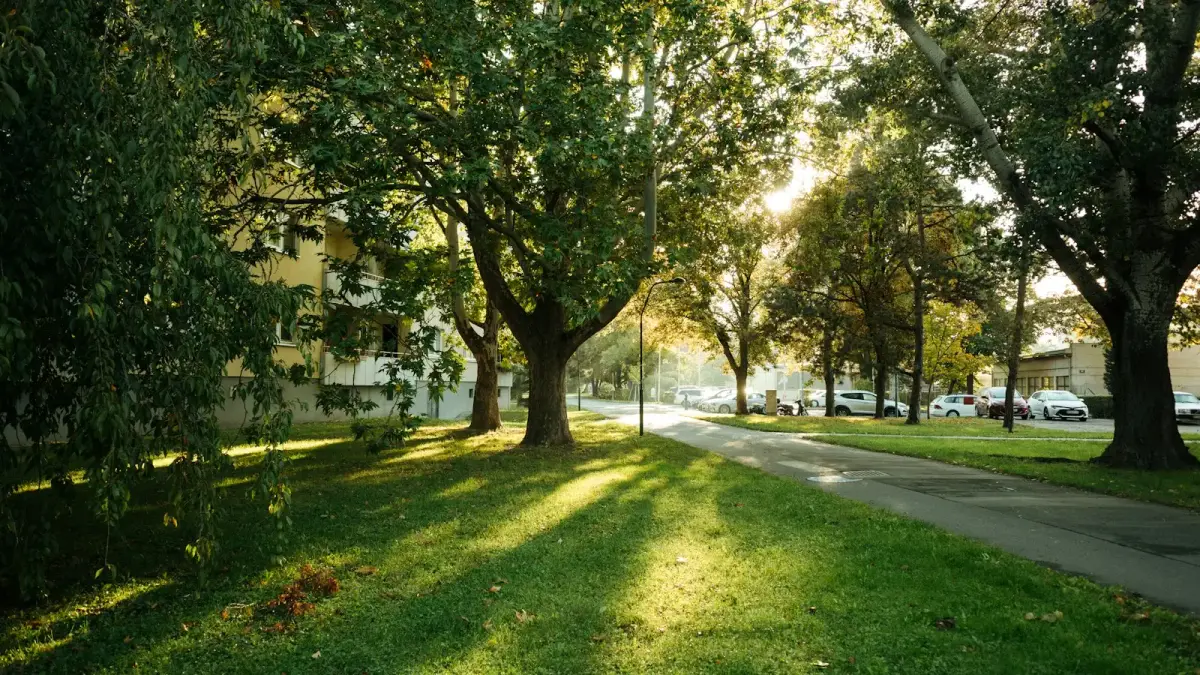
I mowed the lawn last Saturday even though I had mowed it four days earlier. It did not need mowing. My wife looked out the kitchen window and said something I could not hear because the engine was already running, and I pretended not to see her mouth moving.
That is not a confession of cruelty. That is a confession of desperation.
The mower was loud enough that nobody could ask me anything, and for forty-seven minutes I walked in straight lines across a yard that was already short, and my shoulders dropped two full inches, and my jaw unclenched for the first time since Monday, and I did not have to be anyone’s answer to anything.
I came inside afterward smelling like gasoline and cut grass, and my wife said the yard looks great, and I said thanks, and neither of us mentioned that the yard had looked exactly the same before I started.
The machine that makes you unreachable
There is a particular kind of man - and if you are reading this, you probably live with one, or you are one - who has built his entire interior life around machines that make noise.
The lawn mower. The table saw. The leaf blower.
The pressure washer. The shop vac.
The router table in the garage that he bought three years ago and has used exactly twice for woodworking and approximately two hundred times for the sound it makes when he turns it on.
These are not hobbies. They are alibis.
They are the only socially acceptable way a man in his forties or fifties or sixties can say “I need to be alone” without anyone asking him why. Without anyone asking if he is angry. Without anyone looking at him with that particular tilt of the head that means they are about to start a conversation he does not have the energy to finish.
A 2019 study published in the Journal of Research in Personality found that men are significantly less likely than women to articulate a need for solitude, even when their psychological need for it is identical. The researchers noted that men who do seek solitude tend to frame it in terms of activity rather than emotional need - they are “working on something,” not “needing space.”
That is the whole trick. The lawn mower is not a machine for cutting grass. It is a machine for creating the only kind of silence a man was ever allowed to have - the kind buried inside noise.
The garage is not about the car
You know the man I am talking about. You might be married to him.
He disappears into the garage after dinner. He says he is going to check on something. He does not specify what.
He is in there for forty-five minutes. When he comes back inside, he has not fixed anything, has not built anything, has not changed anything about the car that was already fine when he walked out.
But something in his face has shifted. His eyes are softer. He sits down on the couch and asks about your day, and for the first time since morning, the question sounds like it has room behind it.
What happened in that garage was not mechanical. It was neurological. His nervous system spent forty-five minutes in a space where nobody was going to walk in with a problem or hand him a phone or need a decision about what to have for dinner.
The garage door was closed. The concrete floor was cold. And for forty-five minutes, his body remembered what it felt like before it started bracing.
The difference between being alone and being unreachable
Here is the thing most people do not understand about this pattern. These men are not introverts in the textbook sense. They coach Little League and chair the HOA meeting.
They are not craving solitude. They are craving something more specific than that.
They are craving unreachability.
Being alone means no one is in the room. Being unreachable means no one can get to you even if they tried.
The mower makes you unreachable. The table saw makes you unreachable. The fishing boat a mile offshore in the fog at five in the morning makes you unreachable.
A locked door does not, because someone will knock. A bedroom does not, because someone will text. A walk around the block does not, because your phone is in your pocket and your wife has your location.
But a man standing behind a running lawn mower at seven-thirty on a Saturday morning, wearing ear protection, covered in grass clippings? That man is gone. That man is inside the noise, and the noise is a wall, and the wall has no door.
That is what he is mowing toward. Not a nicer lawn. A thicker wall.
Boys who never learned the sentence
Here is where it started.
You were ten or eleven. You were sitting in your room, maybe reading, maybe just sitting, and your mother or your father came in and said, “What are you doing?”
Not with curiosity. With suspicion. As if a boy who is sitting quietly must be doing something wrong, or feeling something wrong, or becoming something that needs to be corrected.
So you learned to always be doing something. You were not sitting - you were reading. You were not needing space - you were mowing the lawn.
Dr. Niobe Way, a developmental psychologist at NYU, spent two decades studying adolescent boys and found that boys between the ages of twelve and fifteen undergo what she calls an “emotional crisis of connection” - they go from being expressive, vulnerable, and deeply attached to their friends to performing a version of masculinity that requires them to suppress those needs almost entirely.
The sentence they lose is simple. It is five words long. “I need to be alone.”
Girls lose things too. They lose plenty. But most girls are allowed to keep that sentence.
They are allowed to close a bedroom door. They are allowed to say “I just need a minute.” They are allowed to cry in a bathroom without someone asking them what their problem is.
Boys lose the sentence. And they spend the next thirty or forty years building machines to say it for them.
His father did it with the woodshop
If you ask the man who mows the lawn every Saturday where he learned this, he will not know what you mean. He does not think of it as learned behavior. He thinks of it as yard work.
But if you press him, gently, he will remember something.
He will remember that his father had a place too. A workbench in the basement. A fishing spot.
A particular chair in the garage next to the old radio. A Saturday morning routine that involved the car and a chamois cloth and two hours that nobody was allowed to interrupt.
His mother called it “Dad’s time.” His siblings knew not to ask.
There was no explanation, no negotiation, no conversation about boundaries or needs. There was just the understanding that Dad was in the garage and you did not bother Dad when he was in the garage.
And if you go back another generation, there was the grandfather with the woodshop. Or the grandfather who fished alone.
Or the grandfather who drove to the hardware store every Saturday and walked the aisles for an hour without buying anything, because the hardware store was the only cathedral he had ever been allowed to enter without explanation.
A 2021 study published in Psychology of Men and Masculinities found that men who grew up with fathers who modeled “activity-based withdrawal” were significantly more likely to adopt the same pattern. The researchers described it as an intergenerational transmission of emotional coping that is invisible precisely because it looks productive.
Three generations of men, building things they do not need, fixing things that are not broken, mowing grass that is already short. Three generations of men who never once said the sentence.
The wife who thinks he loves yard work
She tells her friends he is obsessed with the lawn. She says it with affection, maybe a little eye-roll, the way wives talk about the harmless quirks of men they have loved for a long time.
She does not know that the lawn is not a hobby. She does not know that when he is out there, walking those rows, something inside his chest opens up for the first time all week.
She does not know that the reason he always volunteers for the loud, solitary, outside jobs is not because he is handy. It is because those are the only requests he knows how to make.
He cannot say “I need an hour alone.” He has never said that sentence in his life. He is not even sure what would happen if he did.
He imagines it would sound like a complaint. He imagines her face, and the face is hurt, and he cannot hurt that face, so he puts on his boots and goes outside and starts the mower.
The kids think Dad just loves the yard. The neighbors think he is the most dedicated homeowner on the block.
Nobody knows. Including him. Because he has never had the language for it, and you cannot ask for something you cannot name.
The sadness underneath the noise
Here is the part I need to say carefully, because I do not want you to hear this as criticism.
There is something sad about a man who has to hide inside noise to find peace.
There is something sad about a culture that made “I need an hour” so impossible to say that a man had to buy a machine and burn gasoline and sweat through his shirt just to get what a closed door and a simple sentence should have given him.
There is something sad about the fact that his wife would probably say “of course, take all the time you need” if he asked. She would mean it. She is not the obstacle.
She never was. The obstacle is the voice inside his chest that was installed sometime around 1979, the one that says needing space is the same as failing the people who depend on you.
The man on the mower is not fine. He is not tired. He is holding, and holding, and holding, and the only time he puts it down is when the engine is loud enough that nobody can hand him anything else.
The straight lines
There is one more thing about the mowing that I want you to notice.
He walks in straight lines. Back and forth, back and forth, in rows so even they look measured.
He overlaps each pass by exactly two inches. He turns at the edges with the precision of someone who cares deeply about the geometry.
He does not mow in circles. He does not mow randomly. He mows in lines, and the lines are perfect, and if you asked him why, he would say it gives the best cut.
But that is not why.
The lines are the point. The order is the point.
In a life where everything is slightly out of his control - the bills, the kids, the marriage, the job, the body that aches in new places every year - the yard is the one thing that submits to his effort. The grass does what he tells it to do. The rows come out even.
For one hour a week, cause and effect are simple. Push the machine forward, the grass gets shorter. Turn around, push again.
The world makes sense in rows.
It is meditation, if meditation came with a pull cord and a Briggs and Stratton engine. It is prayer, if prayer were something you could do in a stained t-shirt without having to talk to anyone, including God.
The permission you were never given
If you are the man I have been writing about, I want to say something directly.
You are allowed to close the door. You are allowed to say the sentence. You are allowed to need an hour that does not involve a machine or a task or a reasonable excuse.
You are allowed to sit on the porch without fixing anything. You are allowed to go into the garage and just stand there, doing nothing, needing nothing, producing nothing, and that is allowed to be enough.
You are not broken for needing this. You are not weak. You are not failing anyone.
You are a person who was never given the smallest, most basic permission that a human being needs, which is the permission to say “not right now.”
The lawn will grow back. It always does.
And the next time you pull that cord on a Saturday morning, and the engine catches, and the noise fills up the yard, and your shoulders finally drop, I want you to know that I see what you are doing.
You are not mowing the lawn.
You are building the only room you were ever allowed to have.