There is a particular kind of conversation that only happens in the car on the way home from a family gathering - the one where you finally say what you actually thought about what your sister said at the table, where the sentences start tumbling out the moment you pull out of the driveway, where the car becomes the one room in the world where you are allowed to have the opinion you spent three hours swallowing - and the reason you always wait until the doors are closed and the road is moving beneath you is that a child who learned to hold her tongue at the dinner table never stopped needing an enclosed, moving space to make honesty feel safe enough to say out loud
The Driveway Was Always the Starting Line
The engine turned over and you hadn’t even backed out of the driveway before it started. Your partner’s hand was still reaching for the seatbelt and you were already mid-sentence.
“Did you hear what she said about the kitchen renovation? Did you catch the tone she used when she said ‘must be nice’ about our vacation?”
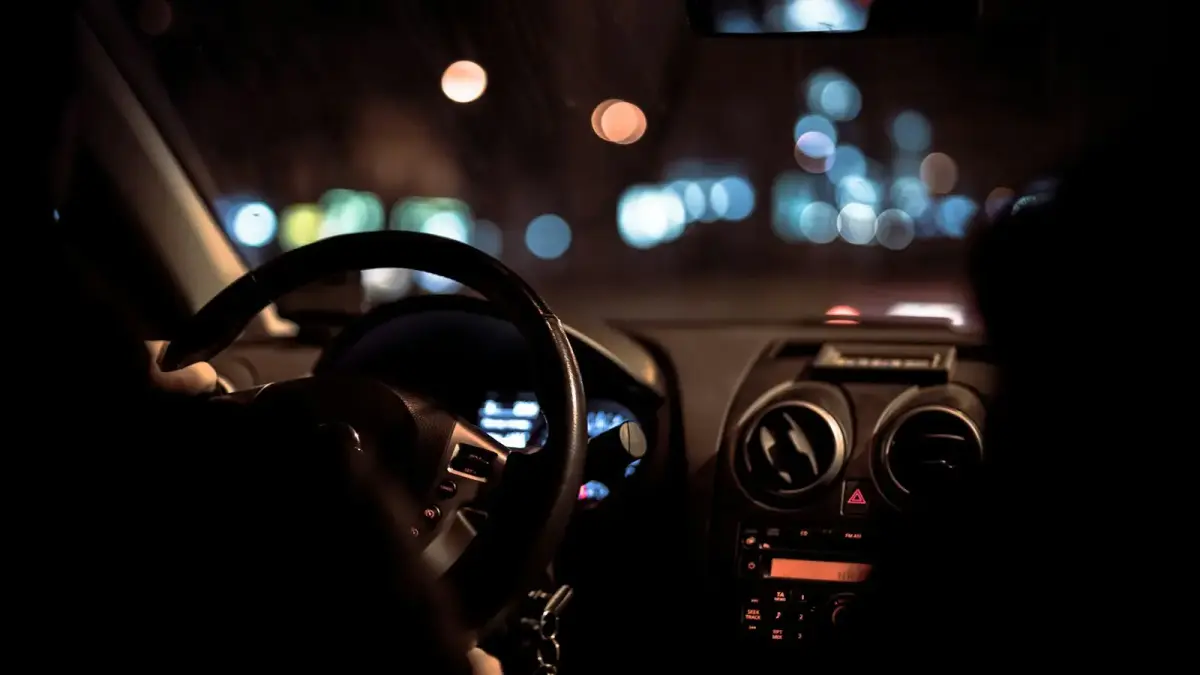
And your partner, who had been sitting at that table watching you smile and nod for three hours, didn’t look surprised at all. They just adjusted the mirror and pulled onto the road, because they knew. They always know. The real conversation was never going to happen inside that house. It was going to happen here - sealed inside this moving metal room, with the dark sliding past the windows and the taillights of your mother’s neighborhood shrinking behind you.
I have been that person a thousand times. Sitting at a family table, holding my face in an expression of pleasant neutrality while something inside me was screaming. Not screaming in anger, exactly. Screaming in the way a thought screams when it has been held underwater for too long and just wants to breathe.
The car ride home is where it finally surfaces.
The Confessional on Wheels
There is something about the architecture of a car that gives permission. The forward motion. The enclosed space. The fact that you are both looking at the road instead of at each other. The darkness, if it is nighttime, which it usually is because family dinners always run long.
A 2014 study published in the Journal of Environmental Psychology found that enclosed, moving environments lower psychological defensiveness. The combination of physical containment and forward motion creates what researchers call a “transitional space” - a psychological no-man’s-land between two settings where the social rules of neither fully apply. You are no longer at the gathering. You are not yet home. You are somewhere in between, and in that gap, honesty slips through.
I think most of us know this intuitively. We know the car is different. We know that the version of ourselves buckled into the passenger seat, watching streetlights pass, is closer to the real version than the one who just spent three hours asking about everyone else’s children and pretending she didn’t notice the comment about her weight.
The car becomes a confessional. Not in the religious sense - in the architectural one. A small, enclosed booth where the walls are close enough to hold you and the other person is separated by just enough space that you can speak without the vulnerability of full eye contact.
Your partner becomes the priest. Not because they absolve you, but because they witness you. They hear the uncensored version. They receive the rant, the hurt, the petty observation you would never say to anyone else.
And somehow, by the time you pull into your own driveway, the pressure has released. Not because anything was resolved, but because the honest thing was finally said out loud to someone who was willing to hear it.
Why You Could Never Say It at the Table
Here is the part that matters. You didn’t stay quiet at the family gathering because you are weak. You stayed quiet because you learned - very early, very precisely - that the family table is not a place where honest reactions are safe.
Maybe it was explicit. Maybe someone at that table, decades ago, said “don’t start” or “this isn’t the time” or “keep your opinions to yourself.” Maybe there was a raised voice, or a long silence that felt like punishment, or a car ride home from a different era where one of your parents said “you embarrassed me in there.”
Or maybe it was subtler than that. Maybe you just watched. You watched what happened to the person at the table who did say the honest thing. You watched your aunt go quiet after your grandmother’s response. You watched your father’s jaw tighten when your uncle made a joke that wasn’t really a joke. You absorbed the lesson without anyone ever teaching it directly.
The lesson was: this room has rules. The rules say you smile. The rules say you deflect. The rules say you absorb the comment about your life choices and respond with “ha, yeah, maybe” instead of “that actually hurt me.”
Dr. Gabor Mate has written extensively about how children develop emotional suppression as a survival strategy. It is not a flaw. It is an adaptation. A child who needs attachment - and every child needs attachment - will sacrifice authenticity to maintain connection. They will swallow the real reaction if the real reaction threatens the relationship.
And then they grow up. And the swallowing becomes automatic. And they don’t even realize they are doing it until the car doors close and the words start pouring out like water from a cracked dam.
The Geometry of Honest Conversation
I want to talk about why the car works when the table doesn’t, because it is not just about privacy. It is about geometry.
At a family table, you are facing each other. Eye contact is expected. Your face is visible. Your reactions are monitored. Everyone can see if your smile falters. The geometry of a dinner table is the geometry of surveillance - not malicious surveillance, but the ordinary, human kind where everyone is watching everyone and calibrating their behavior in real time.
A 2019 study in Psychological Science found that side-by-side positioning - the kind you find in a car, on a park bench, or walking together - significantly increases emotional disclosure compared to face-to-face positioning. When people are oriented in the same direction rather than toward each other, they report feeling less evaluated and more willing to share vulnerable material.
The car takes this principle and amplifies it. You are side by side. You are looking at the same road. Your hands are occupied. The engine provides white noise. And critically, neither of you can leave. You are both committed to this shared space for the duration of the drive, which removes the anxiety of “what if they walk away when I say the hard thing.”
This is why teenagers tell their parents important things in the car. This is why some of the deepest conversations in a marriage happen on long drives. This is why therapists sometimes walk with clients instead of sitting across from them.
The geometry of honesty is not a circle. It is a parallel line.
What You Are Actually Doing in That Car Ride
When you spend the first twenty minutes of the drive home dissecting every comment your sister made, you are not being petty. I want to be very clear about that.
You are doing something your nervous system desperately needs. You are processing.
At the gathering, you were in a state that psychologists call “emotional labor” - the active management of your external expressions to match social expectations, regardless of what you are actually feeling. Arlie Hochschild first described this in the context of work, but family gatherings demand it on an even deeper level, because the stakes are not professional. They are primal.
You were managing your face, your tone, your reactions, your body language - all while simultaneously tracking the emotional temperature of the room, anticipating conflict, and deciding in real time which version of yourself would cause the least disruption. That is exhausting work. And it generates a backlog of unprocessed emotional material that has to go somewhere.
The car is where it goes.
The rant about what your sister said is not really about your sister. Not entirely. It is about the gap between what you felt and what you expressed. It is about the accumulated weight of performing pleasantness when pleasantness was not what you felt. It is about reclaiming your own internal experience after spending hours pretending it was something else.
Your partner, sitting in the driver’s seat, nodding along - they are not just hearing gossip. They are helping you metabolize an experience that your body held in suspension for hours. They are the witness that makes the processing real.
The Road as Permission Slip
There is one more thing about the car that I think matters, and it is the one that makes me the saddest.
The car is moving. And for some of us, motion is the only context in which honesty feels survivable.
Think about that. A stationary room with people you love - that feels dangerous. A moving vehicle headed away from them - that feels safe. The road itself becomes a kind of permission slip. As long as the wheels are turning, the honest words can keep coming. As long as there is distance being created between you and the gathering, the truth can be spoken.
A 2021 study in Frontiers in Psychology found that physical movement activates different neural pathways than stillness, and that people in motion show reduced activity in the amygdala - the brain region associated with threat detection. In plain terms: moving makes your brain feel less afraid. And when your brain feels less afraid, it releases the things it was holding back.
This is why you can’t say it at the table but you can say it at sixty miles an hour. It is not a character flaw. It is neuroscience layered on top of childhood conditioning layered on top of the very real social dynamics of a family system that never taught you it was okay to disagree out loud.
The Child Who Learned to Wait
I think about the child version of us sometimes. The one sitting at a table that felt enormous, surrounded by adults whose approval meant everything, learning in real time that some thoughts were acceptable and some were not.
That child didn’t stop having the unacceptable thoughts. She just learned to hold them. She learned to wait for the right container - a diary, a best friend’s bedroom, a car ride home with someone who wouldn’t punish her for having a reaction.
And here she is, decades later, still waiting for the container. Still holding the thought until the doors close and the engine starts and the road begins to move beneath her. Still needing the enclosed, forward-moving space to feel safe enough to say “that hurt me” or “I disagree” or even just “did you notice that, too?”
There is nothing wrong with this. I want you to hear that. The car ride debrief is not evidence that you are passive or conflict-avoidant or emotionally stunted. It is evidence that you found a solution. You found a space that works. You found a way to be honest without blowing up the relationships you still need to survive.
But I also want to say this gently: you deserve rooms that feel as safe as the car. You deserve tables where the honest reaction doesn’t have to be swallowed. You deserve stillness that doesn’t feel like surveillance.
You may not have those rooms yet. That is okay. The car is a good room. The road is a good listener. And the person beside you, the one who already knew the real conversation wouldn’t start until the seatbelts clicked - they are doing something holy, whether they know it or not.
They are giving you a space where you are finally allowed to say what you actually think.
And that, in a family system that taught you to smile through everything, is no small thing.