There is a particular kind of man who plants the same vegetable garden his father planted every spring - the same tomatoes along the south-facing fence, the same row of green beans his father called insurance because they always came in no matter what else failed, the same basil in the corner that gets too much shade and never grows taller than six inches - not because these are the best varieties or the ideal layout for the soil but because a boy who knelt beside his father in May and learned which direction to face the seed and how deep to press it into the dark earth learned that a garden is not about food but about the promise that something you put into the ground with your own hands will come back, and the man who kneels at sixty-one in the same posture his father knelt is not growing tomatoes but tending the last conversation his father started that the soil keeps finishing every August
The garden was never about the tomatoes
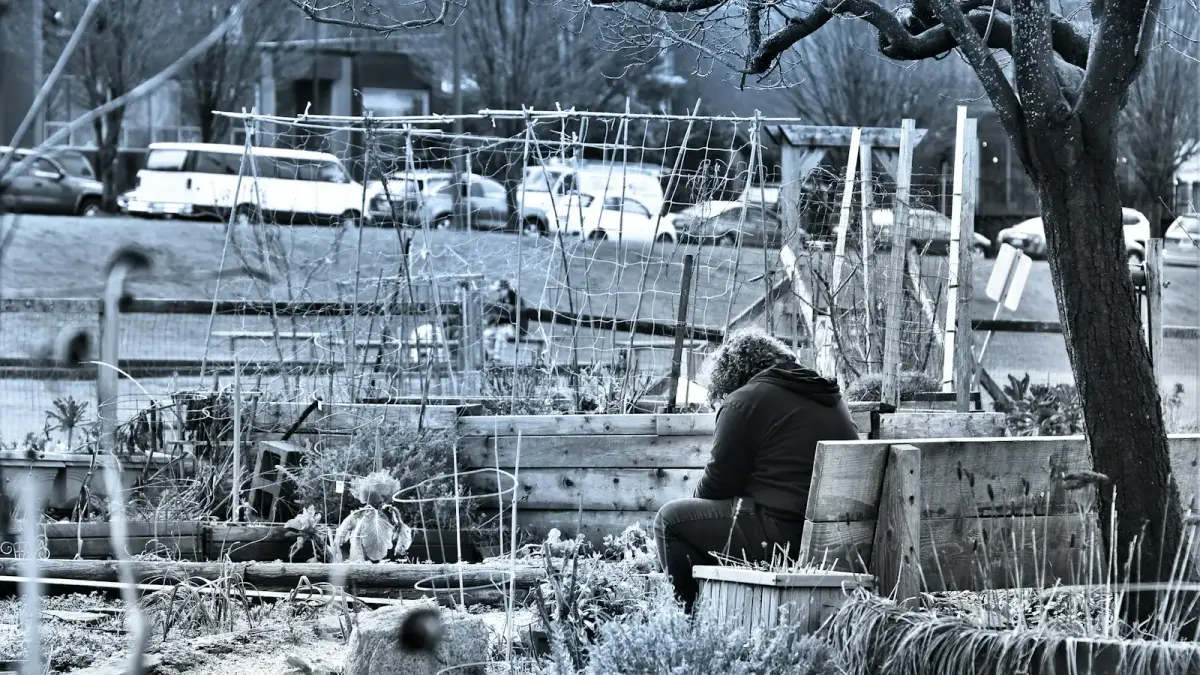
My neighbor Ed turned sixty-one this past March, and by the first Saturday in May he was on his knees in the backyard with a bag of Early Girl tomato seeds and a hand trowel that looked older than both of us.
I asked him once why he didn’t try one of the newer hybrid varieties. The kind that resist blight better. The kind that actually produce more fruit with less water and less worry.
He looked at me like I’d suggested he rename his children.
“These are what Dad grew,” he said, and that was the end of the conversation. Except it wasn’t, because I’ve been thinking about that sentence for three years now. These are what Dad grew. Not these are the best. Not these are what I prefer. These are what Dad grew - as if the seeds themselves carried instructions that had nothing to do with germination.
Ed’s father has been gone for fourteen years. The garden has not missed a single spring.
The boy who learned to kneel
There is a particular kind of education that happens in a garden between a father and a small boy, and it has almost nothing to do with horticulture.
The boy learns which direction to face the seed. He learns that you press it into the earth with your thumb, not your finger, because the thumb knows the right depth without measuring. He learns that the green beans go along the east side because his father put them there, and his father put them there because his grandfather put them there, and nobody remembers the original reason anymore.
The reason doesn’t matter. What matters is the kneeling.
A 2018 study published in the Journal of Environmental Psychology found that place-based identity - the sense of self derived from meaningful physical locations - becomes more psychologically significant as people age, particularly in men who associate specific places with formative relationships. The researchers noted that the physical environment doesn’t just trigger memories. It becomes a container for identity itself.
Ed’s father taught him that basil goes in the southeast corner. It gets too much shade there. It never grows taller than six inches. Every year Ed plants it in the same spot, and every year it struggles in the same predictable way, and every year he lets it.
Because the basil isn’t there to grow. The basil is there because that’s where his father’s hand pointed when he said, “Basil goes here.”
What the hands remember that the mind forgets
You forget your father’s voice first. That’s what people don’t tell you about grief - that the most intimate thing, the sound of a person speaking directly to you, is the first thing the brain lets go of.
You forget the exact way he laughed. You forget whether he said “to-may-to” or “to-mah-to,” and that forgetting feels like a small betrayal you can never correct.
But your hands remember everything.
Your hands remember the depth of the seed. Your hands remember the pressure of the soil when you pack it down just enough but not too much. Your hands remember the temperature of the garden hose water in early May, that specific cold that means the ground is almost ready but not quite.
Research on embodied cognition - particularly a 2020 study published in Psychological Science - has shown that physical rituals activate memory networks that verbal recall cannot reach. The body stores emotional experience in motor patterns. When you repeat a physical action learned in the presence of someone you loved, you aren’t just remembering them. You are, in a neurological sense, being with them again.
This is why Ed kneels the way his father knelt. Not because it’s the most comfortable position for a sixty-one-year-old man with two bad knees. Because the posture itself is a kind of phone call.
The green beans his father called insurance
Ed’s father called the green beans “insurance” because they always came in. Drought year, wet year, the summer the tomatoes got blight and the cucumbers rotted on the vine - the green beans came in.
There’s something about that word, insurance, that tells you everything about the generation of men who used it. These were men who had watched things fail. Crops. Businesses. Marriages, sometimes. They had learned that the world does not reliably give you what you plant, and so you plant something that the world cannot take away from you.
The green beans were not about food security. They were about existential security. They were proof that effort still connects to outcome, that the universe has not entirely abandoned the contract between a man’s labor and the earth’s response.
Ed plants the same green beans every year. He gives most of them away. He doesn’t even particularly like green beans.
But every August, when the first pods appear, something in his chest loosens. Something he didn’t know was clenched. Because the beans came in again, which means the contract holds, which means his father was right, which means his father is still right, which means his father is still.
That last part is the one he can’t say out loud.
The garden as unfinished sentence
Psychologist Dan McAdams has written extensively about how identity is constructed through narrative - that we understand ourselves through the stories we tell about our lives. But there is a kind of story that doesn’t use words. There is a kind of story told entirely through repetition, through the annual act of putting the same thing in the same place and watching it come back.
Ed’s garden is an unfinished sentence his father started forty years ago.
Every spring, Ed adds another clause. The tomatoes go here. The beans go there. The basil struggles in its corner. The sentence grows longer, and it never reaches a period, and that is exactly the point.
Because a period would mean the conversation is over. And the man who kneels at sixty-one in the same posture his father knelt at fifty is not ready for the conversation to be over. He may never be ready. The garden is the only place where readiness is not required - where you just show up in May and the earth takes it from there.
A 2019 study in Frontiers in Psychology examined how intergenerational transmission of rituals - particularly physical, place-based rituals - serves a grief-processing function that formal therapy often cannot replicate. The researchers found that adults who maintained inherited rituals reported lower levels of complicated grief and a stronger sense of continuing bonds with deceased parents. The ritual didn’t replace the person. It held the door open.
Ed’s garden holds the door open.
What the soil keeps finishing
There’s a moment every August when the garden is fully in. The tomatoes are heavy on the vine. The green beans are hanging in their reliable clusters. The basil is doing its modest best in the shade.
Ed stands at the edge of the plot in the early morning, coffee in hand, and surveys the whole thing. He doesn’t pick anything yet. He just looks.
I asked him what he thinks about in that moment.
“Nothing,” he said. Then: “Everything.”
Then he was quiet for a long time, and I understood that I had asked a question that didn’t have a verbal answer.
What he thinks about is the morning his father stood in this same spot and said, “Look at that.” Just that. Look at that. As if the garden had done something miraculous by simply being what it was. As if the fact that you could put seeds in the ground in May and stand in front of food in August was not ordinary but astonishing.
The man who kneels at sixty-one has learned that his father was right about that too. It is astonishing. Not the botany of it. Not the agriculture. The fact that something you put into the ground with your own hands comes back.
The fact that anything comes back at all.
You are probably tending something too
Maybe it’s not a garden. Maybe it’s the way you fold towels the way your mother folded them, in thirds instead of halves, even though halves make more sense in your linen closet. Maybe it’s the route you drive to work - the long way, past the house you grew up in, adding seven minutes to your commute for reasons you’ve never explained to anyone.
Maybe it’s the recipe you keep making wrong on purpose, because your father made it wrong, and the wrong version is the right version, and you will defend this to anyone who tries to correct it.
These are not habits. These are conversations.
They are the places where the people who shaped you are still allowed to speak. Where their preferences, their quirks, their unexplained insistences are still honored - not because they were right, but because they were theirs, and because honoring them is the only way you know how to say I’m still listening.
Ed will plant that garden again next May. The tomatoes along the south-facing fence. The green beans his father called insurance. The basil in the corner that gets too much shade.
He’ll kneel the way his father knelt. He’ll press the seeds into the dark earth with his thumb. And the soil will do what the soil has always done - take what a man puts into it with his own hands and give it back, changed and growing and alive.
The last conversation his father started.
The one the soil keeps finishing every August.