There is a particular kind of man who puts his hand on the back of the passenger seat headrest when reversing the car, the arm extending across, the body turning, the face suddenly inches from the person beside him, and it was never really about seeing behind you, it was the only context in which he could reach toward someone without having to explain why
The Arm That Crossed the Distance
My father was not a man who touched people.
He shook hands firmly, squeezed shoulders at funerals, and gave the kind of hug where his arms went stiff and his back stayed straight, like he was bracing for something rather than giving in to it. I never once saw him reach for my mother’s hand in a restaurant. Never saw him stroke her hair or pull her close on the couch while the television murmured through a Sunday evening.
But when he reversed the car out of the driveway, something changed.
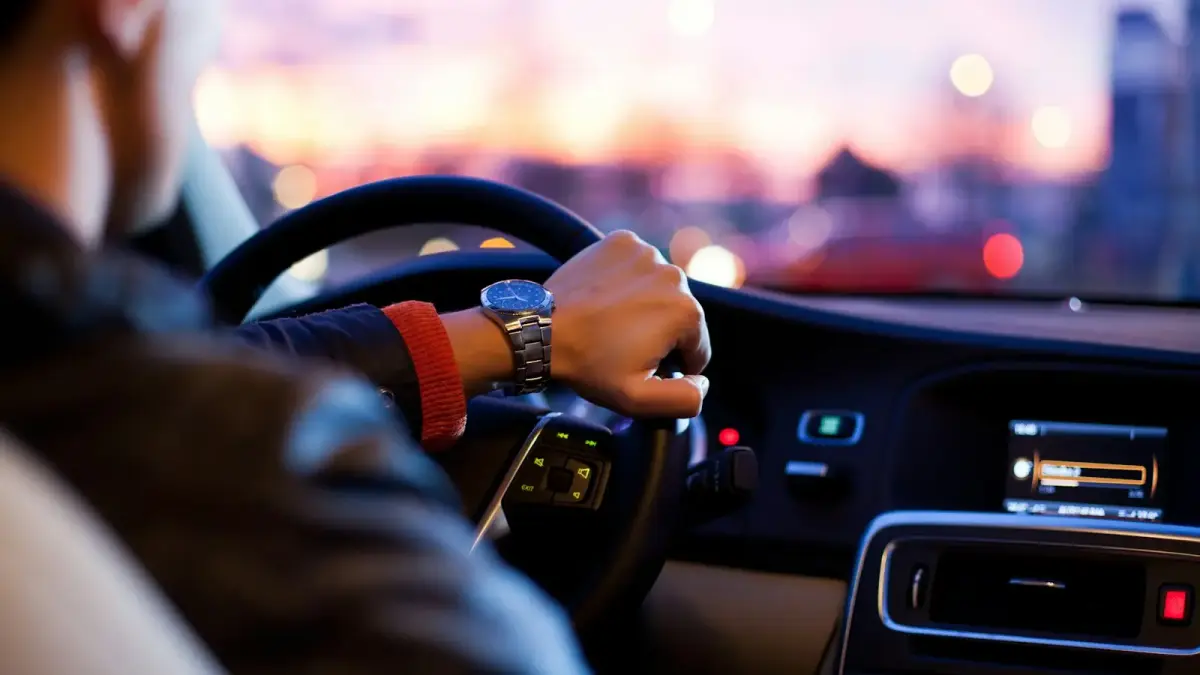
His left hand stayed on the wheel. His right arm extended across, settling on the back of the passenger seat headrest - sometimes on the headrest itself, sometimes on the top of the seat just behind my mother’s neck. His body turned. His face came close to hers. And for those few seconds, while the car crept backward and his eyes scanned the rear window, he was closer to her than I ever saw him be anywhere else.
I noticed this before I had words for it. I was maybe seven or eight, sitting in the back seat, watching his arm stretch across like a bridge between two people who had forgotten how to cross any other way.
He didn’t know I was studying him. He didn’t know that gesture would become the way I understood love for the next thirty years.
What the Body Learns When Words Are Not Allowed
There is a generation of men - and it stretches wider than one generation, really - who learned that physical closeness required a reason. You could throw an arm around someone after a touchdown. You could carry your daughter when she fell asleep in the car. You could put your hand on the headrest when you needed to see behind you.
But you couldn’t just reach across and touch someone because you wanted to be near them. That required an explanation, and the explanation was the part that felt impossible.
A 2019 study published in the Journal of Social and Personal Relationships found that men who scored high on traditional masculinity norms were significantly more likely to express affection through instrumental behaviors - acts of service, physical tasks, logistical care - rather than through direct verbal or physical intimacy. The researchers called it “enacted closeness,” and they noted something that anyone who grew up watching a quiet father already knew: the love wasn’t absent. It was translated into a language that didn’t require vulnerability to speak.
The hand on the headrest was that language, spoken fluently.
It was allowed because it was functional. It had a reason. The reason was driving. And within that reason, a man could let his arm cross the space between himself and the person he loved most, could let his body turn toward them, could let his face hover inches from theirs, and never have to say a single word about what he was actually doing.
The Geometry of Almost Holding Someone
Think about what that gesture actually looks like, stripped of its automotive context.
One person extends their arm behind another person’s head. Their torso rotates toward them. Their face turns close. If you saw this on a park bench, you would call it intimacy. You would call it the posture of someone who is about to whisper something tender, or press their forehead against someone else’s temple, or say I’ve got you.
In the car, it was called parking.
But the body knows what the body is doing, even when the mind insists otherwise. The nervous system doesn’t distinguish between a purposeful embrace and an arm that lands behind someone’s head because there’s a mailbox to avoid. The warmth still registers. The proximity still lands. The person in the passenger seat still feels, for those few seconds, held.
I think about my mother in that passenger seat. I think about whether she knew. Whether she felt the difference between the times he was genuinely looking behind him and the times he could have just used the mirrors but chose not to. Whether she understood that this was as close to tenderness as the architecture of his upbringing would allow.
I think she knew. I think she leaned into it without leaning, the way you do when someone is giving you something they can’t name and you don’t want to startle them out of it.
Intimacy Through Logistics
This goes so far beyond a single gesture in a car.
There are men who show love entirely through the machinery of competence. They check the tire pressure before you drive to your sister’s house. They put gas in your car so you won’t have to stop in the dark. They walk on the street side of the sidewalk. They carry the heaviest bag without being asked, hold doors with their whole body rather than just their hand, and stand slightly behind you in unfamiliar rooms - not because they think you’re fragile, but because positioning themselves between you and the unknown is the only protection they know how to offer.
A 2021 study in Frontiers in Psychology examined what the researchers termed “protective proximity behaviors” in long-term male partners. They found that men who had grown up in homes with limited emotional expression were far more likely to develop what the authors called “functional intimacy patterns” - habitual physical behaviors that served a practical purpose on the surface but consistently positioned them closer to their partner. The men in the study rarely identified these behaviors as affectionate. Their partners almost always did.
The gap between those two perceptions is where so much loneliness lives.
Because the man reversing the car genuinely believes he is reversing the car. He is not performing closeness. He is not thinking about intimacy. He is thinking about the curb and the garbage can and the neighbor’s van. But his arm still reaches. His body still turns. His face still comes close. And the fact that he doesn’t recognize what he’s doing might be the most honest part of all - the love leaking through the infrastructure of a self that was never given permission to express it directly.
What a Boy Learns in the Back Seat
I learned it from watching.
I learned that you could be close to someone if you were doing something else at the same time. That the arm behind the headrest was available to me if I was driving. That walking someone to their car was an acceptable form of not wanting them to leave. That fixing something in their apartment was a way of saying I want to be in your space without having to articulate why.
And for a long time, these translations worked. They were enough. The women in my life seemed to understand the code, or at least they accepted it. The arm on the headrest. The hand on the small of the back while navigating a crowded restaurant. The way I’d drive an hour to help with a shelf that took four minutes to install.
But there came a point - and I think most men like me reach it, usually around the time their body starts reminding them that time is not infinite - when the translations stopped being enough. When I realized that the arm behind the headrest was beautiful, but it was not the same as turning to someone in the middle of an ordinary afternoon and saying I love the way you exist in the world and I’m afraid of what happens when one of us isn’t here anymore.
The gesture got me close. The words were what I actually needed to cross.
The Tenderness That Had No Other Door
Daniel Goleman wrote about this in his work on emotional intelligence - the way men of certain generations developed what he called “emotional channeling,” routing affective states through physical competence because direct emotional expression had been coded as weakness in their formative years. The channel worked. It carried the feeling from one person to another. But it also meant that the feeling could never be fully received, because it always arrived disguised as something else.
Your father’s hand on that headrest was love. It was also a kind of grief. The grief of a man who had so much tenderness in him and so few doors through which it was allowed to leave.
I think about this every time I reverse my own car now. I notice my arm reaching. I notice the gesture living in my muscles like an inheritance, passed down through the specific choreography of a body that learned closeness from a man who could only practice it while driving.
And sometimes I let the arm settle there, on the headrest, behind the person I love. I let my body do what my father’s body taught it to do.
But then I do the thing he couldn’t.
I leave my arm there after the car stops moving.
The Thing That Was Never About the Car
If you grew up watching a man express love through the mechanics of daily life - through the way he held a door or checked a lock or salted the driveway at five in the morning so no one would slip - I want you to know that you are not imagining the love you felt.
It was real. It was enormous. It was just wearing work clothes.
And if you are that man - if you are the one whose arm reaches without thinking, who shows up with solutions when someone needs a witness, who carries other people’s bags because carrying is the only tenderness you trust - I want you to know that the people around you feel it. They have always felt it.
But they also want to hear it. Not because the gesture isn’t enough. But because you are enough, and the sound of you saying so is something the people who love you have been quietly waiting for, the way a passenger waits in the seat beside you, feeling your arm behind their head, knowing exactly what it means, hoping that someday you’ll know it too.
The hand on the headrest was never about the car.
It was the arm around the shoulder you never knew how to offer any other way.
And it was always, always enough to tell us you were trying.