There is a particular kind of man who still walks through the house at 10 PM turning off every light his family left on - the hallway, the bathroom, the lamp in the living room nobody is sitting near anymore - not because the electric bill matters the way it used to but because a boy who grew up watching his father patrol the house switching off evidence of his family's carelessness learned that a responsible man is one who walks behind the people he loves quietly correcting everything they forgot
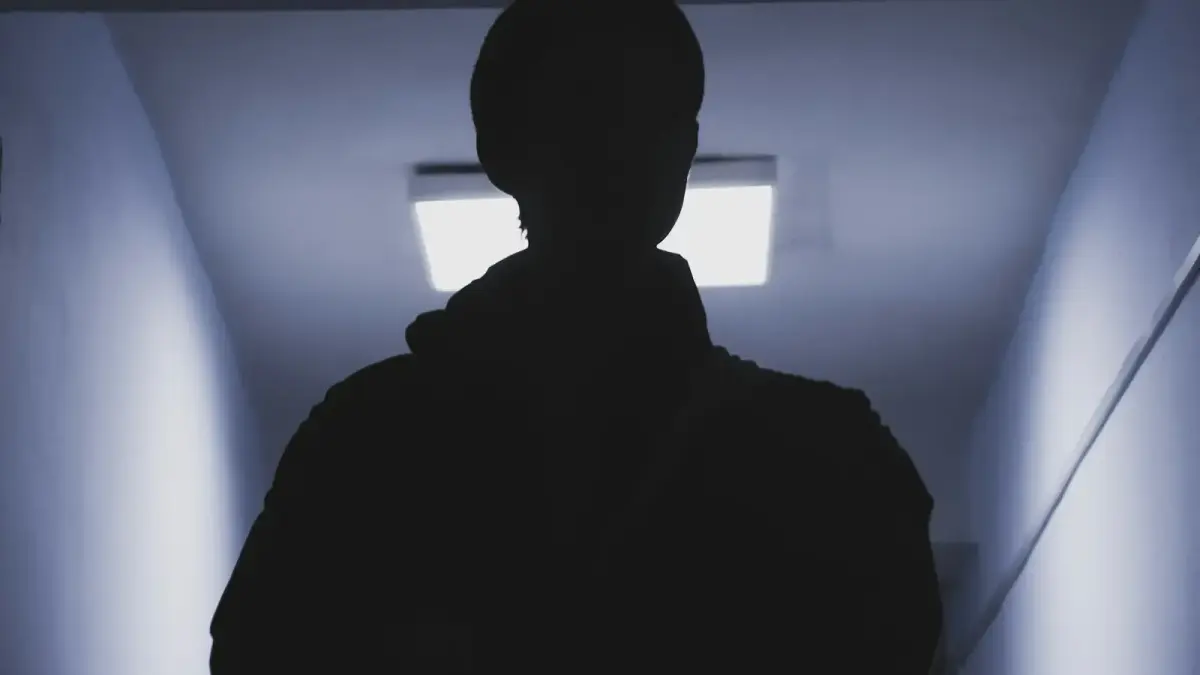
My father never said goodnight the way other fathers did. He said it with his footsteps.
I could hear him starting the circuit around 9:45 every evening - the soft padding of his socks against the hallway floor, the pause outside each room, and then the click. That small, deliberate click. The bathroom. The hallway. The light over the kitchen stove that my mother left on because she liked the way it made the house feel less empty after dark.
He never announced what he was doing. He never complained about it, either. He just walked behind us - his wife, his three kids, the trail of illumination we left in our wake like a careless signature - and he erased it. Room by room. Switch by switch. A man reducing his household’s evidence of comfort back to darkness, because darkness was cheaper and cheaper was safer and safer was love.
I didn’t understand that last part until I was well into my thirties.
The circuit has no off switch
You know this man. Or you are this man.
He earns enough now. The mortgage is manageable. The electric bill is a line item, not a crisis. He could leave every light in the house burning until morning and it would cost him less than his daily coffee.
But he can’t.
Something in him physically cannot walk past a light that nobody is using. It’s not a preference. It’s closer to a compulsion - a small, quiet alarm that sounds in the back of his skull every time he sees a bulb burning for no one.
His kids leave their bedroom lights on when they go downstairs. His wife leaves the bathroom light on because she’ll be back in twenty minutes. The porch light stays on past midnight because someone forgot.
And he walks the circuit. Every night. The same route his father walked. The same small clicks in the same predictable order.
A 2019 study published in the Journal of Family Psychology found that behavioral rituals are among the most reliably transmitted patterns between generations - more durable than values, more persistent than beliefs. We don’t inherit our parents’ opinions as consistently as we inherit their habits. The things they did with their hands, their feet, their bodies moving through domestic space - those transfer almost perfectly. Not because we’re taught them, but because we watched them ten thousand times before we were old enough to question why.
The light-switch patrol isn’t a choice. It’s an echo.
What the boy was actually learning
Here is what nobody explained to the boy watching his father flip switches in the dark.
His father wasn’t turning off lights. His father was performing the only version of control available to a man who felt, most of the time, that the world was happening to him.
The factory might lay him off. The car might break down in a way he couldn’t fix with the tools he had. The price of everything might go up again next month. His body might give out before the house was paid off.
But the lights - the lights he could manage.
Every switch was a tiny act of agency in a life that offered very little of it. Every darkened room was proof that he was paying attention, that he was keeping watch, that the household had a man in it who noticed things and responded to them and made small corrections that kept the whole operation from sliding into the kind of waste that, in his experience, preceded disaster.
Psychologist Terri Apter has written extensively about how working-class fathers often express love through acts of material vigilance rather than verbal affirmation. The father who checks the tire pressure every Sunday. The father who knows exactly how many gallons of gas are in the car at any given time. The father who can tell you, to the penny, what it costs to heat the house in January.
These aren’t quirks. They’re love languages born from economic anxiety. And the sons who watched - they absorbed every syllable.
The inheritance you didn’t know you accepted
The strange part is the persistence.
The boy grows up. He goes to college, maybe - the first in his family. He gets a job that pays more than his father ever earned. He buys a house with better insulation and LED bulbs that cost almost nothing to run. The economic pressure that created the circuit is gone.
But the circuit remains.
And it remains because it was never really about electricity. It was about identity. About what kind of man you are. The boy learned, in that dark hallway, a complete definition of masculine responsibility: a responsible man is one who walks behind the people he loves and quietly corrects everything they forgot.
Not loudly. Not with resentment. Not with lectures. Just - quietly. The way his father did it. With his body. In the dark. After everyone else has already moved on to the next room.
A 2021 study in Frontiers in Psychology examined what researchers call “economic vigilance behaviors” - the persistent monitoring of resource use that continues long after financial scarcity has resolved. They found that adults who grew up in economically unstable households maintained these behaviors decades into financial security. The behaviors had decoupled entirely from their original function. They’d become something else. Ritual. Identity. A way of being in the world.
The man turning off lights at 10 PM in a house he can easily afford to illuminate is not being frugal. He is being his father’s son.
The cost nobody counts
There is a loneliness in this circuit that nobody talks about.
Because the man walking through the house at night, clicking off switches, is also the man who is always last to sit down. Always the one doing one more thing before he can rest. Always scanning for what needs correction rather than simply being present in the room as it is.
His wife is on the couch reading. His kids are upstairs doing whatever kids do behind closed doors. The house is alive with people being comfortable, being careless, being free to leave a light on without thinking about it.
And he is in the hallway. Alone. Fixing things.
This is the part that catches in my chest when I think about my father. He gave us the freedom to be careless. He absorbed the vigilance so we wouldn’t have to. And the price of that gift was that he was never quite in the room with us. He was always slightly outside it - checking, correcting, patrolling the perimeter of our comfort.
Adam Grant has written about how certain forms of generosity become invisible precisely because they’re constant. The person who is always adjusting, always monitoring, always running the background processes of a household - that person’s contribution disappears into the architecture of daily life. You don’t notice the lights being turned off. You only notice when they aren’t.
What his family sees - and what they miss
His kids think he’s annoying about lights. His wife has made gentle jokes about it for years. Somebody probably bought him a novelty sign at some point - something about being the “light police” - and it hangs in the garage and he smiled when he got it but something about the joke didn’t land the way it was supposed to.
Because they’re laughing at the behavior. And the behavior is all he knows how to give them.
This is the quiet tragedy of inherited class consciousness. The original context disappears - the tight budget, the cold house, the father who knew exactly what every watt cost because he’d calculated it against his hourly wage. That context is gone. But the behavior it produced survives, stripped of its meaning, reduced to a quirk.
The son can’t explain why he does it because the explanation lives in a house he grew up in thirty years ago, in a economy that no longer exists, in a version of manhood that was built for scarcity and never updated for abundance.
A 2018 study published in the Journal of Personality and Social Psychology found that people who grew up in lower-income households showed persistent “resource monitoring” behaviors regardless of their current economic status. More remarkably, their children - who had never experienced the original scarcity - showed attenuated but measurable versions of the same patterns. The signal weakens but it does not disappear. It becomes quieter. More ambient. Less a habit and more a hum.
The click that holds everything together
I called my father last week. He’s seventy-four now, living in the house he paid off twelve years ago. His pension is fine. His lights are LED. His electric bill is negligible.
He still does the circuit.
I asked him about it - gently, the way you ask about something you’ve been thinking about for a long time. He was quiet for a moment. Then he said something that I haven’t stopped turning over in my mind.
“I know it doesn’t matter,” he said. “But when I turn them off, I feel like everything’s okay. Like I checked, and everything’s okay.”
That’s it. That’s the whole inheritance.
Not frugality. Not control. Not even habit, exactly. It’s a man who found, a long time ago, a small nightly ritual that let him believe he was holding things together. And he passed that ritual to his son the way you pass a prayer - not by teaching the words but by letting the child watch you say them, night after night, until the rhythm lives in his bones.
If you are the person who walks through the house at night turning off lights, I want you to know something. You are not being irrational. You are not being cheap. You are carrying something your father gave you - the only version of “I’m keeping us safe” that he knew how to say.
And every click of every switch is a small, almost silent conversation between you and a man who probably never found a better way to tell you he loved you than to walk the dark hallway one more time, making sure nothing was being wasted, making sure everything was accounted for, making sure the house was closed up tight against a world that, in his experience, could take things from you if you stopped paying attention even for a night.
The light goes off. The hallway goes dark. And somewhere in that darkness, something is being held together.
It always was.