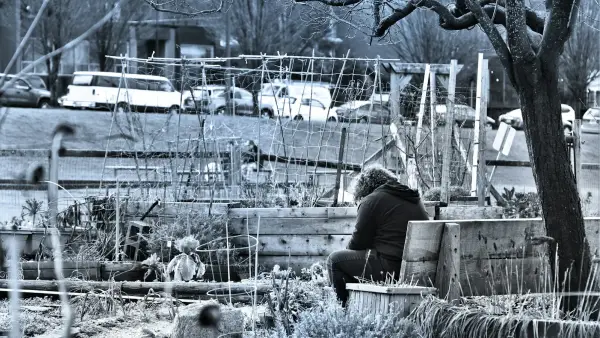
There is a particular kind of man who still walks outside on the first warm evening of June to see if the fireflies have come back, who stands at the edge of his yard in the dark, hands in his pockets, watching for that first green pulse above the grass, because a boy who sat with his father on the back steps counting the lights that blinked on and off in the field behind the house learned that some things in this world keep their promise, and the man who watches for fireflies at sixty-three is not being nostalgic but confirming that the one appointment his childhood made with the natural world has not yet been broken
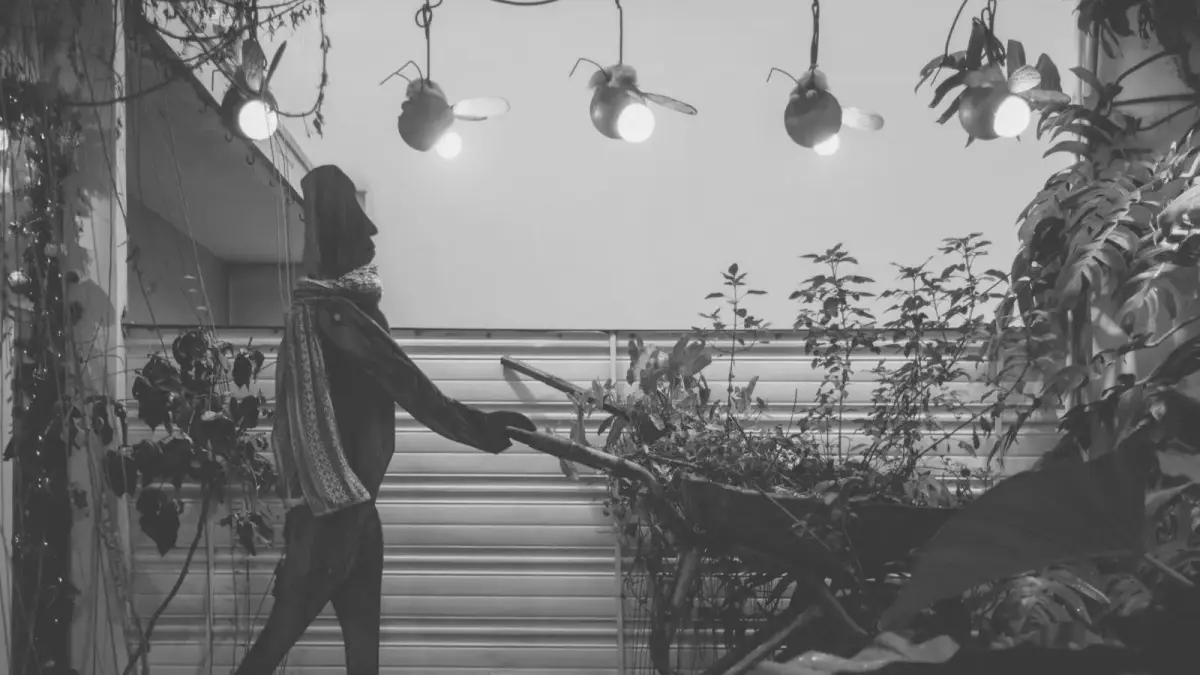
The first one always catches you off guard
I stepped outside last June and I wasn’t even thinking about them yet.
The air had that weight to it - warm and damp and full of cut grass - and I had gone out to check on the garden hose I’d left running. I was halfway across the yard when something flickered near the treeline. Just once. A small green light that rose about two feet off the ground and then disappeared.
I stopped walking. I stood completely still.
And then another one lit up, maybe ten yards to the left. Then a third. Then the whole back field began to pulse in this slow, scattered rhythm that I have known since I was seven years old.
I didn’t go back inside for the garden hose. I stood there in the dark with my hands in my pockets like I was waiting for someone, and I guess in a way I was.
My father never called it anything
He didn’t say “let’s go watch the fireflies” or “it’s that time of year.” He just stood up from the dinner table on a certain kind of evening - you could always tell which one, the air had to be just right - and walked out the back door. He’d sit on the top step and lean his elbows on his knees and look out at the field behind our house.
I’d follow him out. Every time.
We didn’t talk much during those evenings. Sometimes he’d point to a spot where three or four lit up at once and say “there’s a whole convention over there.” Sometimes we’d try to count them, which was impossible, which was the point.
He was a man who worked with his hands and came home tired and did not naturally reach for language when something moved him. But he reached for that back step every June. He reached for the dark and the quiet and the small lights that came back without being asked.
A 2019 study published in the Journal of Research in Personality found that men who maintain consistent nature-based rituals show significantly higher levels of emotional regulation and life satisfaction than those who don’t - not because the rituals themselves are therapeutic in some clinical sense, but because the act of returning to the same experience year after year creates what the researchers called “temporal anchoring.” A sense that something in your life is exactly where you left it.
My father didn’t know any of that. He just knew that the fireflies came back.
The ritual you inherit without anyone teaching it to you
Nobody sat me down and said “this is something you’ll do for the rest of your life.” Nobody explained that one day I would own a house three states away from the one I grew up in and still walk outside on the first warm night of June and stand perfectly still in the dark, waiting.
It just happened. The way certain things get into your body and stay there.
I was thirty-one the first year I noticed myself doing it. I had moved to a new town, bought a house with a small yard that backed up to a row of pines, and I was taking the trash out one evening when the first light appeared above the grass. I set the trash bag down on the driveway and walked to the edge of the yard and watched.
I didn’t think of my father in that moment. That came later. In the moment itself, I was just a man standing in his yard watching fireflies, and the feeling was something close to relief. Like arriving at a place I had not realized I’d been driving toward.
That’s the thing about inherited rituals. They don’t announce themselves. You don’t perform them on purpose. One day you just catch yourself standing exactly where someone you loved once stood, doing exactly what they did, and you understand that something was passed to you that never went through words.
What the lights actually are
I looked it up once. The glow is bioluminescence - a chemical reaction involving luciferin and an enzyme called luciferase. The males fly around flashing their specific pattern, and the females sit in the grass and flash back when they see one they like. The whole field of light is basically a conversation about love happening in a language made entirely of small green fires.
I told my wife this one evening and she said, “that’s the most romantic thing you’ve ever said to me and you were talking about bugs.”
She wasn’t wrong.
But here’s what stays with me. Fireflies have been doing this for over a hundred million years. The same chemical reaction. The same slow pulse. The same conversation carried out in darkness, night after night, summer after summer, across a span of time so vast that everything else has changed around it - continents, climates, entire species - and still the lights come back.
A 2021 study published in Frontiers in Psychology found that people who regularly engage with recurring natural phenomena - seasonal migrations, annual blooms, celestial events - report a stronger sense of what the researchers described as “continuity of self.” The returning event becomes a kind of mirror. You measure yourself against it. You see who you were the last time it happened, and you understand, without anyone telling you, how far you’ve traveled since.
My father has been gone eleven years. The fireflies have come back eleven times since the last evening he watched them. And every time they return, I am somehow both the sixty-three-year-old man standing in his own yard and the seven-year-old boy sitting on the back steps in the dark, watching his father’s face glow green for half a second before the light moves on.
The specific loneliness of standing where your father stood
I want to be careful here, because I’m not talking about grief exactly. Grief is its own country and I’ve walked through it and that’s a different essay.
What I’m talking about is the feeling of doing something your father did - in a different yard, in a different state, in a different decade - and knowing that the experience connects you to him in a way that nothing else can, and also knowing that the connection only runs in one direction.
He can’t see me standing here. He doesn’t know that I kept the appointment. He doesn’t know that the thing he did without thinking became the thing I do on purpose, every year, as if purpose could close the distance between his life and mine.
There is a particular kind of loneliness in that. Not the loneliness of being alone but the loneliness of being faithful to something that cannot know you are faithful to it.
I think a lot of men carry this. The unspoken rituals we inherited from our fathers - the way we check the oil, the way we stand at the grill, the way we walk the perimeter of the house before locking up at night. We do these things and we feel close to men who are no longer here, and the closeness is real, and the distance is also real, and both of those things exist in the same moment without canceling each other out.
Adam Grant once wrote about how the small behaviors we absorb from our parents often carry more emotional weight than the big lessons they tried to teach us on purpose. The planned speeches get forgotten. The way your father stood in the yard - that gets into your bones.
Why some promises are kept by the world and not by people
My father broke plenty of promises. He was not a perfect man. He said he’d come to games and didn’t. He said he’d fix the screen door and it stayed broken for three years. He said a lot of things that evaporated the moment they left his mouth.
But the fireflies came back. Every single year.
And I think that’s why the ritual landed so deep in me. Because my father was not the one keeping the promise. The natural world was keeping it for him. He just had the good sense to show up and witness it, and he had the even better sense to let me witness it with him.
There’s something important in that distinction. Some of the most reliable things in our lives are not maintained by human effort. They are maintained by forces so much larger than us that our job is simply to notice. The sun going down. The tide pulling out. The fireflies blinking on above the grass in June.
A 2022 study published in Psychological Science found that people who feel a sense of awe in nature - even small, everyday encounters with natural beauty - demonstrate greater humility and a stronger sense of connection to others. The researchers noted that awe doesn’t just make you feel small. It makes you feel located. Part of something that was here before you and will be here after.
That’s what my father gave me, standing on those back steps. Not words. Not wisdom. Not even his presence, really, because he was so quiet during those evenings that he barely seemed to be there. What he gave me was a location. A specific spot in the world where I could stand and feel the weight of time passing and also feel that some things do not pass. Some things pulse on.
The appointment
I have a son. He’s twenty-nine. He lives in a city now, in an apartment with no yard, and I don’t know if he remembers the evenings we spent on our back steps watching the fireflies come in.
I never asked him to come outside on those nights. I did what my father did. I just stood up and walked out the back door.
Sometimes he followed me. Sometimes he didn’t. That was always his choice and I never made it into anything more than what it was - a man going outside to keep an appointment with something that doesn’t require his attendance but receives it anyway.
Last June, the night I stood in the yard after finding them again, I almost called him. I had my phone in my pocket and I thought about pulling it up and saying, “They’re back.” But I didn’t, because I realized that the message was not mine to deliver. The fireflies will tell him themselves, one evening, when the air is right and he happens to be somewhere with grass and trees and enough darkness for the lights to show.
And when that happens - when he stops on a sidewalk or steps onto someone’s lawn or looks up from whatever he’s carrying and sees that first green pulse above the ground - he’ll understand something that I understood and that my father understood before me.
That some things in this world keep their promise.
That the keeping has nothing to do with us.
And that the most sacred thing a man can do is simply show up, year after year, at the edge of his own small life, and watch.