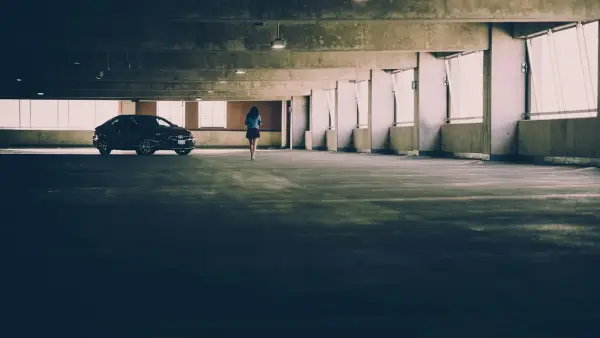
There is a particular kind of person who still cannot fall asleep with the closet door open - she is not afraid of the dark, she is the girl who lay awake at eight years old watching the gap between door and frame, and learned the only way to make the night safe was to give the dark a boundary
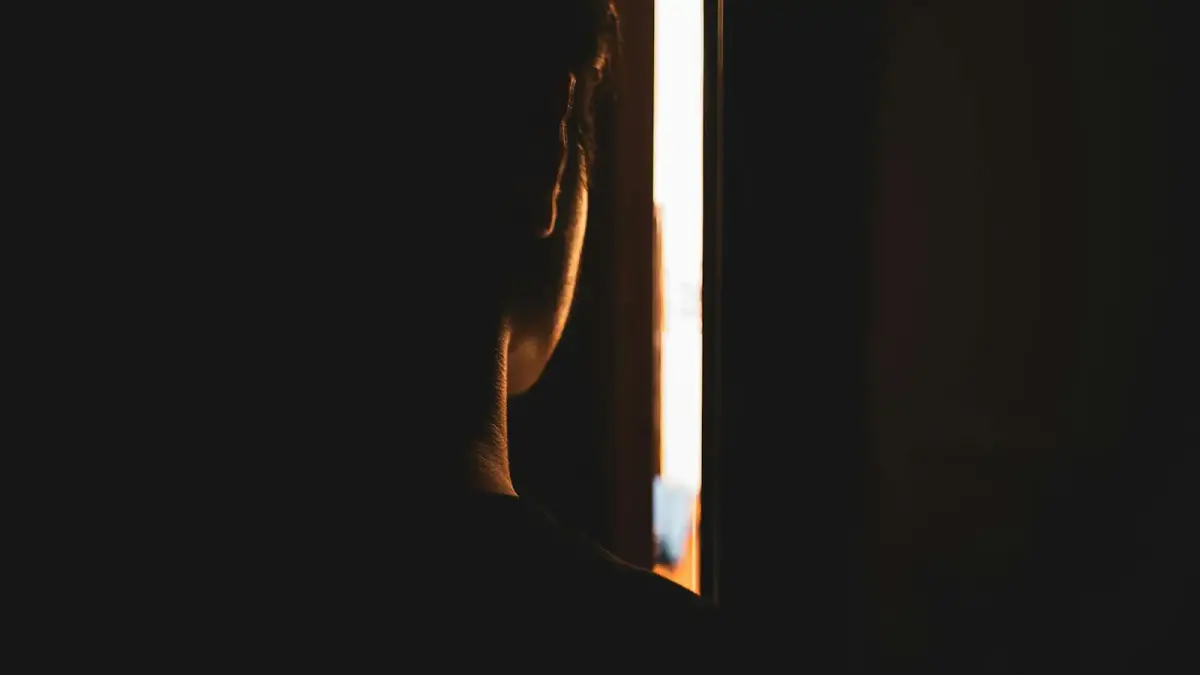
I am a grown woman with a mortgage and a retirement account and a drawer full of chamomile tea, and I cannot fall asleep if the closet door is open.
Not won’t. Cannot.
I will lie there in the dark with my eyes tracing that thin vertical strip of deeper black where the door sits an inch from the frame, and my entire body will refuse to soften. My breathing stays shallow. My shoulders hold. I know, with the full rational capacity of an adult who has read books and paid taxes and assembled furniture alone, that there is nothing in the closet. But knowing has never been enough to make my hand stop reaching for the handle.
I used to be embarrassed about this. I thought it meant something was wrong with me - that I had failed at some fundamental level of growing up. Then I started talking about it. And I found that I was not alone. Not even close.
The girl who watched the gap
She was seven or eight. Maybe nine. Old enough to know that monsters were not real, but young enough that knowing changed nothing about what she felt when the lights went out.
The closet door in her bedroom did not close properly. The latch was loose, or the frame had warped with the humidity of summers that came and went without anyone calling a handyman. So the door drifted open in the night. Just a few inches. Just enough to create a gap that was darker than the rest of the dark.
She would lie in bed and watch it.
Not because she expected something to emerge. It was never that specific. The fear was not of a creature or a figure or even a sound. It was formless. It was the feeling that the dark on the other side of that door was a different kind of dark - uncontained, unbordered, connected to something she could not name but could feel pressing against the edges of her awareness.
So she got up. Every night. She crossed the cold floor in bare feet and pushed the door until it clicked. And the click was the thing. The small mechanical sound of a latch catching was the only thing between her and a night spent listening, waiting, watching.
She did this hundreds of times before she turned ten. And her body learned the lesson her mind would later forget: the dark is manageable, but only if you give it a wall.
What the body remembers that the mind releases
There is a concept in psychology called procedural memory - the kind of memory stored not in narrative or image but in the body itself. It is how you ride a bicycle decades after your last ride. How your fingers find the keys on a piano you have not touched since childhood. How a smell can make your stomach clench before your conscious mind has even identified what you are smelling.
A 2019 study published in Psychological Science found that procedural memories formed during periods of heightened emotion are significantly more durable than those formed in calm states. The researchers described these memories as “encoded in the body’s emergency architecture” - stored not as thoughts but as muscle patterns, postural reflexes, and autonomic responses.
This is what happened to the girl and the closet door. Her nightly ritual was not casual. It was performed under emotional duress - the specific, full-body vigilance of a child lying in the dark, scanning for threat. Every time she got up and closed that door, her nervous system filed the action under “survival behavior.” And survival behaviors do not expire when you turn eighteen.
They do not expire at all.
The adult who closes the closet door before bed is not performing a superstition. She is executing a procedural memory so deeply embedded in her body’s threat-response system that her conscious mind never even gets a vote.
It was never about the closet
Here is what I have come to understand about that little girl - about all the little girls and little boys who developed their own versions of this ritual.
The closet door was a symbol. A proxy. A thing she could control in an environment where too many other things were uncontrollable.
Maybe her parents argued at night. Maybe they did not, but the house had a quality of unpredictability - a mother whose mood shifted without warning, a father who traveled and left silences that felt like absences of gravity. Maybe nothing was overtly wrong. Maybe everything was fine on paper, but the child’s nervous system had picked up on some frequency of tension that the adults themselves were not even aware they were broadcasting.
Dr. Gabor Mate has written extensively about how children absorb the emotional atmosphere of their homes the way their lungs absorb air - automatically, completely, without any conscious decision to do so. A child does not need to witness conflict to feel unsafe. She only needs to sense that the adults around her are not fully settled, not fully present, not fully okay.
And a child who senses this but cannot name it - who feels the vibration of unease without having the language or the authority to address its source - will find something she can address. Something concrete. Something with a latch.
The closet door becomes the container for everything that has no container. The dark behind it becomes the stand-in for every shapeless anxiety the child carries but cannot articulate. And closing it - hearing that click - becomes the one moment in her day when she successfully makes the world smaller, more bordered, more survivable.
The rituals we carry without knowing why
It is not just closet doors.
Some people cannot sleep unless the bedroom door is locked. Some need to check the stove three times. Some fold the sheet over the blanket in a precise way that they could not explain if asked but would notice immediately if someone did it differently.
These are not disorders. Not most of the time. They are artifacts - residual choreographies from a period of life when the world was too large and the self was too small, and the only power available was the power to arrange small physical details into a pattern that meant safety.
A 2021 study in Frontiers in Psychology examined what researchers called “residual safety behaviors” in adults - actions that persist long after the original threat has passed. They found that these behaviors are remarkably resistant to cognitive intervention. You can explain to someone that their ritual is unnecessary. You can prove it logically. You can show them evidence. And they will nod and agree and understand completely - and then get out of bed at midnight to close the closet door anyway.
Because the behavior does not live in the part of the brain that processes logic. It lives in the part that processed fear before logic existed.
The tenderness of a body that still protects you
I want to be careful here, because there is a version of this conversation that pathologizes everything. That turns every closed closet door into a symptom, every bedtime ritual into evidence of unresolved trauma. And I think that framing misses something important.
Your body is not broken for remembering. Your body is faithful.
Think about what it means that your nervous system - decades after the original need passed - still runs the program that kept you safe. Still closes the door. Still checks the lock. Still folds the sheet. Not because it is stuck, but because it made a promise to a frightened child, and it has never stopped keeping it.
There is something almost unbearably tender about that.
The seven-year-old who lay in the dark watching the closet door did not have a therapist. She did not have language for what she felt. She did not have anyone to tell her that her anxiety was valid, that her home was complicated, that her feelings were not silly or dramatic or wrong.
All she had was a door and a latch and her own two feet on the cold floor. And she built a ritual out of that. She engineered her own tiny intervention. She found the one variable she could control and she controlled it, night after night, until her body learned it so thoroughly that it became automatic.
That is not a flaw. That is resourcefulness. That is a child solving an impossible problem with the only tools available to her.
Learning to honor what you cannot explain
I still close the closet door every night.
But I do it differently now. I used to do it with a kind of shame - a quick, furtive motion, hoping my partner would not notice, embarrassed by the childishness of it. Now I do it slowly. Deliberately. I let my hand rest on the handle for a moment and I think about the girl I was.
I think about her lying in bed in that room that smelled like carpet cleaner and old wood. I think about the courage it took to put her feet on the floor in the dark when every nerve in her body was telling her to stay under the covers. I think about the hundreds of nights she made that crossing, and how she never once failed to get up and do the thing she needed to do to feel safe.
She was braver than I have ever given her credit for.
A 2022 study in the Journal of Research in Personality found that adults who are able to reframe their childhood coping behaviors as adaptive rather than pathological show significantly higher levels of self-compassion and emotional resilience. The shift is not about whether you still close the door. It is about whether you close it with shame or with recognition.
You are not performing a leftover fear. You are honoring a promise your body made to a child who needed one reliable thing in a world that offered very few.
The click that still means safety
Some nights, when the house is quiet and the day has been long and I reach for the closet door in the half-dark of the bedroom, I can almost feel her there. The girl. Standing beside me in her bare feet with her heart pounding, reaching for the same handle.
She does not need me to explain to her that she is safe now. She does not need a lecture about how the closet is just a closet and the dark is just the dark.
She needs the click.
So I give it to her. Every night. Not because I am afraid, but because she was. And because the woman I became has never forgotten the girl who found a way to make the night survivable with nothing but a door and the stubborn, holy refusal to leave it open.
If you close the closet door before you sleep - if you check the lock twice, if you need the hallway light, if you arrange the pillows in an order that makes no sense to anyone but you - I want you to know something.
You are not being irrational. You are being loyal. Loyal to a version of yourself who needed exactly one thing to go right before the dark came, and who found a way to make it happen, every single night, all by herself.
That is not something to outgrow. That is something to bow to.