There are people who keep gift cards in a drawer for months, sometimes years - who receive a fifty-dollar card for their birthday and feel a wave of warmth followed immediately by a quiet paralysis, because a girl who grew up in a home where her needs always came last learned that spending money on herself was the same as admitting she wanted something, and wanting things was the one luxury the house could never afford
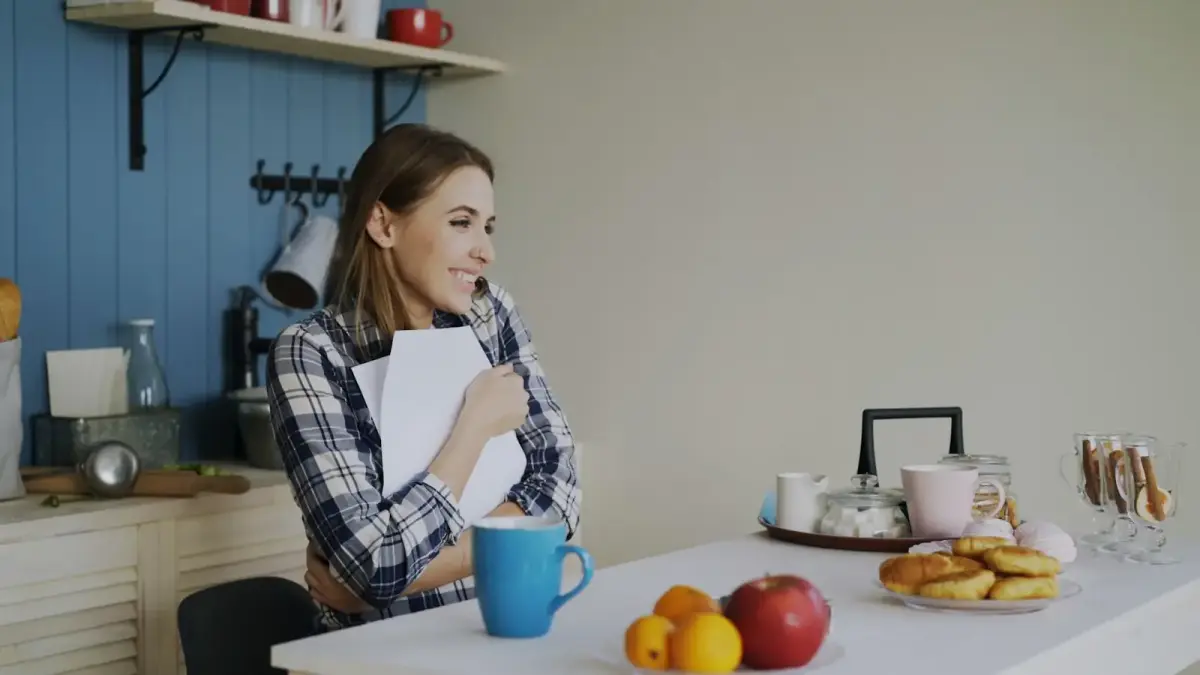
I found three gift cards in the back of my junk drawer last Tuesday. One was from a bookstore that closed two years ago. One had seventeen cents left on it, which meant I’d gotten close once before losing my nerve. The third was a fifty-dollar Visa card from my mother-in-law, still sealed in its little envelope, with “Happy Birthday, sweetie!” written in her careful cursive.
My birthday was in March. Of 2024.
I stood there in my kitchen holding these small plastic rectangles and felt something I didn’t expect - not embarrassment, not even guilt, but recognition. Like finding old journals you forgot you’d written. These cards weren’t forgotten. They were placed there, deliberately, by a version of me who received each one with genuine gratitude and then immediately didn’t know what to do with permission.
Because that’s what a gift card is, if you grew up the way some of us did. It’s not money. It’s permission. And permission was the one currency nobody in my childhood home ever had enough of to share.
The warmth that turns to weight
You know the feeling if you’ve lived it. Someone hands you a card at dinner, and you open the little sleeve, and there it is - a flat piece of plastic that says you are allowed to want something. For a second, warmth floods your chest. Someone thought of you. Someone wanted you to have something nice.
Then the warmth shifts. It doesn’t disappear - it thickens. It becomes a kind of pressure behind your sternum that you couldn’t name if someone asked.
What do I actually want? The question arrives like a spotlight in a dark room. And you realize that you’ve spent so many years being the person who doesn’t need anything that you’ve lost the muscle for wanting. Not the capacity - the muscle. The part of you that reaches toward something without first calculating whether reaching is safe.
A 2021 study published in the Journal of Consumer Psychology found that people with lower self-worth consistently underutilize gift cards compared to equivalent cash gifts. The researchers called it “redemption anxiety” - the stress of choosing something for yourself when you’ve internalized that your preferences don’t matter enough to act on.
But I think the researchers were being too polite. It’s not anxiety about choosing. It’s terror about deserving.
The house where needs were ranked
Let me tell you about a specific kind of household. Not abusive, not neglectful - at least not in any way that would make a teacher call someone. Just a house where resources were finite and everyone knew it, and somewhere along the way, a ranking emerged.
Dad needed new work boots. That was survival. Mom needed her prescription refilled. That was health. Your brother needed cleats for the team he made. That was opportunity. And you - you wanted a book. Or a sweater that wasn’t your cousin’s. Or to take the art class at the community center.
And those wants were fine. Nobody said they were wrong. But they lived on a different tier. They were “if there’s anything left” wants. “Maybe for Christmas” wants. “We’ll see” wants, where “we’ll see” was a gentle way of teaching you that your desires existed in a conditional tense.
You learned the lesson perfectly, the way children do - not through a single moment but through a thousand tiny calibrations. You learned to say “I don’t need anything” before anyone had to tell you there wasn’t enough. You learned to preempt the disappointment by killing the want before it fully formed.
And here is what nobody tells you about that adaptation: it works. It works so well that by the time you’re an adult with your own income and your own kitchen and your own drawer full of gift cards, the machinery is still running. You are still, at forty-three, parsing whether your wants have earned the right to exist.
The arithmetic nobody taught you to stop doing
There’s a specific calculation that happens when you hold an unspent gift card. I’ve done it so many times I could teach a class on it.
Fifty dollars. That could buy my daughter new headphones. That could cover two weeks of her lunch account. That could be a nice bottle of wine for the neighbors who watched our dog. That could go toward the electric bill.
Notice what never appears on the list: something I want.
Not because I don’t know what I want. I know exactly what I want. I’ve had a particular pair of earrings saved in my browser for four months. They cost thirty-eight dollars. I think about them at least once a week. They are small gold hoops with a tiny pearl, and every time I see them I feel a pull in my chest that I’ve learned to immediately translate into “that’s frivolous.”
Frivolous. The word that replaced “wanted” somewhere around age nine.
Dr. Kristin Neff’s research on self-compassion has shown that people who struggle to spend on themselves often have no trouble being generous with others. It’s not that they don’t understand value - it’s that they’ve built a value system with a hole in the center where they should be. They can calculate everyone else’s worth with precision. Their own remains an unsolved variable.
The gift card sits in the drawer because spending it would require solving that variable. And the answer might be a number you’re not ready to see.
Permission still sealed in its envelope
I want to talk about the envelope. The fact that my mother-in-law’s gift card was still sealed - that detail matters more than I first realized.
Sealed means I never even opened it all the way. Sealed means I looked at it enough to know what it was and then put it away. Not because I was ungrateful - I called her that evening and thanked her with a warmth that was completely genuine. I was moved that she thought of me.
But opening the envelope fully, sliding the card out, carrying it in my wallet - that would have meant accepting the permission. Walking around with fifty dollars of pure “this is for you, specifically, not for groceries or bills or anyone else’s needs” felt like carrying something stolen.
A 2019 study in Psychological Science examined what researchers called “self-reward resistance” - the pattern of deflecting, delaying, or declining rewards directed specifically at the self. They found it was most pronounced in adults who had been parentified as children or who grew up in homes with scarce emotional or financial resources. The brain, they suggested, literally encodes self-directed pleasure as a mild threat. The neural pathways for guilt and for personal reward begin to overlap until they become almost indistinguishable.
This is what the sealed envelope holds. Not fifty dollars. Not even permission. It holds the possibility that you might enjoy something without first earning it through sacrifice, and that possibility still registers somewhere in your nervous system as dangerous.
The strange relief of expiration
Here is the part I’ve never said out loud: when that bookstore closed and the gift card became worthless, I felt relief.
Not happiness - relief. The quiet, exhaled kind. The decision had been made for me. I didn’t have to choose. I didn’t have to spend it on myself and feel guilty, or spend it on someone else and feel like I’d missed the point, or let it sit in the drawer and feel like a failure of adulthood. The bookstore simply ceased to exist, and my card went with it, and the whole problem dissolved like sugar in water.
That’s when I knew this wasn’t about indecision. Indecisive people agonize over menus. This was about something structural - something built into the foundation of how I learned to exist in relation to my own needs.
Because when the card expired, I lost fifty dollars. And I felt lighter. That’s not a spending problem. That’s a self-worth architecture that was built without a room for you in it.
I think there are more of us than anyone realizes. People who open gifts with genuine gratitude and then quietly struggle to use them. People who can spend three hundred dollars on their kids without blinking but cannot buy themselves a twelve-dollar candle without an internal committee meeting.
We are not bad with money. We are not ungrateful. We are people who learned, very young, that the safest version of ourselves was the one who didn’t want anything. And we carried that safety into adulthood like a blanket we forgot we were still holding.
What the giver actually meant
My mother-in-law is not a complicated woman. She is kind in the way that some people are kind - without performance, without agenda. When she bought that gift card, she wasn’t testing me. She wasn’t measuring whether I’d spend it wisely. She was doing something simpler than any of my overthinking could accommodate.
She was saying: I see you. I want you to have something nice. That’s all.
And “that’s all” is exactly the part I couldn’t absorb. Because in the house where I grew up, nothing was ever just “that’s all.” Every resource had strings. Every kindness had a ledger. Every gift was also a calculation about what everyone else might need instead.
But my mother-in-law’s card didn’t come from that house. It came from a woman who baked me a pie when I had the flu and who once drove forty minutes to bring me a lamp she found at a yard sale because “it looked like you.” She wasn’t asking me to solve an equation. She was asking me to receive.
Receiving. Such a simple word for something that requires the complete dismantling of a survival strategy.
Adam Grant writes about givers and takers, but he rarely talks about the people who have trouble being given to - not because they’re proud, but because receiving requires believing you were supposed to have things in the first place. It requires a kind of faith in your own worthiness that some of us are still building, brick by slow brick, in our forties and fifties.
The drawer is not the problem
I still have that drawer. I still have two of the three cards - the expired bookstore one I finally threw away, which felt like its own small ceremony. The Visa card is in my wallet now. It’s been there for six days. I haven’t spent it yet, but I carry it, and that’s something.
I looked at those earrings again last night. The gold hoops with the tiny pearl. Thirty-eight dollars. Twelve dollars left over for a coffee and a pastry somewhere quiet, just me, on a Saturday morning.
I haven’t bought them yet. But I’m not telling myself they’re frivolous anymore. I’m trying a different word - one I’m borrowing from my mother-in-law, who would never understand why this is hard but who gave me the card anyway because some people just love you without needing you to earn it.
The word is “wanted.” As in: you are allowed to want things. As in: the girl who learned to shrink her desires down to nothing did what she had to do, and she can stop now. As in: the gift card was never really about fifty dollars.
It was about someone saying you deserve something, and you finally - quietly, imperfectly, with your hands still shaking a little - letting that be true.