There are people who have memorized the exact schedule of their neighbor's movements - who know that the woman next door takes the bins out at 6:47 on Tuesday mornings and walks the dog at 7:15 and sits on the porch between 4:30 and 5 on Sundays - not because they are surveilling anyone but because a girl who needed to time her exits to avoid conversations she did not have the energy for became a woman who checks the window before getting the mail at fifty-two, performing the quiet choreography of someone who used up her entire allocation of warmth on the people inside the house and has nothing left for the ones outside it
The Window Check
I check the window before I get the mail.
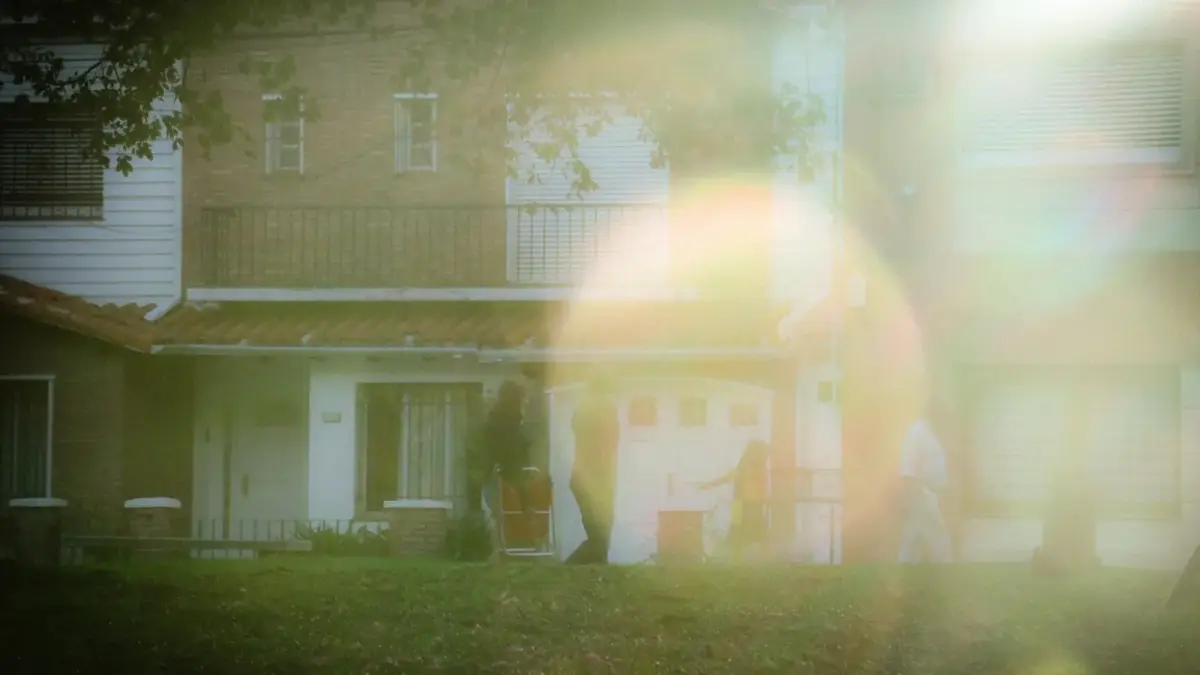
I have done this for years. Not a glance - a full audit. I look left toward the Hendersons’ driveway to see if Pam’s car is there. I look right to see if the man two doors down is doing his afternoon lap with the golden retriever. I look across the street to see if the retired couple has set up their folding chairs yet.
If it’s clear, I go. If it’s not, I wait.
I know their schedules the way you might know the tides if you lived near the ocean. Not because I studied them. Because I have been moving around them for so long that the knowledge just accumulated, the way sand fills the cracks in a sidewalk.
Pam takes the bins out at 6:47 on Tuesday mornings. The dog walker passes at 7:15. The couple across the street sits on their porch from about 4:30 to 5 on Sundays, sometimes later if the weather is good. And I have silently arranged the rhythm of my own outdoor life around all of it.
I used to think something was wrong with me for this. I don’t anymore.
The Choreography Nobody Sees
There is a whole architecture to avoiding small talk that only the people who practice it would recognize.
It’s the way you open your front door slowly, just enough to see without being seen. It’s the way you take the recycling out at 9:45 at night instead of in the morning. It’s the way you wave from the car window instead of stopping, because stopping means five minutes of standing in the driveway talking about rain and how fast the kids are growing and the new fence the Petersons are putting in.
None of this is hostile. None of it is cold. It is the careful, practiced movement of someone who does not have unlimited social currency and who has already spent today’s supply on the people who matter most.
I gave the best parts of my patience to my daughter this morning when she was frustrated about a college application. I gave the warm, attentive version of myself to a friend who called during lunch needing to talk about her mother. I gave my focused, present energy to a colleague who was struggling through a difficult meeting.
By the time I walk to the mailbox at 4 pm, I am not the same person who woke up. I am the version of me that has already loved people hard today and has nothing casual left to offer.
And the woman next door deserves better than a half-present neighbor faking interest in her new mulch. She deserves the version of me who actually has something to give. So I wait until she’s inside.
It Starts Young
This is not a habit you pick up in middle age. This is something that begins in girlhood, in the particular education of learning that your energy has edges.
You were the child who needed to be alone after school. Not because you didn’t like your classmates - you did. But the performance of being social for seven hours left you feeling like a wrung-out towel. You would come home and sit in your room and do nothing for twenty minutes, and your mother would knock and ask if you were okay, and you didn’t have the language to explain that you were refueling something invisible.
A 2011 study published in the Journal of Research in Personality found that introverts who engaged in sustained social interaction showed measurable increases in fatigue and decreases in positive affect, even when the interactions were pleasant. The researchers described it as a kind of depletion that had nothing to do with the quality of the contact and everything to do with the neurological cost of processing it.
You were never avoiding people because you disliked them. You were managing a resource that nobody around you seemed to need to manage.
And you learned - without anyone teaching you - how to move through shared spaces on a schedule that minimized the unplanned encounter. You learned when the hallways were empty. When the break room would be clear. When you could slip out the back door without running into the chatty neighbor kid who wanted to show you his skateboard trick for the fourteenth time.
By the time you were an adult, this choreography was automatic. You didn’t even notice you were doing it.
The Myth of the Antisocial Neighbor
We have a cultural script for the person who avoids their neighbors: they are unfriendly, standoffish, possibly strange. We assign darker motives to privacy than we assign to intrusion.
But there is something deeply flawed about a framework that treats avoidance as pathology and treats interruption as warmth.
The neighbor who stops you in the driveway for twenty minutes is not being kinder than the neighbor who waves and keeps walking. They are simply spending your energy without asking if you had any to spare.
Susan Cain wrote about this imbalance in the way we value extroverted behavior - how our culture reads openness as health and reserve as disorder. The person who volunteers information freely is seen as emotionally well. The person who keeps a boundary is seen as hiding something.
But the woman who checks her window before getting the mail is not hiding. She is choosing. She is making a decision, dozens of times a week, about where to place a limited resource. And she is consistently choosing the people inside her house over the people outside it.
That is not avoidance. That is devotion wearing quiet clothes.
What the Window Check Really Means
When I stand at my front door and scan the street before stepping outside, I am not afraid of my neighbors. I like my neighbors. Pam has brought me soup when I was sick. The dog-walking man always says something kind about my garden. The retired couple waved at my daughter every morning for four years while she waited for the school bus.
I am not avoiding them because I don’t care about them. I am avoiding them because I don’t have the energy to care about them properly right now, and I would rather not care at all than care badly.
This is the part that people who don’t experience social depletion have trouble understanding. It’s not that the interaction would be unpleasant. It’s that it would be shallow, and shallow costs something too.
A 2019 study in the Journal of Personality and Social Psychology found that people who scored high in introversion reported that brief, low-stakes social encounters - the kind most people describe as harmless - were actually more draining than deeper conversations with close friends. The researchers suggested that surface-level interaction requires a particular kind of performance energy that deeper conversation does not, because depth allows you to drop the mask.
Standing in the driveway talking about whether it’s going to rain requires a mask. Sitting on the couch with your partner talking about whether your marriage is where you want it to be does not.
The window check is a woman choosing depth over breadth, every single day, without announcing it.
The Invisible Rationing
I think about my social energy the way some people think about money. There is a finite amount. It replenishes, but slowly. And every expenditure is a choice.
The morning phone call with my sister costs something. The work meeting costs something. The trip to the grocery store costs something - not the shopping itself, but the potential for eye contact, for someone recognizing me, for the cashier wanting to chat.
By late afternoon, the account is low. And the question becomes: if I have twenty units of warmth left today, where do they go?
They go to my kids when they come through the door. They go to my partner when he sits next to me on the couch. They go to the phone call I’ll make tonight to check on my father.
They do not go to a seven-minute driveway conversation about property taxes.
This is not selfishness. This is resource management at a level so intimate that most people don’t even recognize it as a skill. The woman who checks the window has been doing advanced emotional budgeting since she was twelve years old. She just never got credit for it because our culture doesn’t count quiet as competence.
The Permission to Move Like a Shadow
I want to tell you something that took me a long time to understand about myself.
I am not less loving because I check the window. I am not less kind because I time my exits. I am not less connected because I have memorized the schedule of every person on my street so that I can move through my own neighborhood without being pulled into an interaction I don’t have the bandwidth for.
I am, in fact, more loving. Because the love I give to the people I choose to spend my energy on is full and present and unhurried. It is not the distracted, one-eye-on-the-door version of attention. It is the real thing.
A 2022 study in Frontiers in Psychology found that individuals with strong introverted tendencies who maintained clear social boundaries reported higher relationship satisfaction with their close partners and family members. The study suggested that boundary maintenance was not a barrier to intimacy but a precondition for it - that people who protected their energy gave more fully when they chose to engage.
You are not broken for needing to check the window.
You are not paranoid for knowing the dog-walking schedule.
You are not cold for choosing the back door when the front one would put you in someone’s line of sight.
You are a woman - or a man, or a person of any kind - who figured out early that warmth is not unlimited, and who decided, without anyone’s permission, to spend yours where it mattered most.
The Mail Can Wait
Some evenings, I stand at the door and Pam is out with her garden hose and the retired couple is in their chairs and the dog is making its third loop, and I just close the door and sit back down.
The mail can wait until dark.
And I feel no guilt about this anymore. Not even a flicker. Because I have been the woman who forced herself outside, who smiled through the small talk, who stood in the driveway performing neighborliness while something inside her slowly dimmed. And I have been the woman who went back inside and had nothing left for the people who needed her most.
The second version is worse. Every time.
So I sit. I wait. I let the street empty out on its own schedule. And when I finally step outside - into the quiet, into the dusk, into the privacy of a neighborhood that has moved indoors - I breathe.
Not because I was suffocating. But because I was holding my breath, the way you do when you’re trying not to be noticed. And there is something deeply restful about a moment when no one is looking.
You have been doing this your whole life, probably. Timing your exits. Scanning rooms. Choosing the long way around to avoid the conversation you couldn’t afford.
You are not avoiding life. You are protecting the parts of it that matter to you most. And that kind of protection - quiet, deliberate, invisible to everyone but you - is its own form of love.