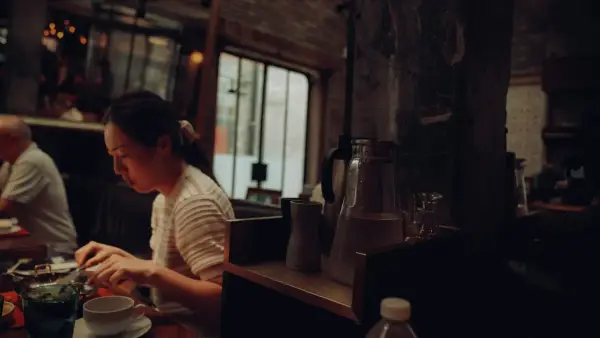
There are people who only feel like themselves in the first hour of the morning before anyone else wakes up, who move through their kitchen in the dark making coffee with the precision of someone protecting a ritual they have guarded for decades, and the quiet they are holding is not selfishness and it is not avoidance - it is the only version of themselves that nobody has ever edited
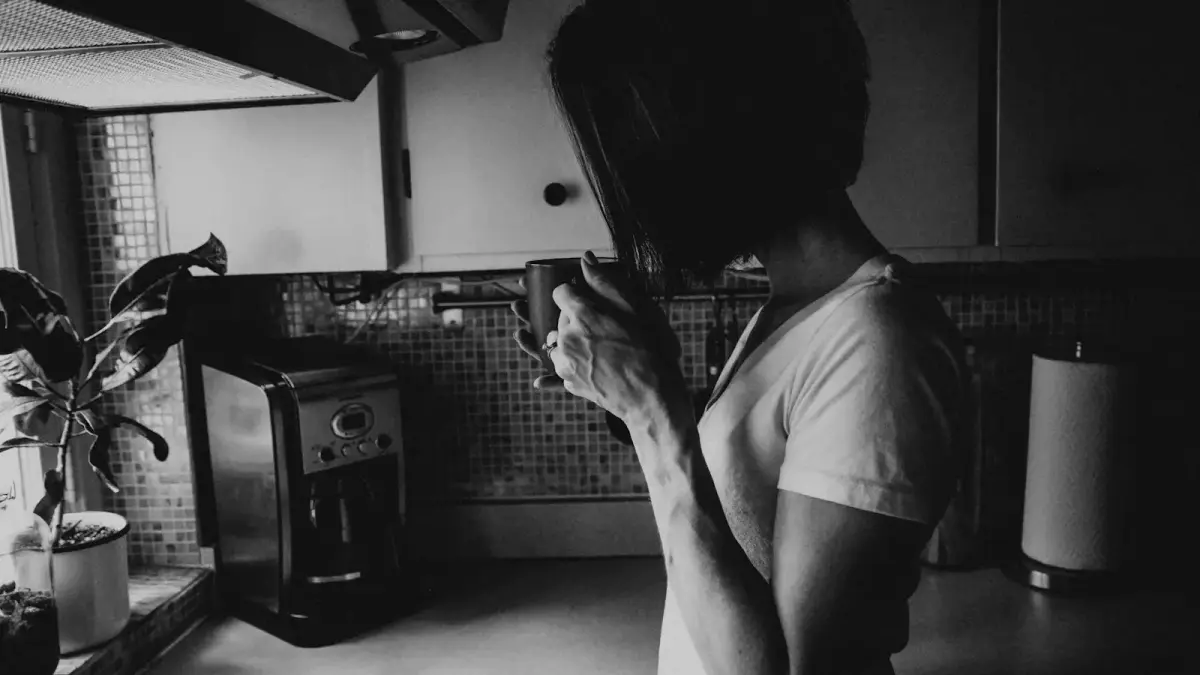
I set my alarm for 4:50 every morning. Not because I have to. Not because I am disciplined or ambitious or any of the things people assume when they hear that number. I set it because 4:50 gives me eleven minutes before the coffee finishes brewing, and those eleven minutes - standing barefoot on cold tile in a kitchen so dark I navigate it by memory - are the only minutes in my entire day where I am not performing for anyone.
I don’t check my phone. I don’t think about the day. I just stand there, listening to the coffee maker do its slow, methodical work, and I breathe the way I actually breathe when nobody is watching.
It took me until my late forties to realize that this wasn’t a habit. It was survival.
The room before the room
There is a version of you that exists only when no one else is present.
Not a better version. Not a truer version, exactly. But an unedited one. The version that doesn’t adjust its posture when someone walks in. That doesn’t modulate its voice or rearrange its face into the expression most likely to make the next interaction go smoothly.
Most people carry some awareness of this. But for certain people - quiet ones, accommodating ones, people whose entire childhood was a masterclass in reading what the room needed and becoming it - the gap between the edited self and the unedited self is so wide it feels like two different lives.
The early morning is where the unedited self lives. And the ritual of protecting it is not selfishness. It is the most honest thing they do all day.
How the ritual begins
Nobody wakes up one morning and decides to become a dawn person. It happens slowly, usually across years, usually in response to a life that has gradually filled every other hour with obligation, response, accommodation.
You are a parent and the house fills with noise by seven. You are a partner and the shared morning means conversation before your thoughts have finished forming. You work in a job that requires you to be “on” - pleasant, organized, someone else’s version of competent - from the moment you walk through the door.
So you start waking up earlier. Not dramatically. Just fifteen minutes at first. Then twenty. Then you realize that the kitchen at 5:15 is a fundamentally different room than the kitchen at 6:30, and something inside you unclenches for the first time in longer than you can remember.
A 2019 study published in the Journal of Research in Personality found that people who report high levels of “solitude restoration” - the psychological recovery that happens during voluntary alone time - are not more antisocial or avoidant than average. They are, in fact, often higher in agreeableness and emotional sensitivity. They need the solitude precisely because they give so much during the hours they spend with others.
The early rising isn’t withdrawal. It is the cost of being someone who is fully present for everyone else.
The precision of the ritual
Watch someone in their pre-dawn kitchen and you will see something that looks almost ceremonial.
The coffee is made the same way every time. The mug is the same mug. They stand in the same spot, or sit in the same chair, and there is a particular quality to their movements that you don’t see at any other hour - slow, deliberate, unhurried in a way that their daytime self has forgotten how to be.
This is not rigidity. This is what safety feels like when your nervous system has learned to produce it for itself.
The predictability of the ritual is the point. In a day that will be shaped by other people’s needs, moods, timelines, and interruptions, this one hour is entirely self-authored. The coffee is made the way you like it, not the way someone else prefers. The silence is not waiting to be filled. The temperature of the room, the quality of the light, the pace of your own thoughts - all of it belongs to you.
Susan Cain, whose work on introversion reshaped how we understand quiet temperaments, has written extensively about how introverted people don’t dislike social interaction - they require periods of low stimulation to process and recover from it. The early morning is not a rejection of the people who will fill the later hours. It is the thing that makes those later hours possible.
The grief no one talks about
Here is the part that sounds strange until you have lived it.
When someone else wakes up early - a partner who couldn’t sleep, a child who had a bad dream, a houseguest who is a morning person - and walks into the kitchen during that protected hour, what the dawn person feels is not annoyance.
It is grief.
Not dramatic grief. Not the kind you would ever name out loud. But a quiet, gut-level sense of loss, like something irreplaceable just slipped through their fingers. Because the presence of another person - even a beloved person, even a person they chose - changes the room. It changes the air. It changes the version of themselves that is available.
The unedited self cannot exist in the presence of an audience. Not because it is fragile, but because the editing is so automatic, so deeply wired, that it begins before conscious thought can intervene. The moment another person is present, the performance starts. The voice adjusts. The posture shifts. The internal monologue switches from “what do I feel” to “what does this moment require of me.”
And the dawn person knows this about themselves. They know it the way you know a physical limitation - not with resentment, just with the quiet factuality of someone who has spent decades inside their own nervous system.
So they don’t get angry when the hour is interrupted. They grieve. And then they adjust, because adjusting is what they have always done.
The editing that never stops
To understand why the pre-dawn hour matters so much, you have to understand how relentless the editing is during every other hour.
It starts in childhood for most people who become dawn protectors. They grew up in homes where the emotional weather was set by someone else - a parent whose mood determined the temperature of the evening, a household where the wrong sentence at the wrong moment could shift everything. They learned to scan, translate, and accommodate before they learned algebra.
A 2021 study in Frontiers in Psychology examined what researchers call “self-monitoring” - the tendency to observe and regulate one’s own behavior in response to social cues. People who score high in self-monitoring report significantly greater fatigue at the end of social days, not because the interactions were negative, but because the cognitive labor of continuous adjustment is genuinely exhausting.
This is the labor that nobody sees. The dawn person at a dinner party looks relaxed, engaged, warm. They are all of those things. But they are also running a parallel process the entire time - reading faces, calibrating tone, making micro-adjustments to ensure the interaction is comfortable for everyone in the room. It is not dishonesty. It is the opposite. It is someone working incredibly hard to be present for other people.
The exhaustion accumulates. And by nine in the evening, the dawn person is not tired in the way that sleep fixes. They are tired in the way that only silence fixes.
What the quiet actually is
People who don’t need the pre-dawn hour often misread it. They see it as a preference, a lifestyle choice, something adjacent to meditation or wellness culture. They say things like “I should try waking up early too” the way they say “I should try yoga.”
But the dawn ritual is not self-improvement. It is not productivity. It is not the optimized morning routine of someone trying to get ahead.
It is repair.
It is the one hour where the nervous system is not tracking anyone else’s emotional state. Where the body is not subtly positioned to accommodate another person’s space. Where the face is not arranged. Where the thoughts are allowed to be half-formed, contradictory, strange, unfinished - because there is no one present who needs them to be coherent.
Adam Grant has written about the concept of “languishing” - that middle state between depression and flourishing where you feel hollow and stagnant. For people who spend their days in continuous emotional translation, the pre-dawn hour is the antidote to languishing. It is not happiness, exactly. It is something more fundamental. It is contact with a self that has not been shaped by what someone else needed it to be.
The permission you are already giving yourself
If you are someone who guards the early morning, I want you to know something you probably already sense but have never heard said plainly.
You are not antisocial. You are not cold. You are not avoiding the people you love.
You are doing the most generous thing a person like you can do - you are filling your own cup in the only hour that allows it, so that you can spend the remaining fifteen or sixteen hours pouring yourself into the lives of people who may never fully understand what it costs you to show up for them the way you do.
The coffee ritual is not eccentric. The silence is not empty. The grief you feel when someone walks into the kitchen early is not a character flaw.
It is the truest evidence of how deeply you feel the presence of others - so deeply that you need one hour, just one, where the only presence you feel is your own.
And that hour is not something you should apologize for. It is not something you need to explain or justify or dress up as a wellness practice. It is yours. It has always been yours. And the fact that you wake before dawn to protect it does not make you difficult.
It makes you someone who knows exactly who they are - and has built the only room in the day where that person is allowed to exist without translation.
The kitchen will fill with noise soon enough. The coffee will be shared. The day will ask you to become the version of yourself that the world needs, and you will do it, because you always have.
But right now, in the dark, in the quiet, with the coffee maker ticking through its slow cycle and the house still breathing around you - you are no one’s mother, no one’s partner, no one’s employee, no one’s version of fine.
You are just you. And that is enough.