There are people who can only think clearly when they are walking alone - not sitting at a desk, not lying in bed, not in conversation - but specifically in motion with no destination, and the woman at fifty-three who walks four miles every morning before the neighborhood wakes is not exercising, she is giving her nervous system the only conditions under which it has ever agreed to tell her the truth
She Does Not Call It Exercise
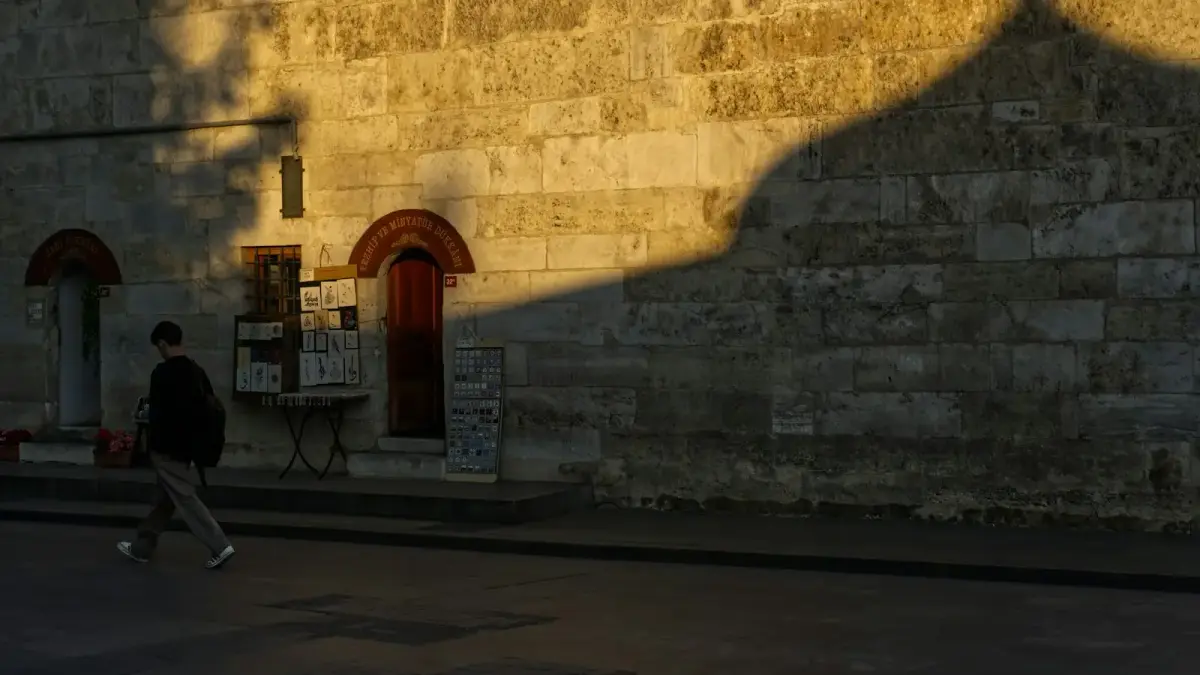
I know a woman who wakes at five-fifteen every morning, laces her shoes in the dark hallway, and leaves the house before anyone else stirs. She has done this for eleven years. Her husband stopped asking where she goes a long time ago.
She walks four miles. Sometimes more if the problem is complicated.
If you asked her why, she would say something about fresh air. About her knees. About needing to move. But that is not the truth, and she knows it. The truth is that her mind refuses to speak to her unless she is in motion.
I know this because I am the same way. The desk is a trap. The bed is worse. Sitting still in a quiet room does not produce clarity - it produces a kind of internal noise that sounds like productivity but is actually just my mind rehearsing obligations, cycling through a to-do list, performing the theater of thinking without actually arriving anywhere.
But walking. Walking is different. Walking is where my real thoughts live.
The Architecture of Honesty
There is something about the rhythm of footsteps that changes what the mind is willing to say. Not running - running is too urgent, too physical, too much like fleeing. And not walking with someone else, because then you are performing again, editing yourself in real time, aware of another person’s silence and what it might mean.
Walking alone is the only architecture of solitude where the internal voice stops managing and starts confessing.
A 2014 study from Stanford University found that walking increases creative output by an average of sixty percent compared to sitting. But what fascinated the researchers was that this effect persisted even after the walk ended - as though the brain, once given permission to wander, kept wandering even when the body stopped.
I think the researchers were measuring the wrong thing. It is not creativity that walking unlocks. It is honesty.
The desk is where I write what I am supposed to think. The walk is where I discover what I actually think. These are rarely the same thing.
Why Stillness Feels Like a Trap
If you are someone who needs to move to think, you probably grew up in a house where stillness meant availability. Sitting down meant someone could find you. Being in a room meant being interruptible. The couch was not a place of rest - it was a place where people asked things of you.
Your body learned early that the only way to be alone was to be in motion.
Not leaving - that would have been noticed, questioned. But walking. Walking looked harmless. Walking looked healthy. Nobody interrogates a person who says they are going for a walk.
Dr. Stephen Porges’ polyvagal theory describes how the nervous system constantly scans the environment for safety signals. For some people, the safest state is not rest - it is rhythmic, predictable movement. The body in gentle motion sends a signal to the brain that says: we are neither fleeing nor frozen. We are safe enough to think.
This is why the bed at midnight produces anxiety instead of insight. Lying still in the dark, your nervous system cannot distinguish between rest and helplessness. The stillness feels like waiting. The mind fills it with worry because worry is what kept you alert when alert was the only thing keeping you safe.
But walking - walking tells the body that you are going somewhere even when you are going nowhere. And that small lie is enough to let the truth in.
The Morning Hours Belong to You
There is a reason so many of us walk in the early morning. It is not discipline. It is not willpower. It is that the early morning is the only hour that belongs to no one else.
At six AM, the world has not yet made its demands. No one has texted. No one has asked what is for dinner. The neighborhood is still sleeping and you are moving through it like a visitor in your own life, temporarily exempt from every role you carry.
The woman at fifty-three is not being mindful on her morning walk. She is not counting her breaths or practicing gratitude. She is processing. She is letting her mind sort through what it could not sort through yesterday because yesterday she was needed, and the day before that she was needed, and the day before that.
Her walk is not a luxury. It is the only hour of the day when her thoughts are not organized around someone else’s needs.
A 2020 study in the journal Frontiers in Psychology found that solitary walking in natural environments significantly reduced rumination - the repetitive, self-critical thought loops associated with depression and anxiety. But participants reported something the researchers did not expect: they described the walks not as relaxation but as a kind of conversation with themselves they could not access any other way.
That word - access. It matters. These are not thoughts you are creating on the walk. They are thoughts that already existed but could not surface until the conditions were right.
Your Body Is Not Restless
If you have ever been told you are restless, consider the possibility that you are not. Consider that what looks like restlessness is actually your nervous system’s learned method of creating safety.
You are not someone who cannot sit still. You are someone whose body discovered that motion is the only state in which your mind is not on guard.
The pacing in the kitchen at ten PM is not nervous energy. It is your body trying to give your mind the conditions it needs to process something it could not process while you were sitting across from someone at dinner, smiling, asking about their day, being present in the way you were taught presence should look.
Your thinking walk is not avoidance. It is the opposite of avoidance. It is the only place where you stop avoiding what you actually feel.
I spent years believing something was wrong with me because I could not journal. Could not meditate. Could not sit in a therapist’s office and access what I knew was in there. Then one morning I went for a walk and cried for forty minutes and understood something about my marriage I had been refusing to understand for two years.
I was not broken. I just needed to be in motion to be honest.
The Problem Was Never Focus
People who think on their feet are often described as having focus problems. Cannot sit still in meetings. Cannot concentrate at a desk for long hours. Mind wanders. Needs to move.
But this is not a focus problem. This is a nervous system that learned to associate stillness with surveillance - with being watched, evaluated, available, responsible. The body in a chair is a body that is somewhere. A body that can be found. A body that owes something.
The body in motion owes nothing.
Daniel Goleman, in his work on emotional intelligence, described a state he called “open awareness” - a quality of attention that is broad rather than narrow, receptive rather than directed. It is the kind of attention that allows insight rather than effort. And it is almost impossible to access while sitting at a desk trying to force it.
Walking creates open awareness without effort. The rhythm of the steps handles the body’s need for stimulation. The changing scenery provides just enough novelty to prevent the mind from fixating. And the solitude removes the one thing that shuts down honest thinking faster than anything else - the presence of someone who might hear what you are thinking.
What the Walk Actually Is
Your morning walk is not exercise. It is not meditation. It is not self-care in the way magazines describe self-care - a thing you do for yourself as a reward for being so good at everything else.
Your walk is where you do your real living. It is where the decisions get made. Where the grief gets processed. Where the marriage gets examined honestly. Where you admit what you want. Where you forgive yourself for wanting it.
Your family asks where you are going and you say “just a walk” because there is no way to explain that the walk is the only place you are fully yourself. That the person they know is the one who comes back from the walk. That the person who leaves the house at five-thirty in the morning - quiet, unlaced, half-awake - is the one who needs to exist first before the other one can show up and be what everyone needs.
You Were Never Broken
If your clearest thoughts come at mile two, that is not a problem to solve. It is a pattern to honor.
If you have built a life where the only thirty minutes that belong entirely to you happen on a sidewalk before sunrise, that is not a failure of boundaries. It is proof that you found a way to survive inside a life that left very little room for you to simply think.
The woman at fifty-three knows something the rest of the world is still catching up to. She knows that the body and the mind are not separate systems. She knows that some truths cannot be accessed from a seated position. She knows that walking is not about the destination or the steps or the heart rate.
Walking is the only place her nervous system has ever felt safe enough to be honest with her. And she has honored that truth every single morning for eleven years.
If you are that person - if the walk is where you live - then keep going. Not because it is healthy. Not because it is good for you. But because it is yours, and you deserve at least one hour a day that belongs to no one else.