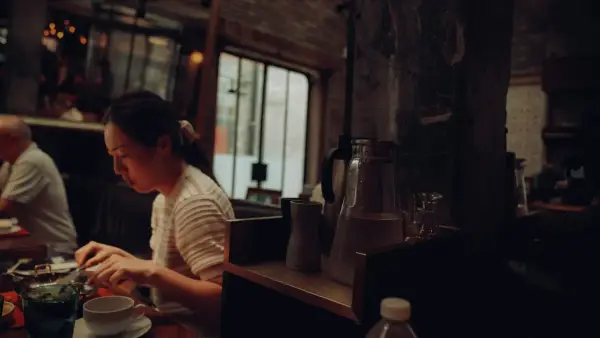
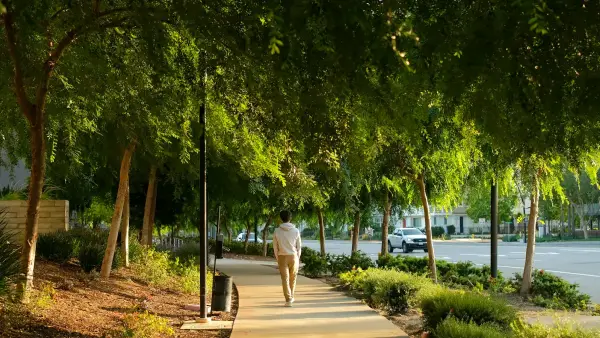
There are people who tell their coworkers 'not much, just relaxed' when asked about the weekend, and what they mean is they spent forty-eight hours in a kind of solitude so complete and so nourishing that describing it out loud would make it sound like loneliness to anyone who has never felt the difference - the woman at fifty-one who spent Saturday reading a novel for six hours, who cooked dinner for one and ate it at a table set for one, who walked through the park at dusk without taking a single photograph, is not lonely or depressed but fluent in a dialect of rest that requires no audience, no narration, and no proof it happened
The Monday morning translation
Every Monday at nine fifteen, someone in the break room asks me what I did over the weekend.
I have learned to answer quickly. “Not much. Just relaxed. Ran some errands.” And the person nods and moves on, and neither of us acknowledges that I have just performed a small act of translation - converting forty-eight hours of the richest, most nourishing time I know into a sentence that sounds like nothing happened.
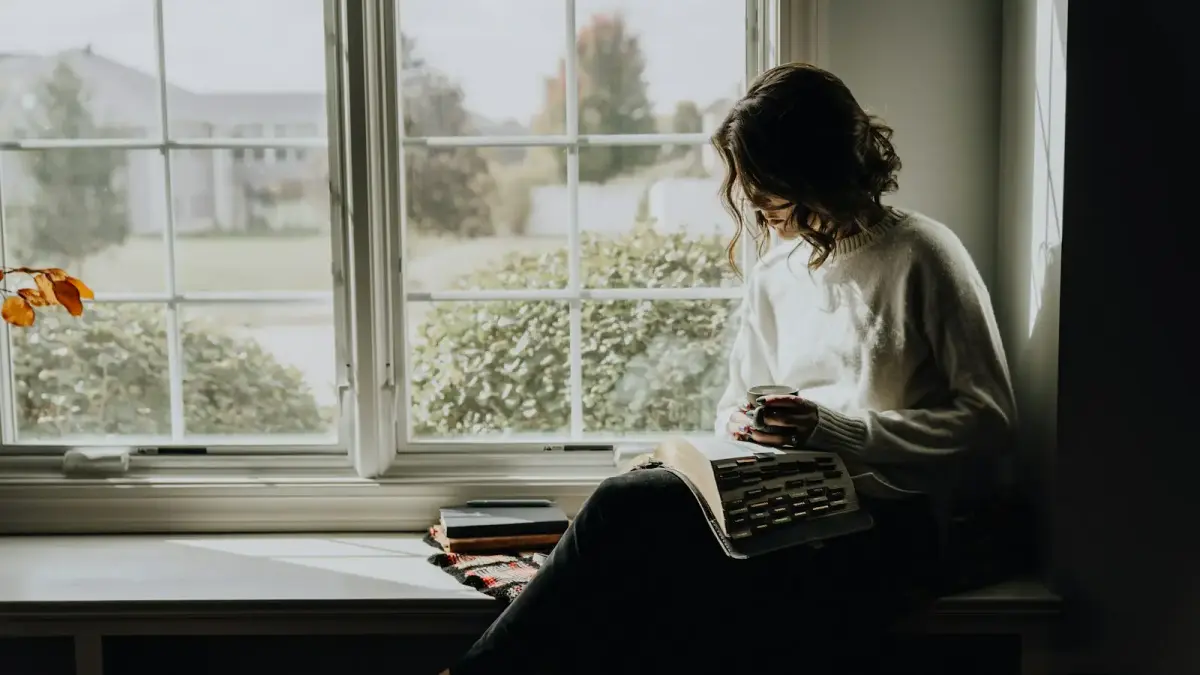
Because the truth is that something did happen. I spent Saturday morning on the couch with a novel I have been saving for a weekend exactly like this one. I read for six hours. Not in pieces between tasks but in one long, unbroken stretch where the light in the room changed three times and I did not notice until my neck was stiff and the tea had gone cold twice.
I cooked dinner for one that evening. Set the table for one. Ate slowly, without a screen, without a podcast, without the pleasant background noise of someone else’s company. And when the dishes were done, I walked to the park at dusk and stood near the pond for a while and did not take a photograph or call anyone to describe what I was seeing.
If I told my coworker this, she would tilt her head. She might ask if I was okay. She might suggest I try a book club or a cooking class or a walking group - three ways of saying that the things I did alone should have been done with witnesses.
The things that cannot be reported
There is an entire category of experience that loses its meaning the moment you try to explain it to someone who has never needed it.
The silence of a Saturday morning when you wake up and realize that the entire day belongs to you - not to your schedule, not to anyone’s expectations, but to the specific version of yourself who only exists when nobody else is watching. That version does not perform. She does not narrate. She moves through the house with a slowness that would alarm anyone who thinks productivity is the price of a day.
A 2022 study published in the Journal of Personality and Social Psychology found that people who regularly chose solitude - not out of anxiety or social avoidance but as a deliberate preference - reported higher levels of emotional stability and self-awareness than those who filled their free time with social activity. The researchers called it “self-determined solitude,” and they found that it functioned as a kind of emotional reset, a period during which the nervous system could process the week’s accumulated input without adding new stimulation on top of it.
But the study did not capture the part I find hardest to explain. It is not just that solitude is restorative. It is that certain experiences only exist inside it.
The particular quality of attention you bring to a novel when there is no one in the room to interrupt. The way food tastes when you are eating it slowly, for yourself, at a table where the only expectation is your own appetite. The way a walk feels when nobody knows where you are and nobody is waiting for you to return.
These are not lesser versions of shared experiences. They are different experiences entirely. And they cannot survive translation.
The performance of having done something
There is a reason I say “ran some errands” instead of “spent fourteen hours alone and loved every second of it.”
The reason is that our culture has exactly two categories for a person who spends a weekend entirely alone. The first is lonely. The second is recovering from something. There is no widely accepted third category for a person who is simply full.
Susan Cain wrote about this tension - the way Western culture conflates solitude with isolation and treats the desire to be alone as a symptom rather than a preference. But she was describing a structural bias. What I am describing is more personal. It is the specific exhaustion of performing social adequacy around your own rest.
Because if you say you went to brunch, nobody asks follow-up questions. If you say you went to a concert, nobody tilts their head with concern. But if you say you spent all of Saturday reading a book and then went to bed at nine thirty and it was the best day you have had in weeks, something shifts in the room. A small, concerned pause. A gentle suggestion that sounds like care but feels like a correction.
You are not broken. You are not hiding. You are not depressed. You simply speak a language that the room does not have ears for.
A 2020 study published in Psychological Science found that adults who described their solitary activities as chosen rather than imposed reported satisfaction levels equal to or higher than those engaged in social leisure. The key variable was not the activity itself but the presence of autonomy - the feeling that the solitude was something you walked toward, not something that happened to you because nobody called.
That distinction matters. Because it means the woman at fifty-one who spends a weekend alone and calls it the best two days of her month is not compensating for a lack. She is accessing something that most people’s schedules do not leave room for. And the fact that she cannot describe it on Monday morning without sounding like she needs help is not her problem. It is a failure of vocabulary.
Why the quiet feels like fullness
Here is what I think happens during those hours alone, the ones I cannot explain to someone who has not felt them.
The nervous system exhales. Not the shallow exhale of a relaxation exercise but the deep, structural exhale of a body that has been holding a very specific kind of tension since the last time it was truly alone. The tension of being perceived. The tension of tracking conversations, managing expressions, calibrating your energy to the room.
Daniel Goleman described emotional labor as the invisible tax of social life - the cognitive cost of monitoring other people’s feelings while simultaneously managing your own presentation. For people who are naturally attuned to emotional atmosphere, that tax is higher. Not because they are fragile or oversensitive but because they process more. Every interaction carries more data. Every room has more signals. And the only time the processing stops is when the room is empty.
That is what the weekend is for. Not escape. Not avoidance. Not the absence of something better. It is the presence of something that cannot exist in company.
A 2021 study in Frontiers in Psychology found that individuals with high sensitivity to environmental stimuli - often described in the literature as sensory processing sensitivity - showed measurably greater physiological recovery during periods of chosen solitude compared to social rest. Their cortisol levels dropped faster. Their heart rate variability improved more. Their self-reported emotional clarity increased in ways that social downtime did not replicate.
In other words, for some people, being alone is not a break from living. It is the part of living where the most important work happens.
The language nobody taught you
I used to apologize for it. Not directly, but in the way I structured my weekends around other people’s expectations of what a full life should look like. I would accept brunch invitations I did not want. I would say yes to group outings that left me more tired than the workweek. I would perform the version of a weekend that looked right from the outside, even though the cost was spending Monday morning grieving the rest I did not get.
I stopped doing that somewhere around forty-five. Not because I became antisocial or rigid or selfish, but because I finally understood that the quiet was not the gap between events. It was the event.
The reading. The cooking. The walk at dusk. The slow, plotless hours that most people would call wasted. Those were the experiences my body was waiting for all week. And every Monday morning when I said “not much” to the person in the break room, I was carrying the fullest version of myself inside a sentence designed to sound empty.
If you recognize any of this - if you have ever stood in a kitchen on a Saturday evening, cooking something simple, listening to nothing, and felt a contentment so quiet that it does not have a name - then you already know what I am trying to say.
You do not need more plans. You do not need to be fixed or activated or drawn out of your shell. The shell is not a shell. It is a room you built, carefully, over decades, and the reason it fits so well is because you are the only person it was ever designed for.
The world will keep asking what you did this weekend. And you will keep saying “not much.” And both of you will be telling the truth - yours in a language that does not translate, and theirs in a question that was never really looking for the answer you carry.
That is okay. The best weekends were never the ones that made good stories. They were the ones that made you feel, for forty-eight hours, like the quietest version of yourself was also the most real.