There are people who drive the long way home from work every single day - not because they dislike what is waiting but because the car is the only space left where nobody needs anything from them, where they can exist for twenty minutes without being someone's answer, someone's anchor, someone's next task
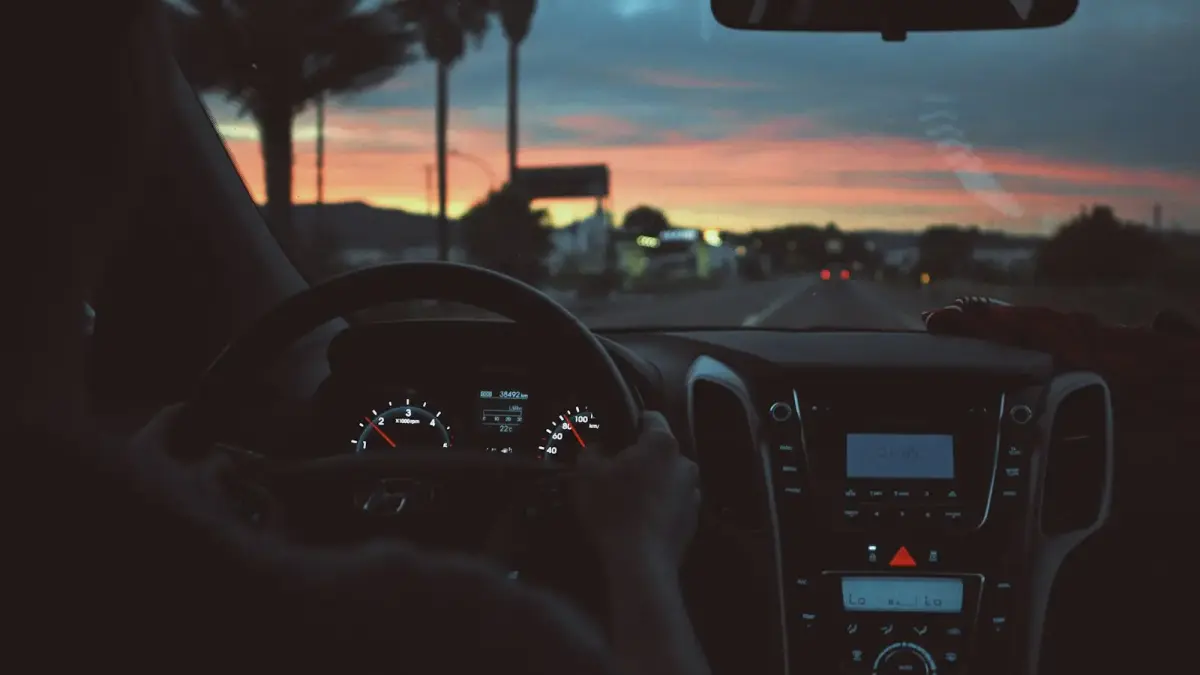
I used to take the highway home. Fourteen minutes, door to door, if the lights cooperated.
Then one Tuesday - I cannot tell you what happened that Tuesday, nothing remarkable, nothing terrible - I turned left instead of right and drove through the old part of town where the trees hang over the road like a cathedral ceiling. It added eleven minutes. Nobody was worried. Nobody even noticed.
I did it again Wednesday. And Thursday. And by the following week I had a whole route mapped out in my body - not on any screen, just muscle memory pulling me toward those extra minutes the way your hand reaches for a glass of water before your brain registers thirst.
I felt guilty about it for months. I love my home. I love the people in it. But the car had become something I did not have a name for yet - a room with no demands, no questions, no one waiting for me to be the version of myself that holds everything together.
If you have ever sat in your own driveway with the engine off, watching the light change in your living room window while you finish a song or simply breathe - you already know exactly what I am talking about.
The last room that belongs to you
Here is what nobody says out loud: in a full life - a life with people who love you, who depend on you, who genuinely want your presence - there may not be a single physical space that is yours alone.
The bedroom belongs to partnership. The kitchen belongs to feeding others. The bathroom gets interrupted. The living room is shared territory. Even the backyard carries the weight of maintenance, of projects undone, of someone calling your name through the screen door.
The car is different.
The car is climate-controlled solitude. It is a sealed environment where your phone can ring and you can watch it ring without answering. Where the only voice is one you chose - a podcast, a song from 1994, or nothing at all.
A 2019 study published in the Journal of Environmental Psychology found that people consistently identify enclosed, mobile spaces as psychologically distinct from stationary rooms - the sense of movement combined with privacy creates what researchers called a “transitional psychological state” that allows emotional processing to happen almost automatically.
You are not avoiding your life. You are metabolizing it.
Why twenty minutes matters more than you think
There is a concept in emotional regulation research called the “depletion gap” - the distance between what your nervous system has given and what it has received back. For people in caregiving roles, high-responsibility positions, or relationally dense lives, this gap widens throughout the day like a slow leak you cannot see.
Twenty minutes does not sound like much. But twenty minutes of unstructured, unmonitored, unproductive time is - for many adults - the only margin they have.
Not twenty minutes of meditation. Not twenty minutes of exercise. Not twenty minutes of anything optimized or intentional.
Twenty minutes of simply not being needed.
Dr. Gabor Mate has written extensively about how the body keeps a running tally of relational debt - the accumulation of small moments where we override our own needs to meet someone else’s. The long drive home is not escape. It is a payment on that debt. A tiny rebalancing that allows you to walk through the door and be present rather than depleted.
The guilt is the tell
If you feel guilty about wanting those twenty minutes, that is not evidence that you are doing something wrong. That is evidence of how thoroughly you have been trained to believe that your presence must be constant and available to be valid.
Think about that for a moment.
You feel guilty about driving slowly. About taking a longer route through a neighborhood with better trees. About sitting in a parked car in your own driveway listening to the end of a radio segment.
The guilt is not moral information. It is conditioning. It is the voice of a culture that treats rest as laziness and solitude as rejection - especially for people whose identity has become inseparable from their usefulness to others.
A 2022 study in Frontiers in Psychology examined what researchers called “role saturation” - the point at which a person’s sense of self becomes entirely subsumed by their function within relationships. The study found that individuals who maintained small, daily rituals of solitude - even five to fifteen minutes - reported significantly higher relationship satisfaction and lower rates of resentment than those who moved directly from one relational context to another without transition.
The drive home is your transition. It is the airlock between who you are for everyone else and who you are when you are simply breathing.
What you are protecting
I want to name what is actually happening in that car, because I think most people misidentify it.
You are not hiding. You are not withdrawing. You are not choosing the car over your family.
You are protecting your capacity to love them well.
There is a difference between presence that comes from fullness and presence that comes from obligation. Your family can feel that difference. Your partner can feel it. Your children can feel it - even the grown ones, even the ones who moved out years ago and still call on Sundays.
When you walk through the door having given yourself those twenty minutes, you arrive differently. Not perfectly. Not with infinite patience. But with enough room inside yourself to receive what is waiting without immediately calculating what it will cost you.
That is not selfishness. That is maintenance.
The driveway sitters
I want to talk specifically to the people who sit in the driveway. Because I think you carry a particular kind of shame about it - this sense that you are literally ten feet from the people you love and you are choosing to stay in a parked car.
You watch the light come on in the kitchen. You see shadows move past windows. You know dinner is happening, or homework, or the nightly negotiation of bedtime. And you sit there with the engine off and the radio low and you breathe.
Sometimes it is three minutes. Sometimes it is fifteen. Sometimes your partner texts “you home?” and you feel caught, like a child hiding in a closet during a party.
But here is what I want you to know: the fact that you need those minutes does not mean your life is wrong. It does not mean you chose the wrong partner, the wrong career, the wrong number of children. It means you are a person with a nervous system that requires transition time - and you have found the one small pocket in your day where that transition can happen without anyone needing to accommodate it.
You are not broken for needing the driveway. You are resourceful.
The ones who understand without being told
There is a strange kinship among people who do this. You can see it sometimes in the way someone describes their commute - the slight defensiveness, the preemptive justification.
“I just like the scenic route.”
“I listen to podcasts, so the extra time is nice.”
“Traffic is bad that way, so I go around.”
All of these are true. None of them are the whole truth. The whole truth is closer to: I have found a way to give myself twenty minutes that nobody has to approve, schedule, or know about, and those twenty minutes are the reason I still have something left to give when I get home.
A 2021 study published in the Journal of Personality and Social Psychology found that adults who reported the highest levels of relational satisfaction were not those with the most time together - they were those who maintained what the researchers called “autonomous micro-rituals,” small daily practices that belonged entirely to the individual and required no negotiation or permission.
Driving the long way home is an autonomous micro-ritual. It requires nothing from anyone. It costs nothing except a few minutes of fuel. It produces no output. It optimizes nothing. And it holds your life together in ways that are invisible until you stop doing it.
What happens when you stop
I know this because I tried. For two weeks, I took the fast route - fourteen minutes, no detours, straight home.
I told myself I was being efficient. Present. A good partner. A person who did not need to hide in a car to function.
By day four I was snapping at questions that were not aggressive. By day seven I resented the sound of my own name being called from another room. By day ten I understood, with the kind of clarity that only comes from deprivation, that those eleven extra minutes were not a luxury.
They were structural. They were the beam in the ceiling that you never look at until the roof starts to sag.
I went back to the long way. The trees. The slower streets. The feeling of my shoulders dropping somewhere around the third turn, when my body finally believes that nobody needs anything from me for the next eight minutes.
Permission you do not need but I am giving anyway
You do not need permission to drive slowly. You do not need permission to sit in your driveway. You do not need to justify the extra gas, the extra minutes, the apparent inefficiency of choosing a longer path when a shorter one exists.
But if hearing it helps - if some part of you needs another person to say it clearly - then here it is:
The long way home is not avoidance. It is not dissatisfaction. It is not a red flag about your marriage, your family, or your emotional health.
It is a person who gives constantly finding the one small way to receive. It is twenty minutes of being nobody’s answer. And it is enough - just barely, some days - to walk through the door and mean it when you say, “Hey. I am glad to be home.”
Because you are. You just needed a moment to remember that.