There are people who make their best decisions in empty rooms, whose clearest thoughts arrive the moment the last guest leaves and the front door clicks shut, and they have spent their entire lives being told this preference for quiet is a deficiency when it is actually the most honest thing about the way their mind was built
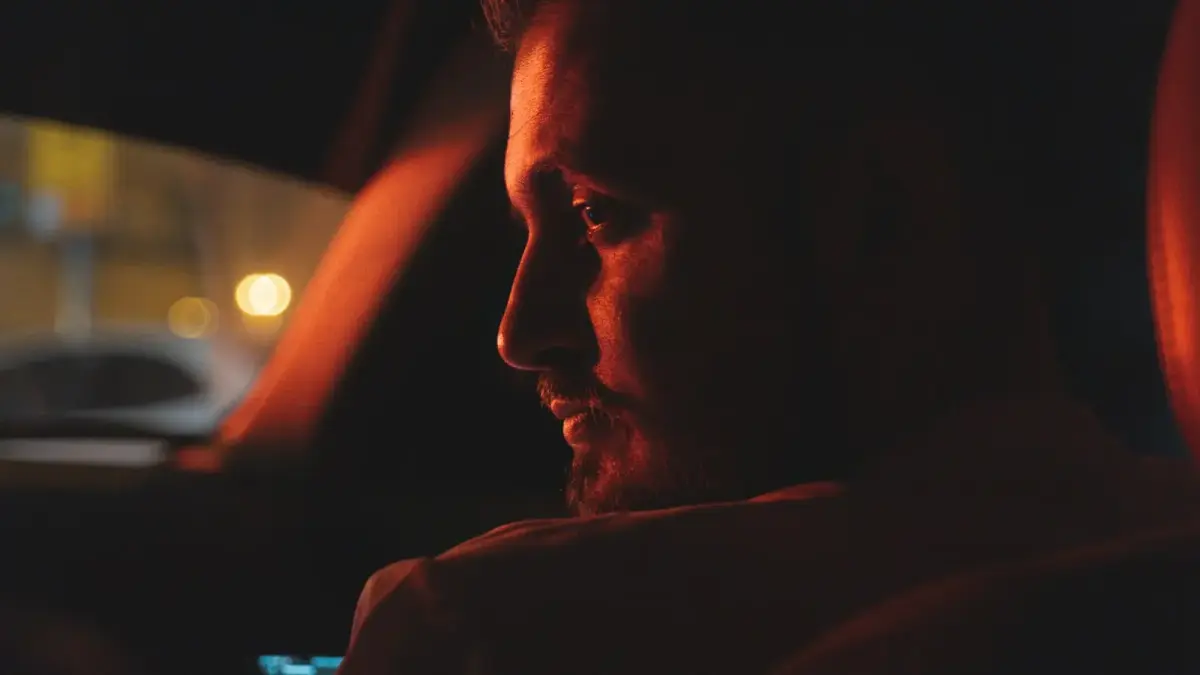
I noticed it for the first time on a Sunday afternoon in my late twenties. The apartment was finally empty. My roommate had left for the weekend, the neighbor’s music had stopped, and the hum of obligation that usually lived in my chest had gone quiet. I sat down at my desk with a cup of tea that was already getting cold and something happened that I didn’t expect.
I had an idea. A real one. Not the kind you force during a brainstorm or blurt out in a meeting to prove you belong. The kind that arrives fully formed, like it had been waiting behind a door you didn’t know was there.
I wrote for three hours without stopping. When I finally looked up, the light in the room had changed entirely. And I remember thinking - not with pride but with a strange sadness - that this was the clearest my mind had felt in months. Maybe years. All it took was an empty room.
I didn’t tell anyone. I had already learned that saying “I do my best thinking alone” earned a particular look. The concerned tilt of the head. The gentle suggestion to get out more. The implication that needing silence was a symptom of something that needed fixing.
The room where everything gets louder
There is a particular kind of mind that does not perform well with an audience. Not because it is fragile or slow or antisocial, but because it processes the world in layers - and layers take time, and time requires space, and space requires the absence of other people’s expectations pressing against your skin.
You know this mind. You might live inside it.
It is the mind that has the perfect response to a conversation forty-five minutes after the conversation is over. The mind that needs to leave a meeting and sit in a parked car for ten minutes before it knows what it actually thinks. The mind that cannot access its own intelligence when someone is watching.
This is not a flaw. This is architecture.
A 2022 study published in the Journal of Research in Personality found that individuals with high sensitivity to environmental stimulation showed significantly greater creative output when working in low-stimulation settings. Their performance didn’t just improve slightly in quiet conditions. It transformed. The same people who appeared unremarkable in group settings produced work of striking originality when given solitude and unstructured time.
The researchers called it “stimulus-dependent cognitive variation.” But you don’t need a term for it. You have lived it every day of your life.
What the world rewards instead
We built a culture that treats thinking out loud as thinking well. The person who speaks first in a meeting is assumed to have the strongest opinion. The child who raises their hand fastest is assumed to be the smartest. The colleague who fills silence with words is assumed to be the most engaged.
And you - the one sitting quietly, turning the question over in your mind like a stone in your palm, feeling your way toward something true - you are assumed to be disengaged. Uncertain. Lacking confidence.
Susan Cain wrote about this in her landmark work on introversion - how Western culture, particularly American culture, developed what she called the Extrovert Ideal. The belief that the healthy, successful, admirable person is the one who is gregarious, comfortable in the spotlight, quick to speak. Not because the data supports this. But because the culture decided it, and then built schools and workplaces and social norms to enforce it.
You grew up inside that enforcement. You felt it every time a teacher wrote “needs to participate more” on your report card. Every time a manager told you to speak up in meetings. Every time someone at a dinner party said, “You’re so quiet tonight,” as though quiet were a weather condition you were inflicting on the group.
What nobody said - what nobody thought to say - was that your silence was not emptiness. It was processing. It was respect for the complexity of the question. It was your mind doing exactly what it was designed to do, which is think before it speaks.
The intelligence that only arrives in the quiet
There is a particular quality of thought that cannot exist in noise. Not background noise - though that matters too - but the noise of social expectation. The awareness of being watched. The pressure to produce something visible, something immediate, something that justifies your presence in the room.
Daniel Goleman’s work on focused attention describes two fundamentally different modes of cognition. There is the reactive mode - fast, surface-level, responsive to external cues. And there is the reflective mode - slow, deep, internally generated. Both are real intelligence. But our culture rewards the first and barely recognizes the second.
If your mind works best in reflective mode, you have spent your life being evaluated by reactive-mode standards. It is like being a distance runner judged exclusively on your forty-yard dash time. The measurement isn’t wrong, exactly. It is just measuring the wrong thing.
And here is what makes it painful. You know what you are capable of. You have felt it - alone in your kitchen at midnight, or on a long drive with the radio off, or in the twenty minutes after everyone leaves. You have felt the quality of your own thinking when no one is asking you to perform it. You know it is real.
But you have also internalized the suspicion that it doesn’t count if no one sees it happen.
The door clicks shut and something opens
I want to talk about that specific moment. The one you know intimately.
The last person leaves. The door closes. There might be a brief exhale - not dramatic, just the body releasing something it has been holding without your conscious permission. And then the room changes. Not physically. Energetically. The air gets wider.
Your thoughts, which had been circling like cars in a parking garage, suddenly find open road.
This is not escape. This is not avoidance. This is your nervous system finally reaching the conditions it needs to do its actual work. A 2019 study in Frontiers in Psychology found that solitude - freely chosen, not imposed - was associated with increased creativity, emotional regulation, and self-clarity. The researchers noted that the benefits of solitude were strongest for individuals who scored high in what they called “need for cognition” - people who genuinely enjoy thinking deeply.
You are not retreating from the world when you close that door. You are arriving at yourself.
And the decisions you make in that space - the ones that come after the quiet settles in and your mind stops performing for an invisible audience - those are often the truest decisions you will ever make. Not because solitude is magic. But because solitude removes the single biggest distortion in human cognition, which is the desire to be seen thinking correctly rather than actually thinking.
The apology you have been carrying
You have apologized for this. Many times, in many ways.
You have apologized by forcing yourself to attend events you didn’t want to attend, then feeling guilty for not enjoying them. You have apologized by pretending to brainstorm enthusiastically in open-plan offices while your real ideas waited at home. You have apologized by describing yourself as “kind of introverted” with a self-deprecating laugh, as though introversion were a mild personality defect you were learning to manage.
You have watched other people make impulsive decisions in crowded rooms and receive praise for their boldness. And you have watched your own carefully considered decisions - the ones that took root in silence and grew in solitude - go unrecognized because they arrived without spectacle.
Adam Grant has written about how organizations systematically undervalue the contributions of people who think before they speak. Not because those contributions are weaker, but because the process of producing them is invisible. The extroverted thinker’s work is public - you can watch it happen. The introverted thinker’s work is private. By the time you see the output, you have missed the entire process, and so you assume it was easy. Or obvious. Or not really that impressive.
But you know what went into it. You know the hours of quiet turning. The mental drafts that were written and discarded before the real idea emerged. The discipline of sitting with uncertainty long enough for clarity to arrive on its own terms.
That process is not a deficiency. It is a practice. And it is one of the most rigorous forms of thinking that exists.
The room is not empty
Here is what I want you to hear, if you are someone who has spent decades apologizing for the way your mind works.
The room is not empty when you are alone in it. It is full - of you. Of the particular quality of attention you bring to problems when no one is watching. Of the thoughts that can only take their true shape when they are not being forced into the mold of a quick answer or a confident delivery.
Your need for solitude is not a wound. It is not something that happened to you. It is not the result of a difficult childhood or a social failure or an inability to connect. It might coexist with some of those things - most lives contain contradictions - but it is not caused by them.
It is how you were built. And you were built well.
The creativity that finds you in quiet rooms, the clarity that arrives after the front door clicks shut, the decisions that surface only when the pressure of performance has been removed - these are not lesser forms of intelligence. They are intelligence operating in its natural habitat.
You do not need to become someone who thrives in noise. You do not need to learn to think on your feet if your best thinking happens in a chair, alone, with the lights low and the phone in another room. You do not need to apologize for requiring conditions that most of the world has been too loud to understand.
The empty room was never the problem. It was the answer. And you knew that before anyone gave you permission to believe it.