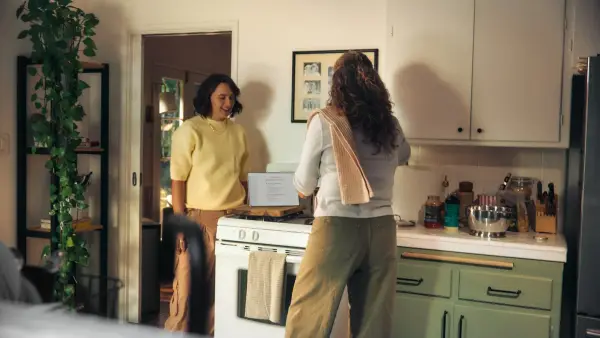
There are people who stand in the doorway and wave goodbye until the car has completely disappeared around the corner - not because they are sentimental or have nothing else to do but because a child who turned around once in the back seat of a leaving car and saw that the person they loved had already gone inside learned that the worst kind of leaving is the one that happens while someone is still watching, and the woman at fifty-three who waves until there is nothing left to see is still making sure nobody ever turns around to find an empty doorway where love used to be standing
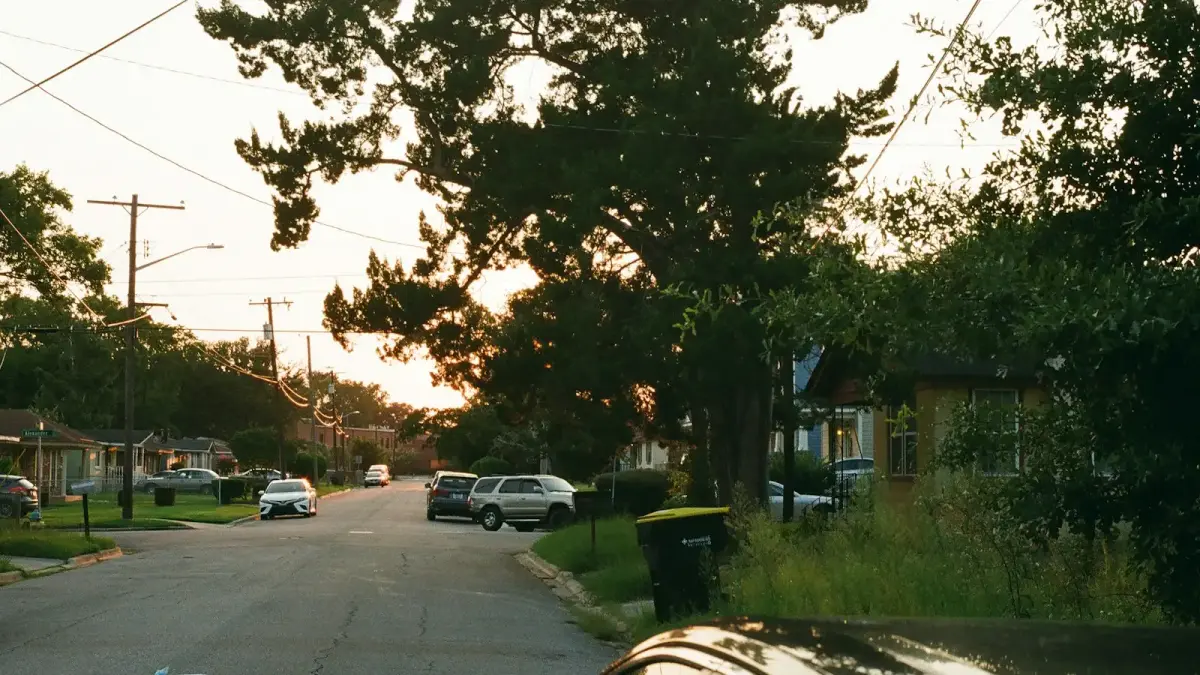
The back seat taught me everything I needed to know about leaving
I was seven the first time I turned around in the back seat of my father’s car and saw that my grandmother had already gone inside.
We hadn’t even reached the end of her street. The car was still moving slowly, the way it does when someone is leaving a neighborhood they know by heart, and I twisted around in the seat belt to wave one more time. The doorway was empty. The screen door was already closed. The porch light was still on, but the person who had been standing there moments before had vanished - as though the goodbye had been a performance that ended the second the audience looked away.
I don’t remember crying. I remember something worse. I remember a thought forming that I didn’t yet have the words for - that love could be present and then simply not be there, and that the person who loved you could decide they were finished saying goodbye before you were.
That moment lived in my body for decades before I understood what it had built.
The architecture of an empty doorway
There is a specific kind of wound that doesn’t come from what someone did to you, but from what they stopped doing before you were ready.
John Bowlby, the British psychiatrist who gave us attachment theory, spent years studying what happens to children when the presence of a secure figure is interrupted. His concept of the “secure base” - the idea that we need to know someone is there in order to feel safe enough to leave - is usually discussed in terms of early childhood. But Bowlby himself observed that the need for a reliable figure at the point of departure doesn’t disappear when we grow up. It just becomes quieter. Less visible. Harder to name.
The empty doorway isn’t a trauma in the way we typically use that word. Nobody would call it abuse. Nobody would write about it in a therapy intake form.
But it teaches something. It teaches a child that the transition between presence and absence is a moment most people rush through. That the space between together and apart is something adults want to get over with. That the goodbye is for the person leaving, not the person staying.
And the child who learns that - the one who turned around and saw the closed door - makes a quiet promise. Not in words. In the body.
The promise sounds something like this: I will never be the empty doorway.
What the woman at fifty-three is actually doing
You know her. Maybe you are her.
She stands on the front porch or in the driveway or at the edge of the yard, and she waves. Not a perfunctory wave. Not a quick hand raised and lowered. She waves the entire time the car is pulling out, backing up, straightening, moving down the street. She waves when the car reaches the stop sign. She waves when the brake lights come on at the corner. She waves when the car begins to turn.
She is still waving when the car disappears.
Then she stands there for another moment, just in case someone looks back one more time and needs to find her exactly where they left her.
If you ask her about it, she’ll laugh and say something self-deprecating. She’ll say she’s silly, or old-fashioned, or that she just likes to make sure they got off okay. She probably doesn’t know that she’s completing a ritual that began forty-five years ago in a moment she may not even consciously remember.
A 2019 study published in the Journal of Personality and Social Psychology found that what researchers called “departure rituals” - the specific behaviors people enact during goodbyes - have a measurable effect on felt security in relationships. The study found that the quality of a goodbye predicted relationship satisfaction more reliably than the quality of a greeting. Not what was said during the goodbye, but how present the person remained during the transition from together to apart.
The woman at fifty-three isn’t being dramatic. She is being present at the exact moment most people have already turned away.
The last image matters more than the first
Here is something I’ve come to believe after years of studying how relationships form and fracture: we remember beginnings, but we are shaped by endings.
The first time you meet someone, you are taking in new information. Your brain is busy categorizing, assessing, forming impressions. But the last image - the final frame before the scene cuts - is the one that lives in the body. It’s the one that tells you whether the connection is safe.
Think about it. You remember the way someone looked when you walked away from them. You remember whether they watched you go. You remember whether the door was open or closed when you glanced back.
Daniel Goleman writes about emotional memory as something that operates below conscious thought - the limbic system recording the feeling-tone of a moment long before the rational mind has decided what it means. The last image of a goodbye is exactly this kind of memory. It doesn’t announce itself. It simply becomes the template for what leaving feels like.
The child who saw the empty doorway didn’t decide that love was unreliable. The child’s nervous system recorded a felt sense - that the transition from together to apart was a moment when attention could be withdrawn. When presence could simply stop.
And the adult that child becomes doesn’t think about it in those terms. She just knows that she can’t go inside until the car is gone. She just knows that something in her body won’t let her turn away first.
The quiet mathematics of staying visible
There is a mathematical quality to this behavior, if you pay attention to it.
The person who waves until the car disappears is calculating, constantly, whether they are still visible. They are running a quiet equation: can they still see me? Have they turned around yet? Is there still a line of sight between us?
This isn’t anxiety, exactly. It’s something closer to devotion expressed through geometry. The insistence on remaining in the sightline of the person who is leaving. The refusal to let there be a gap - even a fraction of a second - between the moment the person looked back and the moment they would find you still there.
A 2021 study in Frontiers in Psychology examined what researchers termed “transitional availability” - the degree to which a caregiver remains emotionally and physically accessible during moments of separation. The findings were striking. Children whose caregivers maintained presence through the full arc of a departure - not just the initial goodbye but the entire leaving process - showed higher levels of secure attachment and lower cortisol responses during subsequent separations.
The researchers noted something fascinating: it wasn’t the grand gestures that mattered. It wasn’t the tightness of the hug or the number of times “I love you” was said. What mattered was whether the person was still there at the end. Whether they held their position in the doorway until the transition was truly complete.
The woman at fifty-three has been conducting this research her entire life, without knowing it.
The ones who rush inside
I don’t say this to judge anyone.
Some people go inside quickly after a goodbye because they are protecting themselves from the feeling that rises in the chest when someone leaves. Some people go inside because they were taught that lingering is weakness, that efficiency is strength, that you shouldn’t make a fuss.
Some people go inside because their goodbyes were never given weight when they were small, and they learned that the moment of parting was insignificant - a gap to be closed, not a bridge to be honored.
But the person on the other side of that equation - the one in the car, the one walking away, the one who turns around - they don’t know any of this. They just see the closed door. And the closed door says something that the person who closed it may never have intended to say.
It says: I was ready for you to be gone before you were gone.
This is why the woman who waves matters. Not because her way is right and the other way is wrong. But because she has understood something about the architecture of love that most people never articulate.
Love isn’t only what you do when someone arrives. It’s what you do when someone is leaving. And more than that - it’s what you do in the last seconds, when staying feels unnecessary, when the car is already down the block, when no one would blame you for stepping back inside.
That’s when it counts the most.
The promise that was never spoken
My grandmother wasn’t a cold person. She was warm, generous, the kind of woman who made food for every neighbor who was sick and called on birthdays without fail. Her going inside wasn’t cruelty. It was probably just habit, or a sore back, or the bread in the oven, or a lifetime of goodbyes that had taught her that the leaving part was the leaving person’s business.
She didn’t know I turned around. She didn’t know about the empty doorway. She didn’t know that her seven-year-old granddaughter was forming an entire theory of love around one missing wave.
But I did. And the theory held.
I am forty-six now, and I wave until the car is gone. I wave until my arm is tired and the street is empty and there is no possibility that anyone could turn around and find me missing.
My children tease me about it. My husband pretends not to notice. But my daughter - she is nine - she does it too. She stands next to me in the doorway and she waves until her father’s car has turned the corner, and then she looks up at me and says, “Okay, he’s gone now.”
She doesn’t know why she does it. She just knows that we stand here until the car disappears.
And maybe that’s how love works, in the end. Not as grand declarations or perfect words. Not as the absence of pain or the presence of constant joy. But as the willingness to remain visible for five more seconds than anyone would expect. As the refusal to close the door while someone you love is still in the act of leaving.
The woman at fifty-three who stands in the doorway waving is not sentimental. She is not wasting time. She is not performing.
She is keeping a promise that a child made in the back seat of a car, decades ago, to a doorway that was already empty.
And every time someone she loves turns around and finds her still standing there - hand raised, door open, present in the fading light - that child finally gets the ending she always needed.
Not a closed door. Not an empty porch.
Just someone who loved her enough to stay visible until the very last moment it mattered.