There is a particular kind of person who takes the same route to work every single day even when the GPS suggests a faster one - who turns at the same intersection, parks in the same spot, walks through the same door - not because he is a creature of habit but because a boy who grew up in a house where the rules changed without warning learned that the only safe path is the one you have walked before, and a man who navigates by repetition is not rigid but terrified of what lives at the end of an unfamiliar road
The Turn He Always Takes
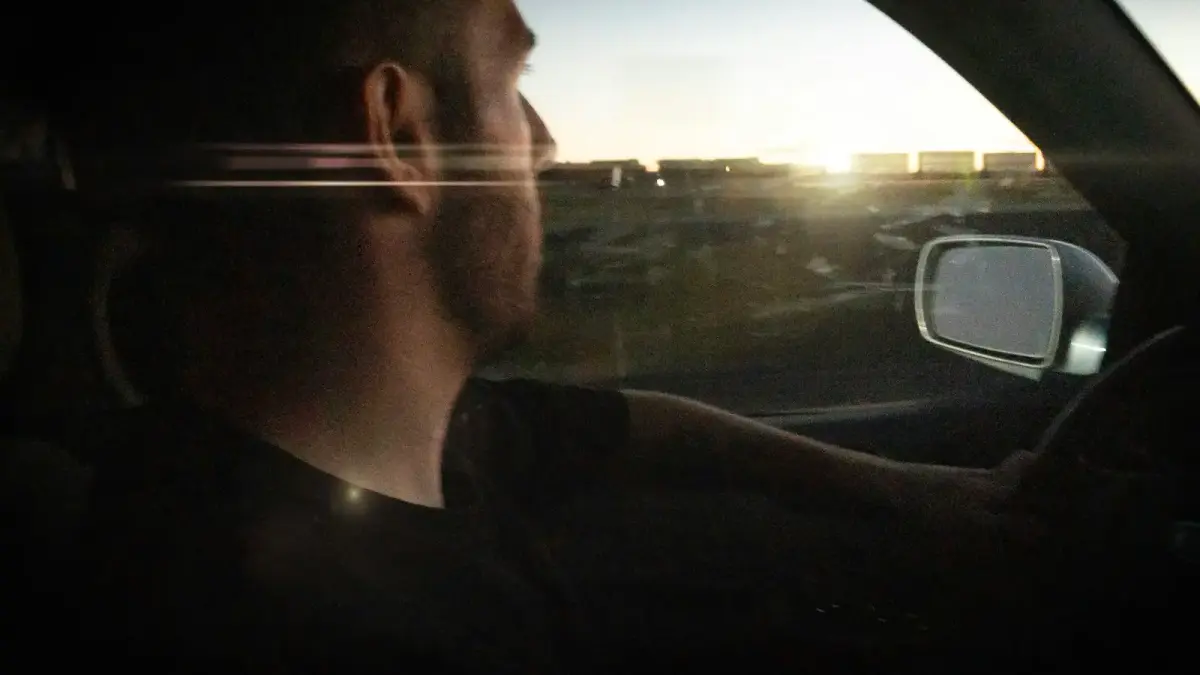
I know a man who has driven the same route to work for eleven years.
His wife showed him once that a different highway shaves off seven minutes. He nodded, said that was interesting, and the next morning turned left at the same intersection he always turns left at. She thought he was being stubborn. He thought he was staying alive.
Not literally. He knows, rationally, that a different road will not kill him. But something in his chest tightens when the GPS recalculates, when the blue line on the screen bends in a direction he has not memorized. Something old. Something that has nothing to do with traffic.
He parks in the same spot - third row, near the oak tree with the split trunk. He orders the same coffee - medium, black, no room. He sits at the same desk and opens his laptop in the same sequence, browser first, then email, then the project folder he left open the night before.
People call this boring. They call it rigid. They say he is “stuck in his ways” like it is a diagnosis.
But I know where that road starts. And it does not start at the intersection where he turns left every morning. It starts in a kitchen where a seven-year-old boy stood very still and tried to read the weather of his father’s face before deciding whether it was safe to pour cereal.
When the Floor Kept Moving
There is a specific kind of childhood that does not leave bruises but leaves something just as permanent - a nervous system that never learned to rest.
Not every chaotic home is violent. Some are just unpredictable. The rules shift. Monday’s joke is Tuesday’s offense. The volume of the house depends on which version of a parent walks through the door. You learn, very young, that the ground beneath you is not solid. That a good morning can become a terrible afternoon for reasons you will never be told.
A 2019 study published in the journal Development and Psychopathology found that children raised in unpredictable environments - where routines were inconsistent and caregiving was erratic - showed heightened stress reactivity well into adulthood. Their cortisol patterns were different. Their bodies stayed on alert even in objectively safe situations.
The researchers called it “adaptive vigilance.” The children had learned to scan constantly for threat, not because they were anxious by nature but because their environment demanded it. And that scanning does not stop when you grow up and move out. It just finds new things to scan.
Like roads. Like parking lots. Like the specific way your morning unfolds.
The Architecture of Safety
Here is what nobody tells you about routine: for some people, it is not a preference. It is a regulation strategy.
When your childhood offered no predictability, you build it yourself. You construct a world where the same thing happens at the same time in the same order, because every confirmed expectation is a small promise kept. Every familiar turn is proof that the world is holding still.
The same coffee order is not about the coffee. It is about the fact that you asked for something, and it arrived exactly as you expected.
The same parking spot is not about convenience. It is about the fact that you drove somewhere, and everything was where you left it.
The same route to work is not about efficiency. It is about the fact that every intersection did what it was supposed to do, every light changed in the order you predicted, and nothing jumped out from behind a corner you had not memorized.
Dr. Bruce Perry, a psychiatrist who has spent decades studying trauma’s effect on the developing brain, describes this as the body’s attempt to create “patterned, repetitive” experiences that regulate the stress response. The brain craves rhythm. And when rhythm was absent in childhood, the adult brain builds it compulsively - not because something is wrong with the person, but because the brain is doing exactly what it was designed to do. It is trying to feel safe.
The Man Who Eats at the Same Restaurant
I want to tell you about the man at the restaurant.
He comes in every Thursday. Same booth, the one near the window with the slightly crooked blinds. He orders the grilled chicken sandwich, no tomato, with the house salad. He has been doing this for six years. The waitstaff know his name. They do not even bring the menu anymore.
His friends think it is funny. They tease him about it, gently. “Don’t you want to try the new place on Fifth?” they ask. He smiles. He says maybe next time. He never goes to the new place on Fifth.
What his friends do not know is that he moved four times before he was twelve. Different towns, different schools, different kitchens with different smells and different rules about which cabinets belonged to you and which ones you were not allowed to touch.
They do not know that his mother rearranged the furniture when she was anxious, which was often. He would come home from school and the living room would be different. The couch would be against a new wall. His room would be reorganized. Nothing was where he left it.
So now he sits in the same booth. Because the booth does not move. The blinds are still crooked. The chicken sandwich tastes exactly the way it tasted last Thursday. And that consistency - that small, ordinary, unremarkable consistency - is the thing that lets his shoulders drop half an inch.
What the Body Remembers
A 2021 study in Frontiers in Psychology examined adults who reported high levels of childhood household chaos. The researchers found something striking: these adults did not just prefer routine. They experienced measurable distress when routines were disrupted. A cancelled plan, a detour, a rearranged schedule - events that most people absorb without thinking - triggered a stress response that was disproportionate to the actual disruption.
The study’s authors suggested that for these individuals, routine had become “an external regulatory scaffold.” In other words, the predictable structure of their day was doing the work that a calm, consistent childhood would have built into their nervous system automatically.
This is the part that gets misunderstood most often.
People look at a man who takes the same route every day and they see someone who is inflexible. Someone who lacks spontaneity. Someone who needs to “loosen up” or “live a little.”
But what they are actually seeing is a person whose body learned, very early, that surprise is not fun. That novelty is not exciting. That “you never know what might happen” is not an invitation - it is a threat.
And the routine he built, piece by piece, intersection by intersection, coffee order by coffee order - that is not a cage. That is the scaffolding he constructed around himself so he could stand upright in a world that once knocked him sideways without warning.
The Grief Inside the Pattern
There is a grief in this that rarely gets named.
It is the grief of knowing that your need for sameness comes from somewhere. That the comfort you feel in repetition is not just a personality quirk but a scar dressed up as a preference.
It is the grief of watching other people take detours and try new restaurants and rearrange their living rooms for fun, and knowing that the reason you cannot do that easily is not because you lack courage. It is because your body still believes that anything unfamiliar might hurt.
Gabor Mate has written extensively about how the body stores what the mind tries to forget. The patterns we build as adults - the rigidity, the need for control, the quiet insistence on doing things the same way - these are not failures of character. They are the body’s long memory, still responding to a threat that ended decades ago.
And the man who drives the same way to work every morning is not ignoring the GPS because he is too proud to change. He is ignoring it because his nervous system has already calculated a different kind of efficiency - not the fastest route, but the safest one. The one where nothing unexpected happens. The one where every turn has been tested and confirmed and found to be free of danger.
That is not stubbornness. That is a boy’s survival strategy wearing a man’s commute.
The Permission You Were Never Given
If you are that person - the one who orders the same thing, drives the same way, sits in the same seat, feels a small knot tighten in your chest when someone suggests a change you did not plan for - I want you to hear something that maybe nobody has said to you directly.
You are not boring. You are not rigid. You are not “stuck in your ways.”
You are a person who built an entire architecture of safety out of nothing, because nobody built one for you. Every familiar route is a brick you laid yourself. Every predictable morning is a wall you put up between yourself and the chaos that used to be your whole world.
And maybe, over time, some of those walls can come down a little. Maybe one Tuesday you will try a different coffee order. Maybe one spring you will take the highway your wife suggested. Not because you should, but because you finally feel safe enough to survive a surprise.
But even if you never do - even if you drive that same route for another eleven years and park by that same oak tree and order that same medium black coffee until the day you retire - that is not a failure. That is a man who found a way to feel steady in a world that taught him, very young, that steadiness was not something the world would offer him.
You built it yourself. Every single morning. And that is not rigidity.
That is one of the bravest things a person can do.