Psychology says men who always insist on driving when their wife is in the car - who reach for the keys without thinking, who cannot settle into the passenger seat without their foot pressing an invisible brake - are not controlling or distrustful, they are men whose only permitted expression of protection was logistics, and the hand on the steering wheel at fifty-eight is not authority but the last surviving way a man who was never taught to say 'I am afraid of losing you' can say it without anyone hearing the fear
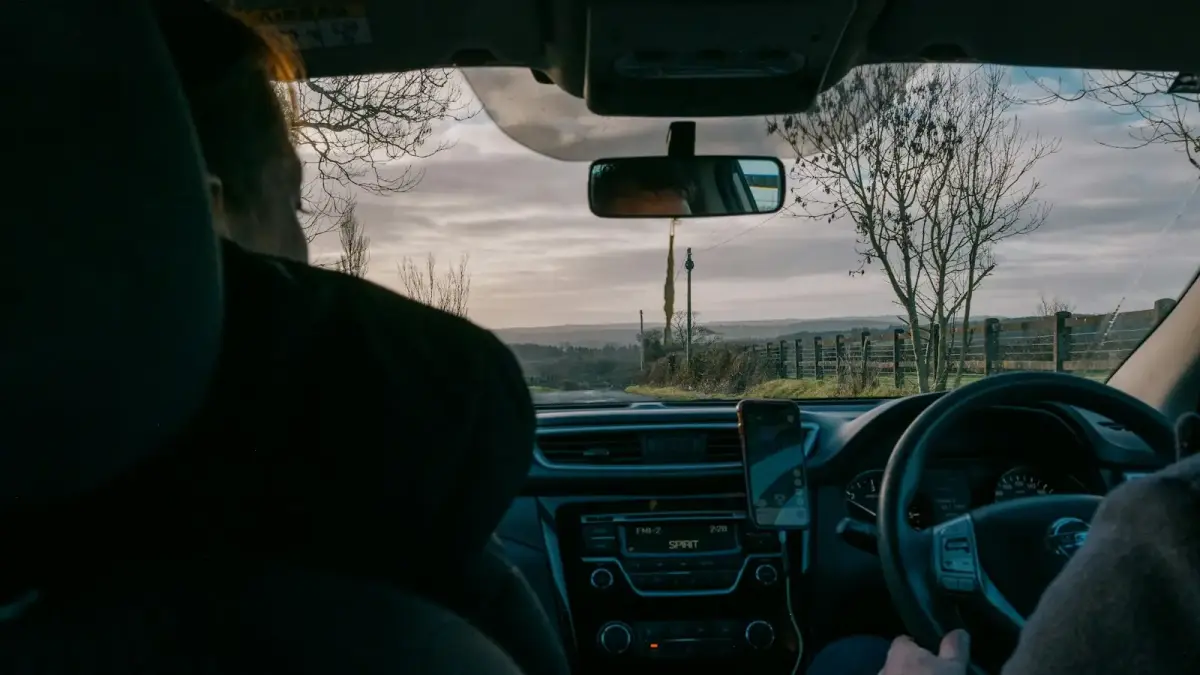
My father never once sat in the passenger seat when my mother was driving. Not on errands. Not on road trips. Not even on the short drive to church on Sunday mornings when he was running a fever and had no business being behind the wheel.
I didn’t think anything of it growing up. It was just the way things were arranged, like the fact that he always walked closest to the street or that he was the one who checked every door in the house before bed. Some things were simply his. The driver’s seat was one of them.
It wasn’t until I caught myself doing the exact same thing - reaching for the keys before my wife even had her coat on, adjusting mirrors she’d already adjusted, settling into the driver’s side with a relief I couldn’t explain - that I realized this wasn’t preference. It was something closer to a compulsion. And the compulsion had a source I hadn’t examined until I was well into my fifties.
The Invisible Brake Pedal
Anyone who has ridden as a passenger with a man like this has seen it. His right foot presses the floor. His hand grips the door handle on turns. He inhales sharply when the car ahead brakes, even though there’s plenty of room. He is driving from the passenger seat, and he is doing it badly, and he cannot stop.
It looks like distrust. It feels, to the woman driving, like a commentary on her competence. And she’s not wrong to feel that way - it does function as a kind of erasure, a quiet insistence that her hands are not quite enough.
But the man pressing that invisible brake is not thinking about competence. He is not thinking at all, not in any deliberate way. What’s happening is deeper than thought. His nervous system has placed itself between his wife and the road, and it will not stand down.
A 2018 study published in the Journal of Research in Personality found that men who scored high on protective vigilance - an unconscious orientation toward scanning for threats to loved ones - were significantly more likely to have grown up in households where masculine identity was tied to physical responsibility. The researchers described it as a “guardian schema” - a cognitive framework in which a man’s worth is measured not by what he says but by what he prevents.
He is not preventing her from driving. He is preventing something from happening to her while she drives. The distinction is everything.
The Vocabulary of Tires and Locks
Here is a partial inventory of the things my father did every single day without being asked, without being thanked, and without ever framing any of it as love.
He checked the tire pressure on my mother’s car every Sunday. He walked around the house before bed and tested every lock, every window latch, every sliding door. He parked under streetlights. He backed into parking spaces so she could pull straight out. He filled her gas tank when it hit half, not empty - half, because what if she needed to go somewhere unexpectedly and didn’t have time to stop.
None of this was on a list. None of it was discussed. It was the entire operating system running silently in the background of a sixty-year marriage, and my mother didn’t fully recognize its scope until he was in the hospital and the car sat in the driveway for three weeks and she realized she had never once in her life pumped gas at night because he had made certain she never needed to.
This is not control. Control announces itself. Control needs you to know it’s in charge.
This was invisible. That’s how you know it was devotion.
How Boys Learn to Guard Instead of Speak
The training starts early and it starts without ceremony.
A boy falls off his bike, and someone says “shake it off.” A boy cries at school, and someone says “toughen up.” A boy tells his father he’s scared, and the father’s face does something complicated - not anger, not disappointment, but a kind of concerned confusion, as if the boy has just spoken a sentence in a language the father doesn’t have a dictionary for.
So the boy learns. Slowly, completely, the way children learn everything. He learns that fear is real but must not be named. He learns that love is real but must be demonstrated through logistics. He learns that the space between himself and danger is the only territory he is allowed to tend with his full attention.
A 2021 study in Psychology of Men and Masculinities examined how men across four decades of birth cohorts described their primary emotional responsibility within relationships. Across every generation, the most common response was not “emotional support” or “communication.” It was “keeping her safe.” When asked to elaborate on what that meant in practice, the answers were strikingly consistent. Driving. Locking up. Walking on the street side. Checking the car before long trips. Sleeping closest to the bedroom door.
The researchers noted something important: these men did not describe these behaviors as choices. They described them as instincts. Things their bodies did before their minds could intervene. The language they used was closer to reflex than to decision.
And reflexes, unlike decisions, don’t respond well to being told they’re unnecessary.
The Street Side of the Sidewalk
I want to stay with that detail for a moment - the walking on the street side. Because almost every man I know does this, and almost none of them can tell you why.
If you ask, they’ll say something vague. “It’s just what you do.” Or they’ll reference some half-remembered origin about carriages splashing mud, as if they’re motivated by nineteenth-century etiquette and not by something far more alive and urgent.
What they won’t say - because most of them have never put words to it - is that they have placed their body between the person they love and the lane of traffic. They have made themselves the barrier. If a car jumps the curb, it hits them first. That’s the math. That’s the entire calculation, and it happens in less than a second, every single time they walk beside their wife on any street anywhere in the world.
It’s the same math as the steering wheel. The same math as the locked doors and the tire pressure and the gas tank filled at half.
The equation is always: my body between you and whatever could go wrong.
And the man doing this arithmetic has been doing it so long he doesn’t know he’s doing it anymore. It just feels like walking.
What She Sees, What He Means
There is a gap in this arrangement, and it’s the gap where loneliness lives for both of them.
She sees a man who won’t let her drive. Who hovers. Who checks the stove after she’s already checked it. Who asks if she locked the car when she’s standing right there with the keys in her hand. It feels, over years, like a quiet verdict: you cannot be trusted to handle things alone.
He means something entirely different. He means: this is the only way I know how to tell you that the thought of something happening to you makes my chest tight in a way I have no words for.
Dr. Brene Brown has written extensively about how vulnerability requires a vocabulary - a set of words and a cultural permission to use them. For millions of men, that vocabulary was never issued. What was issued instead was a set of behaviors. A checklist of physical acts that, performed faithfully and without complaint, constituted the entirety of what a man was allowed to offer as proof that he loved someone.
The tragedy is not that these men don’t feel deeply. The tragedy is that the depth of what they feel is legible only through actions that can be mistaken for control by the very person they’re trying to protect.
The Steering Wheel at Fifty-Eight
I am fifty-eight years old, and I still reach for the keys every single time.
My wife has been driving for forty years. She has a perfect record. She’s a better driver than I am in rain, and she knows it, and I know it, and I still reach for the keys because the part of me that needs to be between her and the road is not a part that responds to evidence.
She stopped fighting it a long time ago. Not because she gave in, but because she figured out what it meant. One night, years ago, she watched me check the rearview mirror for the third time in two minutes, and instead of sighing, she put her hand on my arm and said, “You’re doing it again.”
Not an accusation. An observation. As if she had identified the behavior for what it was - a man saying I love you in the only fluent language he’d ever been given - and decided to receive it as such.
That is the most generous thing anyone has ever done for me.
The Fear Underneath
Here is what is underneath all of it. The driving. The locks. The tires. The street side. The gas tank at half.
It is fear.
Not anxiety. Not worry. Fear. The specific, physical, gut-level terror that the person you have built your entire life around could be harmed, and you could have prevented it, and you didn’t, because you were sitting in the passenger seat, or you forgot to check the tires, or you let her walk on the street side just once.
Men like my father - like me - cannot say this out loud. Not because we’re too proud. Because we were never given the words. The emotional vocabulary we inherited has a hole in it exactly the shape of this fear, and we have spent our entire adult lives trying to fill that hole with locked doors and full gas tanks and the specific weight of our hands on a steering wheel.
A 2020 study in Frontiers in Psychology found that men who expressed care primarily through protective behaviors reported levels of emotional attachment equal to or exceeding men who expressed care verbally. The researchers concluded that “behavioral protection” was not an inferior form of emotional expression - it was a parallel one, shaped by socialization rather than capacity.
We are not less loving. We are differently fluent.
The Hand on the Wheel
My father drove my mother everywhere for fifty-three years. To the grocery store, to her sister’s house, to the hospital when her hip finally needed replacing, to the cemetery where her parents were buried. He drove in silence, mostly. She looked out the window. Sometimes she reached over and rested her hand on his forearm while he steered, and he would glance at her once, briefly, and then back at the road.
He never said what the driving meant. She never asked.
But the last time I visited them before he got sick, I watched him walk her to the car on a Tuesday afternoon - just a run to the pharmacy, nothing important. He opened her door. He waited until she was settled. He closed it gently. Then he walked around to the driver’s side, adjusted the mirrors he’d adjusted that morning, and placed both hands on the wheel at ten and two.
He was seventy-nine years old. His reflexes weren’t what they were. His night vision was going. By any practical measure, she should have been driving.
But he placed his hands on that wheel the same way he’d placed them there for half a century - carefully, deliberately, the way you hold something that matters too much to let go of.
That was never about the car.
If you are married to a man like this - a man who checks the locks twice, who fills your gas tank before it needs filling, who cannot sit in the passenger seat without pressing a brake that isn’t there - know that you are witnessing a man in the act of saying something he was never given the language to say out loud.
He is not controlling the car. He is holding the only thing he knows how to hold.
And the grip has always meant the same thing, even if he never finds the words: I am afraid of a world where I cannot keep you safe, and this steering wheel is the closest I can get to a promise.