Psychology says men who sit in their car in the driveway for ten minutes before going inside aren't avoiding their families - they are running the only decompression ritual their nervous system was ever given, because a boy who learned that needing solitude was the same as being ungrateful never developed a way to say 'I need ten minutes' that didn't sound like 'I don't want to be here'
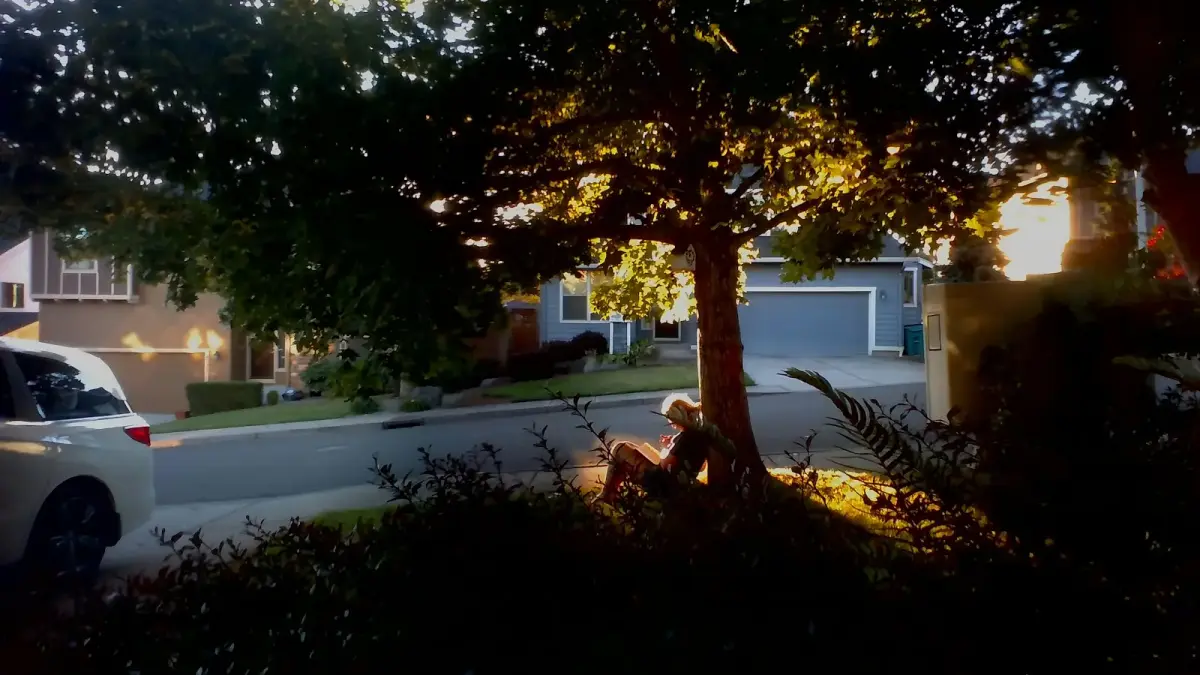
The engine was off. The garage door was right there. He could see the kitchen light on through the side window, which meant she was already starting dinner.
The kids were probably at the table doing homework or staring at their phones or arguing about something that didn’t matter. He knew all of this. He knew he should go inside.
But he sat there. Hands still on the steering wheel at ten and two, even though the car wasn’t moving. Radio off, phone face-down on the passenger seat.
Just sitting in the silence of a vehicle that was no longer taking him anywhere, parked eight feet from the door of a home he loved, filled with people he would choose again without hesitation.
And if his wife had looked out the window at that moment - and she did, sometimes - what she saw was a man who didn’t seem eager to come home. A man who needed a few extra minutes away from his own family. A man who, if she was being honest with herself on a hard day, seemed like he’d rather be anywhere else.
She was wrong about that. But he couldn’t explain why.
Not because he didn’t want to. Because he genuinely didn’t have the language for what was happening in those ten minutes between the driveway and the front door.
The driveway is not what it looks like
Here is what’s actually happening in that car.
His nervous system is shifting gears. Not metaphorically - literally. The version of him that exists at work is not the same version that exists at home, and the transition between those two selves is not instant.
It requires a buffer. A decompression chamber. A place where he is not yet anyone’s boss, anyone’s coworker, anyone’s husband, anyone’s father - where he is, for maybe the only ten minutes in his entire day, just a man sitting in a quiet space with no one needing anything from him.
A 2018 study published in the Journal of Personality and Social Psychology examined what researchers called “role transition boundaries” - the psychological mechanisms people use to shift between different social identities throughout the day. The study found that individuals who lacked clear transition rituals between roles reported significantly higher emotional exhaustion and lower relationship satisfaction.
The buffer wasn’t a luxury. It was a regulatory necessity.
That’s what the driveway is. It’s a transition ritual.
But here’s the part that makes it complicated: most men who do this never chose it consciously. They didn’t read an article about nervous system regulation and think, I should try sitting in my car for a few minutes. The driveway ritual emerged on its own, the way most survival strategies do - not from knowledge, but from need.
The boy who learned that needing space was a character flaw
Trace this back far enough and you’ll almost always find a boy who was taught, explicitly or implicitly, that needing time alone was the same thing as rejecting the people around him.
He came home from school and went straight to his room. His mother appeared in the doorway five minutes later. “What’s wrong? Are you mad at me?”
And the boy - who wasn’t mad, wasn’t upset, just needed to sit with his own thoughts for a while - learned something he would carry for the next forty years: wanting solitude looks the same as wanting away from the people who love you.
So he stopped going to his room. Or he went, but he left the door open so it didn’t look like he was hiding.
Or he sat in the living room with everyone else and went somewhere private inside his own head instead, which was less effective but at least nobody accused him of being withdrawn.
Dr. Gabor Mate has written about how children learn to suppress their authentic needs when those needs conflict with the attachment relationship. A child who understands, even unconsciously, that his need for solitude threatens his mother’s sense of being loved will abandon the need before he’ll risk the relationship.
He doesn’t stop needing space. He just stops admitting it. Eventually he stops believing he’s allowed to want it.
And then he grows up. And he gets married. And he has children.
And every single day, he moves between a world that demands his competence and a home that demands his presence, and there is no hallway between the two. There is no transition. There is just the driveway.
What she sees when she looks out the window
She sees him sitting in the car. And depending on the day, depending on what kind of week it’s been, depending on how stretched she already feels from managing everything while he was at work - she reads it differently.
On a good day, she thinks he’s finishing a phone call. Wrapping up a text. Maybe listening to the end of a song.
On a harder day, she thinks something else. She thinks he doesn’t want to come in. She thinks the life they’ve built isn’t enough to pull him out of that seat.
She thinks about her friend whose husband used to sit in the car too, and then one day he didn’t come inside at all. He backed out of the driveway and drove to someone else’s house.
She doesn’t say any of this. She just watches the kitchen clock and feels something tighten in her chest when the minutes stretch past five, past eight, past twelve.
And the tragedy of this scene - the thing that makes it ache - is that they are both telling the truth. She is genuinely hurt. And he is genuinely not avoiding her.
Both things are real. They’re just operating on completely different maps of what those ten minutes mean.
For her, his delay says something about desire. About wanting. About whether this home and this life are where he wants to be.
For him, those ten minutes are the only reason he can walk through that door and actually be there. Not performing there, not going through the motions - but present, settled, the version of himself that his family actually deserves.
The body knows what the mind won’t say
Here’s what’s happening below the level of language.
Daniel Goleman’s work on emotional intelligence describes the concept of emotional flooding - the state in which the nervous system becomes so saturated with stimulation that it loses its capacity for nuanced response. When a person is emotionally flooded, they can’t listen well, they can’t be patient.
They respond to minor stressors - a child’s whining, a partner’s question about the electric bill - as if those things are emergencies, because their nervous system is already maxed out.
The driveway is a de-flooding zone. It’s where his cortisol levels start to drop. Where his breathing shifts from shallow and automatic to something slower and more intentional.
Where the clenched jaw he didn’t notice loosens. Where the person he had to be from eight to six gradually dissolves and makes room for the person he actually is.
A 2020 study published in Frontiers in Psychology looked at what the researchers termed “post-work recovery micro-rituals” - small, self-directed behaviors that individuals use to psychologically detach from work before engaging with home life. The study found that even brief recovery periods - as short as ten minutes - were associated with significantly lower emotional reactivity in the evening and higher reported relationship quality.
People who went directly from work to family engagement without any buffer showed higher rates of interpersonal conflict, not because they cared less, but because their nervous systems hadn’t had time to recalibrate.
He isn’t avoiding his family. He is preparing to be present with them. Those are not the same thing, even though they look identical from the kitchen window.
The language he was never given
Ask a man who does this why he sits in the car, and he’ll probably shrug. “I don’t know. Just decompressing, I guess.”
But push further - gently, without judgment - and you’ll find something underneath the shrug that sounds more like this:
I don’t know how to say I need ten minutes without it sounding like I don’t want to be here.
That sentence is the whole thing. That’s the operating system running in the background of every driveway sit.
Because somewhere along the way - in childhood, in early relationships, in the ambient messages about what a good man and a good father looks like - he absorbed the idea that needing transition time between roles means he’s failing at one of them. That a man who loves his family should want to walk through that door the second the car stops.
So instead of saying “I need ten minutes,” he just takes them. Quietly, without announcement, without framing it as a need - because framing it as a need would require a vocabulary he was never taught and a permission he was never given.
And the car becomes the only room in his life where no one is watching, no one is waiting, and no one needs him to be any particular version of himself. It’s not that the car is special. It’s that the car is the last unclaimed space in a life where every other square foot belongs to a role.
The ritual deserves a name
What’s remarkable about the driveway sit is not that so many men do it. What’s remarkable is that so many men invented it independently, without a manual, without a therapist suggesting it, without anyone telling them that transition rituals are a well-documented psychological necessity.
They reverse-engineered nervous system regulation from scratch. No one taught them that shifting between roles requires a buffer. No one told them that the tension in their shoulders at 5:47 PM is not a personal failing but a biological process.
No one gave them permission to need what they need. So they found ten minutes in a parked car in their own driveway, and it worked well enough that they’ve been doing it for years, and the only problem is that no one in their life understands what it is.
It’s not avoidance. It’s not dissatisfaction. It’s not a red flag.
It’s a man who built a decompression ritual out of nothing because nothing was all he was given. A man whose body knew what it needed even when his upbringing told him that needing it was selfish. A man who sits in the driveway not because he doesn’t want to go inside, but because he wants to go inside as the right version of himself - and that transformation takes a minute.
The bridge between who you have to be and who you get to be
If you are the man in the car, I want you to hear something you probably haven’t been told.
Those ten minutes are not a weakness. They are not evidence that you love your family less than someone who bounds through the door the instant they pull in. They are evidence that you care enough about being present that you’ve built an entire ritual around making sure you actually are.
You created a bridge between who you have to be out in the world and who you’re allowed to be inside your own home. You built that bridge without blueprints, without support, without anyone even acknowledging that the bridge was necessary. And you’ve been crossing it every single day, quietly, in a parked car with the engine off.
If you are the person watching from the kitchen window, I want you to know that what you’re seeing is not reluctance. It’s preparation. He is sitting in that car because you are important enough to prepare for.
The driveway isn’t where he goes to avoid his life. It’s where he goes to become ready for it.
And the fact that he found that on his own - that he built a regulation practice out of silence and a steering wheel and ten minutes of unclaimed time - says something about him that he’s probably never been able to say about himself.
He is not avoiding. He is arriving. And he has been arriving, every single day, for years.