Psychology says men who only apologize by doing something - fixing the shelf, washing the car, taking the bins out at six in the morning after an argument - are not avoiding the conversation, they are men who learned as boys that the words 'I'm sorry' were followed by conditions, and the only safe way to say 'I know I was wrong' was to make it true with their hands before anyone could attach a price to the words
The Morning After
I watched my father do this my entire childhood.
There would be a fight the night before - voices through the walls, my mother’s frustration landing somewhere between accusation and exhaustion. Then silence. Then sleep. And then, at six-something in the morning, I would hear him in the kitchen. Not talking. Working.
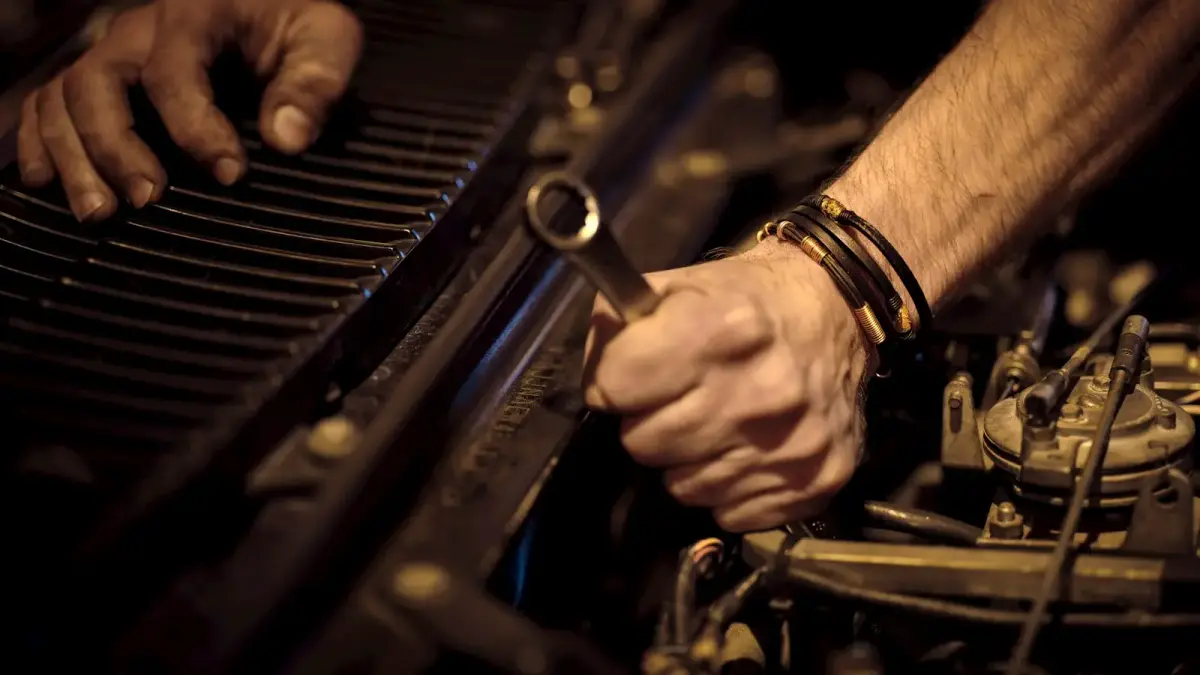
The squeaky cabinet door he’d been promising to fix for three months - suddenly tightened. The dripping tap - resolved. Her car, which she’d mentioned needed washing last Tuesday - gleaming in the driveway before she woke up.
He never said sorry. Not once in my memory did the actual words leave his mouth after a fight. And for most of my life, I assumed that meant he wasn’t apologizing.
I was wrong. He was apologizing the entire time. I just didn’t have the language to hear it yet.
The Apology That Doesn’t Sound Like One
Here’s what most people miss about men who communicate through action: they’re not refusing to engage. They are engaging - in the only dialect their nervous system trusts.
A 2019 study published in the Journal of Social and Personal Relationships found that men are significantly more likely than women to use “repair attempts” through behavioral change rather than verbal acknowledgment after conflict. The researchers called these “non-verbal reconciliation behaviors,” but that clinical language misses the rawness of what’s actually happening.
What’s happening is this: a man who grew up learning that spoken apologies were dangerous - that saying “I’m sorry” out loud opened a door to further punishment, extended lectures, or conditional forgiveness that felt more like a trap than a resolution - develops a parallel system.
The system says: don’t announce your regret. Demonstrate it. Make it physical. Make it undeniable. Make it something no one can argue with or throw back in your face.
Because you can’t weaponize a fixed shelf. You can’t negotiate with a clean car. You can’t attach conditions to someone who’s already done the thing before you woke up.
Where This Begins
Let me be specific about the kind of boyhood that builds this pattern, because it’s not rare. It’s almost ordinary.
Picture a boy of eight or nine. He breaks something - a plate, a rule, it barely matters. He’s told to apologize. He says sorry. And then the sorry isn’t enough. The sorry becomes an opening for: “You always do this. You never think. What’s wrong with you? Why do I have to keep telling you?”
The apology didn’t close the loop. It opened one. It became an invitation for more pain wearing the costume of a teaching moment.
Dr. Gabor Mate has written extensively about how children learn to suppress emotional expression when that expression leads to unpredictable consequences. The child doesn’t decide consciously to stop apologizing verbally. The body decides. The nervous system learns: words are exposure. Words are vulnerability with no guaranteed safety on the other side.
So the boy develops a workaround. He learns that if he just fixes the thing - cleans his room before anyone asks, does his homework without being told, takes out the garbage as a peace offering - the storm passes without the dangerous part. The part where he has to stand there, exposed, saying words that might or might not be accepted.
And this workaround becomes a man’s entire emotional operating system.
The Translation Problem
Here’s where the real pain lives. Not in the man’s silence, but in the gap between what he’s saying and what his partner is hearing.
She hears: nothing. Avoidance. Stonewalling. A refusal to take responsibility.
He is saying: I know I was wrong. I’ve been thinking about it since last night. I couldn’t sleep. So I got up and I did this thing for you - this specific, physical thing - because I need you to see that I’m trying. That I heard you. That I’m not the person I was in that argument.
A 2021 study in Psychological Science found that partners who felt their significant other’s repair attempts went unrecognized reported significantly higher relationship dissatisfaction on both sides. The partner making the unrecognized attempt felt invisible. The partner missing the attempt felt abandoned.
Two people, both feeling alone. Not because love is absent, but because it’s being spoken in two languages with no translator in the room.
This Is Not Emotional Avoidance
I need to be careful here, because I’m not arguing that all silence is apology. Some men do stonewall. Some men do avoid. The difference is specific and recognizable.
The emotionally avoidant man disappears. He minimizes. He acts like the fight never happened and expects you to do the same. Nothing changes in his behavior afterward.
The man apologizing through action does the opposite. He shows up differently the next morning. There’s an energy to him - a quiet attentiveness. He’s doing things. Specific things. Often things that connect directly to complaints his partner has made before.
That shelf she mentioned three weeks ago? Fixed at seven a.m. the morning after an argument. That’s not avoidance. That’s a man saying: I was listening. Even when you thought I wasn’t, I was listening. And I remember what matters to you.
Research on attachment styles from a 2020 paper in the Journal of Research in Personality suggests that men with anxious-avoidant attachment patterns often develop what the authors called “behavioral amends” - concrete actions that serve as non-verbal bids for reconnection. The study found these weren’t defense mechanisms. They were genuine expressions of remorse through the only channel that felt safe.
What His Hands Are Actually Saying
When you watch a man like this closely - and I say this as someone who has been this man - you start to see the grammar of it.
The timing matters. It’s always soon after. Usually before the other person wakes up or comes home. There’s an urgency to it, like the body can’t hold the regret any longer and has to put it somewhere physical.
The specificity matters. It’s not random productivity. It’s targeted. It connects to her. To something she needs or wants or mentioned once in passing three weeks ago.
The silence around it matters. He doesn’t announce what he’s done. He doesn’t say “I fixed the shelf, so we’re good now, right?” Because that would turn it back into a transaction. That would attach words to it. And words, his body remembers, are where the danger lives.
He just does the thing and then waits. Waits to see if she notices. Waits to see if the temperature in the house changes. Waits to find out if he’s been forgiven without anyone having to say the terrifying words out loud.
The Part That Breaks My Heart
The saddest part of this pattern isn’t the silence. It’s that most of these men desperately want to say the words. They know the words exist. They know their partners need to hear them.
But their bodies won’t let them.
It’s like standing at the edge of a high dive you jumped off once as a kid and got hurt. Your mind knows the water is safe now. Your legs won’t move. The body has its own memory, its own logic, its own non-negotiable boundaries that no amount of rational thought can override.
Adam Grant talks about psychological safety - the conditions that have to exist before someone can be vulnerable without fear of punishment. For many men, especially men over forty who grew up in households where male emotion was met with contempt or further consequence, psychological safety around verbal apology was never established.
It wasn’t modeled. It wasn’t rewarded. It wasn’t safe.
So they built something else. Something that works through hands and hours and quiet mornings. Something that says I love you in fixed hinges and clean floors and tightened screws.
Learning to Translate
If you’re the partner of this man - and you’ve spent years feeling frustrated by what you interpreted as his refusal to engage - I want to offer something that isn’t an excuse. It’s a lens.
Next time there’s a fight, watch what happens the next morning. Not what he says. What he does. Track the specificity of it. Notice whether his actions connect to things you’ve expressed wanting or needing.
And if they do - if that fixed shelf is actually a love letter written in wood and metal - consider that he might be having the conversation you’ve been waiting for. Just not with words.
This doesn’t mean you can’t also need the words. You absolutely can. Both things can be true. You can honor his language while also asking him to learn yours. But the asking works differently when it comes from “I see what you’re doing and I know what it means” rather than “why won’t you just say sorry like a normal person.”
Because he’s not refusing. He never was. He’s been saying it this whole time - in the only language his body trusts won’t be turned against him.
What I’m Still Learning
I’m forty-six and I still catch myself reaching for a task when what’s needed is a sentence. I still feel the pull to fix something external when the real thing that needs repair is the space between me and someone I love.
But I’m learning that the words don’t have to be perfect. They don’t have to be a performance. They can be as simple and quiet as tightening a hinge at six in the morning.
“I’m sorry. I heard you. I’m trying.”
Nine words. No conditions attached.
If you’re a man who recognizes himself in this - who has spent decades apologizing with his hands because his mouth learned early that words were weapons that could be used against him - I want you to know something.
Your apologies counted. Every single one of them. The car washes and the fixed shelves and the bins taken out in the dark while everyone else slept. Those counted. They were real. They meant what you meant them to mean.
And if you want to add words to them now - just words, small ones, with no performance and no negotiation - you’re allowed to do that too. The words don’t erase what your hands have been saying all along.
They just make it easier for the person you love to hear you.