Psychology says people who always offer to host but rarely accept an invitation to someone else's home are not being generous or controlling - they are people whose childhood taught them that the only safe room was one they had arranged themselves, and at fifty-five the phrase 'why don't you come to our place instead' is not hospitality but a nervous system that still cannot relax in a space it did not prepare
The Table You Set Before Anyone Arrives
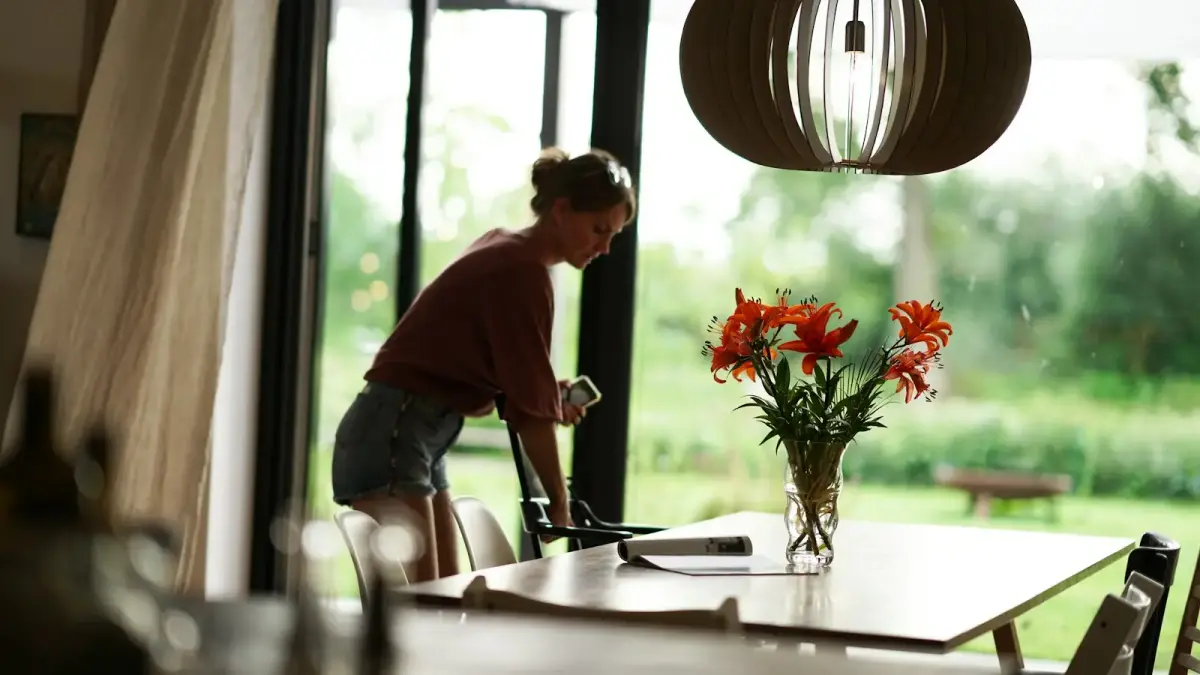
I have a friend who throws the most beautiful dinner parties. The napkins are cloth. The candles are lit before the first guest knocks. There’s always a backup dessert in the fridge, just in case.
She will host Thanksgiving, Christmas, your birthday, the Super Bowl, a random Tuesday. She will cook for twelve on a weeknight and make it look effortless. But ask her to come to your house for dinner - just show up, bring nothing, sit on someone else’s couch - and she hesitates. She’ll offer to bring a dish. She’ll suggest switching the location. She’ll say yes and then cancel the morning of with a reason that sounds plausible but feels rehearsed.
For years, people in her life called her generous. Some called her a control freak. Neither word was right.
What nobody understood - what she barely understood herself - was that her need to host wasn’t about hospitality. It was about safety. And the origin of that safety was a childhood where the only room that didn’t scare her was the one she had arranged with her own hands.
When Hosting Is Not a Choice but a Reflex
You know the feeling, even if you’ve never named it.
You walk into someone’s house and your body does a quiet inventory before you’ve even taken off your coat. Where are the exits. How loud is the television. Is the energy in this room stable or could it shift without warning. You scan faces the way a lifeguard scans water - not because anything is wrong yet, but because you learned a long time ago that “yet” could become “now” without any transition.
At your own house, you don’t have to scan. You already know every corner. You chose the lighting. You know the rhythm of the evening because you designed it. The temperature is yours. The playlist is yours. The exits are familiar.
This isn’t preference. This is a nervous system that learned, early, to equate unfamiliar environments with danger.
A 2018 study published in the journal Psychological Science found that adults who grew up in unpredictable childhood environments showed heightened stress responses in novel or uncontrolled settings - even decades later. The researchers called it “contextual vigilance,” a state where the brain continuously monitors the environment for threats that aren’t present anymore but once were constant.
Hosting is the antidote to contextual vigilance. When you are the host, you are the one who prepared the space. You know what’s in every cabinet. You chose when dinner starts and when it ends. You are not at anyone’s mercy.
That’s not control. That’s a body remembering what it needed to survive.
The Childhood That Taught You to Prepare the Room
Children who grow up in chaotic homes - where a parent’s mood was the weather, where conflict erupted without warning, where the rules changed depending on who had been drinking or who was angry - learn one lesson above all others: the environment is not safe until you make it safe.
Some kids respond by becoming invisible. They shrink. They retreat.
But some kids respond by becoming the ones who arrange things. They set the table before anyone asked. They cleaned the kitchen at nine years old because a clean kitchen meant a calmer parent. They learned to read the room’s emotional temperature and adjust it before the storm arrived.
These were the children who grew into adults who always host.
Gabor Mate has written extensively about how childhood stress imprints on the body - not as memory, but as reflex. The child who managed chaos by managing space doesn’t outgrow that instinct. They refine it. They turn it into something that looks, from the outside, like Martha Stewart-level domestic perfection.
But if you asked them to sit in someone else’s living room with no role, no task, no way to manage the emotional temperature of the evening - they would feel something close to panic. Not dramatic panic. Not visible panic. Just a low-grade hum in the chest that says: you are not in charge of this room. Anything could happen.
What It Really Feels Like to Be a Guest When Your Body Was Trained to Be a Host
Here is what nobody talks about.
You arrive at someone’s house and you smile and you bring wine and you sit where they tell you to sit. And inside, your body is doing math it learned at seven years old.
How far is the door. Is this person’s mood stable. What happens if the energy shifts - do I have a role here that lets me fix it, or am I just sitting in it with no way out.
You watch the host move through their kitchen and part of you wants to help - not because you’re polite, but because standing in someone else’s kitchen with a task is the only way your nervous system agrees to stay.
The moment you have nothing to do - when you’re just a guest, just present, just receiving - something in you gets very, very uncomfortable.
A 2021 study published in the Journal of Personality and Social Psychology found that individuals with high attachment anxiety reported significantly more discomfort in social situations where they could not influence the outcome. The researchers noted that this wasn’t about dominance. It was about emotional safety. People who could not control the environment felt emotionally exposed in it.
That’s you at someone else’s dinner table. Emotionally exposed. Not because anything bad is happening. But because your body is running a thirty-year-old threat assessment in a room that doesn’t require one.
The Generous Misunderstanding
The cruelest part is that people praise you for it.
“You’re such an amazing host.” “Your house is always so welcoming.” “I don’t know how you do it all.”
And you smile and say thank you and refill their glass and nobody - nobody - knows that the reason your home is so welcoming is that it was the only place in your childhood that you could make feel safe. That the warmth they’re enjoying was forged from hypervigilance. That every detail they admire is a relic of a child who believed that if she could just get the room right, maybe the night wouldn’t fall apart.
People call it generosity. And it is generous - that part is real. You do love feeding people. You do love creating a space where others feel held.
But the part nobody sees is that you cannot receive the same thing. You cannot walk into someone else’s carefully prepared space and feel held by it. You feel watched. You feel untethered. You feel like you’re standing in a room without your armor.
Susan Cain has written about how introverts often prefer home environments because they can control stimulation levels. But this is different. This isn’t introversion. This is a trauma response that looks like a personality trait.
The Moment You Realize It Is Not a Preference
For most people, the realization comes quietly.
Maybe you’re fifty-five and your daughter invites you to her apartment for Christmas. She’s an adult now. She’s a good cook. Her home is warm and beautiful. And something in you physically resists going. Not because you don’t love her. Not because you don’t trust her. But because every cell in your body is saying: that is not your territory.
You suggest she come to your house instead. You frame it as easier, more convenient, less trouble for her. And she agrees because she loves you and because she’s been agreeing to this arrangement her entire life without knowing why.
Or maybe you’re at a friend’s house and you excuse yourself to the bathroom, and in the hallway you take a breath and realize your shoulders have been clenched for two hours. Not because anything went wrong. Because nothing is in your hands.
That’s the moment you start to see it. Not as preference. Not as personality. But as pattern. A pattern that started in a kitchen that didn’t belong to you, in a childhood that asked you to become the adult before you’d finished being a child.
Learning to Be a Guest in Your Own Life
Here’s what I want you to know if you recognized yourself in these paragraphs.
You are not controlling. You are not a perfectionist with a hosting addiction. You are someone whose body learned a brilliant, exhausting survival strategy - and then never got the memo that the war was over.
The need to prepare the room is not a flaw. It is intelligence. It kept you safe when nothing else could.
But you are allowed to put it down now.
You are allowed to walk into someone else’s home and sit on their couch and not help in the kitchen and not arrange the chairs and not monitor anyone’s mood. You are allowed to be a guest. To receive. To be held by a room you did not prepare.
A 2022 study in Frontiers in Psychology found that adults who practiced gradual exposure to low-control social environments - starting with small, trusted gatherings - showed significant reductions in anxiety and hypervigilance over a twelve-week period. The nervous system can learn, even late. Even after fifty years of arranging every room you entered.
Start small. Accept one invitation without offering to bring anything. Sit with the discomfort for ten minutes longer than your body wants. Notice that the ceiling does not fall. Notice that the evening holds without you holding it.
You spent your whole childhood making rooms safe for other people. You are allowed, now, to let someone else make a room safe for you.
That’s not weakness. That’s the bravest thing a lifelong host can do - walk through someone else’s door and trust that the room will be okay without your hands on it.
You arranged so many rooms. You earned the right to rest in one you didn’t.