Psychology says people who always order the same thing at every restaurant - who study the menu for ten minutes, consider three new options, close the menu, and say the exact same words to the waiter they said last time and the time before that - are not boring or unadventurous but running a predictability protocol that was installed by a child who tried something unfamiliar in an unpredictable household and learned that the known quantity is the only safe quantity
I ordered the chicken marsala again last Friday.
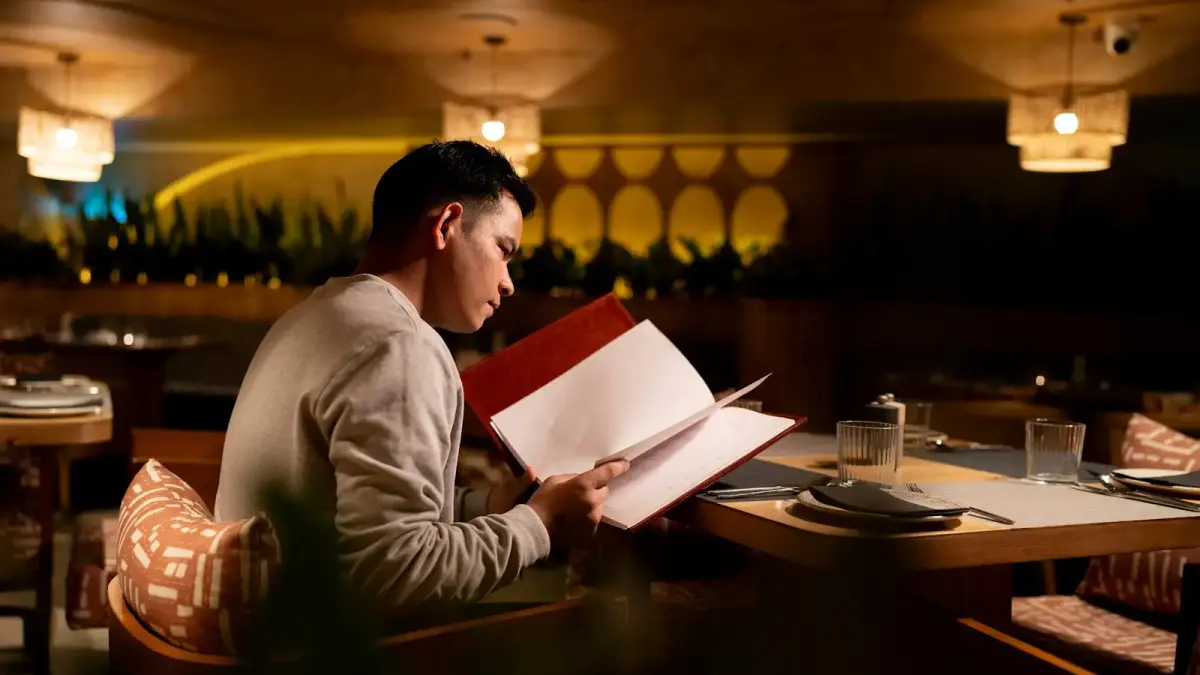
I want you to know that I looked at the menu. I read every single item, including the specials the waiter described with his hands. I lingered on the short rib ravioli. I genuinely considered the sea bass. I asked a clarifying question about the risotto that made it sound like I was a person who might order the risotto.
Then I closed the menu, looked up, and said the same six words I have been saying at that restaurant for three years. Chicken marsala, please. No substitutions.
My partner didn’t even look up from his phone. He already knew. Everyone who has ever eaten with me more than twice already knows. I am the person who reads the entire menu like a novel and then orders the same chapter ending.
For most of my adult life, I assumed this was a personality flaw. A failure of adventurousness. A culinary cowardice that I should probably work on, the way you work on a fear of heights or a reluctance to make phone calls. But then I started asking my clients about it, and what I found changed the way I understood the behavior entirely.
The ritual of considering
Here is what most people miss about the person who orders the same thing. They are not refusing to choose. They are performing an elaborate ritual of consideration that always arrives at the same destination.
The menu-reading is real. The curiosity is real. The moment of genuine attraction to the unfamiliar dish is real. What happens next - the quiet internal conversation where the new option is weighed and found too uncertain - is not a failure of will. It is a negotiation between the part of you that wants something new and the part of you that learned, a long time ago, that new things carry costs you cannot always predict.
A 2019 study published in the Journal of Consumer Research found that people who grew up in unpredictable home environments showed significantly stronger preferences for familiar options across multiple domains - food, music, vacation destinations, even career paths. The researchers called it “familiarity as safety regulation.” The participants called it knowing what they liked.
But knowing what you like and knowing what feels safe are not always the same thing, even though they feel identical from the inside.
Where the protocol gets installed
Think about what dinner looked like in a household where the emotional temperature could change between the appetizer and the main course.
In some homes, trying something new was fine. You didn’t like it, you made a face, someone laughed, you ate bread instead. The stakes were low. The experiment was allowed to fail.
In other homes, the stakes were never low. Dinner was not a meal but a barometer. The wrong choice - the dish that cost too much, the food that went uneaten, the request that inconvenienced someone who was already stretched thin - could shift the entire evening. A child in that house learns something very specific: the unfamiliar is a gamble, and in this house, you do not gamble with the one hour that might still go well.
The chicken marsala is not boring. The chicken marsala is the dish that has never ruined an evening.
What the menu actually represents
I once had a client - a woman in her fifties - who told me she had eaten the same lunch every workday for eleven years. Turkey sandwich, apple, two cookies from the vending machine. She described it with a mix of embarrassment and defiance, the way people describe habits they know are unusual but cannot bring themselves to change.
When I asked her what would happen if she ordered something different, she paused for a long time. Then she said, “I don’t know. And that’s the problem.”
That pause is the whole story. The person who always orders the same thing is not afraid of bad food. They are afraid of not knowing. Of the three seconds between ordering something unfamiliar and having it arrive, during which anything could happen. The dish could be wrong. It could be too expensive. It could draw attention. It could require a reaction they haven’t rehearsed.
Gabor Mate has written extensively about how children who grow up in chaotic environments develop what he calls “a compressed tolerance for uncertainty.” The bandwidth for the unknown gets narrower and narrower until the only comfortable choice is the one whose outcome is already guaranteed. You are not choosing the chicken marsala because you love it the most. You are choosing it because you already know exactly what will happen when it arrives.
The performance nobody notices
Here is the part that makes this behavior so invisible: from the outside, it looks like preference.
Nobody stages an intervention for the person who always orders the same thing. Nobody worries about them. Nobody says, “Have you considered talking to someone about your relationship with the grilled salmon?” It just looks like a quirk, a personality trait, a minor eccentricity that makes you easy to shop for at Christmas.
But inside the body of the person who just closed the menu, something more complex is happening. There is a small grief. A flicker of the person they might have been if trying new things had ever felt safe enough to become a habit. The risotto was genuinely interesting. The sea bass sounded beautiful. And the internal voice that said no was not loud - it was just faster than the voice that said yes.
A 2021 study in Frontiers in Psychology found that adults who reported high levels of childhood unpredictability also reported higher anxiety around novel experiences in adulthood, even when they simultaneously rated themselves as curious people. The researchers described it as a gap between desire and permission. You want the new thing. You just never got the internal clearance to reach for it.
The one meal that changes everything
I want to tell you something that happened to me about a year ago. A friend ordered for me without asking. Not aggressively - she just looked at the waiter and said, “She’ll have the lamb. Trust me.”
My first reaction was a flash of something close to panic. My second reaction, after the lamb arrived and I tasted it and it was extraordinary, was a sadness I was not expecting. Because the lamb was proof that there were wonderful things on the other side of the menu I had never allowed myself to reach. And the fact that it took someone else’s voice to get me there told me something about how deeply I had internalized the idea that the known quantity was the only quantity I deserved.
I don’t tell you this so you feel pressure to order differently. I tell you this because I want you to understand what is actually happening when you close that menu. You are not boring. You are not rigid. You are running a program that was written by a child who figured out that predictability was the closest thing to peace their household offered. And the adult who orders the same pasta every Friday night at the same corner table is not stuck. They are protecting the one hour of the week that belongs entirely to them, and they are making absolutely sure it goes well.
What your body already knows
Research by psychologist Susan David suggests that what we call “comfort seeking” is often the body’s attempt to create the stability it never received. The familiar meal is not about the food. It is about the feeling of knowing exactly what is coming and being right.
There is a version of safety that looks like adventure, and there is a version that looks like the same plate at the same table with the same waiter who already knows your name. Neither version is wrong. One of them just carries a story that most people never hear.
If you are the person who reads the entire menu and orders the same thing - who considers the unfamiliar with genuine interest and then quietly chooses the known - I want you to know that I see the consideration. I see the curiosity. I see the tiny negotiation that happens behind your eyes every time someone says “want to try something new?”
You are not closed off. You are protecting a small pocket of certainty in a world that once taught you certainty was the rarest thing a person could own. And the chicken marsala - or the turkey sandwich, or the grilled salmon, or whatever your version is - is not evidence of a person who has stopped exploring. It is evidence of a person who found one safe place and has been honoring it ever since.
That is not a flaw. That is a kind of loyalty most people will never understand.