Psychology says people who keep every birthday card they have ever received are not being sentimental - they are protecting the last physical evidence that someone once sat down, picked up a pen, and spent three minutes thinking specifically about them
The Drawer That Won’t Close
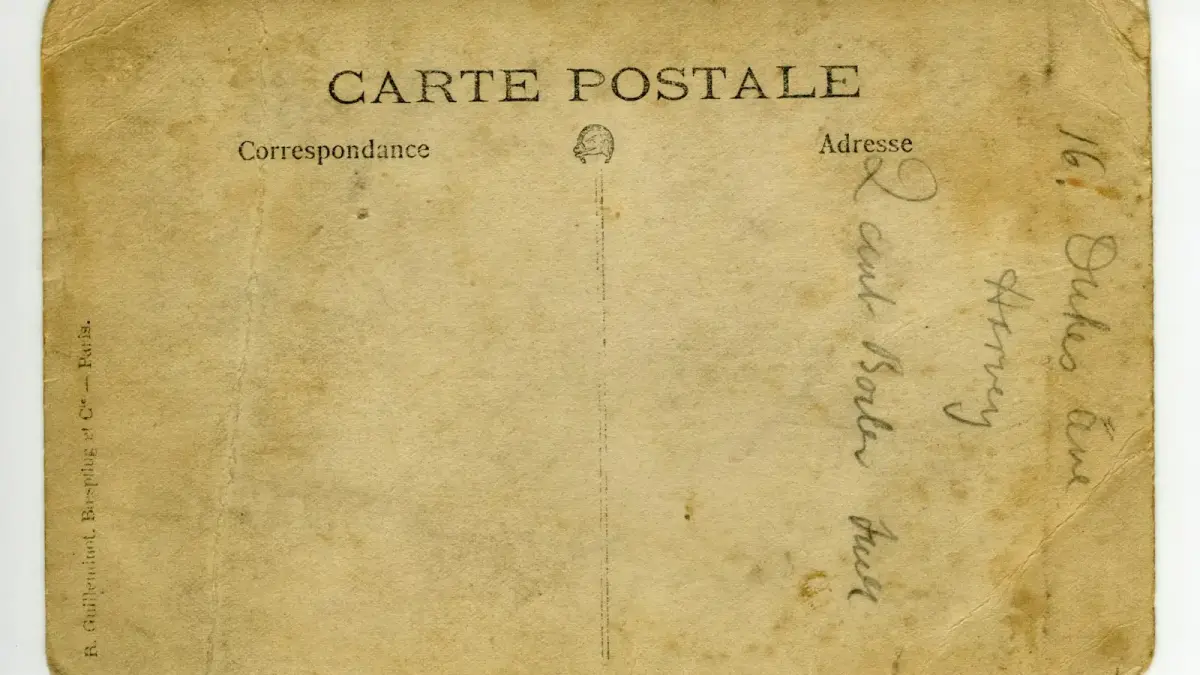
I have a drawer in my bedroom that hasn’t shut properly since 2014. It sticks about two inches from the frame, pushed out by a swollen stack of envelopes, most of them faded pink or pale blue. The edges have gone soft. Some of the ink has bled.
My partner once asked if I wanted him to find me a bigger box for all of it. He wasn’t being unkind. He genuinely thought the problem was storage.
But the problem was never storage. The problem is that one of those cards has my grandmother’s handwriting on it - the last birthday she was alive for - and her L’s always looped too wide and her pen pressed hard enough to leave grooves on the other side of the paper. If I throw that card away, there is nothing left in this world that her hand touched and my hand can still touch. That card is the closest I can get to holding her hand again.
And I know I’m not the only one with a drawer like this.
Why We Hold On to What Held Us
If you have ever been called a pack rat for keeping greeting cards, or felt a flicker of shame when someone saw the shoebox in your closet, I want you to hear something clearly: you are not being sentimental. You are not unable to let go. You are doing something profoundly human - you are preserving evidence.
Evidence that you were noticed. That on one specific day, someone sat at a table, chose a card from a rack, uncapped a pen, and spent a few quiet minutes thinking about no one in the world except you.
For many of us, that evidence is rare. And for some of us, it was the rarest thing we ever received as children.
A 2021 study published in the Journal of Research in Personality found that individuals who place high emotional value on personal objects - what researchers call “relational artifacts” - tend to score higher on measures of emotional depth and relational awareness. They are not more fragile. They are more attuned. They understand, on a level that is almost cellular, that love is not a permanent state. It arrives in moments. And moments disappear unless something physical survives them.
The birthday card is that surviving thing.
The Child Who Learned That One Day a Year, She Existed
This pattern often traces back to childhood. Not always to neglect in the dramatic sense - not always to something a therapist would flag in the first session. Sometimes it traces back to something quieter. A household where emotions were handled efficiently. Where people were fed and clothed and driven to school but rarely asked how they felt about any of it.
In that kind of home, a birthday card could mean everything.
It was the one day a year when the world officially acknowledged that you were here. When someone wrote your name at the top of a card and it wasn’t a form or a report or a permission slip. It was a declaration. You exist. I am glad about that.
For a child who felt unseen - whose emotional inner life was treated as inconvenient or invisible - that card became proof. Not decoration. Not sentimentality. Proof.
And the handwriting mattered more than the words. The handwriting was physical, undeniable evidence that a human body sat in a chair and moved a pen across paper while thinking about you. It was not mass-produced. It was not algorithmic. It could not have been sent to anyone else.
Attachment theorist John Bowlby described how children develop “internal working models” of relationships - mental blueprints for whether they can expect to be seen, valued, and remembered. For children whose blueprints were uncertain, a birthday card could become what psychologist D.W. Winnicott called a transitional object. Not a teddy bear or a blanket, but a piece of paper that carried the same weight - the weight of being held in someone’s mind when they were not in the room.
Your Brain Knows the Difference Between Handwriting and Text
Here is something remarkable that neuroscience has shown us. Your brain does not process handwriting the same way it processes typed text.
A 2014 study published in Psychological Science demonstrated that handwriting activates unique neural pathways associated with personal recognition and emotional memory. When you see the handwriting of someone you love - especially someone who has died - your brain doesn’t just read the words. It recognizes the person. The slight slant. The pressure of the pen. The way they crossed their T’s or forgot to dot their I’s.
Your brain treats that handwriting almost like a face.
This is why finding a card from someone who has passed away can feel like a physical encounter. Your fingers are resting where their fingers rested. The ink came from a pen they held. The card was folded by their hands. In a world where that person no longer exists in any tangible form, this scrap of paper is the last surviving point of contact between their body and yours.
Throwing it away doesn’t feel like tidying up. It feels like a second loss.
Daniel Goleman’s work on emotional intelligence has long emphasized that the most emotionally aware people are often the ones who maintain the strongest connections to sensory memory - the smell of a room, the sound of a voice, the sight of familiar handwriting. Keeping a card is not a failure to move on. It is evidence of a nervous system that understood, perhaps before the conscious mind did, that love leaves physical traces. And those traces deserve to be protected.
The Drawer as a Museum of Being Loved
I once watched a woman at a grief support group describe cleaning out her mother’s house after the funeral. She had been stoic through the whole process - boxing up clothes, sorting through kitchen drawers, labeling furniture for donation. Then she opened a nightstand and found a birthday card she had given her mother eleven years earlier.
Her mother had kept it. In a drawer. By her bed.
The woman broke down in a way she hadn’t at the funeral, the burial, or any of the weeks that followed. Because the card was proof that her words had mattered. That something she had written quickly, maybe even carelessly, had been important enough for her mother to place next to where she slept every night for more than a decade.
This is what the drawer really is. It is not clutter. It is not an inability to let go.
It is a museum. A personal, private museum of every moment someone thought you were worth three minutes and a stamp. Every time someone chose your name from the list in their head and sat down to tell you, in their own handwriting, that they were glad you were born.
Researcher Brene Brown has written extensively about the human need for what she calls “mattering” - the deep, primal need to know that we make a difference to someone. That we are not interchangeable. That if we vanished, there would be a specific, personal gap in someone’s life. The shoebox of cards is not about paper. It is about mattering. Each card is a receipt for a moment when you, specifically you, were on someone’s mind.
Relational Artifacts and the Weight of What We Carry
Psychologists have a term for objects that carry the emotional weight of a relationship long after the relationship has changed or ended. They call them relational artifacts. A wedding ring after a divorce. A child’s first drawing, yellowed and curling. A birthday card from someone who is gone.
A 2019 study in Frontiers in Psychology examined how people interact with relational artifacts from deceased loved ones. The researchers found that holding, touching, and even just being near these objects activated the same neural circuits associated with social bonding and emotional regulation. The object was not a reminder of the person. At the level of the brain, the object partially was the person. It carried enough of their presence - their handwriting, their scent, the memory of their choosing it - to trigger the same neurochemical response as being in their company.
This is why you cannot throw the card away.
It is not because you are weak or stuck. It is because your brain understands something your rational mind keeps trying to override. That card is not empty. It is holding something. And letting go of it means letting go of the last place where their attention toward you still physically exists in the world.
You Are Not Hoarding Paper
If you are someone with a shoebox in the closet, a drawer that doesn’t close, a stack of envelopes rubber-banded together in a place only you know about - I want you to stop apologizing for it.
You are not being irrational. You are not hoarding paper. You are keeping the receipts of being loved, and there is nothing in psychology that says you should throw those away.
The birthday card from your grandmother with her too-wide L’s. The one from your college roommate who drew a terrible cartoon inside. The one from your daughter when she was seven and misspelled “beautiful” and wrote it anyway because she meant it. Those cards are not taking up space. They are holding space. For every moment someone stopped their busy life and turned their full attention toward you.
That is not clutter. That is the most important collection you own.
And the drawer that won’t close all the way is not broken. It is full. Full in the best possible way. Full of proof that you were here, and that it mattered to someone that you were.