She is 62 and just realized she still puts a folded sweater on the back of every chair in the house the first week the temperature drops in October - not because anyone has asked for a sweater, not because the thermostat is not working, not because the house is cold - but because a girl whose grandmother draped a hand-knit cardigan over every chair in the house the first week the season turned learned that warmth is not something you ask for but something that should already be waiting when you sit down, and the woman who puts out six sweaters nobody has requested is not fussing but keeping a promise her grandmother made with wool and two needles fifty years ago that no person in this house would ever have to say the words I am cold
The first cold morning arrived on a Tuesday
I remember the exact moment because I was standing in my kitchen at six in the morning holding a mug of coffee that had gone lukewarm, and I noticed it - the goosebumps along my forearms, the way the tile floor had turned hostile overnight.
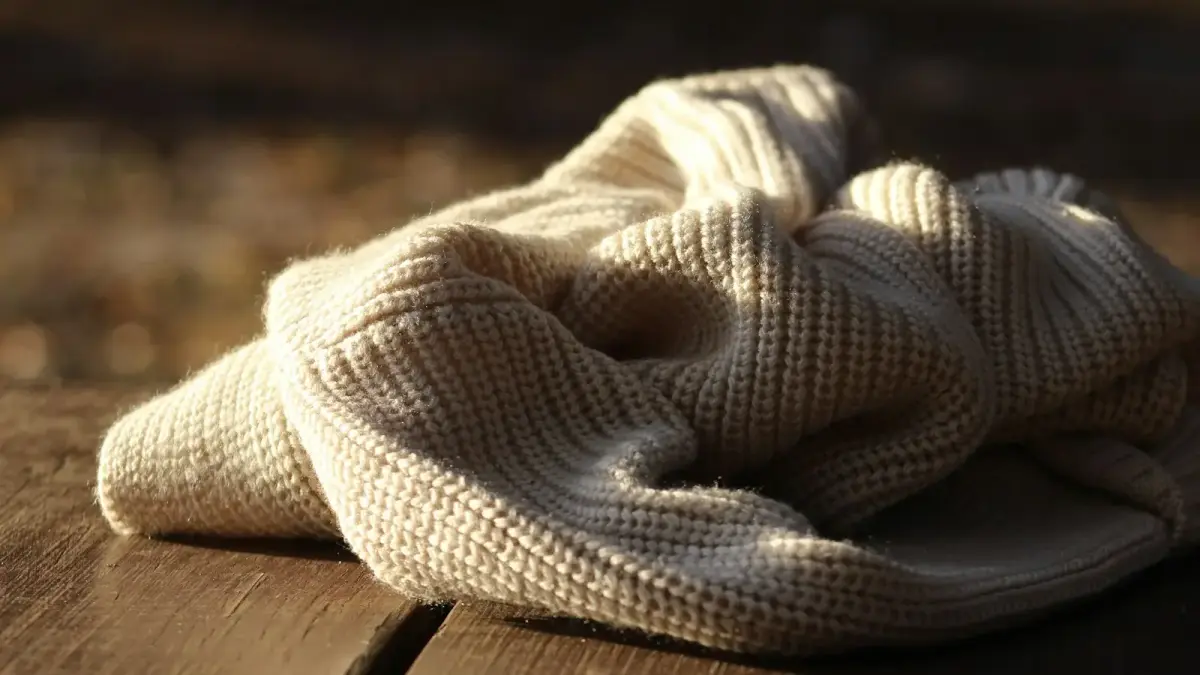
I set the mug down. I went to the hall closet. I pulled out six folded sweaters and walked through the house draping one across the back of every chair.
The dining room chairs. The reading chair by the window. The desk chair in the spare room nobody uses anymore. The kitchen stool where my husband eats his toast. Each one got a sweater, neatly folded, sleeve tucked, placed just so across the top rail.
I did not think about it. I did not decide to do it. I just moved through the house like I was following a map someone had drawn inside my body decades ago.
It was not until I placed the last one - a soft gray pullover across the rocking chair on the porch - that I stopped. I stood there looking at that sweater on that chair and I thought: I have been doing this for forty years. And nobody has ever once asked me to.
A grandmother and a promise made in wool
My grandmother’s name was Rose. She lived in a small house in Vermont with wide plank floors and windows that let in more weather than light.
Every October, the same week the maples turned, Grandma Rose would spend an evening pulling cardigans from the cedar chest in the upstairs hall. Some she had knitted herself. Some were older than I was. Each one smelled like lavender and wood and something I could never name but always recognized.
She would walk through the house the way you might walk through a garden, tending things. A cardigan draped over the back of every chair. A throw folded on the arm of the sofa. A shawl left across the bench by the front door.
Nobody asked for them. Nobody said they were cold. That was the entire point.
Grandma Rose believed that comfort should be preemptive. That a person should be able to walk into any room in a house and find warmth already waiting for them, already offered, already there.
She never said this in words. She said it in wool.
What it means to never have to ask
There is a kind of love that announces itself. It asks what you need. It waits for the request and then fulfills it, and that love is good and real and counts.
But there is another kind that studies you so carefully it already knows. It watches the season. It notices the temperature. It anticipates the shiver before it arrives and places something soft exactly where your hand will reach.
A 2019 study published in the Journal of Personality and Social Psychology found that people who grew up in what researchers call “felt security” environments - homes where their needs were anticipated rather than merely responded to - carried a measurably deeper sense of safety into adulthood. They were not just loved. They were known. And knowing, it turns out, is what the nervous system remembers.
My grandmother never read a psychology paper in her life. But she understood something that takes researchers decades and controlled studies to articulate: that the most powerful form of care is the kind that removes the need to ask.
Because asking requires you to first notice your own discomfort. Then name it. Then risk the vulnerability of admitting it out loud. Then wait to see if someone responds. That is four separate moments where a person could feel alone.
Grandma Rose eliminated all four by putting a cardigan on a chair.
The quiet inheritance of anticipatory love
I did not learn this from a conversation. I did not learn it from a lesson or a speech or a family motto cross-stitched on a kitchen wall.
I learned it from watching a woman’s hands. From the way she folded things. From the sound of a cedar chest opening in October.
Psychologists call this behavioral transmission - the way care practices pass between generations not through instruction but through observation and embodied repetition. A 2021 study in Frontiers in Psychology found that nurturing behaviors are among the most reliably transmitted patterns across generations, often persisting even when the original caregiver has been gone for decades.
The researchers described it as a kind of emotional muscle memory. Your body learns the gesture before your mind learns the reason.
I think about that every October when I open my own closet. I do not have a cedar chest. My sweaters are not hand-knit. I bought most of them at a department store on sale, and they smell like fabric softener, not lavender.
But my hands do the same thing her hands did. They fold. They drape. They place the warmth where the people will be.
I am not copying my grandmother. I am continuing her.
The difference between fussing and keeping a promise
My daughter told me once, gently, that I did not need to put sweaters everywhere. “Mom, we have a thermostat,” she said, smiling the way you smile at someone you love but find slightly eccentric.
She was not wrong. The house is warm. The heating works. Nobody is in danger of being cold.
But that is not what the sweaters are about.
They are not about temperature. They are about a promise. A promise that says: you do not have to monitor your own comfort in this house. You do not have to notice the chill, locate a sweater, ask where I keep them. You do not have to perform the small labor of taking care of yourself in a space where someone has already done it for you.
There is a word for what my grandmother practiced, though she would not have known it. Attachment researchers call it “anticipatory nurturing” - the practice of meeting a need before it becomes a request. It is what secure parents do with infants: they notice the signs of hunger before the cry, the signs of fatigue before the meltdown.
But we tend to stop doing it once people grow up. We decide that adults should know what they need and ask for it. We call it independence. We call it healthy boundaries. We call it being a functioning person.
My grandmother thought that was nonsense. Not in those words. She just kept putting cardigans on chairs.
Sixty years of chairs and what they held
I am 62 now. My grandmother has been gone for twenty-three years. The cardigans she knitted have mostly unraveled or been given away. The cedar chest is in my sister’s garage.
But the practice lives. It lives in my hands every October. It lives in the way I walk through my house in the early morning before anyone else is awake, placing warmth in rooms where warmth will be needed.
I count the chairs now. Six in this house. That is six separate locations where someone I love might sit down and find, without asking, without mentioning, without having to say a single word about being cold, that someone thought of them.
That is what my grandmother gave me. Not a skill. Not a tradition. A theology of care that says warmth is not something you earn by requesting it. It is something that should already be there.
Research from the field of environmental psychology supports this. A 2020 study in the Journal of Research in Personality found that people report significantly higher feelings of belonging in spaces that contain what the researchers called “ambient care cues” - small, unrequested gestures of comfort placed in the environment. A blanket left out. A glass of water on a nightstand. A sweater on the back of a chair.
These cues do not just provide physical warmth. They communicate a message: someone was here before you, thinking about you, before you arrived.
The language that does not use words
My grandmother spoke English and a little Polish. But her real language was objects placed in rooms with intention.
A sweater on a chair says: I know the cold is coming, and I do not want you to feel it alone.
A throw left on a sofa says: rest here, and you will be held.
A shawl draped by the front door says: when you come home, something soft will be the first thing that greets you.
I have spent my whole adult life translating her language. And I did not even know I was doing it until I stood on my porch at sixty-two, looking at a gray pullover on a rocking chair, and realized I was not performing a habit. I was honoring an oath.
If you are the one who puts warmth in rooms nobody asked you to warm
Then I want you to know something.
You are not fussing. You are not anxious. You are not over-mothering a house full of adults who can operate a thermostat.
You are the keeper of a very old promise. A promise that probably was not made in words. A promise that was made in gestures so small they looked like nothing - a folded blanket, a cup of tea placed near someone’s hand, a cardigan draped across a chair in October.
Somewhere, someone taught you that warmth should be waiting. That comfort is not a response to a complaint but a condition of a home. That the people you love should be able to walk into any room and find that someone already thought of them.
That teaching lives in your hands now. It lives in the way you move through your house when the season turns. It lives in the quiet, unrequested work of placing soft things in rooms where people will sit.
You are not being silly. You are being faithful.
And every sweater you fold and place on the back of a chair is a stitch in something your grandmother started. A garment so large it covers every room. A warmth so old it does not need to be asked for.
It just needs to be there when you sit down.