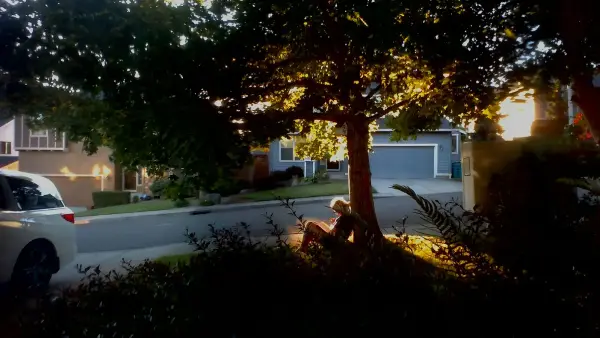
Psychology says people over 60 who sit on the porch watching birds and feel no need to check their phone aren't disconnected from modern life - they've quietly mastered the nervous system regulation that younger generations are spending thousands trying to learn
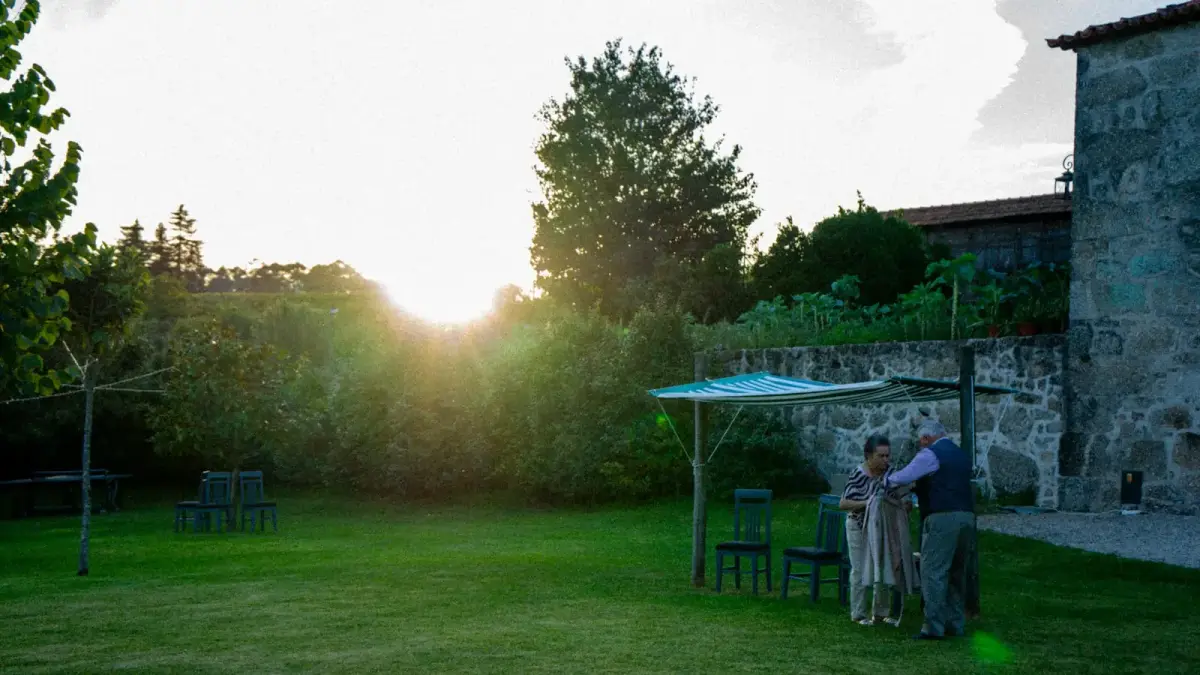
My father-in-law has a chair on his front porch that has a permanent dip in the cushion from decades of use.
Every morning, somewhere around seven, he carries his tea out there, sits down, and watches the street wake up. The birds come first. Then the dog walkers. Then the school buses. He doesn’t narrate it. He doesn’t photograph it. His phone is inside on the kitchen counter, and it will stay there until someone calls, which he might or might not answer depending on how the morning feels.
His daughter - my partner - once gently suggested he try a meditation app. She’d been using one for months and wanted to share the gift. He looked at her the way you’d look at someone trying to sell you water while you’re standing in a river.
“What would I need that for?” he said. And then he went back to watching a cardinal land on the fence post.
I’ve spent the last several years studying how people regulate their nervous systems, and I need to tell you something that might reframe the way you see the quiet people in your life. What he does on that porch every morning - what millions of people over 60 do in their gardens, at their kitchen tables, on their slow walks through the neighborhood - isn’t passivity. It isn’t disconnection. It isn’t falling behind.
It’s mastery. And most of them have no idea they’re doing it.
The thing younger generations are paying to recover
There is a booming industry right now built around teaching people how to calm down.
Breathwork retreats that cost five hundred dollars a weekend. Cold plunge memberships at forty dollars a month. Somatic therapy waitlists stretching into next season. Apps like Calm and Headspace pulling in hundreds of millions in revenue by guiding people through ten-minute exercises designed to activate one specific branch of the nervous system - the ventral vagal pathway, if you want the clinical term.
This is the pathway responsible for feelings of safety, connection, and calm. When it’s activated, your heart rate settles, your breathing deepens, your muscles release tension you didn’t know you were holding. You feel present. Grounded. Like you belong exactly where you are.
A 2018 paper published in Frontiers in Psychology by Stephen Porges, the neuroscientist who developed polyvagal theory, described this state as the foundation of social engagement and emotional wellbeing. Without access to it, we live in some version of survival mode - fight, flight, or freeze - even when there’s nothing to survive.
Here’s what struck me when I first read that research. Every single technique designed to activate this pathway - slow breathing, nature exposure, repetitive low-intensity movement, reduction of sensory overstimulation - is something people over 60 have been doing instinctively for years.
They just never called it regulation. They called it living.
Your nervous system on a porch
Let me walk you through what actually happens, physiologically, when someone sits on a porch in the morning with a cup of tea and no screen.
First, the absence of a phone matters more than most people realize. A 2021 study published in the Journal of Behavioral Addictions found that the mere presence of a smartphone - even face down, even on silent - increased cortisol levels and reduced cognitive capacity. The researchers didn’t even need subjects to use the phone. Just having it nearby kept the nervous system in a low-grade state of readiness. Alert. Scanning. Waiting.
When your grandfather leaves his phone inside and sits outside with nothing but a mug and a view, he’s removing the single most common source of ambient nervous system activation in modern life. He’s not being old-fashioned. He’s doing the thing that every digital wellness expert is now begging the rest of us to do.
Second, the birds. This isn’t a quaint detail. A 2022 study published in Scientific Reports found that encountering birds in everyday settings was associated with lasting improvements in mental wellbeing, even in people who already had a diagnosed mental health condition. The researchers tracked over 1,200 participants and found that the effect wasn’t about birdwatching as a hobby. It was about the brief, unstructured experience of noticing a living creature in its environment. A cardinal on a branch. A robin pulling a worm from the lawn. Small moments of connection with something alive and unhurried.
Third, the tea. The warmth of a cup in your hands activates thermoreceptors that feed directly into the body’s calming response. The ritual of preparing it - kettle, water, steeping, waiting - is a form of slow, sequential behavior that grounds attention in the present moment. It’s the same mechanism that makes breathwork effective, just dressed in a different outfit.
And the sitting itself - the stillness, the lack of agenda, the willingness to be in one place without needing to justify it - that’s the part most younger people find almost impossible.
Why stillness is harder than it looks
I teach a course on developmental psychology, and one of the exercises I give my students is deceptively simple. Sit in a chair for fifteen minutes. No phone, no book, no music, no task. Just sit.
Most of them can’t do it.
They describe the experience as physically uncomfortable. Their legs bounce. Their hands reach for pockets that don’t have phones in them. They report a creeping sense of guilt - like they should be doing something, producing something, responding to something. One student told me it felt like her body was waiting for a notification that never came.
This isn’t weakness. It’s conditioning. They’ve grown up in an environment of constant stimulation, where every pause is filled with a ping, a scroll, a swipe. Their nervous systems have been trained to stay activated. Rest feels like a glitch.
Now think about the people in your life who are over 60. The ones who can sit on a bench in a park for an hour without fidgeting. The ones who drink their morning coffee in silence and don’t experience it as silence at all - they experience it as fullness. The ones who garden slowly, moving from one bed to the next without urgency, hands in the dirt, mind nowhere in particular.
They’re not bored. They’re not checked out. They’re in a state that polyvagal theory would describe as ventral vagal activation - the highest form of nervous system regulation. The state that every mindfulness teacher, somatic therapist, and wellness influencer is trying to help their clients access.
They got there by living. By accumulating decades of mornings where nothing happened and that was enough.
The science of slowing down with age
There’s a reason this seems to come more naturally after 60, and it’s not just about retirement or having more free time.
A 2010 study published in the journal Psychology and Aging found that older adults show a measurable shift in how their brains process stimulation. They become less reactive to negative emotional cues and more attuned to positive or neutral ones. The researchers described it as a “positivity effect” - not because older people are naive or in denial, but because the brain itself begins to prioritize calm over alertness.
Laura Carstensen’s socioemotional selectivity theory explains part of this. As people become more aware of the finite nature of time, they naturally gravitate toward experiences that are emotionally meaningful and away from those that are merely stimulating. The porch becomes more appealing than the news feed. The garden becomes more satisfying than the group chat. Not because they’ve given up on the world - but because they’ve gotten better at choosing what to let in.
And here’s the part that I think deserves more attention. This isn’t just emotional preference. It’s physiological. Older adults who engage in regular low-stimulation activities - gardening, walking, sitting in nature, handwork like knitting or woodworking - show lower baseline cortisol levels, better heart rate variability, and stronger vagal tone than age-matched peers who stay constantly busy or connected.
They’re not just feeling calmer. Their bodies are calmer. Down to the nerve.
What they mastered without a curriculum
I want to name what’s actually happening, because I think it matters.
The person over 60 who wakes up without an alarm, moves slowly through the morning, steps outside to feel the air, notices the quality of light, and doesn’t check their phone for the first hour of the day - that person is practicing nervous system regulation at a level that would make most wellness professionals nod in quiet admiration.
They’re doing somatic grounding without calling it somatic grounding. They’re doing a digital detox without buying a program. They’re engaging their ventral vagal pathway through nature exposure, slow movement, sensory presence, and the radical act of not needing anything to happen next.
They didn’t learn this in a workshop. They learned it the way most real wisdom gets learned - gradually, through loss and stillness and the slow realization that the urgent things were never the important things.
Gabor Mate has written extensively about the connection between chronic stress and disease, about how our culture of constant doing keeps the nervous system locked in a mode it was never designed to sustain. The antidote, he argues, isn’t more tools. It’s fewer demands. It’s creating conditions where the body can finally stop bracing.
That’s what a porch does. That’s what a garden does. That’s what a slow cup of tea with no agenda does. It tells the body: you can stop bracing now. Nothing is coming for you. You’re safe here.
The quiet ones were ahead of all of us
If you’re someone over 60 reading this, I want you to hear something clearly.
The way you live - the way you sit with your coffee and watch the morning without narrating it, the way you walk your neighborhood without earbuds, the way you feel no compulsion to document your meals or announce your moods - this is not a sign that you’ve fallen behind.
It’s a sign that you arrived somewhere the rest of us are still trying to reach.
Your grandchildren are downloading apps to learn what you do before breakfast. Your children are paying therapists to give them permission to sit still. The wellness industry is a multi-billion-dollar attempt to recover something that you never lost in the first place - the ability to be in your body, in your moment, without needing it to be anything other than what it is.
You might not know the term “nervous system regulation.” You might not care about polyvagal theory or vagal tone or somatic experiencing. That’s fine. You don’t need the map when you’ve already been living in the territory.
The porch is not where you go because you have nothing better to do.
The porch is where you go because you finally understand that there is nothing better to do. And that understanding - that bone-deep, hard-won knowing - is the thing the rest of us are only beginning to learn.