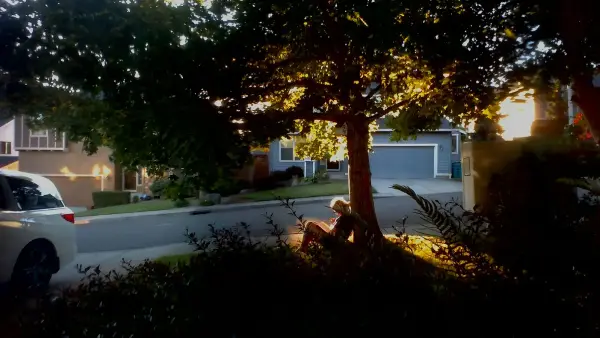
Psychology says people over fifty-five who check the weather forecast every morning before anyone else is awake and then tell their family to bring a jacket even though the sun is shining are not worrying - they are the last generation that learned preparedness was not anxiety but devotion, and the forecast at sixty-one is not about rain but about a person who was raised in a home where the worst thing you could be was the reason someone you loved was caught in the cold without a coat
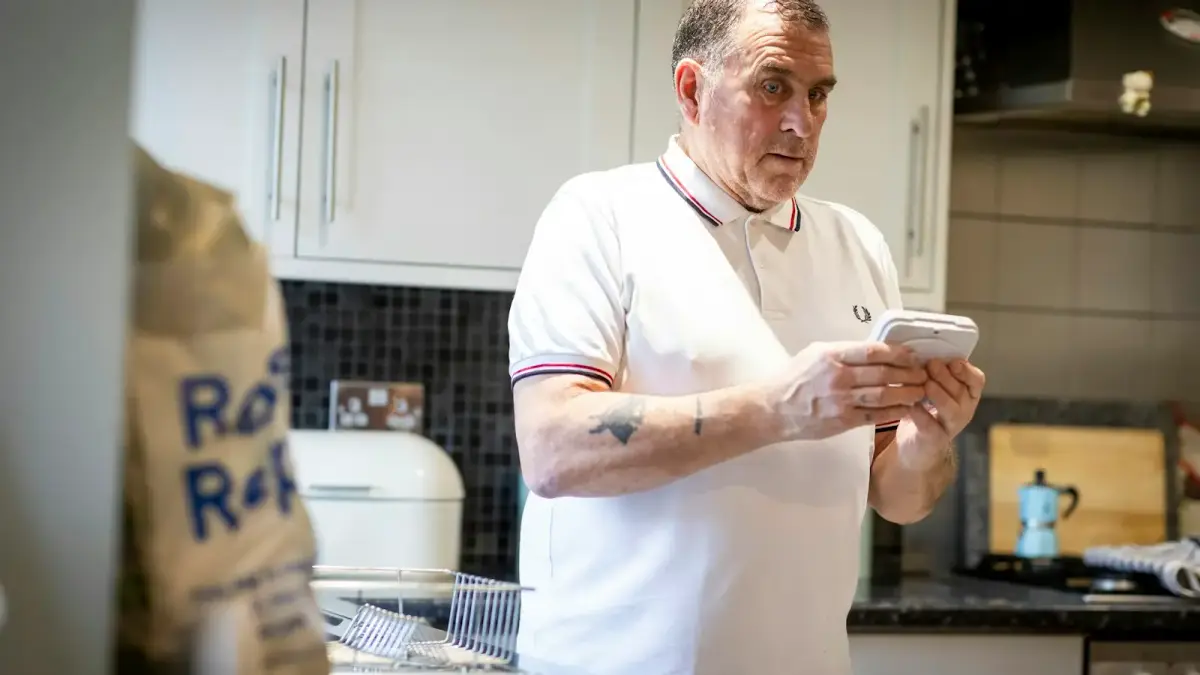
My mother checks the weather at 5:47 in the morning. I know this because I stayed at her house last Thanksgiving and woke up early to find her sitting at the kitchen table in the half-dark, phone tilted toward her face, scrolling through the hourly forecast with the focus of someone reading a medical chart.
It was November. It was already cold. The forecast was going to say exactly what anyone with a window could have told her.
But she wasn’t checking for herself. By the time I came downstairs at seven, she had already texted my brother to wear layers, told my father where his heavier coat was hanging, and set a scarf on the chair by the front door - not hers, mine - folded in a way that made it look like it had simply appeared there. She never mentioned it. She never said “I checked the weather and I think you should.” She just placed the scarf where I would find it and moved on to making coffee.
I used to call this worry. I used to roll my eyes, gently, the way adult children do when their parents seem stuck in a frequency of caution that doesn’t match the actual risk. I used to think she was anxious.
I was wrong. And developmental psychology helped me understand why.
What we mistake for anxiety is actually a different operating system
There is a behavior pattern among adults over fifty-five that most younger people misread completely. The weather checking. The jacket reminders. The extra bottle of water placed in your bag without being asked. The flashlight kept in the glove compartment. The insistence on leaving early, arriving prepared, knowing where the exits are.
From the outside, it looks like worry. It looks rigid, maybe even controlling. A therapist trained in a certain tradition might even call it hypervigilance.
But that framing misses something essential. These are not symptoms. They are a fluency - a language of care that was spoken in homes where love did not announce itself with words but with readiness.
A 2019 study published in the Journal of Personality and Social Psychology found that what researchers call “proactive coping” - the tendency to anticipate future challenges and prepare for them in advance - is strongly correlated with conscientiousness and empathy, not anxiety. People who score highest on proactive coping measures are not, as a group, more fearful. They are more attuned. They scan for what others might need before the need becomes urgent, and they act on it quietly.
This is not worry dressed up as love. This is love performing itself through the body in the only dialect it was ever taught.
The home that trained this response
To understand why your mother checks the weather every morning, you have to understand the home she grew up in.
Many people over fifty-five were raised in households shaped by scarcity, postwar pragmatism, or a Depression-era inheritance of caution that traveled through families like an heirloom no one displayed but everyone carried. In those homes, love was not discussed. It was demonstrated through preparation.
Your grandmother did not tell your mother she loved her. Your grandmother made sure your mother had a hat, a lunch, a plan for getting home if the bus didn’t come. Love was the umbrella in the car before the clouds arrived. Love was the extra set of socks in the overnight bag. Love was knowing what might go wrong and making sure your child would not be the one caught unprepared.
John Bowlby, the psychologist who gave us attachment theory, described the concept of the “secure base” - the idea that a child develops confidence and resilience not through independence alone but through the reliable presence of a caregiver who signals: I have already thought about what you might need. You are covered. You are safe to go.
That signal was not delivered with a speech. It was delivered with a jacket laid out on the bed before school. It was the thermos filled before anyone asked for it.
And the children who received that signal internalized something profound. Not just the habit of preparedness - the belief that preparing for someone is the most honest form of love a person can offer.
Why this generation carries it differently
Here is where it gets specific, and where I think the psychology matters most.
People who are sixty-one today were not raised with the emotional vocabulary that younger generations take for granted. They did not grow up hearing “I love you” at the end of every phone call. They did not grow up in homes where feelings were named, validated, processed out loud.
They grew up in homes where the furnace was checked before winter. Where the car had jumper cables. Where the pantry was stocked for a storm that might not come for months. And they understood - without anyone explaining it - that this was devotion.
A 2021 study in Frontiers in Psychology examined intergenerational transmission of care behaviors and found that adults who grew up in homes with high practical caregiving - meaning parents who expressed love through preparation, provision, and vigilance rather than verbal affection - were significantly more likely to adopt the same caregiving style with their own families. The researchers called this “anticipatory caregiving,” and noted that it serves a genuine attachment function. The person on the receiving end may not always recognize it. But the person doing it is performing one of the deepest acts of connection their nervous system knows how to offer.
Your father did not learn to say “I’m worried about you, so please dress warmly.” Your father learned to hand you a coat and say nothing.
That silence is not emptiness. It is a sentence in a language that predates the one we now use for love.
The forecast is never about the weather
I want to tell you something that changed the way I see my mother’s morning ritual.
When she sits in the dark at 5:47 and scrolls through the hourly forecast, she is not reading a weather report. She is performing a scan of the world her family is about to walk into, looking for anything that might catch them off guard.
She is doing what her mother did. And her mother before that. She is running a quiet, internal calculation: who is going where today, what might they encounter, and how can I make sure they are ready for it.
This is not a cognitive distortion. This is love with a forty-year training history.
Research on what psychologists call “worry as a prosocial behavior” supports this. A 2015 study published in Social Psychological and Personality Science found that people who worry about others - not themselves, specifically others - score significantly higher on measures of empathy, relational investment, and trait agreeableness. Their worry is not pathological. It is relational. It is the nervous system’s way of saying: you matter to me enough that I have already rehearsed the ways the day might hurt you, and I have packed accordingly.
When your sixty-three-year-old mother tells you to bring a jacket, she is not questioning your judgment. She is telling you, in the only language her childhood gave her, that she has already thought about your day more carefully than you have.
Why younger generations miss it
I say this with compassion for everyone involved: younger adults often misinterpret this behavior because they grew up with a different operating manual for love.
If you were raised in a home where love was spoken - where “I love you” was said at bedtime, where feelings were discussed openly, where emotional intelligence was valued and taught - then preparedness-as-love can look like something else entirely. It can look controlling. It can feel like your parent doesn’t trust you to handle your own life. It can register as anxiety, and it can trigger the kind of gentle dismissal that breaks something small and important inside the person offering it.
I have seen this dynamic in my research more times than I can count. The adult child who says, “Mom, I’m forty-two, I can check the weather myself.” And the mother who says nothing, smiles, and quietly stops offering the jacket. And something between them goes quiet in a way that neither of them fully understands.
What the child doesn’t realize is that they just told their mother to stop speaking the only language of love she ever learned to speak fluently. And the mother - because she was also raised not to name her feelings - will not explain this. She will simply fold the scarf and put it back in the drawer and wonder why the house feels a little emptier.
The body remembers what the mouth never learned to say
There is a concept in developmental psychology called “procedural memory of care” - the idea that certain caregiving behaviors become so deeply embedded in the body that they operate below conscious thought. You don’t decide to check the weather. Your body does it for you, the same way your hand reaches for a light switch in a room you’ve walked through ten thousand times.
For people over fifty-five, preparedness lives in the body. It is muscle memory. It is the hand that reaches for an extra sweater before leaving the house. It is the eye that scans the sky. It is the part of the brain that cannot rest until it has confirmed that everyone you love is equipped for what the day might bring.
This is not a disorder. This is devotion that has been in rehearsal for six decades.
And it carries something else with it - something that makes my chest ache every time I think about it clearly. It carries the weight of a generation that was never taught to say “I love you” but was taught, down to the bone, that the worst thing you could be was the reason someone you loved suffered when you could have prevented it.
That is the real forecast. Not rain or sun, not temperature or wind chill. The forecast is a daily reckoning with a question that has followed them since childhood: have I done enough to keep my people safe?
What they deserve to hear
If you have a parent, or a grandparent, or an aunt, or a neighbor over fifty-five who checks the forecast every morning and tells you to bring a jacket - even in June, even when the sun is pouring through the windows - I want to ask you to do something small.
Take the jacket.
Not because you need it. But because taking it is the way you say “I hear you” in a language they actually understand. Taking the jacket is how you complete the sentence they started at 5:47 in the morning, in the dark, alone with a phone screen and a lifetime of love they never learned to put into words.
They are not worrying. They are not anxious. They are not stuck in an outdated version of the world.
They are loving you in the most consistent, unshakable, quietly radical way they know. And the forecast - every single morning, without fail - is their way of saying what their parents’ kitchen taught them love sounds like.
Not “I love you.”
But “bring a jacket, just in case.”