Psychology says people over fifty-five who still carry cash everywhere they go are not afraid of technology - they are the last generation that learned money was something you should be able to feel leaving your hands, and the bill in the wallet at sixty is not a backup plan but a person who watched their parents count physical currency at the kitchen table carrying forward the only relationship with money that ever felt real
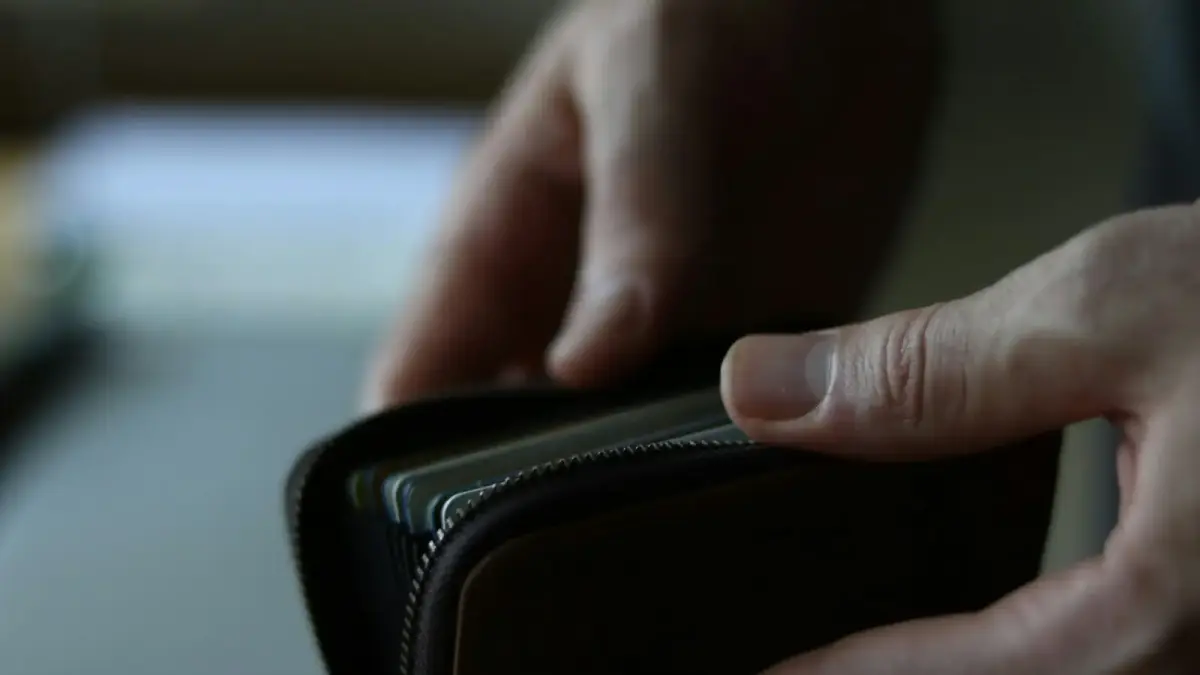
My father kept a twenty folded lengthwise in the front pocket of his work pants every single day for as long as I knew him.
It did not matter that we had a checking account. It did not matter that by the time I was in high school he had a debit card he used for groceries. That twenty was separate. It lived in his pocket the way his keys did, the way his reading glasses did. It was not spending money. It was proof of something I would not understand until I was well into my forties and noticed that I could not bring myself to leave the house without a few bills tucked behind my license.
I thought I was being practical. I told myself it was for emergencies, for parking meters, for the odd cash-only food truck. But the truth was quieter than that. The truth was that money did not feel like money to me unless I could hold it. Unless I could feel it thinning in my wallet over the course of a week. Unless I could hand it to someone and watch it leave.
I am not alone in this, and the reason why has very little to do with technology.
The behavior everyone misreads
There is a quiet assumption that floats around younger generations about people over fifty-five who still carry cash. The assumption is that they are behind. That they have not caught up. That they do not trust the system, or do not understand it, or are stubbornly clinging to the way things used to be because change makes them uncomfortable.
It is a generous reading at best. At worst, it is dismissive - a way of categorizing an entire generation’s relationship with money as quaint.
But psychology tells a different story entirely.
The people who still fold bills into their wallets, who leave a cash tip on the table instead of adding it to the receipt, who press a twenty into their grandchild’s hand on the way out the door - they are not resisting anything. They are honoring something. Something that was built into their nervous system long before contactless payment existed.
They are honoring the fact that money, for most of human history, was physical. And they are the last generation that learned it that way first.
What the body remembers that the screen cannot replicate
There is a concept in psychology called embodied cognition. It is the idea that our thinking is not just something that happens in our brains - it is shaped by what our bodies do, what they touch, what they feel.
A 2016 study published in the Journal of Consumer Psychology found that people who paid with cash experienced a significantly greater “pain of paying” than those who used cards or digital payment. The researchers called it “coupling” - the degree to which the act of spending feels connected to the loss of something tangible. Cash creates tight coupling. Cards loosen it. Digital payment nearly eliminates it.
And here is what matters: that pain is not a flaw. It is information.
For people who grew up handling physical money - counting it, folding it, watching it disappear from a kitchen table and reappear as groceries, electricity, shoes that fit - that coupling is not an inconvenience. It is the entire framework through which they understand what money means.
When your father handed you five dollars and you could feel the weight of what five dollars cost him, you did not learn about money through a spreadsheet. You learned it through your hands.
The kitchen table and what it taught
I keep coming back to the kitchen table because that is where most people over fifty-five first learned what money was.
Not in a classroom. Not in a financial literacy module. At the kitchen table, watching a parent sort bills into envelopes. Watching someone count out exact change for the electric company. Watching hands move across a checkbook with the kind of focus that told you, even as a child, that this mattered. That this was serious. That the numbers on those pages were not abstract - they were the distance between okay and not okay.
Dr. Kathleen Vohs, a psychologist who has studied money’s psychological effects extensively, has written about how physical currency activates a sense of self-sufficiency and personal agency that digital currency does not. The physical bill is not just a medium of exchange. It is an anchor. It tells your brain: this is real. This counts. You are making a decision with weight.
For a generation that watched money counted by hand, the folded twenty is not nostalgia. It is the only version of money that their body fully trusts.
It is not about distrust - it is about presence
One of the most common misreadings of this behavior is that it signals distrust of technology. That the person carrying cash does not believe the system will work. That they think their card will be declined, or the machine will malfunction, or their information will be stolen.
Some of that may be true for some people. But for most, the motivation is far more personal than that.
It is about presence.
When you hand someone a bill, you are present for the transaction. You feel it. You see the money leave. You watch it arrive in someone else’s hand. There is a beginning and an end, a clear boundary between having and spending that a tap on a screen simply cannot provide.
A 2019 study in the Journal of Retailing found that consumers who paid with cash had significantly better recall of what they spent and how much. Not because they were more careful, but because the physical act of paying created a stronger memory trace. The body recorded what the mind might forget.
For someone who grew up watching every dollar tracked by hand, this is not a preference. It is a need. The transaction has to be felt to be believed.
The twenty in the wallet is not a backup plan
I want to be careful here, because there is a class dimension to this that deserves gentleness.
Many people over fifty-five who carry cash grew up in households where money was not theoretical. It was not a number on a screen that went up or down depending on the market. It was the stack of bills in the drawer. It was the jar on the counter. It was the exact amount needed for the week’s groceries, and if the number was short, you could see the shortage. You could hold it in your hand and know exactly how much was missing.
That kind of knowing does not leave you. It becomes part of how your body processes financial reality. And when someone from that background tucks a twenty into their wallet before leaving the house, they are not hedging against a technological failure.
They are carrying forward an awareness that money is finite. That it has edges. That it should feel like something when it leaves you because that feeling is the only honest accounting the body knows.
Adam Grant has written about how early experiences with scarcity shape lasting financial behaviors - not as dysfunction, but as adaptive intelligence. The person who always carries cash is not stuck in the past. They are carrying forward a form of financial literacy that was taught through touch, through counting, through watching someone they loved make hard decisions with real bills on a real table.
The tip left in cash, the twenty pressed into a grandchild’s hand
There are two moments where this becomes most visible, and both of them are beautiful if you look closely.
The first is the cash tip. The person who leaves bills on the table instead of adding a percentage to the receipt is not doing math differently. They are doing generosity differently. They want the person they are tipping to hold the money. To feel it. To know it came from a human hand, not an algorithm. There is something in that gesture that digital payment will never replicate - the warmth of a direct exchange between two people.
The second is the grandchild moment. The twenty pressed into a small hand on the way out the door. The bill folded in a birthday card. This is not because the grandparent does not know about Venmo. It is because money that you can feel is a gift in a way that a notification is not. The child will remember the bill. They will remember the hand. They will remember the look on their grandparent’s face. The transaction is not financial. It is relational.
These are not outdated behaviors. They are deeply human ones.
What gets lost when money loses its body
I am not arguing against digital payment. I use it every day. Most people do. It is faster, it is cleaner, it is often safer.
But something does get lost when money becomes entirely invisible. When spending is a tap, a swipe, a face scan. When the distance between wanting something and owning it collapses into a single gesture that your body barely registers.
Research from the MIT Media Lab has shown that people spend significantly more when using credit cards versus cash - not because they are irresponsible, but because the physical pain of parting with tangible money is a regulatory mechanism that digital payment bypasses. We spend more when we feel less.
The generation that still carries cash did not choose this regulatory mechanism. It was built into them by experience. By watching. By the kitchen table and the bills sorted into envelopes and the quiet arithmetic of making it through the month.
They carry cash because their bodies still believe that money should cost you something to spend. And honestly, that might be one of the most psychologically healthy relationships with money that exists.
You are not behind - you are remembering something the rest of us forgot
If you are someone who still carries cash - who tucks a few bills into your wallet every morning, who tips in paper, who hands your grandchild a folded twenty instead of sending a digital transfer - I want you to know something.
You are not old-fashioned. You are not resistant. You are not failing to keep up.
You are the last generation that learned money through your hands. Through your parents’ hands. Through the sound of bills being counted and the sight of a stack getting smaller as the week went on. You learned that money was real because you could hold it, and that spending it should feel like something because your parents’ faces told you it did.
That knowledge lives in your body now. It is not going anywhere. And it is not a flaw.
The twenty in your wallet is not a backup plan. It is a relationship with reality that most of the world has already forgotten. And there is nothing outdated about wanting to feel the weight of your own choices.
Some things should not be frictionless. Some things should cost you something to let go of. Your hands have always known that. Psychology is only now catching up.