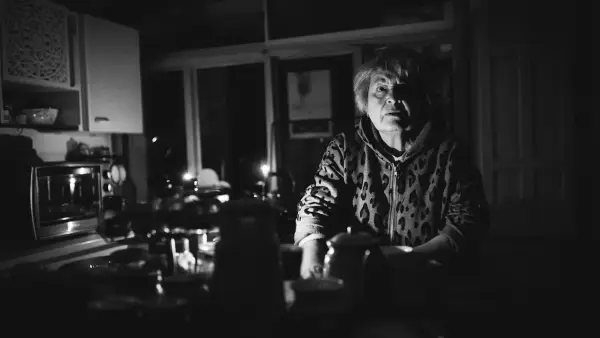
Psychology says people who rehearse every conversation in their head before having it - who practice what they will say to the doctor in the shower, who script phone calls before dialing, who have held entire arguments alone in the car with someone who was never there - are not overthinking but drafting in the only space where a rough draft was ever permitted, because a child who spoke up once without rehearsing and watched the room go silent learned that unedited words were dangerous and has spent thirty years running a review process that nobody ever told her she could stop
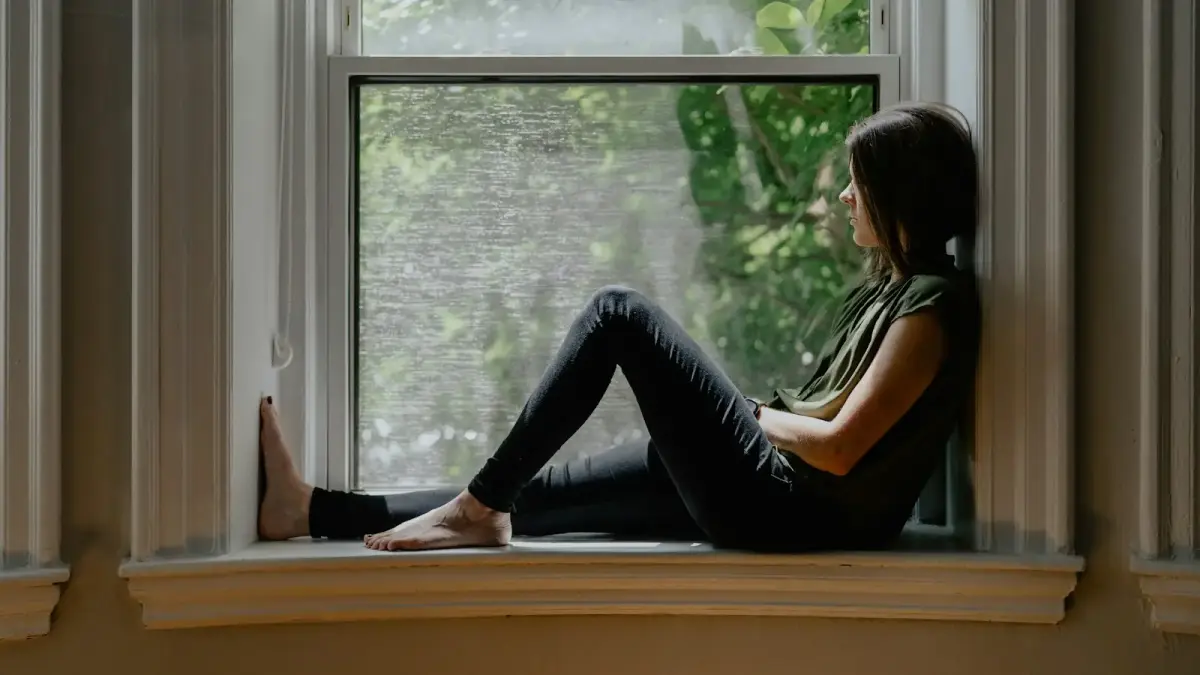
I rehearsed asking for a raise for six days before I actually did it.
Not casually. Not in the background the way people rehearse a toast or a job interview. I mean I stood in the shower on a Tuesday morning and said the words out loud to the tile wall, adjusted my phrasing, started over, tried it softer, tried it firmer, imagined my boss’s face changing, rewound, and delivered the whole thing again from the beginning.
By the time I walked into his office on Friday, I had performed that conversation maybe forty times. I knew every version of it. I had answers ready for objections he might never raise. I had practiced the exact way I would pause after my ask, because I had read somewhere that silence after a request makes people take you seriously.
He said yes in under two minutes.
And afterward, sitting back at my desk, I did not feel proud. I felt tired. I felt the particular exhaustion of someone who had just spent nearly a week living inside a conversation that lasted ninety seconds - and who knew, with absolute certainty, that she would do the same thing next time.
If you recognize yourself in any of this, I want you to know something that took me a long time to understand. You are not doing something wrong. You are doing something you were taught to do, in a classroom you may not even remember attending.
What rehearsal actually is
Most people assume that rehearsing conversations is a symptom of anxiety. And that framing is not entirely wrong - there is anxiety involved. But it misses the deeper architecture.
Rehearsal is not worry. Rehearsal is editing.
It is the process of taking raw, unfiltered thought and running it through a series of invisible checkpoints before it is allowed to leave your mouth. Does this sound too needy? Too aggressive? Too emotional? Too much? Is there a version of this that gets the point across without making anyone uncomfortable, including me?
A 2019 study in the journal Cognition and Emotion found that individuals who engage in high levels of pre-event mental simulation are not simply more anxious than average. They tend to show heightened sensitivity to social evaluation - a deep, often unconscious awareness of how their words land on other people.
The researchers framed it as a cognitive style, not a disorder.
And I think that distinction matters enormously. Because when you rehearse a phone call to the dentist’s office, you are not spiraling. You are drafting. You are doing the same thing a writer does with a paragraph - trying it one way, cutting the weak parts, tightening the language, making sure the final version is safe enough to share.
The question is not why you are doing this.
The question is: when did “safe enough to share” become the only standard your words were allowed to meet?
The room that went quiet
Here is a scene I want you to sit with for a moment.
You are eight years old. Maybe ten. You are at the dinner table, or in the car, or standing in the kitchen while something simmers on the stove. And you say something. Not something terrible. Not something cruel. Just something honest. Something unfiltered.
Maybe you told your mother you did not want to go to your aunt’s house. Maybe you said you were bored. Maybe you asked a question about something you were not supposed to notice. Maybe you just spoke at the wrong volume, in the wrong tone, at the wrong moment.
And the room changed.
Not violently. Not always. Sometimes it was a look. Sometimes it was the particular silence that falls when a parent decides not to respond - the silence that is louder than any yelling because it teaches you that your words can make someone disappear from the conversation without warning.
Sometimes it was the sigh. The slow exhale that says, without words, that you have just made someone’s day harder by opening your mouth.
A 2021 paper published in Developmental Psychology examined how children internalize communicative norms within their families. The researchers found that children raised in households where emotional expression was met with withdrawal, criticism, or unpredictable responses developed what they called “communicative hypervigilance” - a persistent monitoring of their own speech for potential relational threat.
Not a disorder. A learned behavior. A rational adaptation to an environment where unedited words carried real consequences.
And the adaptation does not expire when you leave home. It just transfers. To bosses. To partners. To phone calls with strangers. To the mechanic, the teacher, the friend you have not spoken to in months.
The invisible editorial department
I once described my inner life to a therapist as feeling like I have a full editorial staff living in my head.
There is a writer - that is the part of me that actually has something to say. And then there is an editor who reviews everything before it goes out. And a fact-checker who makes sure I am not overstating anything. And a sensitivity reader who scans for anything that might land wrong. And a managing editor who decides whether the piece should be published at all or quietly shelved.
She laughed, but she also said something I have thought about since.
She said: “That editorial process exists because at some point, you submitted a rough draft and it was rejected. Not the idea - you. The whole person behind the words. And you decided, very reasonably, that you would never submit a rough draft again.”
That is what rehearsal is. It is the refusal to let anyone see the first draft of your thoughts, because the first draft was punished.
And over time, the editorial process becomes invisible. It runs in the background, all the time, without you noticing. You think you are just “being careful.” You think everyone practices what they will say before calling the doctor. You think it is normal to spend twenty minutes constructing a text message that looks casual.
It is common. But common and natural are not the same thing.
Why it is exhausting in a way nobody talks about
Here is what I want to name, because I think it goes unspoken.
Rehearsing conversations is not just mentally tiring. It is lonely.
Because the person on the other end of that conversation - the friend, the partner, the coworker - they are having one conversation. The one that happens out loud, in real time, with you sitting across from them.
But you are having two. The one out loud, and the one you already had in the shower, in the car, lying in bed at midnight. You have already felt the feelings of this conversation. You have already experienced the tension, the vulnerability, the relief. By the time the real version happens, you are arriving at the end of something the other person is just beginning.
Dr. Susan David, a psychologist at Harvard Medical School, has written extensively about what she calls “emotional agility” - the capacity to experience feelings without being controlled by them. But she has also noted that people who over-prepare for emotional encounters often end up feeling disconnected from the encounter itself, because the preparation has already consumed the emotional energy the moment required.
You show up composed because you rehearsed. And the other person thinks the conversation went smoothly. They have no idea that you already lived through it three times before breakfast.
That gap - between your internal experience and what others see - is where the loneliness lives.
What the rough draft was trying to say
I want to go back to that child at the dinner table for a moment. The one who said the wrong thing and watched the room go quiet.
That child was not trying to cause trouble. She was trying to connect. She had a feeling, or a question, or a need, and she did what humans are built to do - she expressed it.
And the response she got taught her something: that connection requires perfection. That you earn the right to be heard by making sure what you say is flawless first. That love has a submission process, and your job is to make sure your drafts are clean before you turn them in.
A 2018 study in the Journal of Personality and Social Psychology explored the relationship between perfectionism and interpersonal communication. Researchers found that individuals with high “socially prescribed perfectionism” - the belief that others expect perfection from them - reported significantly more rehearsal behavior before social interactions. They also reported lower satisfaction with those interactions, even when the conversations went well.
Because the conversation going well was not the point. The point was surviving it.
And surviving is not the same as connecting. You can rehearse your way through a perfect conversation and still walk away feeling like you were not actually there. Because you were not. The rehearsed version of you was.
The review process nobody told you to stop
There is a moment in therapy, or in self-awareness, or sometimes just in the middle of an ordinary afternoon, when you realize that you are still running a program that was installed decades ago.
You are fifty-three years old, and you are still rehearsing what you will say to the waiter if they get your order wrong. You are still scripting the voicemail before you leave it. You are still rewriting a text to your sister four times before hitting send, not because the stakes are high, but because somewhere inside you, every act of communication still feels like it has stakes.
And the thing I want to tell you - the thing I wish someone had told me sooner - is that you can stop.
Not all at once. Not by forcing yourself to be spontaneous, which is its own kind of performance. But by noticing. By catching yourself mid-rehearsal and asking, gently: who am I editing this for?
Because often, the answer is not the person you are about to talk to. The answer is someone from a long time ago. Someone whose approval you stopped needing years before you stopped seeking it.
Letting the first draft exist
I still rehearse sometimes. I probably always will. When the stakes feel genuinely high - a difficult conversation with someone I love, a professional situation that matters - I still run through versions in my head. And I have stopped judging myself for that.
But I have also started letting some conversations happen unscripted. Small ones, at first. Telling a friend I missed them without workshopping the phrasing. Asking a question in a meeting without pre-testing it for weakness. Saying “I don’t know how to say this, so I’m just going to say it badly” and watching the other person lean in, not pull away.
That leaning in. That is what happens when you let someone see the rough draft.
It turns out most people are not waiting for your polished version. They are waiting for the real one. The messy, unedited, slightly too honest one that you have been holding back since you were eight years old and the room went quiet.
Your rehearsal habit is not a flaw. It is proof that you survived something that required you to become your own editor, your own censor, your own protective barrier between the world and the unguarded version of yourself.
But the room is different now. The people around you are different. And the child who learned that unedited words were dangerous deserves to find out that some rooms will hold her voice exactly as it comes - first draft, rough edges, and all.
You do not need to rehearse your way into being heard.
You were already worth listening to before you edited a single word.