Psychology says people who take the long way home from work every evening are not avoiding their families or dreading their lives, their nervous system learned somewhere between thirty-five and fifty that the car is the only room in their world where nobody needs anything from them, and those extra miles are not a detour but the only solitude that does not require an explanation
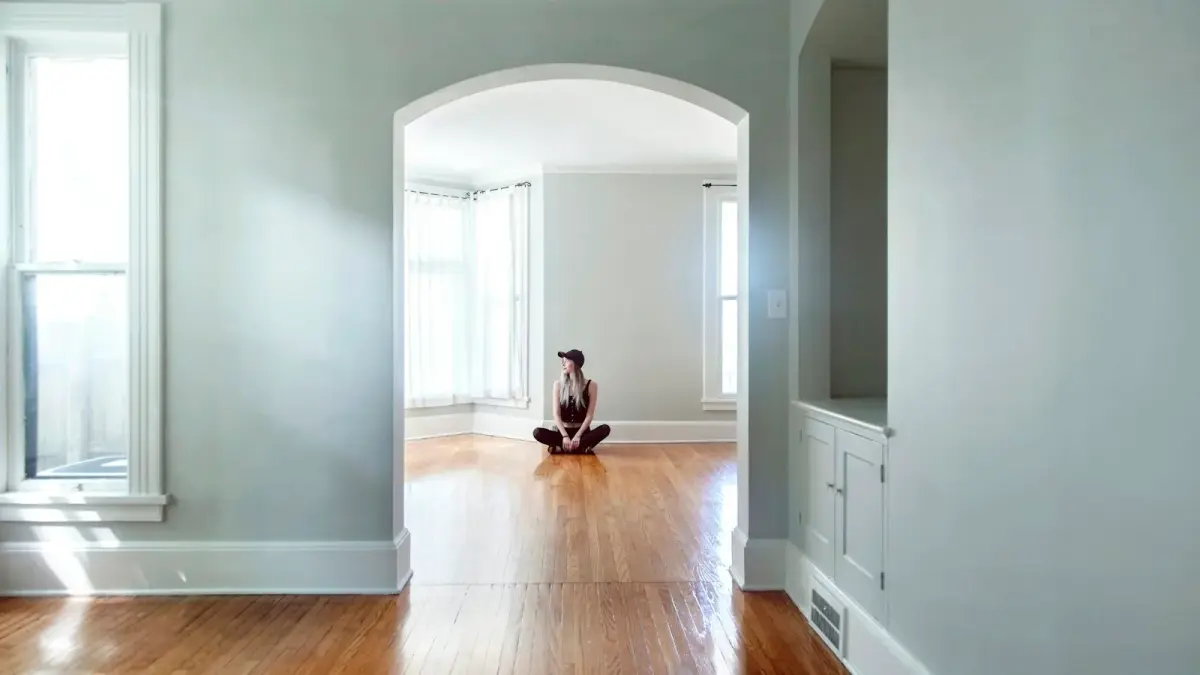
I take the long way home. Every single evening. Not sometimes, not when traffic is bad on the main road, not when I need to decompress after a particularly rough day. Every evening, without exception, I add fourteen minutes to a drive that should take eleven.
My husband noticed a few months ago. He pulled up the route on his phone and held it toward me with a look that was half confusion, half hurt. “Why do you go this way? This is completely out of your way.”
I didn’t have an answer. Not a real one. I said something about the road being prettier, which is true - it runs along a reservoir and the light does something soft and golden around six o’clock in the late spring. But that wasn’t the reason. The reason was something I hadn’t found language for yet, something my body understood long before my mind caught up.
The long way home is the only part of my day where nobody needs me to be anything.
The room with no doors
If you are somewhere between thirty-five and sixty, I want you to think about the rooms in your life. Not metaphorical rooms - actual, physical spaces where you spend your time.
There is the office, or the job site, or the classroom, or the clinic. In that room, you are a role. You have responsibilities. People need your attention, your decisions, your competence. You are performing a version of yourself that other people depend on.
There is home. And home is beautiful - I want to be clear about that. Home is the place you chose, the people you love, the life you built on purpose. But home is also a room full of needs. Dinner needs to happen. The dog needs to go out. Someone needs help with homework. Someone else needs to talk about their day. The dishwasher needs to be emptied. A permission slip needs to be signed.
There is the bathroom, maybe. A few minutes behind a locked door. But even that comes with a clock. Someone will knock. Someone will call your name through the door.
And then there is the car.
The car is the only room where your presence is not a resource. Nobody is waiting for you to solve something. Nobody is monitoring your facial expression to gauge whether you’re in a good enough mood to ask for something. The car is a sealed, climate-controlled container moving through space, and for the duration of the drive, you are accountable to no one except the road.
A 2020 study published in the Journal of Environmental Psychology examined what researchers called “transitional spaces” - environments people move through between fixed roles. They found that commuters who reported higher satisfaction with their drive, even long ones, consistently described the car as a space where they felt “temporarily released from identity demands.” The car wasn’t transportation. It was a psychological decompression chamber.
Not avoidance - arrival
There is a story people tell about the person who takes the long way home, and it is not a kind story.
It says they are unhappy. It says they are avoiding their spouse, dreading their children, running from a life they no longer want. It says the extra miles are a confession - that if they really loved their family, they would be rushing to get back.
I want to dismantle that story completely, because it has caused an enormous amount of unnecessary guilt.
The person who takes the long way home is almost never avoiding their family. They are preparing to arrive. Those are completely different things.
Think about what you are being asked to do every evening. You are being asked to walk through a door and immediately become a different version of yourself. At work, you were the employee, the colleague, the professional. The moment you cross the threshold of your house, you are the parent, the partner, the provider of emotional stability. The transition is instant. There is no curtain call, no intermission, no green room where you can take off the costume from the last act before putting on the next one.
The long way home is the green room.
Adam Grant has written about the concept of “role transitions” - the cognitive and emotional work required to shift between different identities throughout a day. He notes that the transitions themselves are often more depleting than the roles, because they require a kind of internal renegotiation that happens below conscious awareness. Your brain has to shut down one operating system and boot up another, and that process needs time and space.
The car gives you both.
What your nervous system figured out before you did
Here is what I find extraordinary about this behavior: most people who do it cannot explain why they do it. They will tell you it’s the scenic route. They will tell you traffic is better. They will tell you they like the radio station and just want to hear the end of the song. They will offer twelve different rational explanations for something that is not rational at all.
It is biological.
Somewhere in your late thirties or early forties, your nervous system ran a quiet calculation. It assessed the total demand load on your body - the number of people who need things from you, the number of roles you are expected to perform, the number of hours in your day where your attention belongs to someone else. And it found a deficit. There was not enough room in the architecture of your life for your system to regulate itself.
So it went looking for a gap. And it found one. That fifteen-minute drive between work and home where nobody had a claim on your attention.
A 2017 study in Frontiers in Psychology examined cortisol patterns in midlife adults and found that the transition period between work and home was a critical window for stress recovery. Adults who had even a brief period of low-demand solitude during this transition showed markedly better evening cortisol regulation than those who moved directly from workplace stress into household demands. The researchers described this window as a “parasympathetic bridge” - a period where the nervous system could shift from sympathetic activation back toward baseline.
Your body didn’t read that study. It didn’t need to. It figured out the same thing through forty-five years of lived experience, and it solved the problem the only way it could - by making the drive a little longer, the route a little more winding, the arrival a little more delayed.
This is not weakness. This is sophisticated self-regulation happening below the level of language.
The guilt that doesn’t belong to you
If you are someone who takes the long way home, there is a very good chance you carry guilt about it. Especially if someone you love has noticed.
The guilt says you should want to be home faster. That a good parent sprints through the door. That a loving partner doesn’t need a buffer between the office and the kitchen. That the desire for solitude, even fifteen minutes of it, is evidence of some deficiency in your love.
I want to tell you something I wish someone had told me three years ago: the fact that you need those fifteen minutes is evidence of exactly how much you give.
People who have nothing left to offer at the end of the day don’t take the long way home. They walk through the door depleted and irritable and short-tempered, because they had no recovery window between the giving they did at work and the giving they are about to do at home. The person who takes the long way home is doing something profoundly generous - they are making sure the version of themselves that walks through the front door is the version their family actually deserves.
Brene Brown has written about the difference between “selfish” and “self-preserving,” and the long way home sits squarely in the second category. It is not a withdrawal from love. It is the maintenance work that makes love sustainable.
The songs you listen to in the car are not random
I want to name something specific, because I think it matters.
The music you listen to on the long way home is different from the music you listen to at any other time. It is not the playlist you put on during a party or the podcast you listen to for professional development. It is the music that belongs only to you. The songs from when you were twenty-two. The album you played on repeat during a summer that shaped you. The genre your family would laugh at if they heard it.
That music is doing something important. It is connecting you to a version of yourself that exists outside of your roles. The version of you that is not someone’s parent or partner or employee. The version that is just - you. The person you were before the roles accumulated.
Those fourteen extra minutes on the back road by the reservoir are the only time all day that person gets to exist. And your nervous system is fiercely protective of that time, because it knows something that your conscious mind often forgets: you cannot sustain a life of constant giving if there is no self left to give from.
The road by the reservoir
I still take the long way home. I will probably always take the long way home. But I no longer feel guilty about it, and I no longer pretend it’s about the scenery.
It is about the fact that I am fifty-one years old, and I have spent the last twenty-three years being needed. I have been needed beautifully, by people I love, in a life I built on purpose. But the needing is relentless, and it does not come with intermissions.
So I built one. Fourteen minutes on a road that runs along a reservoir where the light goes golden around six o’clock. Windows up. Phone on silent. No one expecting anything. No one monitoring my face. No one needing me to be warm or competent or patient or wise.
Just me, and the road, and whatever song I loved at twenty-two.
If you take the long way home, you are not avoiding your life. You are doing the quiet, invisible maintenance work that allows your life to continue. You are not broken. You are not pulling away. You found the only room in your world where you can set everything down for a few minutes, and your body is smart enough to drive there every single evening without being asked.
Those extra miles are not a detour. They are the most direct route to the person your family needs you to be when you walk through the door.